The Story Behind Michelangelo’s Foot Drawing: Anatomy, Genius, and Historical Context
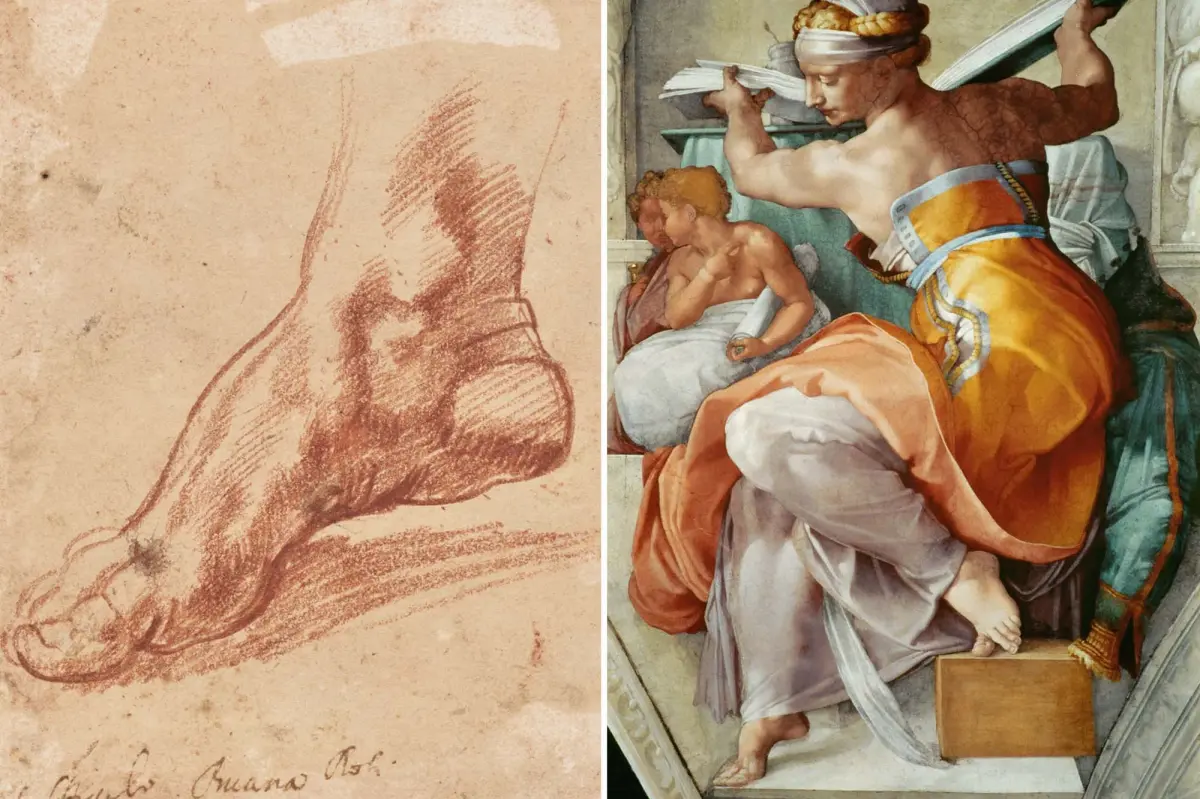
The story behind Michelangelo’s famous foot drawing—specifically a remarkable anatomical study housed in the Casa Buonarroti in Florence—revolves around the Renaissance master’s obsessive pursuit of human anatomical accuracy, his secre...
The story behind Michelangelo’s famous foot drawing—specifically a remarkable anatomical study housed in the Casa Buonarroti in Florence—revolves around the Renaissance master’s obsessive pursuit of human anatomical accuracy, his secretive late-in-life document destruction, and the rare survival of sketches that reveal how he prepared for monumental masterpieces like the Sistine Chapel ceiling and the Medici Chapel sculptures.
Contents
Introduction to Michelangelo’s Anatomical Studies
To understand the significance of Michelangelo Buonarroti’s sketches of human extremities, one must examine the intersection of Renaissance art, scientific inquiry, and human mortality. While many art enthusiasts recognize Michelangelo primarily as a sculptor and painter, his mastery of form relied heavily on exhaustive empirical observation. He did not merely draw what he saw; he dissected, analyzed, and synthesized the musculoskeletal structure of the human body.
Among his surviving paper works, studies of hands and feet hold a privileged position. These delicate, highly rendered studies demonstrate a level of precision that rivals contemporary medical illustration. Yet, they are fundamentally works of high art, designed to solve complex compositional problems of weight, balance, and kinetic tension. Exploring the story behind these drawings sheds light on a famously reclusive artist who went to great lengths to conceal his working methods from posterity.
The Historical and Biographic Context of Michelangelo’s Drawings
Michelangelo Buonarroti lived from 1475 to 1564, a period during which the perception of the artist shifted radically from that of a manual artisan to a divinely inspired intellectual. Humanism placed the human body at the center of artistic expression, demanding a rigorous understanding of anatomy.
Access to Dissection and Scientific Inquiry
During his youth in Florence, Michelangelo gained informal access to human corpses through his relationship with the Prior of the Church of Santo Spirito. In exchange for carving a wooden crucifix for the convent, Michelangelo was permitted to study cadavers in the monastery's small hospital. This hands-on anatomical study laid the groundwork for his unprecedented understanding of musculature, bone structure, and tendon mechanics.
Although the Church and civil authorities placed strict regulations on human dissection, artists of the High Renaissance routinely pushed boundaries to improve their craft. Michelangelo’s foot and hand drawings are direct products of this empirical tradition. By analyzing how bones interlock and how tendons stretch under tension, he could imbue static marble and frescoed plaster with a profound sense of potential movement.
The Great Destruction of Papers
A crucial element of the story behind Michelangelo's surviving drawings is the near-total loss of his preliminary sketches. Late in his life, consumed by a desire to protect his reputation and ensure that the public only witnessed his finished perfections, Michelangelo ordered massive bonfires of his working drawings, sketches, and personal notebooks.
Vasari, his famous contemporary and biographer, noted that Michelangelo burned thousands of studies so that the world would not see the labor behind his genius. Consequently, the few surviving sheets—preserved largely by loyal friends, family members, and disciples like Daniele da Volterra—are treated as priceless historical relics. The foot drawings that escaped destruction offer a rare, unvarnished look into the master’s analytical mind.
Technical Analysis of the Foot Drawings
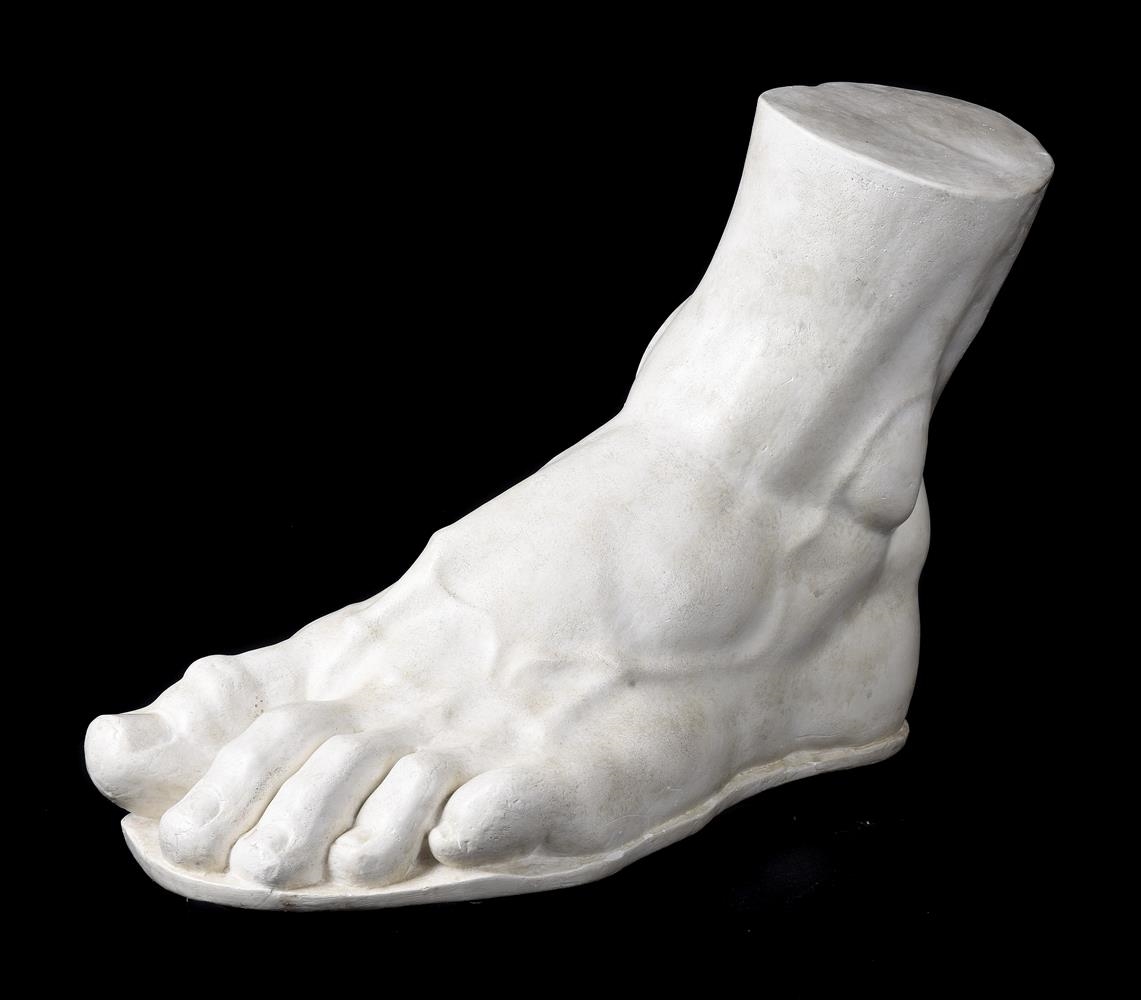
Michelangelo’s studies of feet are distinct for their sculptural quality. Rather than treating a foot as a flat, static appendage, he rendered it as a dynamic architectural foundation.
Musculoskeletal Precision
In these drawings, which often utilize red chalk, brown ink, or black chalk, Michelangelo meticulously mapped out the complex network of the dorsal venous arch, the extensor digitorum longus tendons, and the precise bony landmarks of the malleolus (ankle bones). Every line serves a structural purpose:
- Tendon Tension: The tendons are rendered taut, indicating that the limb is bearing weight or preparing for motion.
- Bone Structure: The tarsal and metatarsal bones are articulated with structural clarity, reflecting a deep understanding of how load is distributed across the arch of the foot.
- Shadow and Light (Hatching): Utilizing fine, cross-hatched lines, Michelangelo built up volume, making the flat paper appear three-dimensional, much like a marble relief.
Comparative Study of Renaissance Anatomical Drawings
To contextualize Michelangelo’s approach, it is helpful to compare his surviving extremity studies with those of his contemporaries, such as Leonardo da Vinci.
| Artist | Primary Mediums | Analytical Focus | Artistic Intent |
|---|---|---|---|
| Michelangelo Buonarroti | Red chalk, pen, ink, black chalk | Musculoskeletal tension, structural weight, sculptural volume | Preparation for monumental figurative sculpture and painting |
| Leonardo da Vinci | Pen, ink, washes over metalpoint | Empirical physiology, proportion, mechanics of movement | Scientific documentation and encyclopedic natural philosophy |
| Albrecht Dürer | Pen and ink, watercolor | Surface realism, proportional grids, textural detail | Theoretical treatise on human proportion and printmaking |
While Leonardo approached anatomy with the eye of an inquisitive scientist documenting nature for its own sake, Michelangelo utilized anatomical study as an instrumental tool to serve emotional expression and heroic narrative.
Surviving Collections and Provenance
The primary repository for these intimate works is the Casa Buonarroti in Florence, a museum established in the ancestral home of the Buonarroti family. Following the artist's death, his grand-nephew, Michelangelo Buonarroti the Younger, dedicated himself to collecting every scrap of his famous ancestor's remaining work, poetry, and letters.
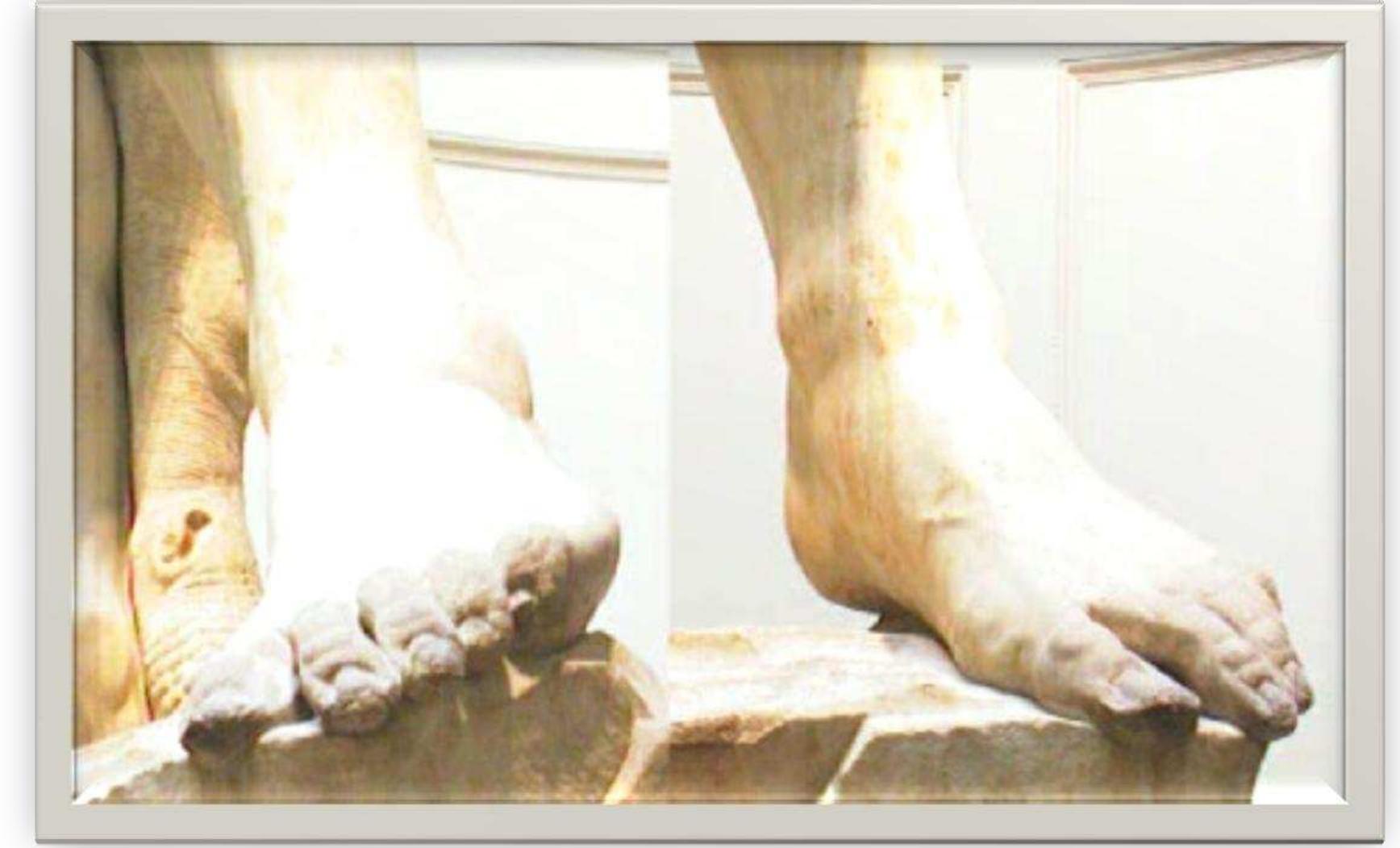
The foot drawings preserved in this collection provide direct insights into the creation of major sculptural projects, such as the David or the figures on the Medici Tombs in the New Sacristy of San Lorenzo. In these sculptures, the feet are carved with astonishing realism, showing swollen veins, compressed toes, and anchored heels that ground colossal figures to their plinths. The drawings were the indispensable blueprints for this physical illusion of weight and gravity.
Common Misconceptions Regarding Michelangelo’s Sketches
Popular culture often surrounds Renaissance masterworks with myths that obscure historical reality. Clarifying these points ensures a proper appreciation of the art:
- Myth: Michelangelo created detailed anatomical drawings as finished works of art for collectors.
- Fact: These studies were strictly working tools, preliminary preparations, or private notes kept out of public view.
- Myth: Michelangelo had access to modern medical text illustrations.
- Fact: He relied entirely on direct, firsthand observation of cadavers and classical sculpture, operating centuries before standard medical atlases were widely published for artists.
- Myth: The surviving drawings represent the entirety of his graphic output.
- Fact: Because of his late-life bonfires, scholars estimate that over ninety percent of his preliminary sketches were intentionally destroyed.
Practical Significance for Modern Art Historians and Conservators
For modern conservators and art historians, studying these sheets involves advanced imaging technologies, including infrared reflectography and multispectral analysis. These tools reveal underlying underdrawings, pentimenti (changes of mind), and stylus markings where Michelangelo pressed hard into the paper to transfer contours.
Understanding the story behind these drawings also aids in authenticating disputed sheets that occasionally emerge on the art market. Genuine Michelangelo studies exhibit a distinct kinetic energy—a rapid, confident hatching technique driven by deep anatomical knowledge rather than hesitant copying.
Frequently Asked Questions
Why did Michelangelo destroy most of his drawings?
Michelangelo destroyed the vast majority of his working papers late in life to protect his artistic legacy. He wanted the public to see only his perfected masterpieces in marble, bronze, and fresco, rather than exposing the grueling trial-and-error process behind his creations.
Where can Michelangelo’s foot drawings be viewed today?
The most significant collection of surviving Michelangelo sketches, including anatomical and extremity studies, is housed in the Casa Buonarroti museum in Florence, Italy, alongside select sheets in international institutions like the British Museum and the Louvre.
How did Michelangelo learn human anatomy?
He gained foundational knowledge through clandestine human dissections permitted by the prior of the Church of Santo Spirito in Florence during his youth, coupled with lifelong empirical observation of living models and classical sculpture.
Are these foot drawings considered scientific documents?
No. While they display remarkable accuracy, Michelangelo’s drawings are artistic studies intended to solve compositional, sculptural, and expressive problems rather than function as formal medical treatises.
What mediums did Michelangelo prefer for his anatomical sketches?
He frequently worked with red chalk, black chalk, and pen and brown ink on paper, utilizing cross-hatching to build up sculptural volume and tonal depth.
Conclusion and Next Actions
The story behind Michelangelo’s foot drawing is a testament to the relentless discipline required to achieve artistic greatness. Far from being spontaneous bursts of divine inspiration, his masterpieces were grounded in rigorous empirical study, physical endurance, and anatomical mastery. For those wishing to explore this subject further, a virtual or in-person visit to the Casa Buonarroti offers direct exposure to these rare, surviving monuments of Renaissance draftsmanship.
Image Gallery