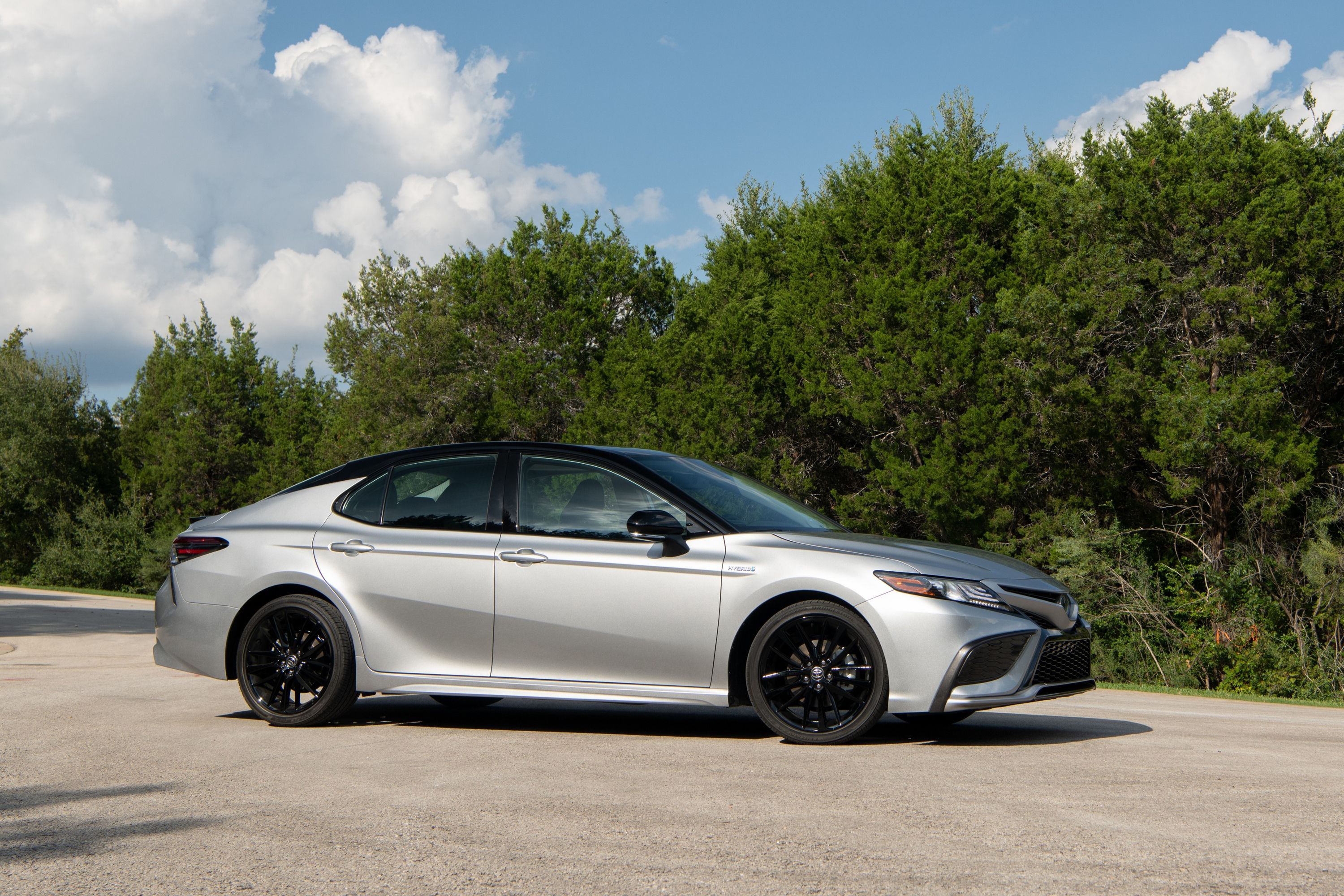
Comprehensive 2021 Toyota Camry MPG Overview: Fuel Economy by Trim and Engine
The 2021 Toyota Camry provides a wide range of fuel efficiency, spanning from an EPA-estimated 25 combined MPG for the performance-tuned V6 TRD to a remarkable 52 combined MPG for the Hybrid LE. Standard four-cylinder front-wheel-drive...
The 2021 Toyota Camry provides a wide range of fuel efficiency, spanning from an EPA-estimated 25 combined MPG for the performance-tuned V6 TRD to a remarkable 52 combined MPG for the Hybrid LE. Standard four-cylinder front-wheel-drive models typically achieve 32 combined MPG, offering a balance of power and economy.
Contents
As we look at the automotive market in 2026, the 2021 Toyota Camry remains a benchmark for midsize sedan efficiency. This specific model year was significant because it introduced the "Refresh" for the eighth-generation Camry, featuring updated styling and the debut of Toyota Safety Sense 2.5+. However, for most buyers and owners, the primary focus remains the vehicle's legendary reputation for fuel economy. The 2021 lineup offered three distinct powertrains: a fuel-efficient four-cylinder, a robust V6, and a highly optimized Hybrid system. Understanding the nuances of each configuration is essential for evaluating the total cost of ownership and environmental impact.
The Three Pillars of 2021 Camry Performance
To understand the MPG variations, one must first look at the mechanical configurations available. Toyota did not use a one-size-fits-all approach; instead, they optimized different trims for specific driving personas.
The 2.5L Dynamic Force Four-Cylinder
The backbone of the Camry lineup is the 2.5-liter Dynamic Force four-cylinder engine. This engine utilizes high-speed combustion technology and a multi-hole direct fuel injection system to achieve high thermal efficiency. In the 2021 model, this engine produces roughly 202 to 206 horsepower depending on the trim and exhaust setup. It is paired with a Direct Shift 8-speed automatic transmission, which was designed to provide a direct feel similar to a manual transmission while maintaining the smoothness of a traditional automatic. This combination allows the FWD LE and SE trims to reach an impressive 39 MPG on the highway.
The 3.5L V6 Engine
For those prioritizing acceleration and passing power, Toyota retained the 3.5-liter V6 engine for the XLE, XSE, and TRD trims. Producing 301 horsepower, this engine turns the Camry into one of the most powerful mainstream sedans in its class. Naturally, this comes at a cost to fuel economy. The V6 variants are roughly 20-25% less efficient than their four-cylinder counterparts in city driving, though they remain surprisingly capable on long-distance highway cruises thanks to the tall eighth gear in the transmission.
The Toyota Hybrid System (THS II)
The 2021 Camry Hybrid represents the pinnacle of Toyota’s electrification efforts for that era. It pairs a specialized version of the 2.5-liter engine (operating on the Atkinson cycle) with an electric motor and a sophisticated Electronically controlled Continuously Variable Transmission (eCVT). In 2021, Toyota notably moved the hybrid battery from the trunk to under the rear seats, which improved weight distribution and lowered the center of gravity, aiding both handling and efficiency.
2021 Toyota Camry MPG Ratings by Configuration
The following table details the EPA-estimated fuel economy ratings for the primary 2021 Camry configurations. These figures reflect the performance of the vehicle under standard testing conditions.
| Trim Level & Drivetrain | Engine Type | City MPG | Highway MPG | Combined MPG |
|---|---|---|---|---|
| Hybrid LE | 2.5L 4-Cyl Hybrid | 51 | 53 | 52 |
| Hybrid SE / XLE / XSE | 2.5L 4-Cyl Hybrid | 44 | 47 | 46 |
| LE / SE (FWD) | 2.5L 4-Cyl | 28 | 39 | 32 |
| XLE / XSE (FWD) | 2.5L 4-Cyl | 27 | 38 | 31 |
| LE / SE / XLE / XSE (AWD) | 2.5L 4-Cyl | 25 | 34 | 28 |
| XLE / XSE (V6) | 3.5L V6 | 22 | 32 | 26 |
| TRD (V6) | 3.5L V6 | 22 | 31 | 25 |
Analyzing the Efficiency Gap Between Trims
One of the most frequent questions regarding the 2021 Camry is why the Hybrid LE performs so much better than the Hybrid XSE or XLE. A 6-MPG difference in combined ratings is substantial, and it stems from three primary factors: weight, wheel size, and battery chemistry.
The Impact of Wheel and Tire Selection
The Hybrid LE typically rides on 16-inch steel wheels with aerodynamic covers and low-rolling-resistance tires. These tires are designed to minimize the energy lost to friction and heat as the tire deforms against the road. Conversely, the XSE and XLE trims often feature 18-inch or 19-inch alloy wheels. Larger wheels are heavier and have a higher rotational inertia, requiring more energy to get moving. Furthermore, the wider tires on the XSE provide more grip but also create more aerodynamic drag and rolling resistance, which directly penalizes fuel economy.
Equipment and Curb Weight
The 2021 Camry LE is the "poverty spec" or base trim, meaning it has fewer motorized components, less sound deadening, and simpler seating. The XLE and XSE trims add panoramic glass roofs, power-adjustable leather seats, and premium audio systems. These features add several hundred pounds to the vehicle's curb weight. In stop-and-go city traffic, the hybrid system must work harder to move this extra mass, leading to the lower 44 MPG city rating for the premium trims compared to the 51 MPG of the LE.
All-Wheel Drive (AWD) Considerations
The 2021 model year continued the availability of All-Wheel Drive, a feature reintroduced to the Camry lineup in 2020. The Dynamic Torque Control AWD system can direct up to 50% of engine torque to the rear wheels when slippage is detected. When not needed, the rear drive axle disengages to save fuel. However, the physical presence of the driveshaft, rear differential, and added weight results in a 3 to 4 MPG penalty across the board. For drivers in northern climates, this tradeoff is often considered worth the slight increase in annual fuel costs.
Real-World Factors Influencing Camry Fuel Economy
While the EPA numbers provide a standardized baseline, real-world results in 2026 vary based on how the vehicle has been maintained and operated. Because the 2021 Camry is now five years old, certain maintenance factors become critical for preserving its original efficiency.
Aerodynamics and the TRD Trim
The TRD (Toyota Racing Development) trim is a unique case in the 2021 lineup. Despite sharing the V6 engine with the XSE, it has a slightly lower highway rating (31 vs 32 MPG). This is due to the aggressive aerodynamic body kit, including a large rear spoiler and front splitter. While these components increase downforce for better high-speed stability, they also increase the vehicle's drag coefficient. For drivers who frequently commute at speeds above 70 mph, the TRD's "racy" look will result in slightly higher fuel consumption.
The Role of Driving Modes
The 2021 Camry features selectable driving modes: Eco, Normal, and Sport.
- Eco Mode: Adjusts the throttle response and air conditioning output to prioritize fuel savings. It is most effective in city driving where aggressive acceleration is the primary enemy of MPG.
- Sport Mode: Sharpens the throttle and changes the shift points of the 8-speed automatic. While it makes the Camry feel more responsive, it encourages higher RPMs, which can drop real-world efficiency by 10-15%.
Maintenance and Aging
By 2026, a 2021 Camry may have between 50,000 and 80,000 miles. To maintain peak MPG, owners should ensure that the low-viscosity 0W-16 oil (required for the 2.5L engine) is used during changes. Using a thicker oil can increase internal engine friction. Additionally, the hybrid air filter—located under the rear seat—must be kept clean. If this filter becomes clogged with dust or pet hair, the hybrid battery can overheat, forcing the gasoline engine to run more frequently to provide cooling and power, thus degrading fuel economy.
Competitive Comparison: How the 2021 Camry Stacks Up
In the 2021 midsize sedan market, the Camry’s primary competitors were the Honda Accord, the Hyundai Sonata, and the Nissan Altima.
- Honda Accord: The 2021 Accord Hybrid achieved a combined 48 MPG, which sat right between the Camry Hybrid LE (52 MPG) and the Camry Hybrid XSE (46 MPG). However, the base 1.5L turbo Accord was often cited for better "real-world" highway fuel economy compared to the Camry’s naturally aspirated 2.5L, though the Camry’s engine is generally considered more durable over the long term.
- Hyundai Sonata: The Sonata Hybrid Blue trim offered an EPA-estimated 52 combined MPG, matching the Camry Hybrid LE exactly. The Sonata utilized a 6-speed automatic for its hybrid system, which some drivers preferred for its more traditional shifting feel compared to the Camry's eCVT.
- Nissan Altima: The Altima relied heavily on its Variable Compression Turbo (VC-Turbo) engine. While innovative, it could not match the raw efficiency of the Camry Hybrid, topping out at around 32 combined MPG for its most efficient gas-only models.
Frequently Asked Questions
Does the 2021 Camry Hybrid require premium fuel?
No, the 2021 Toyota Camry, including the Hybrid and V6 models, is designed to run on regular 87-octane unleaded gasoline. Using premium fuel (91-93 octane) will not provide a measurable increase in fuel economy or performance, as the engine's timing and compression are optimized for regular fuel. This contributes to a lower total cost of ownership compared to some turbocharged European competitors that require premium.
How does the Camry Hybrid's MPG change in winter?
All vehicles lose efficiency in cold weather, but hybrids are particularly sensitive. In the 2021 Camry Hybrid, the gasoline engine must run more frequently in the winter to generate heat for the cabin and to bring the battery up to its ideal operating temperature. Owners in cold climates often report a 10% to 20% drop in MPG during the winter months. Using the heated seats instead of the cabin heater can help mitigate some of this loss.
Is the Camry AWD significantly worse on gas than the FWD?
The 2021 Camry AWD achieves 28 combined MPG, while the FWD LE/SE achieves 32 combined MPG. This 4-MPG difference is mainly due to the extra 165 pounds of hardware and the mechanical drag of the all-wheel-drive components. While 4 MPG may seem small, it represents a nearly 13% increase in fuel consumption. For high-mileage drivers, this can add up to several hundred dollars in extra fuel costs per year.
Why is the TRD trim the least efficient?
The 2021 Camry TRD is the least efficient model because it combines the 3.5L V6 engine with specific performance modifications. It features heavier-duty underbody bracing, a unique exhaust system that encourages more spirited driving, and aerodynamic elements that increase drag. Furthermore, the TRD comes standard with stickier, performance-oriented tires which have higher rolling resistance than the fuel-saving tires found on the LE or XLE.
Can I improve my 2021 Camry's MPG with aftermarket parts?
Generally, no. Modern vehicles like the 2021 Camry are highly optimized from the factory. Aftermarket "cold air intakes" or "fuel savers" often have a negligible or even negative effect on MPG. The most effective way to improve mileage is through driving behavior—such as utilizing the "Pulse and Glide" technique in hybrid models—and ensuring tires are inflated to the manufacturer’s recommended pressure (usually 35 PSI for most Camry trims).
Final Recommendation for 2026 Buyers
If your primary goal is maximum fuel savings and long-term value, the 2021 Toyota Camry Hybrid LE remains the definitive choice. Its 52 combined MPG is still competitive with new vehicles released in 2026. However, for those who find the LE trim too basic, the Camry SE (Non-Hybrid) offers a more aggressive look and 32 combined MPG, which is an excellent middle ground for budget-conscious drivers who do not want the higher upfront cost of a hybrid. Regardless of the trim, the 2021 Camry stands as a testament to Toyota's ability to deliver high efficiency without sacrificing the reliability that defines the brand.
Image Gallery