The Bhutan Prince and the Evolution of Royal Influence in the 21st Century
Royal influence in Bhutan is shifting from traditional paternalism to a model of "Visionary Stewardship." Crown Prince Jigme Namgyel Wangchuck, now ten years old in 2026, serves as the symbolic center of this transition, bridging Bhuta...
Royal influence in Bhutan is shifting from traditional paternalism to a model of "Visionary Stewardship." Crown Prince Jigme Namgyel Wangchuck, now ten years old in 2026, serves as the symbolic center of this transition, bridging Bhutan’s carbon-negative heritage with a high-tech, globalized future through strategic initiatives like the Gelephu Mindfulness City and national digital transformation.
Contents
The Paradigm Shift of the Wangchuck Dynasty
The role of the monarchy in Bhutan has never followed the typical trajectory of global royalty. While many monarchies across Europe and Asia have either been relegated to purely ceremonial roles or faced dissolution, the Wangchuck dynasty has maintained a profound level of influence by leading its own democratization. In 2026, we observe the continued results of the "People's King" philosophy, a concept pioneered by the fourth King, Jigme Singye Wangchuck, and refined by the current monarch, King Jigme Khesar Namgyel Wangchuck.
The transition from an absolute monarchy to a constitutional one in 2008 was not the result of a popular uprising, but a gift from the throne to the people. This historical context is essential for understanding the future of royal influence. By voluntarily limiting their own power, the Kings of Bhutan gained a different, more durable form of authority: moral and visionary leadership. In the current landscape of 2026, the Crown Prince represents the next iteration of this influence, where the monarch acts as a "Chief Visionary Officer" for the nation rather than a traditional ruler.
Crown Prince Jigme Namgyel Wangchuck: Training an Heir for 2030 and Beyond
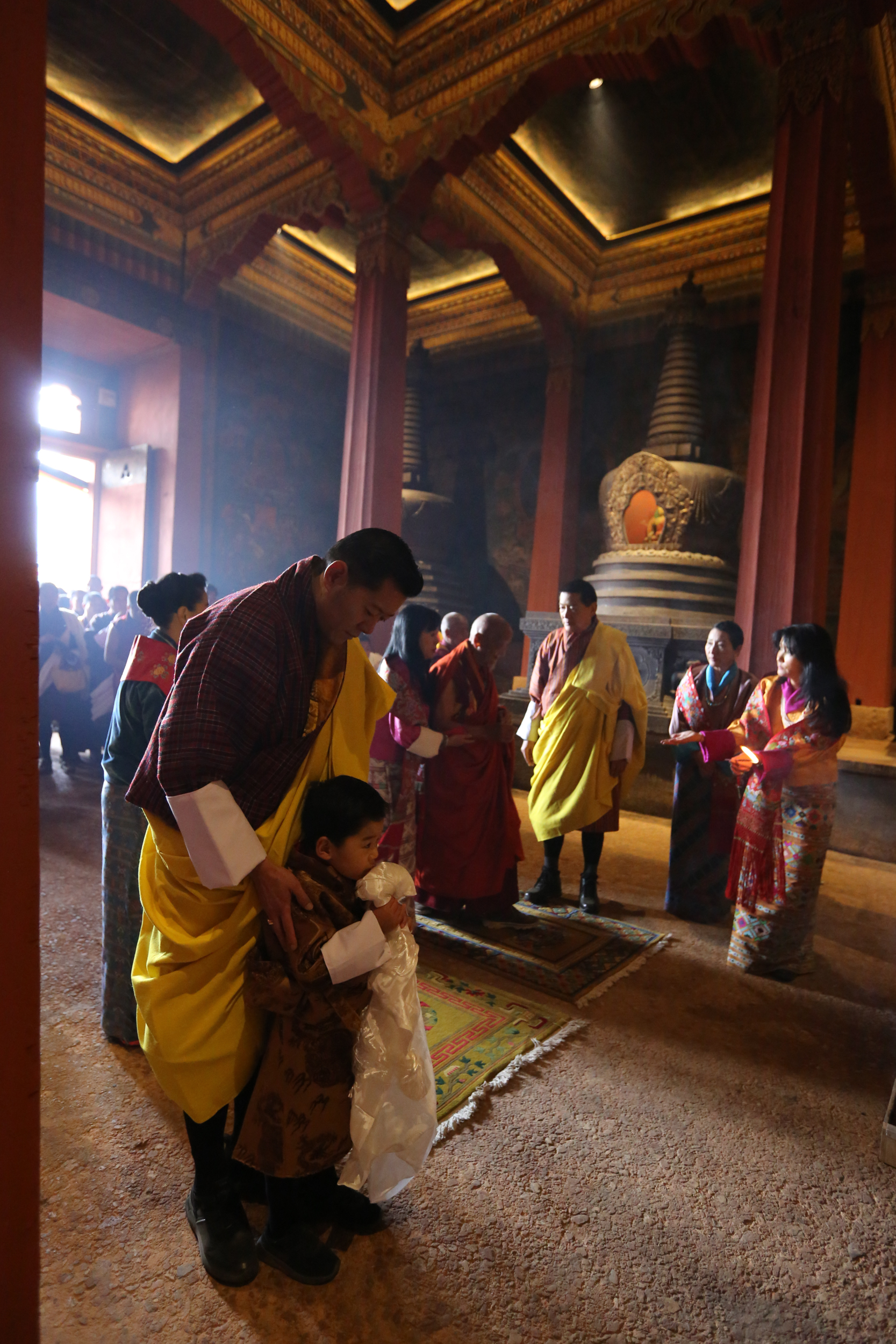
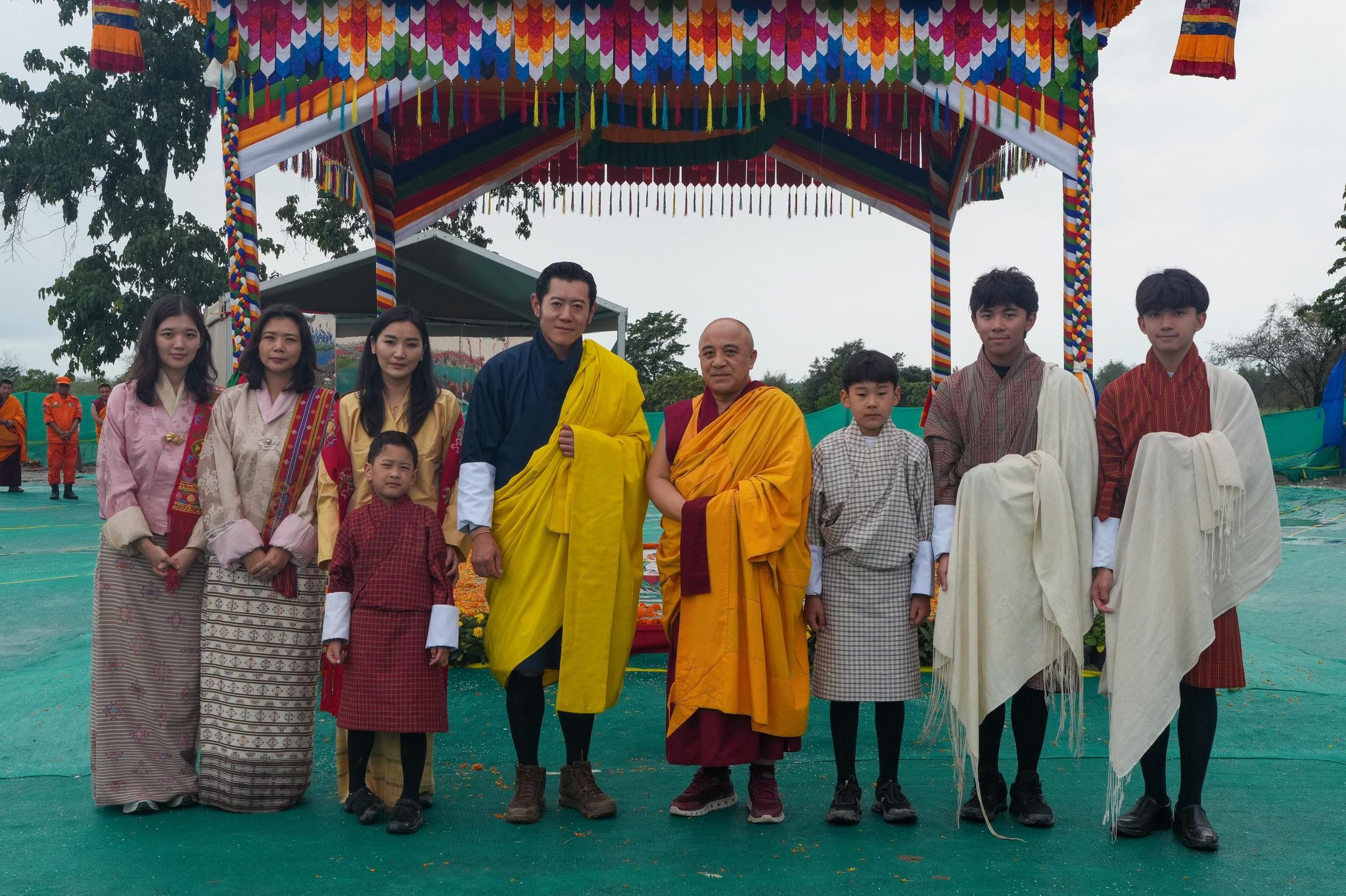
Born on February 5, 2016, the Gyalsey (Crown Prince) Jigme Namgyel Wangchuck is now ten years old. His upbringing is a calculated balance of ancient Himalayan tradition and modern global education. Unlike past generations, his preparation involves high-visibility participation in both religious ceremonies and technological forums.
The future of royal influence in Bhutan is being encoded into the Prince's public persona. He is frequently seen at the inauguration of technology parks and digital infrastructure projects, signaling that the future of the monarchy is inextricably linked to Bhutan’s modernization. This "training" is designed to ensure that when he eventually ascends the throne, he is viewed not just as a protector of culture, but as a leader capable of navigating the complexities of artificial intelligence, climate finance, and global geopolitics.
The Symbolic Role of the Gyalsey
The Crown Prince's role is currently more symbolic than administrative, yet symbols carry immense weight in Bhutanese society. His presence at state functions serves to reassure the populace of continuity and stability. In a world characterized by rapid political shifts, the "eternal" nature of the monarchy provides a psychological anchor for the Bhutanese people, allowing them to embrace radical changes—such as the Gelephu Mindfulness City project—without losing their sense of national identity.
Gelephu Mindfulness City: The Monarchy’s Economic Legacy
As of 2026, the Gelephu Mindfulness City (GMC) stands as the most ambitious project ever undertaken by the Bhutanese throne. This Special Administrative Region (SAR) is the physical manifestation of royal influence in the modern era. Proposed by King Jigme Khesar, the city is designed to be a hub for green technology, finance, and wellness, acting as a bridge between South Asia and Southeast Asia.
The future of royal influence is being staked on the success of this "economic gateway." By positioning the monarchy as the architect of Bhutan’s economic sovereignty, the King has ensured that the crown remains the central pillar of the nation's survival. The GMC is not merely an urban development project; it is a geopolitical strategy to protect Bhutan’s independence by creating an indispensable economic zone that attracts global investment while adhering to the principles of Gross National Happiness (GNH).
| Feature of Influence | Traditional Model (Pre-2008) | Modern Stewardship Model (2026) |
|---|---|---|
| Source of Power | Absolute Divine Right | Moral Authority & Constitutional Mandate |
| Economic Role | Land Wealth & Taxation | Visionary Entrepreneurship (Gelephu SAR) |
| Public Image | Reclusive & Sacred | Accessible, Digital-First, & Global |
| Technology | Preservationist | Proactive Adoption (Blockchain/AI) |
| Global Standing | Isolationist | Leadership in Climate & Mindfulness |
Gross National Happiness as a Tool of Soft Power
The concept of Gross National Happiness (GNH) has evolved from a national policy into a potent form of international "soft power." Under the current King and the growing influence of the Crown Prince, GNH is being rebranded for the 2020s. It is no longer just about spiritual well-being; it is a framework for sustainable development that the rest of the world is increasingly looking toward as climate change intensifies.
The monarchy’s influence extends far beyond Bhutan's borders through this philosophy. By championing a model that prioritizes the environment and collective happiness over raw GDP, the Bhutanese royals have secured a seat at the highest levels of global discourse. In 2026, this influence is used to negotiate favorable carbon credit terms and attract high-value, low-impact tourism, ensuring that Bhutan remains economically viable without sacrificing its soul.
Navigating the Geopolitics of the Himalayas
Bhutan sits in a precarious position between two superpowers: India and China. The future of royal influence is heavily tied to the King’s ability to maintain this delicate balance. Historically, the monarchy has been the primary diplomat for the nation, a role that remains unchanged in 2026.
The King’s personal relationships with regional leaders are often more effective than formal diplomatic channels. The Crown Prince is already being introduced to these dynamics, accompanying his father on state visits to New Delhi and other regional capitals. This "personal diplomacy" is a hallmark of Bhutanese royal influence; it allows the country to maintain its sovereignty and security through trust-based relationships rather than military might.
The India-Bhutan Partnership
India remains Bhutan's most critical partner. The monarchy has successfully leveraged this relationship to secure hydropower investments and infrastructure support. By 2026, this has expanded into digital cooperation, with the two nations collaborating on satellite technology and cross-border digital payments, all under the guidance of royal initiatives.
Digital Sovereignty and the National Digital Identity (NDI)
A unique aspect of modern Bhutanese royal influence is its embrace of cutting-edge technology. Bhutan was one of the first countries to implement a decentralized National Digital Identity (NDI) system based on blockchain technology. The Crown Prince was famously the first citizen to receive a digital ID, a move that signaled the monarchy's commitment to a digital future.
This initiative is about more than just efficiency; it is about "Digital Sovereignty." By leading the charge into the digital realm, the monarchy ensures that Bhutanese citizens can participate in the global digital economy while maintaining control over their own data and identity. This proactive stance prevents the nation from becoming a mere "data colony" of larger tech-dominant powers.
Environmental Leadership in the Climate Crisis
By 2026, Bhutan’s status as a carbon-negative country has become its most valuable global asset. The monarchy’s influence is the primary driver of this environmental stance. The Constitution of Bhutan, mandated by the throne, requires that at least 60% of the country remain under forest cover for all time.
The future of royal influence will likely involve the "monetization" of this environmental stewardship. Through carbon markets and green bonds, the monarchy is steering the country toward a future where its conservation efforts fund its social services. The Crown Prince, as the "Guardian of the Environment," will inherit a nation that is essentially a living laboratory for how humanity can coexist with nature in a warming world.
Frequently Asked Questions
What is the current role of the Bhutanese Crown Prince?
In 2026, at age ten, Crown Prince Jigme Namgyel Wangchuck is a student and a symbolic representative of the nation. He participates in key state and religious ceremonies, often accompanying his father, King Jigme Khesar, to learn the duties of the throne and to signify the continuity of the Wangchuck dynasty.
How does the Gelephu Mindfulness City affect the King's power?
The Gelephu Mindfulness City (GMC) shifts the King’s influence from traditional governance to visionary economic leadership. While the city has its own administrative framework as a Special Administrative Region, it is a project birthed from the King's vision, making the monarchy the central figure in Bhutan’s 21st-century economic strategy.
Is Bhutan still a carbon-negative country in 2026?
Yes, Bhutan remains carbon-negative. This is achieved through extensive forest cover and the use of hydroelectric power. The monarchy continues to be the primary advocate for this status, viewing environmental protection as a sacred duty and a core component of Gross National Happiness.
Will the Crown Prince go to school abroad?
While specific details of the Prince's education are kept private for security and personal reasons, it is traditional for Bhutanese royals to receive a mix of domestic and international education. Past kings have studied in India, the United Kingdom, and the United States to gain a global perspective.
How does the monarchy interact with the elected government?
Bhutan is a constitutional monarchy. The King is the Head of State, while the Prime Minister is the Head of Government. The King acts as a unifying figure and a counselor to the government, ensuring that long-term national interests and the principles of GNH are upheld across changing political administrations.
Recommendations for Following Bhutan's Progress
To understand the trajectory of royal influence in Bhutan, observers should look beyond traditional political reporting. Monitoring the development of the Gelephu Mindfulness City and the expansion of the National Digital Identity (NDI) framework provides the most accurate picture of how the monarchy is positioning the country for the future. Additionally, following the official announcements from the Royal Office of Media offers insights into the Gyalsey’s evolving role and the specific cultural and technological milestones the throne chooses to highlight.
For those interested in the intersection of tradition and modernization, Bhutan serves as a unique case study. The survival of its royal influence depends not on resisting change, but on leading it. By 2026, the Wangchuck dynasty has successfully transitioned from being the masters of the country to being the stewards of its future.
Image Gallery