The 2018 Pelosi-Schumer-Trump Oval Office Meeting Explained
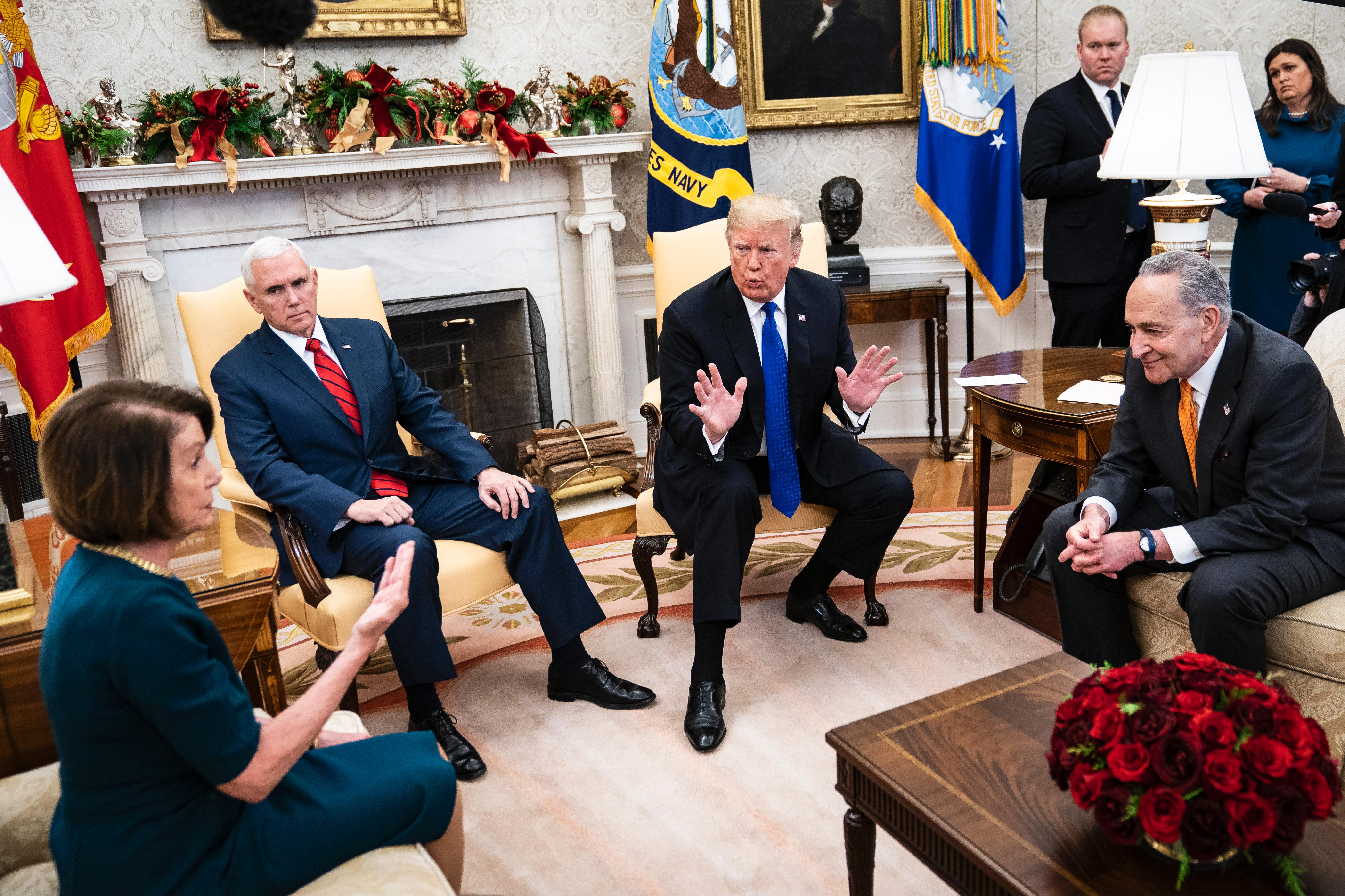
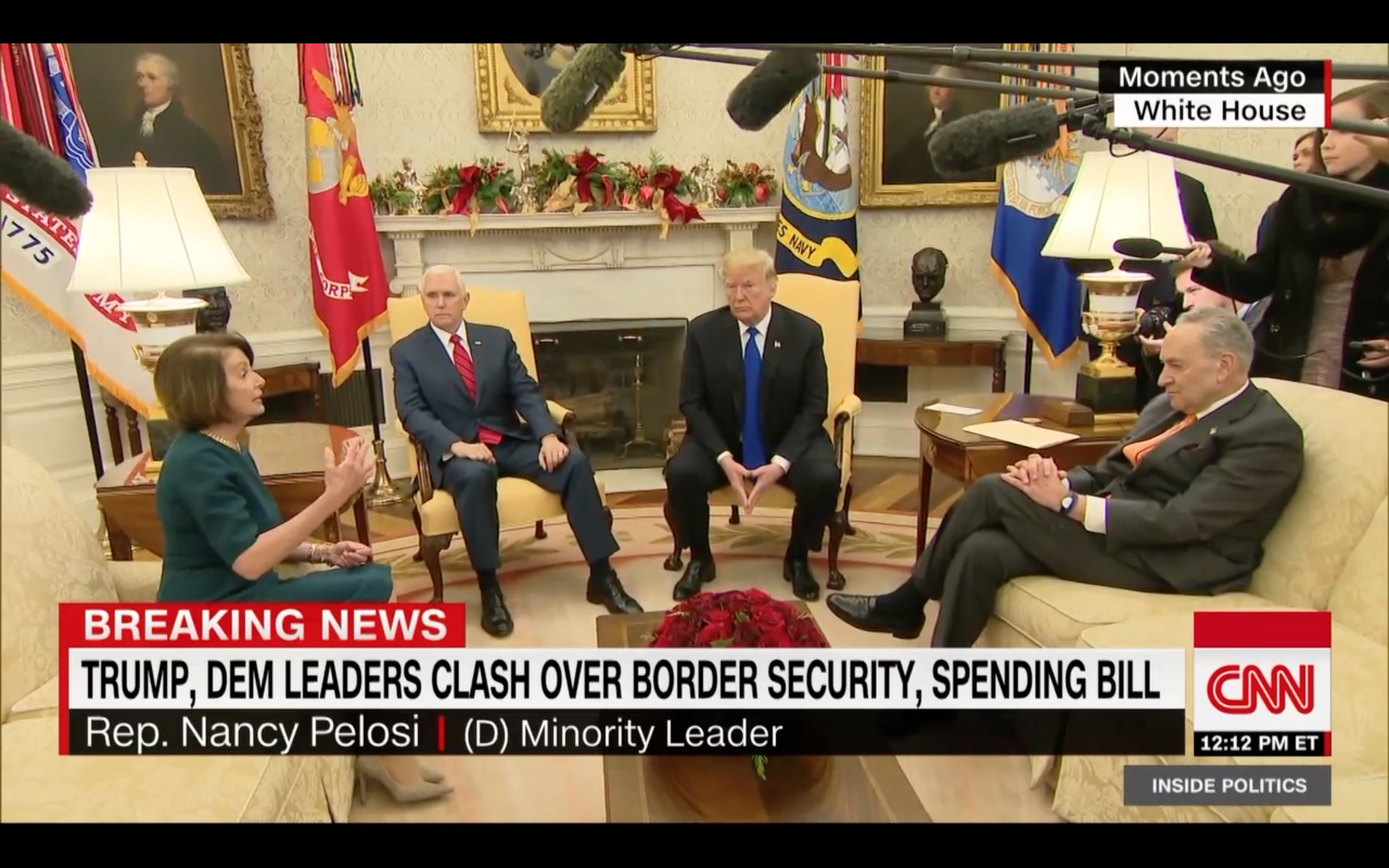
The December 11, 2018, meeting between President Donald Trump, Representative Nancy Pelosi, and Senator Chuck Schumer was a pivotal televised confrontation regarding border wall funding. This clash led directly to the longest governmen...
The December 11, 2018, meeting between President Donald Trump, Representative Nancy Pelosi, and Senator Chuck Schumer was a pivotal televised confrontation regarding border wall funding. This clash led directly to the longest government shutdown in U.S. history, signaling a shift in power as Democrats prepared to take the House majority.
Contents
Context and Backdrop: The Looming Funding Crisis
To understand the weight of the Pelosi-Schumer-Trump meeting, one must look at the political landscape of late 2018. At the time, the United States was facing a December 21 deadline to fund several key government agencies. The central point of contention was President Donald Trump’s demand for $5 billion to construct a wall along the U.S.-Mexico border.
The Republican Party still held the majority in both the House of Representatives and the Senate, but their control was waning. Following the 2018 midterm elections, Democrats were set to take control of the House in January 2019. Nancy Pelosi, then the House Minority Leader, was positioned to become Speaker of the House, while Chuck Schumer led the Senate Democrats.
This meeting was intended to be a standard "photo op" preceding private negotiations. However, it quickly devolved into a rare, unscripted public debate. For the first time in years, the American public saw the raw mechanics of legislative friction in real-time, as the President and the leaders of the opposition party argued over border security, transparency, and the definition of a "shutdown."
Key Moments and Tensions During the Meeting
The meeting began with President Trump expressing his desire for border security, specifically "the wall." What made the event historic was the transition from polite introductions to a high-stakes rhetorical battle. Pelosi and Schumer, sensing the leverage of their recent electoral victories, refused to back down from the President's demands in front of the cameras.
The Debate Over Transparency
Nancy Pelosi immediately pushed for the discussion to be moved behind closed doors. She argued that the public nature of the disagreement was not conducive to an honest negotiation. "I don't think we should have a debate in front of the press," Pelosi stated, attempting to frame the President’s televised approach as a theatrical display rather than a policy discussion.
Trump countered by suggesting that "it's called transparency," insisting that the public should see the positions of each party. This set the stage for a 17-minute argument that touched on everything from election results to the legislative math required to pass a spending bill.
The "Trump Shutdown" Admission
Perhaps the most consequential moment of the meeting occurred when Chuck Schumer pressed the President on whether he was willing to shut down the government. In an unforced error of political optics, President Trump took full ownership of the potential consequences.
"I am proud to shut down the government for border security, Chuck," Trump famously declared. He added, "I will take the mantle. I will be the one to shut it down. I’m not going to blame you for it." This statement was a significant departure from standard political strategy, where parties typically attempt to blame their opponents for government closures. In 2026, political analysts still cite this quote as the moment the President surrendered his leverage, as it allowed Democrats to frame the subsequent 35-day shutdown entirely as the "Trump Shutdown."
Legislative Mechanics: Why They Couldn't Agree
The technical dispute centered on the $5 billion funding request. Democrats were willing to offer roughly $1.3 billion for "border security," which included fencing and technology, but they explicitly rejected funding for a concrete wall.
| Feature | Trump/Republican Position | Pelosi-Schumer/Democratic Position |
|---|---|---|
| Funding Amount | $5 Billion (Initial Request) | $1.3 - $1.6 Billion |
| Primary Use | Physical Wall/Steel Slats | Fencing, Technology, Security Upgrades |
| Negotiation Venue | Public/Televised for Transparency | Private/Closed-Door for Policy Detail |
| Shutdown Stance | Acceptable if necessary for security | Unacceptable; "The Trump Shutdown" |
| House Majority Status | Outgoing Majority (Lame Duck) | Incoming Majority (Power Shift) |
Pelosi challenged the President's claim that he had the votes in the House to pass the $5 billion funding bill. She reminded him that while Republicans still held the majority in the "lame duck" session, they did not have enough consensus within their own party to pass the measure without Democratic help in the Senate, where 60 votes were required. This technical reality—the need for a bipartisan compromise to reach the 60-vote threshold in the Senate—was the fundamental roadblock that the President’s rhetoric could not overcome.
The Immediate Aftermath: The 35-Day Shutdown
Following the meeting, negotiations stalled completely. On December 21, 2018, funding expired for approximately 25% of the federal government, including the Departments of Homeland Security, Justice, and Agriculture.
The shutdown lasted until January 25, 2019, making it the longest in U.S. history. During this period, approximately 800,000 federal employees were either furloughed or forced to work without pay. The tension ignited in that Oval Office meeting persisted throughout the shutdown. Pelosi, having been sworn in as Speaker in early January, eventually used her power to rescind the President's invitation to deliver the State of the Union address until the government was reopened.
The standoff ended when the President signed a short-term spending bill that did not include the wall funding he had demanded. The "mantle" he claimed during the December meeting proved to be a heavy political burden, as public opinion polls largely blamed the administration for the economic and operational disruptions.
Historical Significance and Long-Term Impact
From the perspective of 2026, the Pelosi-Schumer-Trump meeting is viewed as a landmark event in the evolution of modern political communication. It marked the end of the "private negotiation" era and the beginning of a more performative, media-centric legislative process.
- Pelosi’s Assertiveness: The meeting solidified Nancy Pelosi's standing among her caucus. Her willingness to challenge the President in his own office—questioning his "manhood" regarding his ability to pass the bill (as she later reportedly told colleagues)—cemented her authority as she regained the Speaker’s gavel.
- The Risks of Transparency: The event served as a cautionary tale for future administrations about the dangers of unscripted, televised meetings. While Trump intended to use the cameras to pressure Democrats, the televised format actually empowered Pelosi and Schumer to speak directly to their base.
- The Border Wall Legacy: The meeting was the high-water mark for the border wall debate. Although Trump later declared a national emergency to redirect funds for the wall, the failure to secure the funding through the traditional legislative process during this meeting was a significant setback for his signature campaign promise.
Analyzing Leadership Styles in Conflict
The meeting offered a masterclass in contrasting leadership styles. President Trump utilized a "deal-maker" persona, attempting to use social pressure and public visibility to force a concession. Chuck Schumer utilized a "prosecutorial" style, repeatedly steering the conversation back to the President’s own words and the technicalities of the Senate.
Nancy Pelosi, meanwhile, utilized a "procedural" style. She focused on the rules of the House, the reality of the votes, and the constitutional role of the legislature. By refusing to engage in the President's more hyperbolic claims and sticking to the "facts" of the legislative count, she effectively neutralized much of the President's rhetorical momentum.
Frequently Asked Questions
Why was the Pelosi-Schumer-Trump meeting televised?
Originally, only the beginning of the meeting was supposed to be open to the press. However, as the argument heated up, President Trump chose to keep the cameras in the room, believing that a public debate would highlight the Democrats' refusal to fund border security and thereby pressure them into a deal.
What was the main argument about?
The primary dispute was over $5 billion in funding for a border wall. Trump insisted it was necessary for national security, while Pelosi and Schumer argued that a wall was an ineffective, "wasteful" use of taxpayer money. They also argued over whether the President had enough votes in the House to pass his desired bill.
Who "won" the meeting?
Political victory is subjective, but most analysts agree that Pelosi and Schumer gained the upper hand. By getting President Trump to state he would be "proud" to shut down the government, they successfully shifted the blame for the subsequent 35-day shutdown onto the White House.
How long did the shutdown last after this meeting?
The meeting took place on December 11, 2018. The government shut down on December 22, 2018, and lasted for 35 days, ending on January 25, 2019. It remains the longest federal government shutdown in the history of the United States.
Was Mike Pence involved in the discussion?
Vice President Mike Pence was present for the entire meeting but remained almost entirely silent. His lack of participation became a subject of significant media commentary and internet memes, as he sat stoically between the debating leaders.
Strategic Takeaway for Political Observation
When analyzing high-level political meetings like the 2018 Oval Office clash, it is essential to distinguish between rhetorical performance and legislative reality. While the televised portion of the meeting was filled with grandstanding, the true conflict was found in the Senate's 60-vote threshold and the shifting power dynamics of a new Congress.
For those tracking political developments in 2026, this meeting serves as a reminder that "taking the mantle" of a controversial policy decision can have long-lasting consequences for a leader’s ability to negotiate future legislation. The most effective strategy in these settings is often not the loudest voice, but the one that most accurately reflects the procedural constraints of the government.
Image Gallery