MetLife Life Insurance Claims: Understanding the 7 to 10 Day Mailing Timeline
Once a MetLife life insurance claim is approved and the payment is issued, receiving a physical check typically takes 7 to 10 business days via the U.S. Postal Service. This window accounts for administrative processing, check printing...
Once a MetLife life insurance claim is approved and the payment is issued, receiving a physical check typically takes 7 to 10 business days via the U.S. Postal Service. This window accounts for administrative processing, check printing, and standard mail transit times across different geographic regions.
Contents
The period following the loss of a loved one is often marked by emotional distress and financial urgency. When dealing with a carrier as large as MetLife, beneficiaries frequently look for specific timelines regarding their payout. One of the most common phrases encountered during the final stages of the process is that the check will arrive "7 to 10 days in the mail." While this seems like a straightforward estimate, various logistical, regulatory, and administrative factors influence this window. Understanding the mechanics of how MetLife handles these disbursements can help beneficiaries manage expectations and plan their finances accordingly.
The Journey of a MetLife Life Insurance Claim
Before a check ever enters the mail stream, the claim must pass through several rigorous stages of verification. MetLife, as a major global insurer, adheres to strict internal controls and state regulations to ensure that death benefits are paid accurately and to the rightful beneficiaries.
Initial Document Submission and Review
The timeline begins not when the check is mailed, but when the claim is first initiated. Beneficiaries must submit a certified death certificate and a completed "Statement of Claim" form. In 2026, many of these submissions occur through MetLife’s digital portal, which has significantly reduced the initial transit time for paperwork. However, the "review" phase remains critical. Adjusters verify the policy’s active status, check for any exclusions (such as suicide clauses within the first two years or material misrepresentation), and confirm the identity of all named beneficiaries.
The Transition from Approval to Disbursement
Once the claim is marked as "Approved," it moves to the disbursements department. This is a separate administrative unit responsible for releasing funds. If a beneficiary has elected to receive a physical check rather than an electronic fund transfer (EFT), the system triggers a payment request. This request is often bundled with others and processed in batches. The 7 to 10-day countdown generally begins the moment the check is printed and handed over to the postal service, not necessarily the moment the claim is approved.
Why Does Mailing Take 7 to 10 Business Days?
The estimate of 7 to 10 business days is a conservative window provided by MetLife to account for various variables in the logistics chain. It is important to distinguish between "calendar days" and "business days," as weekends and federal holidays can extend the real-world waiting period significantly.
Administrative Lag and Outgoing Mail
Even after approval, it may take 24 to 48 hours for a check to be printed, signed (often via secure digital signature), and inserted into a mailing envelope. Large corporations like MetLife use high-volume mail rooms that interface with USPS hubs. If a claim is approved on a Thursday afternoon, the check might not actually leave the facility until Friday or the following Monday.
USPS Transit Variables
MetLife typically uses standard First-Class Mail for check delivery unless otherwise specified or upgraded for a fee. First-Class Mail transit times vary based on the distance between the MetLife processing center (often located in regional hubs like Warwick, Rhode Island, or Oriskany, New York) and the beneficiary’s address.
- Regional Proximity: Beneficiaries living in the Northeast may see their checks in 3 to 5 days.
- Rural Locations: Those in remote or rural areas may experience the full 10-day duration due to additional sorting stops.
- Seasonal Delays: During peak mail seasons or periods of inclement weather, the 10-day window is more likely to be the reality rather than the exception.
Security and Verification Holds
In some instances, particularly with high-value policies (e.g., payouts exceeding $500,000), MetLife may perform additional security sweeps before the check is released to the mail. These sweeps ensure that there are no active liens or court orders (such as child support arrears or tax levies) that might legally require a portion of the death benefit to be redirected.
Comparison of MetLife Payout Methods
While many beneficiaries prefer the tangibility of a physical check, MetLife offers several alternatives that can drastically alter the timeline for receiving funds. In 2026, the shift toward digital-first payouts has made these options more prominent.
| Payout Method | Typical Delivery Timeline | Security Level | Best For |
|---|---|---|---|
| Physical Check (USPS) | 7 to 10 Business Days | Moderate (Risk of mail theft) | Beneficiaries without bank accounts or those preferring manual deposits. |
| Electronic Fund Transfer (EFT) | 1 to 3 Business Days | High (Direct bank-to-bank) | Those requiring immediate access to funds for funeral or estate costs. |
| Total Control Account (TCA) | 5 to 7 Business Days | High (Interest-bearing) | Beneficiaries who want to keep the money in a secure account while deciding on long-term use. |
| Overnight Delivery | 1 to 2 Business Days | High (Trackable) | Urgent financial situations; usually requires a fee deducted from the benefit. |
The Total Control Account (TCA) Option
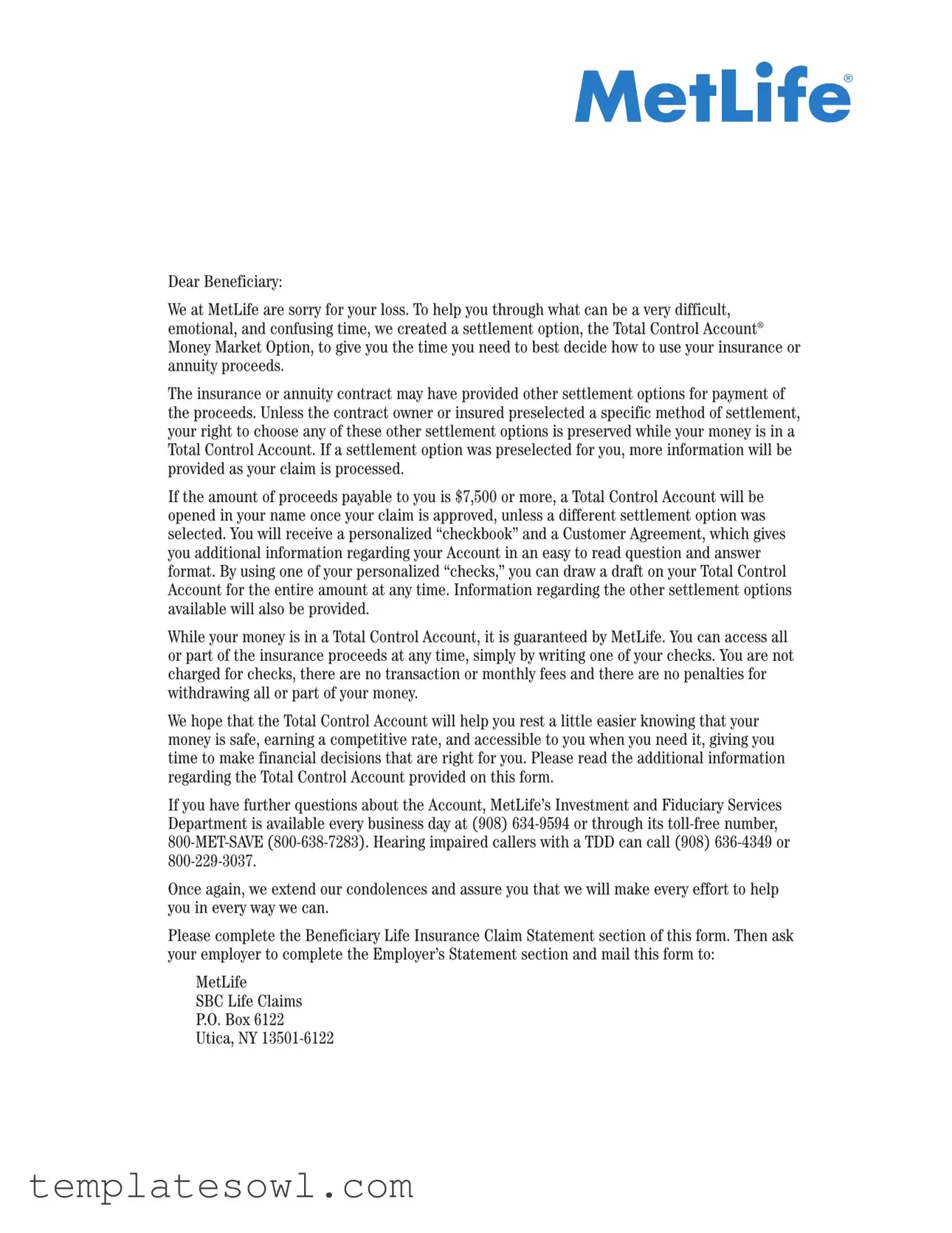
MetLife often encourages the use of the Total Control Account. This is essentially a draft account where the death benefit is deposited. The beneficiary receives a "checkbook" that allows them to write drafts against the balance. While this still involves waiting for the checkbook to arrive in the mail (usually within 5 to 7 days), it allows the funds to begin earning interest immediately upon the claim's approval, rather than while the money is in transit as a standard check.
Common Obstacles in the Mailing Process
If the 10-day window has passed and the check has not arrived, it is usually due to one of several common logistical hurdles. Identifying these early can help in resolving the delay with MetLife’s customer service.
Address Discrepancies
One of the most frequent causes of delay is an outdated address on file. If the policyholder had an old address listed and the beneficiary has since moved, the mail may be forwarded or returned to MetLife. It is vital to ensure that the "Statement of Claim" reflects the current, verified mailing address of the beneficiary, corroborated by a utility bill or government ID if requested.
Missing Endorsements or Multiple Beneficiaries
When a policy has multiple beneficiaries, MetLife may issue separate checks or, in rarer cases, a single check made out to multiple parties (requiring all signatures). If there is a dispute between beneficiaries or if one beneficiary’s information is incomplete, MetLife may hold the mailing of all checks until the entire file is reconciled.
Post Office "Return to Sender"
Occasionally, if a check is sent to a P.O. Box or an apartment complex with insecure mailboxes, the USPS may return the mail to the sender if they cannot verify the recipient lives there. Insurance checks are often sent in envelopes that clearly state they should not be forwarded, which adds an extra layer of security but also increases the risk of the check being returned to MetLife if the address isn't 100% accurate.
What to Do if the Check Doesn't Arrive After 10 Days
If you have surpassed the 10-business-day mark (roughly two full calendar weeks), proactive steps are necessary. Do not assume the check is "just a day away" once the maximum window has closed.
- Verify the Mailing Date: Call MetLife’s life insurance claims department and ask for the exact date the check was "cut" and the date it was "dispatched."
- Confirm the Address: Double-check the address they have on file. Even a single digit error in a zip code can cause a week-long delay.
- Request a "Stop Payment" and Reissue: If the check is confirmed as lost in the mail, you must request a stop-payment order. MetLife will void the original check and issue a new one.
- Pivot to Electronic Payment: If you must have the check reissued, this is the ideal time to provide your banking routing and account numbers to switch to an EFT. This bypasses the mail system entirely and usually puts funds in your account within 48 hours of the reissue.
Legal and Financial Considerations of the Mailing Window
In many jurisdictions, insurers are required to pay interest on life insurance proceeds if the claim is not settled within a specific timeframe (often 30 days from the receipt of "proof of loss"). However, the 7 to 10-day mailing window is usually considered part of a "timely" payout.
Interest Accrual
It is important to check if MetLife has included "settlement interest" in the check. Most states require that interest be paid from the date of death until the date the check is issued. If the mailing delay is excessive (e.g., MetLife took 60 days to mail the check), the interest payment should reflect that entire duration.
Tax Implications of the Payout
While the principal death benefit of a life insurance policy is generally not subject to federal income tax, any interest earned during the processing and mailing window is taxable. If your check includes a significant amount of interest because of a long delay, you will likely receive a Form 1099-INT from MetLife the following year.
FAQ
Can I track my MetLife claim check in the mail? Standard checks sent via First-Class Mail do not usually come with a tracking number. If you require tracking, you must request "Expedited" or "Overnight" shipping at the time of claim filing. This typically involves a fee that MetLife deducts from the total benefit amount, but it provides a FedEx or UPS tracking number for peace of mind.
What happens if the check is stolen from my mailbox? If you suspect mail theft, you must report it to both MetLife and the U.S. Postal Inspection Service immediately. MetLife will place a stop-payment on the check. If the check has already been cashed fraudulently, a claims investigation will be launched, which may involve local law enforcement. This is why many beneficiaries in 2026 opt for the Total Control Account or direct deposit.
Does the 7 to 10-day window apply to international beneficiaries? No. International mailings can take 3 to 6 weeks depending on the destination country’s postal infrastructure and customs procedures. MetLife generally recommends wire transfers for beneficiaries living outside the United States to avoid these lengthy delays and the risk of physical checks being lost in international transit.
Why did I receive a letter but not the check? Sometimes MetLife sends an approval letter and the actual check in separate envelopes for security reasons. If you receive the letter stating your claim is approved, the check is usually only 24 to 48 hours behind it. If the letter arrives and the check does not follow within 3 business days, contact your claims examiner.
Final Recommendation
When waiting for a MetLife life insurance payout, the best course of action is to track the claim status online via the MetLife beneficiary portal. If you have chosen to receive a check by mail, mark the 10th business day on your calendar from the date of approval. If the funds have not arrived by the morning of the 11th business day, call MetLife customer service at 1-800-638-5000 to verify the mailing status and, if necessary, initiate a stop-payment and pivot to a direct deposit to avoid further mailing complications.
Image Gallery