Does Tesla Have Autopilot? Versions, Features, and Costs Explained
Yes, all new Tesla vehicles come standard with Basic Autopilot, providing essential driver-assist features like traffic-aware cruise control and lane centering. For more advanced capabilities, such as automated lane changes or city str...
Yes, all new Tesla vehicles come standard with Basic Autopilot, providing essential driver-assist features like traffic-aware cruise control and lane centering. For more advanced capabilities, such as automated lane changes or city street navigation, owners can upgrade to Enhanced Autopilot or Full Self-Driving (Supervised) via a one-time purchase or a monthly subscription.
Contents
Understanding the current landscape of Tesla’s driver-assistance technology requires distinguishing between several different software tiers and hardware generations. As of 2026, the terminology has shifted slightly to emphasize that these systems require active driver supervision, yet the core question of whether a Tesla "has" Autopilot remains a primary concern for prospective buyers and new owners alike.
The Evolution of Tesla Autopilot Tiers
Tesla does not offer a single version of its driving software. Instead, the company provides three distinct levels of functionality. While the hardware—cameras, processing units, and wiring—is built into every vehicle leaving the factory, the specific features available to a driver depend entirely on the software package purchased.
Basic Autopilot
Since April 2019, every Tesla model (Model 3, Model Y, Model S, Model X, and Cybertruck) has included Basic Autopilot as a standard feature at no additional cost. This level of automation is comparable to advanced adaptive cruise control systems found in other luxury vehicles. It consists of two primary functions:
- Traffic-Aware Cruise Control (TACC): This matches the speed of your Tesla to that of the surrounding traffic, slowing down or accelerating as needed without driver intervention on the pedals.
- Autosteer: This assists with steering within a clearly marked lane, using the vehicle's cameras to maintain a central position.
Enhanced Autopilot (EAP)
Enhanced Autopilot was reintroduced as a mid-tier option for those who want highway-specific automation without the full cost of the highest-tier package. It builds upon the basic features by adding:
- Navigate on Autopilot: This feature suggests lane changes, navigates highway interchanges, and automatically engages the turn signal to take the correct exit based on your destination.
- Auto Lane Change: While driving on the highway, the car can move into adjacent lanes when the driver initiates the turn signal or when the system suggests a faster lane.
- Autopark: The vehicle can detect and maneuver into parallel or perpendicular parking spaces.
- Summon and Smart Summon: These allow the car to move in and out of tight spaces via the Tesla mobile app, or even navigate a parking lot to find the owner.
Full Self-Driving (Supervised)
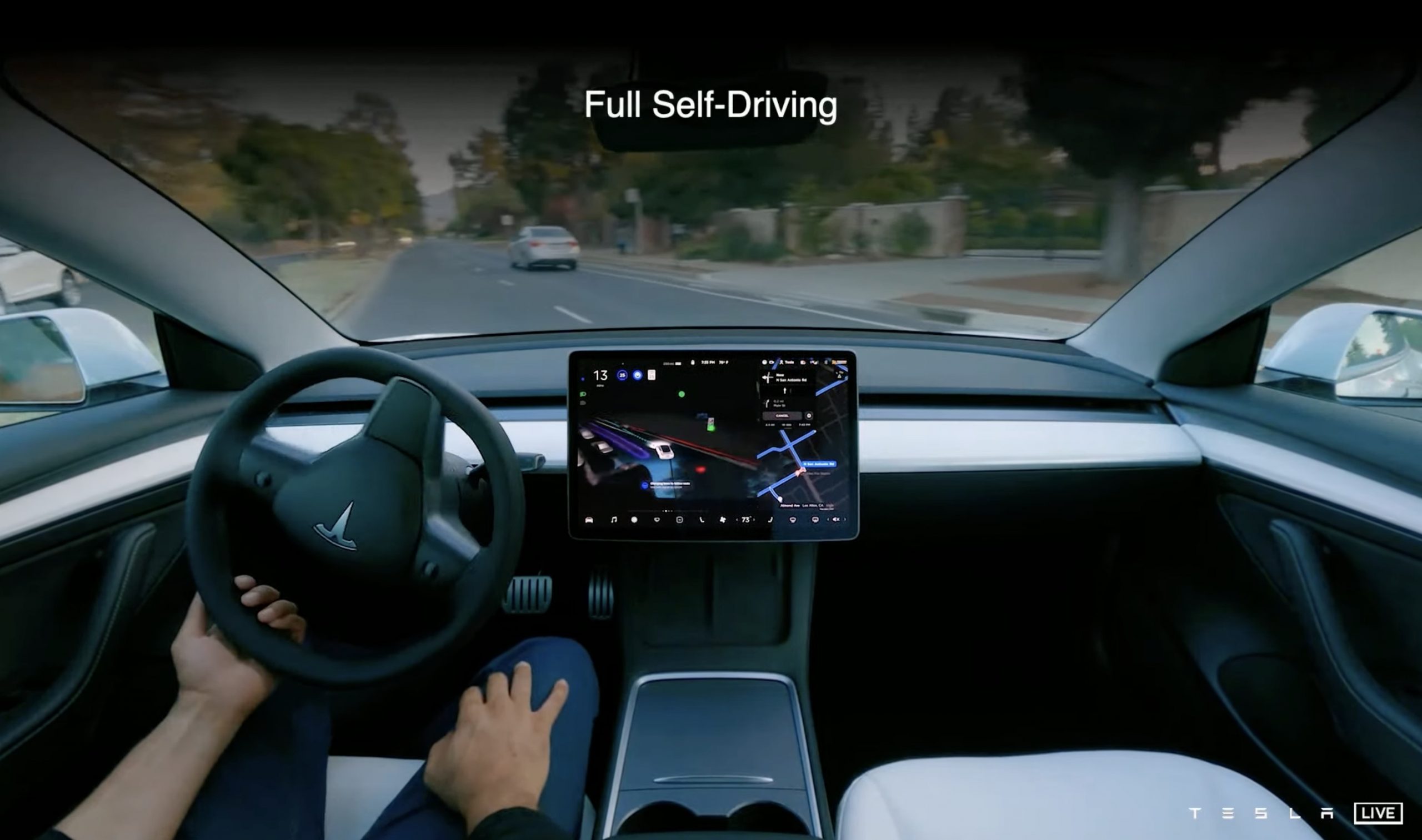
The top-tier package, known as Full Self-Driving (FSD) Supervised, is the most comprehensive suite Tesla offers. Despite the name, it is classified as an SAE Level 2 system, meaning the driver must remain fully attentive at all times. In addition to all Basic and Enhanced features, it includes:
- Autosteer on City Streets: This allows the vehicle to navigate complex urban environments, including making turns at intersections and yielding to pedestrians.
- Traffic and Stop Sign Control: The vehicle identifies stop signs and traffic lights, slowing to a stop and proceeding when the way is clear or the light turns green.
Hardware Requirements: Tesla Vision and Processing Power
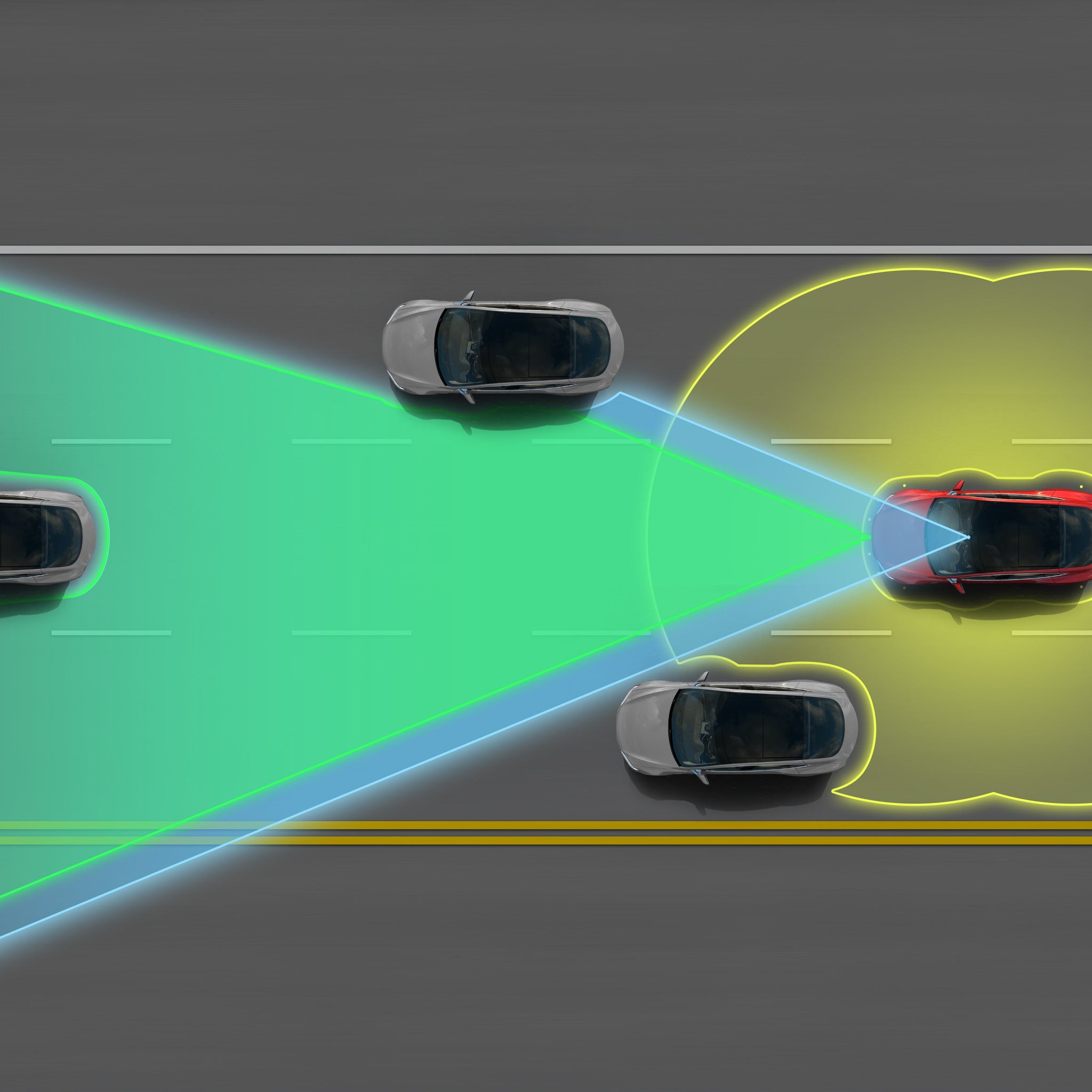
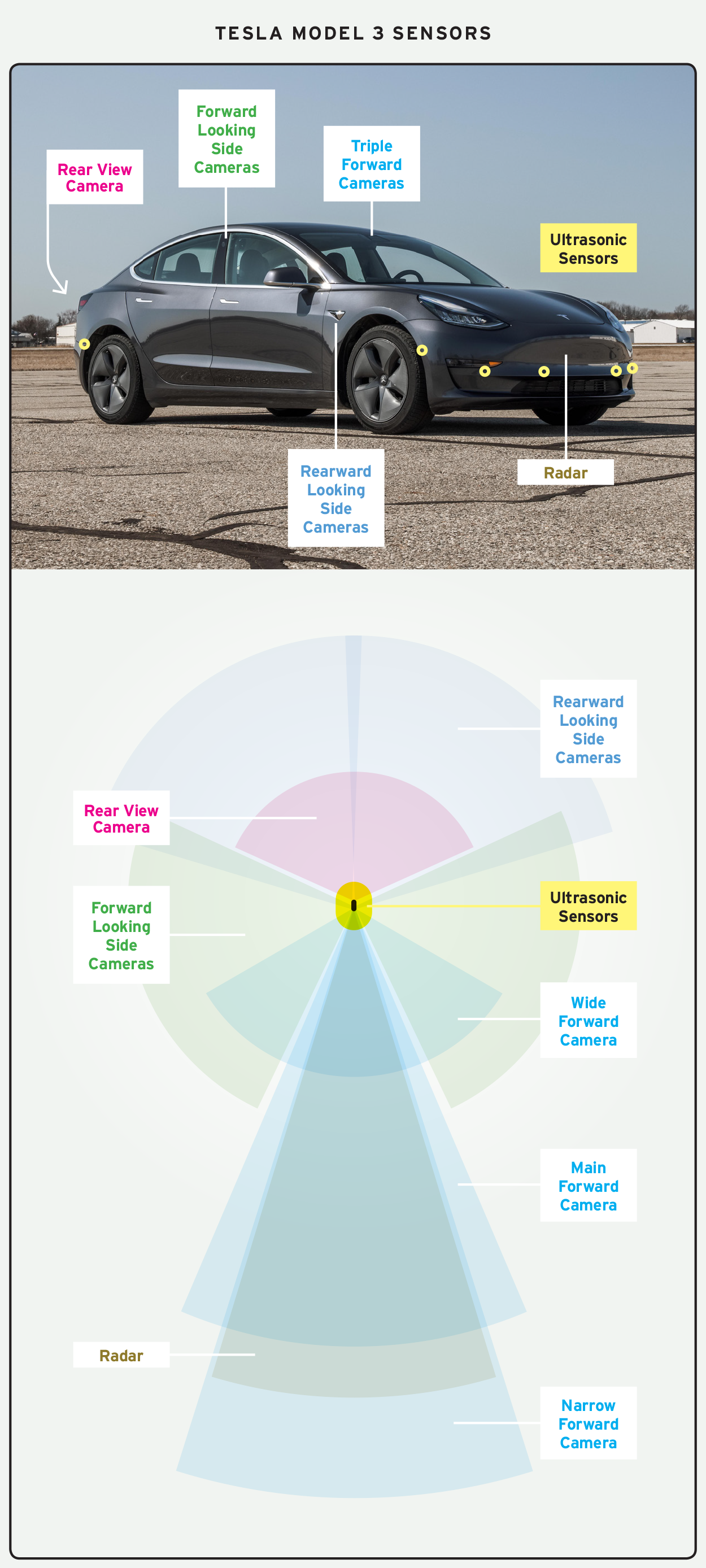
The functionality of Autopilot is deeply tied to the hardware installed in the car. By 2026, the transition to Tesla Vision is complete across the entire fleet. Tesla Vision is a camera-only system that replaces the radar and ultrasonic sensors used in older models.
Camera-Only Architecture
Starting in 2021, Tesla began removing radar from its vehicles, relying instead on eight high-resolution cameras that provide 360 degrees of visibility. The company argues that a vision-based system is more capable of mimicking human perception and reacting to the environment without the "conflicting" data that radar sometimes provided. This shift required a massive update to the neural networks that process visual data in real-time.
Hardware Generations (HW3, HW4, and HW5)
The "brain" of the Autopilot system is the computer responsible for running these neural networks.
- Hardware 3 (FSD Computer): Introduced in 2019, this was the first custom-designed Tesla chip capable of handling the high-frame-rate processing required for city street driving.
- Hardware 4 (AI 4): Rolling out extensively in 2024 and 2025, HW4 introduced higher-resolution cameras and a more powerful processor, allowing the car to "see" further and react faster.
- Hardware 5 (AI 5): Vehicles manufactured in 2026 may feature the latest iterations of Tesla's AI hardware, designed to handle the increasingly complex data required for true autonomous breakthroughs.
While older vehicles with Hardware 2.5 can still run Basic Autopilot, they often require a hardware retrofit to access the full suite of FSD features.
Comparing Tesla Autopilot Tiers
The following table outlines the current feature availability across the three primary software packages as of 2026.
| Feature | Basic Autopilot | Enhanced Autopilot | FSD (Supervised) |
|---|---|---|---|
| Traffic-Aware Cruise Control | Included | Included | Included |
| Autosteer (Lane Centering) | Included | Included | Included |
| Auto Lane Change | No | Included | Included |
| Navigate on Autopilot | No | Included | Included |
| Autopark & Summon | No | Included | Included |
| Traffic Light & Stop Sign Control | No | No | Included |
| Autosteer on City Streets | No | No | Included |
| Active Supervision Required | Yes | Yes | Yes |
Cost and Subscription Models
Tesla has shifted its pricing strategy to make advanced features more accessible via recurring payments rather than high upfront costs. As of 2026, the costs for these packages generally fall into two categories:
- One-Time Purchase: Owners can buy the FSD package outright at the time of vehicle delivery or via the Tesla app later. While prices have fluctuated, this option typically appeals to those who plan to keep their vehicle for five or more years.
- Monthly Subscription: For those who want to test the features or only use them for long road trips, Tesla offers a monthly subscription for FSD. This model has become increasingly popular as it eliminates the high entry barrier and allows for flexibility.
It is important to note that these software purchases are typically tied to the vehicle, not the owner's account, though Tesla has occasionally offered "FSD transfers" during specific promotional periods.
Safety, Limitations, and Driver Responsibility
The most critical aspect of Tesla Autopilot in 2026 remains the distinction between "automated" and "autonomous." Every Tesla system currently available is a driver-assist system, not a replacement for a driver.
The Strike System and Driver Monitoring
To ensure safety and comply with NHTSA (National Highway Traffic Safety Administration) guidelines, Tesla uses a robust driver monitoring system. This includes:
- Cabin Camera: A camera located above the rearview mirror monitors the driver's eyes and head position to ensure they are looking at the road.
- Steering Wheel Torque: The system detects "resistance" on the wheel to ensure the driver's hands are present.
- Autopilot Suspensions: If the system detects repeated inattentiveness, it will issue a "strike." Accumulating five strikes results in a temporary suspension of Autopilot privileges, a safety measure enforced to prevent misuse.
Operational Limitations
Autopilot is not infallible. Its performance can be significantly degraded by environmental factors such as:
- Heavy Weather: Torrential rain, snow, or thick fog can obscure the cameras' view, causing the system to disengage or limit its speed.
- Complex Roadwork: Temporary lanes, cones, and hand signals from construction workers can sometimes confuse the neural networks.
- Bright Sunlight: Direct glare into the camera lenses can occasionally lead to "blindness" in the system, requiring the driver to take immediate control.
Frequently Asked Questions
Can a Tesla drive itself while I sleep?
No. There is currently no Tesla vehicle that allows for "unsupervised" driving. You must remain awake, attentive, and ready to take over the controls at any second. Sleeping while any version of Autopilot is engaged is a violation of the terms of use and is extremely dangerous.
Is Autopilot free on used Teslas?
If you purchase a used Tesla directly from Tesla, the listing will specify which Autopilot package is included. If buying from a third party, you should check the "Software" menu on the car's touchscreen. Basic Autopilot is standard on almost all models built after 2019, but Enhanced Autopilot or FSD only stays with the car if the original owner paid for the full software license and did not remove it.
Does Autopilot work on all roads?
Basic Autopilot and Enhanced Autopilot are primarily designed for highways with clear lane markings and controlled access (on-ramps and off-ramps). Full Self-Driving (Supervised) is designed to function on city streets and residential roads, but even then, it may struggle in areas with poor signage or unique local traffic patterns.
Do I need an internet connection for Autopilot?
The core driving functions of Autopilot do not require an active internet connection to operate, as the processing happens locally on the vehicle's onboard computer. However, features like Navigation and downloading the latest software/map updates do require a cellular or Wi-Fi connection.
How do I turn on Autopilot?
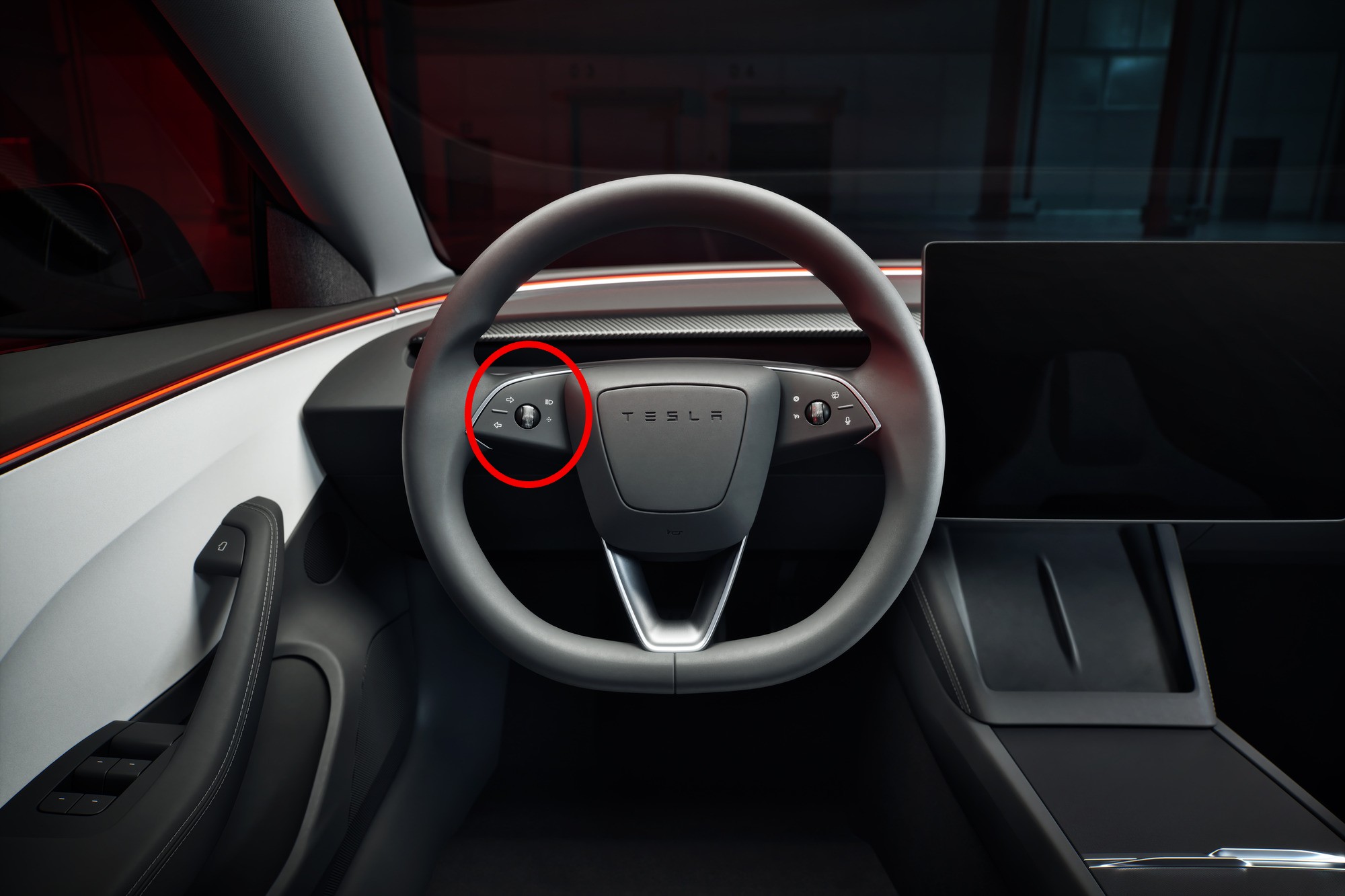
In most models, Autopilot is engaged by pulling down once on the gear selector stalk (on older Model 3/Y) or by pressing the right scroll wheel/selecting it on the screen (on newer stalkless models). A double-pull or double-press is typically required to engage the full steering assist, indicated by a blue steering wheel icon on the display.
Practical Recommendation for Buyers
If you are considering a Tesla in 2026, the best approach is to start with the standard Basic Autopilot that comes with the car. Because Tesla offers the ability to upgrade via the mobile app at any time, there is no need to commit to the expensive FSD package upfront unless you are certain you will use the city-driving features daily.
For the majority of drivers, the standard features provide a significant reduction in fatigue during long highway commutes. If you find yourself wanting more convenience for lane changes, consider the monthly FSD subscription for a single month to evaluate whether the technology meets your specific needs and local driving conditions.
Image Gallery