Human Survivors in the Planet of the Apes Franchise: Lore, Evolution, and Continuity
The fate of human survivors in the Planet of the Apes franchise spans two distinct continuity eras—the original 20th-century film series and the 21st-century reboot trilogy and its sequels—illustrating a grim descent from global techno...
The fate of human survivors in the Planet of the Apes franchise spans two distinct continuity eras—the original 20th-century film series and the 21st-century reboot trilogy and its sequels—illustrating a grim descent from global technological masters to hunted remnants, mute beasts, and eventually marginalized primitives across a radically transformed Earth.
Contents
The Dual Continuities of Human Survival
Understanding how human survivors fit into the Planet of the Apes universe requires looking at how the franchise handles time, evolution, and catastrophe. Across both major cinematic iterations, humanity's downfall is never presented as a single random accident, but rather as a systemic ecological and biological failure. When primates acquire sapience and speech through viral or evolutionary means, human society fractures under the weight of pandemics, nuclear warfare, and social collapse.
In the classic 1968–1973 film pentalogy (beginning with Planet of the Apes and concluding with Battle for the Planet of the Apes), human survivors are ultimately reduced to a mute, sub-intelligent underclass dominated by an advanced ape civilization, though remnants of technological humanity persist underground. Conversely, the modern reboot series (starting with 2011's Rise of the Planet of the Apes and continuing through 2024's Kingdom of the Planet of the Apes) charts a more direct biological trajectory: a synthetic retrovirus called ALZ-113 simultaneously enhances ape intelligence while inducing a fatal pandemic known as the Simian Flu in humans, wiping out the vast majority of the population and causing those who survive to regress in speech and cognitive function over successive generations.
The Classic Era: Underground Dwellers and Mute Wastelands
The original 1968 film starring Charlton Heston as astronaut George Taylor established the initial template for human survival in an ape-dominated world. In this timeline, Earth's surface humanity had regressed into feral, mute hunter-gatherers who wore animal skins and lived in fear of mounted gorilla hunting parties. These surface humans lacked higher cognitive function, symbolic language, and societal organization, treated by chimpanzees, gorillas, and orangutans as pests or experimental subjects.
However, the classic continuity introduced a vital twist in Beneath the Planet of the Apes (1970): a sub-faction of human survivors living in the radioactive ruins of New York City. These underground mutants survived the nuclear holocaust that devastated the surface world centuries prior. To survive the harsh fallout, they developed powerful telepathic abilities and worshipped an undetonated Omega Bomb as a divine instrument of peace and destruction.
| Feature / Aspect | Classic Era (1968–1973) | Modern Reboot Era (2011–Present) |
|---|---|---|
| Primary Cause of Fall | Global nuclear war | ALZ-113 retrovirus / Simian Flu pandemic |
| Surface Human Status | Mute, feral hunter-gatherers | Declining speech, scattered uninfected survivors |
| Underground Humans | Telepathic mutants worshipping a nuclear weapon | Militarized remnants (e.g., Alpha-Omega military units) |
| Ape Society Status | Highly stratified caste system with centralized law | Diverse tribal clans, some with distorted interpretations of Caesar |
The Modern Reboot Era: The Simian Flu and Mutated Strains
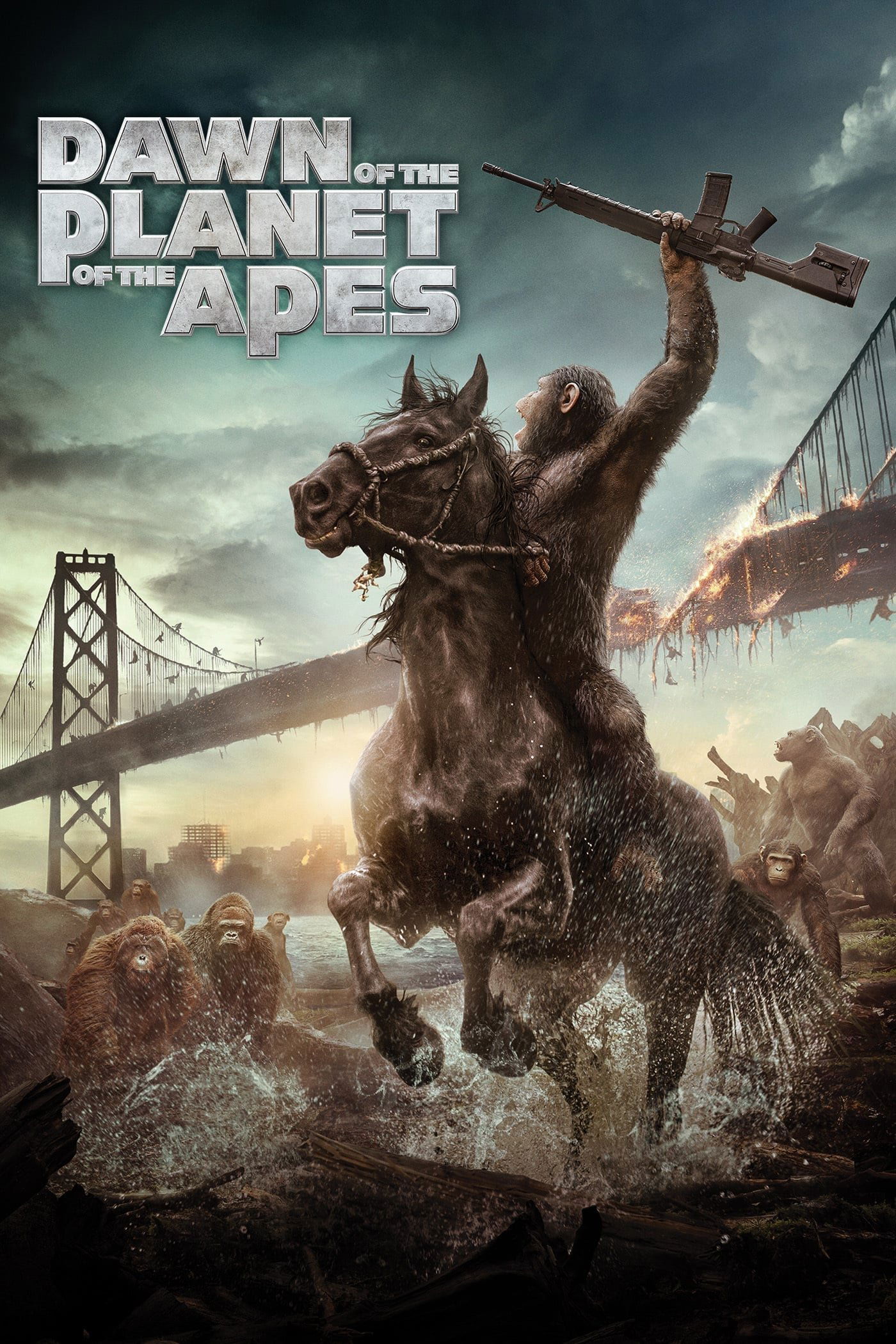
The modern prequel and sequel series—comprising Rise of the Planet of the Apes (2011), Dawn of the Planet of the Apes (2014), War for the Planet of the Apes (2017), and Kingdom of the Planet of the Apes (2024)—offers a granular, scientifically grounded exploration of human extinction. The catalyst is the ALZ-113 virus, originally engineered as a cure for Alzheimer's disease in humans. While it exponentially increases intelligence in simians like Caesar, it proves lethal to baseline humans, triggering the global pandemic known as the Simian Flu.
As depicted in Dawn and War, human survivors cluster in heavily fortified outposts, military installations, or isolated urban pockets. Resources quickly dwindle, leading to brutal conflicts between desperate human factions and Caesar's growing ape colony. By the events of War for the Planet of the Apes, a dangerous mutation of the Simian Flu emerges. Rather than killing its human hosts outright, this mutated strain strips survivors of their higher cognitive faculties, robbing adults of speech and reverting children to a mute, primitive state while leaving them active carriers of the pathogen.
The Descent Into Feral Primitivism
Centuries after the initial collapse of human civilization, the long-term biological consequences take full effect. As explored in Kingdom of the Planet of the Apes, humanity has fractured into scattered, entirely feral tribes of hunter-gatherers who live on the margins of various technologically developing ape kingdoms.
These modern feral humans rarely speak, possess no organized governance, and are viewed by most apes as dangerous animals or sources of manual labor. Yet, the presence of rare, non-feral humans—or pockets of survivors who have retained knowledge of ancient human infrastructure, books, and machinery—serves as a constant source of tension. Ape leaders, particularly tyrannical figures who twist the teachings of historical leaders like Caesar, view any vestige of human intellect as an existential threat to the established ecological order.
Practical Survival Dynamics in an Ape World
For human survivors attempting to navigate a planet ruled by primates, survival requires adhering to strict ecological and behavioral constraints. The dynamics of survival shift drastically depending on whether a human encounters intelligent chimpanzees, stoic orangutans, or aggressive gorillas.
- Concealment and Silence: Because intelligent apes patrol territories aggressively, surface survivors must avoid making fires, using loud machinery, or leaving clear footprints.
- Avoiding Domesticated Simian Zones: Ape settlements, agricultural fields, and military outposts are heavily guarded. Feral humans are frequently rounded up, while intelligent survivors are shot on sight or captured for interrogation.
- Exploiting Abandoned Infrastructure: Long-abandoned subway systems, military bunkers, and high-rise ruins provide shelter from the elements and predators, though these locations often harbor toxic environmental hazards or unstable structures.
- Navigating Factions: In eras where human military remnants still operate (such as Colonel McCullough's rogue faction in War), survivors face internal tyranny, forced labor, and brutal purges if they show signs of the mutated virus.
Frequently Asked Questions
Why did humans lose the ability to speak in Planet of the Apes?
In the modern continuity, human speech loss is caused by the mutated Simian Flu virus, which attacks neurological centers associated with language and higher cognition while allowing infected individuals to survive. In the classic continuity, centuries of societal collapse, radiation exposure, and cultural regression caused humans to lose complex language over multiple generations.
Are all humans completely mute in the modern sequel films?
No. While the Simian Flu pandemic and its subsequent mutations rendered the vast majority of humans mute or feral, small numbers of individuals retained immunity or intelligence. However, by the time period of Kingdom of the Planet of the Apes, generations of isolation have left the vast majority of humanity in a primitive, non-verbal state.
Do human survivors possess any advanced technology in the later eras?
Generally, no. Most surface survivors lose access to electricity, manufacturing, and digital networks within decades of the collapse. While underground mutants in the classic series maintained advanced weaponry like nuclear warheads, surface humans across both continuities were forced to scavenge primitive tools, weapons, and clothing.
How do intelligent apes treat surviving humans?
Treatment varies by era and ape faction. In some societies, humans are hunted for sport or viewed as pests. In others, they are enslaved for agricultural or construction labor. Under Caesar's early leadership in the reboot trilogy, apes generally sought to avoid humans entirely, though rising conflicts eventually forced a state of open warfare.
Next Actions and Further Exploration
To gain a complete understanding of how human survivors shape the narrative arc of the franchise, viewers and researchers should examine the films in chronological order, paying close attention to the environmental and viral shifts between Rise and Kingdom. Analyzing the transition from militarized human resistance to scattered feral populations highlights the central thematic question of the franchise: whether intelligence is an exclusive birthright or an evolutionary burden.
Image Gallery