Understanding Baby P Injuries: Historical Context, Legal Frameworks, and Child Protection Impact
The tragic case of Peter Connelly—widely known in public records as "Baby P"—involved severe, systematic physical injuries and abuse that exposed catastrophic failures within British child protection services, sparking sweeping reforms...
The tragic case of Peter Connelly—widely known in public records as "Baby P"—involved severe, systematic physical injuries and abuse that exposed catastrophic failures within British child protection services, sparking sweeping reforms across social work, healthcare protocols, and legal accountability frameworks.
Contents
The Historical Context of the Baby P Case
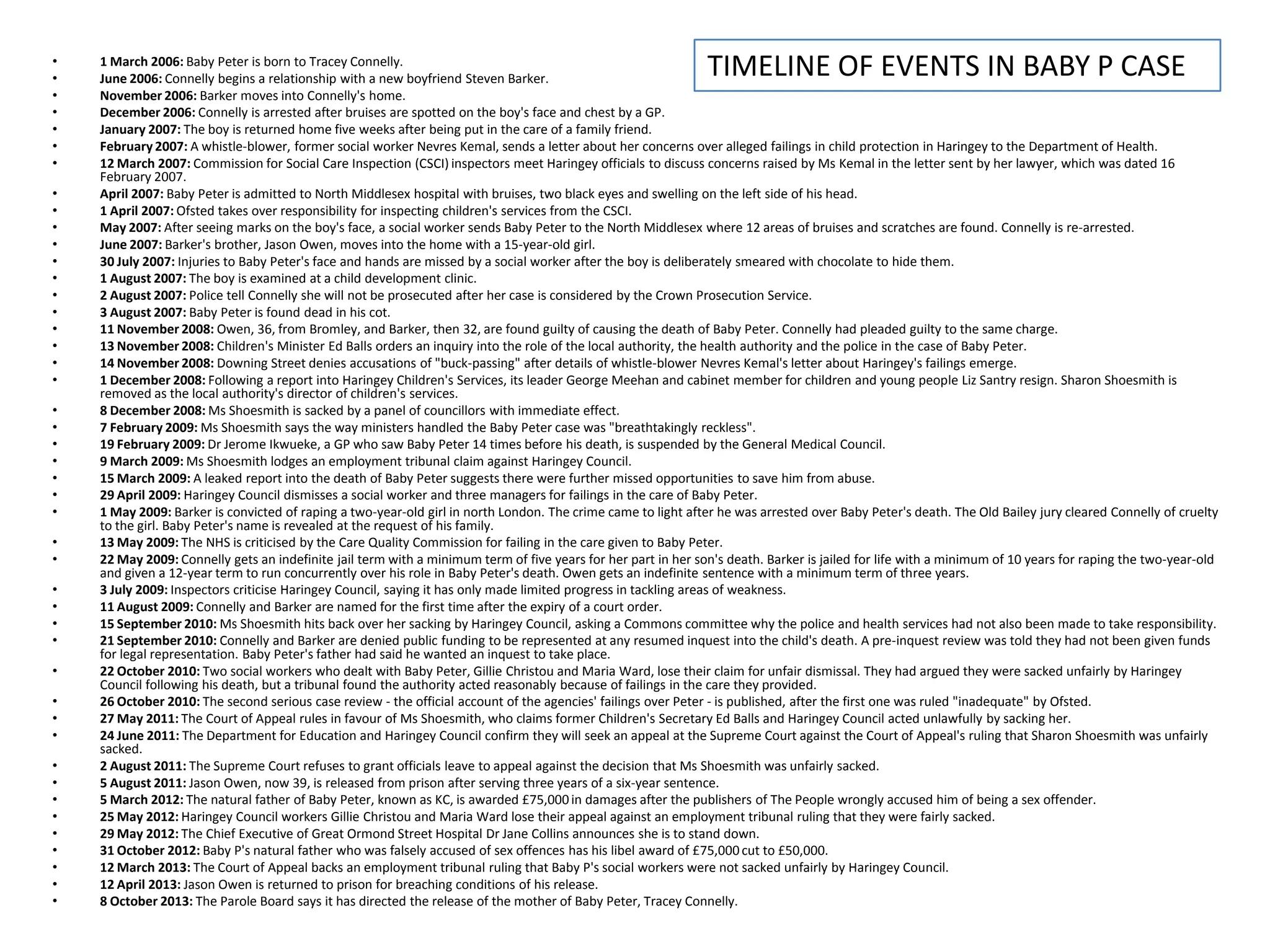
The case of Peter Connelly centers on a 17-month-old toddler from Haringey, North London, who died in August 2007. Over an eight-month period leading up to his death, Peter sustained more than 50 injuries, including a broken back and fractured ribs, despite being on the London borough's "at-risk" register and receiving numerous visits from social workers, police officers, and medical professionals.
The widespread public outcry following the trial and conviction of Peter's mother, her partner, and their lodger fundamentally altered how child protection cases are handled in the United Kingdom. It forced a critical re-examination of inter-agency communication, risk assessment models, and the professional accountability of frontline workers. Rather than remaining an isolated local tragedy, the case became a defining benchmark for systemic vulnerabilities in child safeguarding infrastructure.
Nature and Classification of Pediatric Injuries in Abuse Cases
When medical professionals and forensic pathologists evaluate severe pediatric injuries, they utilize standardized diagnostic criteria to distinguish accidental trauma from non-accidental injuries (NAI). In cases resembling the severity of Baby P injuries, clinical evaluations typically document a complex matrix of acute and healing trauma.
Skeletal Trauma and Fractures
Non-accidental skeletal injuries in infants and toddlers often exhibit specific patterns that raise immediate clinical suspicion. These include:
- Rib Fractures: Particularly posterior or multiple rib fractures occurring at different stages of healing, often resulting from squeezing or shaking forces.
- Metaphyseal Fractures: Classic metaphyseal lesions (CMLs) near the growth plates of long bones, typically caused by twisting or pulling forces.
- Skull Fractures: Complex, depressed, or multiple fractures that are inconsistent with routine household falls from low heights.
Soft Tissue and Internal Manifestations
Severe physical abuse frequently involves blunt force trauma to the abdomen and head. Diagnostic imaging and post-mortem examinations in catastrophic cases often reveal:
- Abusive Head Trauma (AHT): Encompassing subdural hematomas, retinal hemorrhages, and cerebral edema caused by violent shaking or impact.
- Visceral Injuries: Lacerations or hematomas of the liver, spleen, or intestines resulting from direct blows or compression.
- Delayed Presentation: A critical clinical indicator is a significant time gap between the occurrence of severe trauma and seeking medical attention, during which injuries deteriorate.
| Injury Type | Clinical Indicator | Typical Accidental vs. Non-Accidental Context |
|---|---|---|
| Rib Fractures | Posterior/healing fractures | Rare in accidental falls; highly indicative of squeezing or abuse. |
| Long Bone Fractures | Spiral or metaphyseal breaks | Toddler fractures occur, but complex or multiple breaks suggest abuse. |
| Head Trauma | Subdural hemorrhage + retinal tears | Associated with violent shaking or high-velocity impact. |
| Skin Trauma | Patterned bruising (belt, hand) | Uncharacteristic of normal play; frequently found on protected areas. |
Systemic Failures in Child Safeguarding and Social Work
The official serious case review (SCR) following the tragedy highlighted profound systemic failures among the statutory agencies responsible for safeguarding children. These breakdowns provide vital lessons for contemporary child protection systems globally.
Inter-Agency Communication Breakdowns
A primary vulnerability identified in the investigation was the failure of different agencies—including social services, the National Health Service (NHS), police, and local housing departments—to share critical information effectively. Siloed record-keeping meant that warning signs noted by a pediatrician might not be fully integrated into a social worker's risk assessment. This fragmentation allowed abusers to manipulate professionals by presenting selective narratives during home visits.
Professional Complacency and Confirmation Bias
Investigations revealed instances where frontline practitioners exhibited professional complacency, accepting parental explanations for injuries without sufficient skepticism or independent medical verification. Confirmation bias often led workers to interpret ambiguous physical signs as accidental, influenced by a reluctance to challenge parents or initiate complex legal removal proceedings. Consequently, procedural box-ticking took precedence over dynamic, child-centered risk evaluation.
Regulatory and Legislative Reforms
In the wake of the public inquiry led by Lord Laming, the United Kingdom instituted sweeping legislative and operational reforms designed to prevent similar catastrophic failures.
- The Laming Inquiry Recommendations: Emphasized clearer lines of accountability, mandatory multi-agency training, and robust supervision for social workers managing high-risk cases.
- Working Together to Safeguard Children: Updated statutory guidance that establishes clear frameworks for inter-agency cooperation, assessment standards, and timely intervention thresholds.
- Ofsted Inspections: Transitioned local authority children's services to more rigorous, independent inspection regimes capable of intervening directly in failing municipal departments.
Frequently Asked Questions
What specific types of injuries were documented in the Baby P case?
Medical examinations revealed over 50 distinct injuries, including a fractured spine, eight broken ribs, missing fingernails, bruised and swollen internal organs, and extensive soft tissue trauma resulting from months of sustained physical abuse.
How do modern child protection systems prevent similar failures?
Modern frameworks mandate multi-agency information sharing, mandatory reporting standards for healthcare personnel, standardized risk assessment tools, and independent oversight through regular local authority inspections.
What is the difference between accidental trauma and non-accidental injury (NAI)?
Accidental injuries typically match the developmental age and history provided by caregivers, whereas non-accidental injuries often display patterns—such as symmetrical bruising, specific fracture types, or injuries inconsistent with the reported mechanism—that strongly suggest inflicted harm.
How are social workers trained to recognize hidden child abuse?
Training emphasizes behavioral indicators in children, parental dynamics (such as evasiveness or reluctance to allow examinations), mandatory cross-agency data checks, and maintaining professional curiosity during home visits.
Where can professionals report suspected child abuse or neglect?
Professionals must follow local statutory safeguarding pathways, contacting local authority children's social care services or emergency law enforcement agencies immediately when a child is deemed to be at risk of immediate harm.
Image Gallery