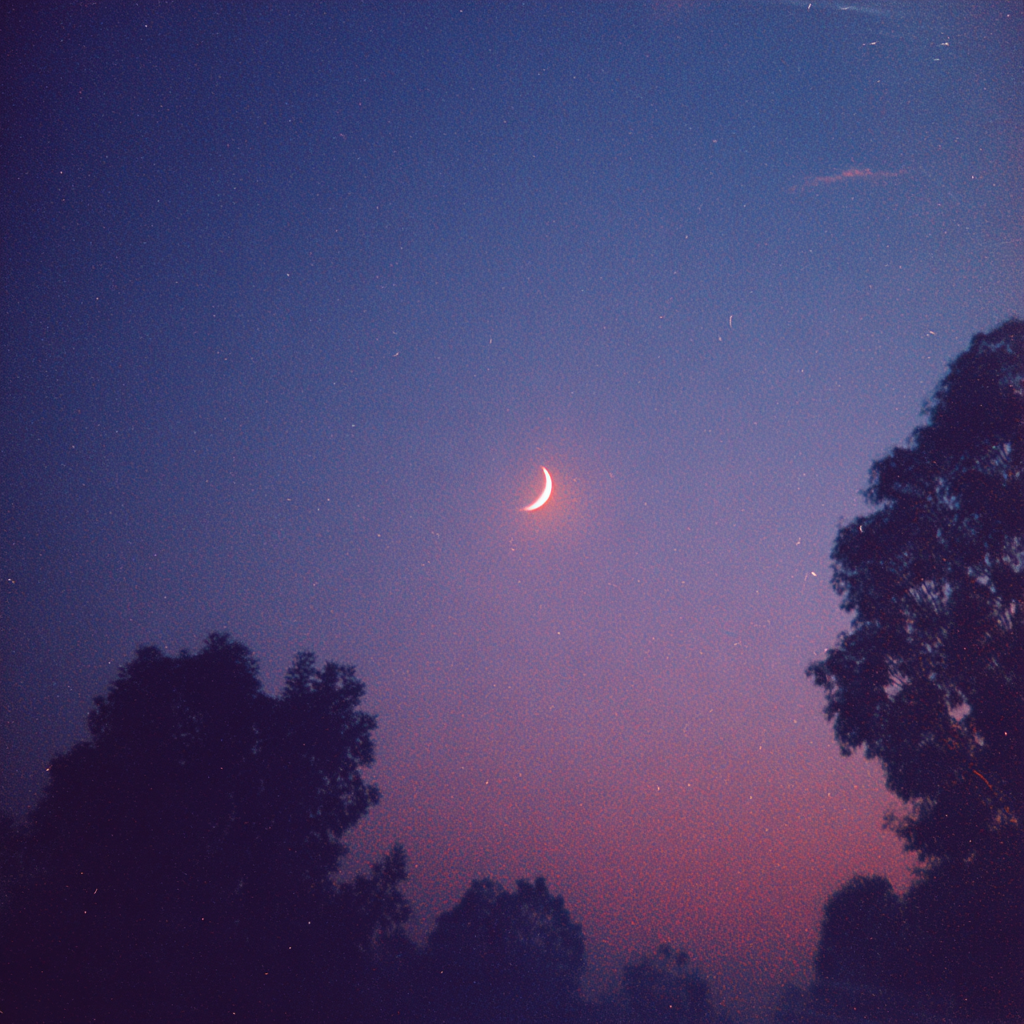
Understanding the Nueva Luna: Its Definition, Astronomical Context, and Significance
A "Nueva Luna"—Spanish for "New Moon"—refers to the first phase of the lunar cycle, occurring when the Moon is positioned between the Earth and the Sun, rendering its illuminated side invisible from our perspective. This astronomical e...
A "Nueva Luna"—Spanish for "New Moon"—refers to the first phase of the lunar cycle, occurring when the Moon is positioned between the Earth and the Sun, rendering its illuminated side invisible from our perspective. This astronomical event marks the beginning of the synodic month and serves as a fundamental anchor for lunar calendars, agricultural cycles, and various cultural traditions across the Spanish-speaking world.
Contents
The Astronomical Mechanics of the Nueva Luna
To understand why the Nueva Luna matters, one must first look at the mechanics of the Earth-Moon-Sun system. The Moon does not produce its own light; it reflects light from the Sun. A "new moon" occurs during a specific alignment known as a syzygy, where the Moon passes between the Earth and the Sun.
From the perspective of an observer on Earth, the hemisphere of the Moon facing us is entirely in shadow during this phase. Because the Moon is so close to the Sun in the sky, it rises and sets at approximately the same time as the Sun. This makes the Nueva Luna nearly impossible to observe with the naked eye, particularly because the brilliance of the solar disc overwhelms any faint reflection that might reach the lunar surface.
This phase marks the starting point of the lunar cycle, which lasts approximately 29.5 days. This duration is known as a synodic month, which differs from a sidereal month (the time it takes for the Moon to orbit Earth relative to the stars, which is about 27.3 days). The discrepancy exists because the Earth is also orbiting the Sun, meaning the Moon must travel slightly further to reach the same position relative to the Sun again.
Why the Nueva Luna Matters
The significance of the Nueva Luna extends far beyond the realm of pure astronomy. It acts as a temporal marker that has influenced human activity for millennia.
1. Temporal Synchronization
The Nueva Luna is the universal "reset" button for lunar calendars. Because the phases of the Moon are globally synchronized—the New Moon occurs at a specific moment in time regardless of your location on Earth—it provides a reliable way to track time independent of the mechanical clock. Many cultures, including those observing Islamic, Hebrew, and certain Buddhist traditions, rely on the sighting of the first sliver of the moon (immediately following the Nueva Luna) to begin new months and religious holidays.
2. Agricultural and Environmental Impact
In many traditional farming communities, the Nueva Luna is believed to influence sap flow and moisture levels in the soil. While scientific consensus on "moon gardening" remains mixed, many practitioners use the New Moon as a time for planting seeds that require deeper root development, as the gravitational pull of the Sun and Moon combined is thought to encourage downward energy flow. Furthermore, because the Moon is invisible at night during the Nueva Luna, the darkest skies of the month offer the best conditions for astronomical observation and nighttime navigation.
3. Tidal Dynamics
The Nueva Luna plays a critical role in the intensity of tides. During the New Moon phase, the Sun and the Moon are aligned on the same side of the Earth. Their combined gravitational forces exert a stronger-than-average pull on the Earth’s oceans, resulting in "spring tides." These tides produce higher-than-normal high tides and lower-than-normal low tides. Coastal industries, maritime logistics, and marine biology research rely heavily on these patterns to predict water levels and understand shoreline ecosystems.
Comparing Lunar Phases
Understanding the Nueva Luna requires placing it within the context of the full lunar cycle. The following table illustrates the major phases and their characteristics.
| Phase | Illumination | Visibility | Tidal Impact |
|---|---|---|---|
| Nueva Luna | 0% | Invisible | High (Spring Tide) |
| First Quarter | 50% | Afternoon/Evening | Moderate (Neap Tide) |
| Full Moon | 100% | All Night | High (Spring Tide) |
| Last Quarter | 50% | Midnight/Morning | Moderate (Neap Tide) |
Cultural and Symbolic Relevance
In literature, folklore, and psychology, the Nueva Luna is frequently associated with beginnings, introspection, and hidden potential. Unlike the Full Moon, which is often associated with culmination, madness, or externalized energy, the Nueva Luna is viewed as a period of quiet transition.
In many Latin American and Mediterranean cultures, the Nueva Luna is historically treated as a time to start new projects, set intentions, or perform rituals intended to "seed" the growth of a business or personal endeavor. This symbolic weight provides a psychological framework for goal-setting, effectively using the lunar cycle as a recurring reminder to reflect on past performance and plan for future success.
Scientific Observation and Verification
For modern researchers, the Nueva Luna remains a subject of intense study, particularly regarding "earthshine." When the Moon is in the narrow crescent phase just after the New Moon, the portion of the moon not lit by the sun is sometimes visible because it is being lit by sunlight reflected off the Earth.
Determining the exact moment of the Nueva Luna is a precise calculation made by national observatories. The transition is defined by the moment the ecliptic longitudes of the Sun and the Moon are identical. In 2026, these moments are calculated to the second by organizations like the U.S. Naval Observatory and international astronomical unions to assist in navigation, satellite communication, and climate research.
Frequently Asked Questions
1. Is the Nueva Luna the same as a solar eclipse? No. While a solar eclipse can only occur during a New Moon, a New Moon does not always cause an eclipse. An eclipse requires the Moon to be perfectly aligned with the Earth and Sun in a way that its shadow touches the Earth. This only happens when the Moon crosses the ecliptic plane at the same time it is in the New Moon phase.
2. How long does the Nueva Luna last? The astronomical New Moon is an instantaneous event—a specific point in time. However, in terms of visual observation, the "dark" phase of the moon generally lasts about 1 to 3 days, during which time the moon is too close to the sun to be visible from Earth.
3. Does the Nueva Luna affect human behavior? While cultural folklore often links the full moon to increased erratic behavior, there is no statistically significant scientific evidence that the New Moon causes changes in human psychology or physiology. Most perceived effects are attributed to confirmation bias.
4. Can I see the Nueva Luna with a telescope? Because the Moon is positioned between the Earth and the Sun, the side facing us is effectively black. Even with a telescope, you will not see the surface of the moon during the peak of the new moon phase; you will only see the surrounding star field.
5. Why do tide charts track the New Moon? Tide charts track the New Moon because the alignment of the Sun, Moon, and Earth creates the maximum gravitational force, resulting in the most extreme tidal range. This is essential for safe navigation in shallow harbors and for identifying the best times for coastal resource harvesting.
Practical Next Steps for Observation
If you wish to begin tracking the Nueva Luna to better understand local tides or to simply improve your ability to navigate by the stars, the most practical approach is to use a dedicated astronomical calendar or a specialized app.
- Verify your location: Tidal impacts and the exact "appearance" of the first sliver of the moon vary based on your longitude and latitude.
- Use reliable data: Consult resources provided by your national astronomical authority for the precise timing of the next New Moon in your time zone.
- Plan for darkness: If you are interested in stargazing, schedule your outings during the 48-hour window surrounding the peak of the Nueva Luna to take advantage of the lack of lunar light pollution.
By understanding the mechanics of the Nueva Luna, you gain a better appreciation for the cycles that dictate everything from the rise of our oceans to the long-established rhythms of human timekeeping.
Image Gallery