The Ronald Reagan Descendants in Modern America
The descendants of Ronald Reagan—the 40th President of the United States and 33rd Governor of California—navigate modern American life across distinct career paths in media, writing, politics, and the arts, maintaining varying degrees...
The descendants of Ronald Reagan—the 40th President of the United States and 33rd Governor of California—navigate modern American life across distinct career paths in media, writing, politics, and the arts, maintaining varying degrees of connection to their grandfather's formidable political and cultural legacy.
Contents
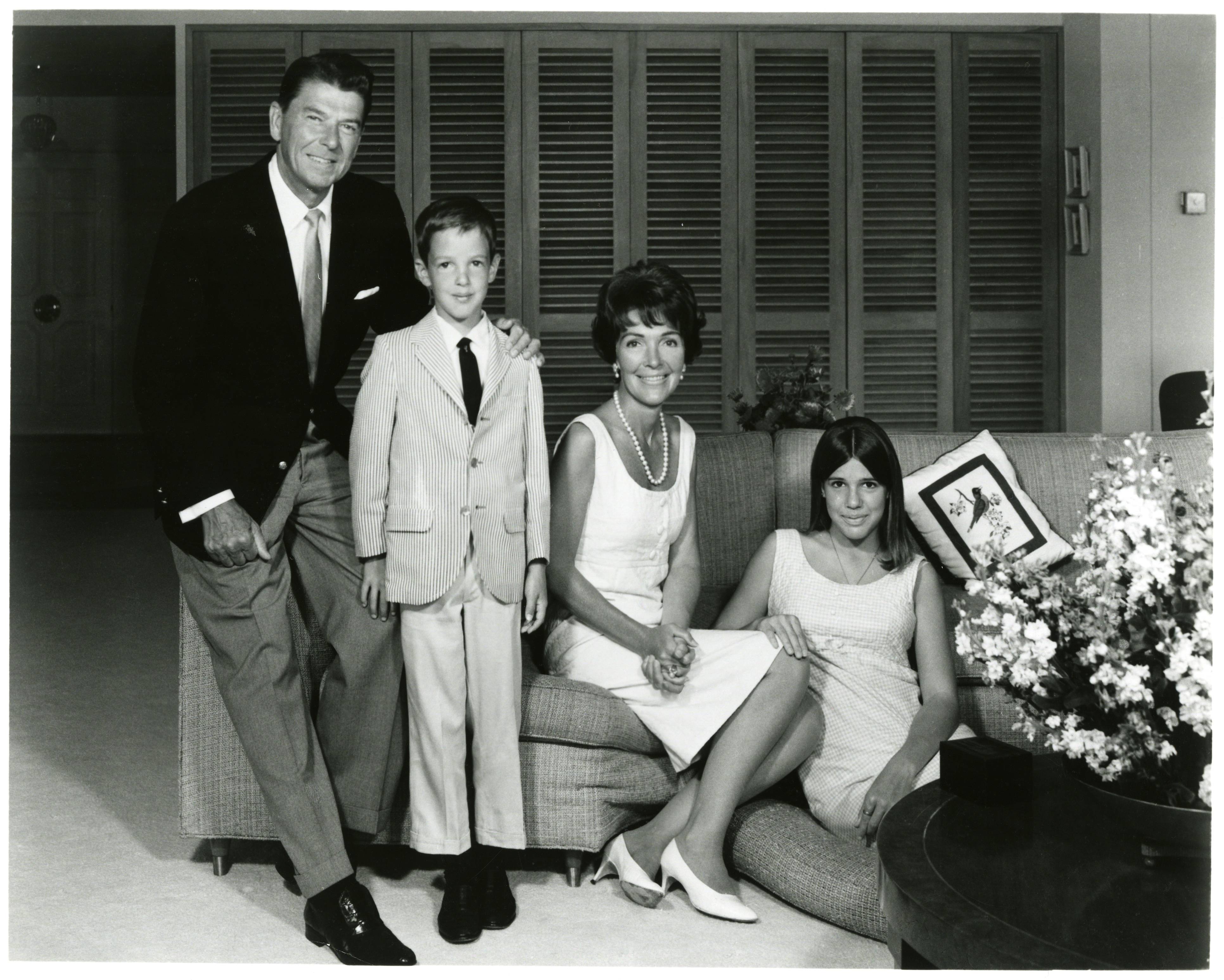
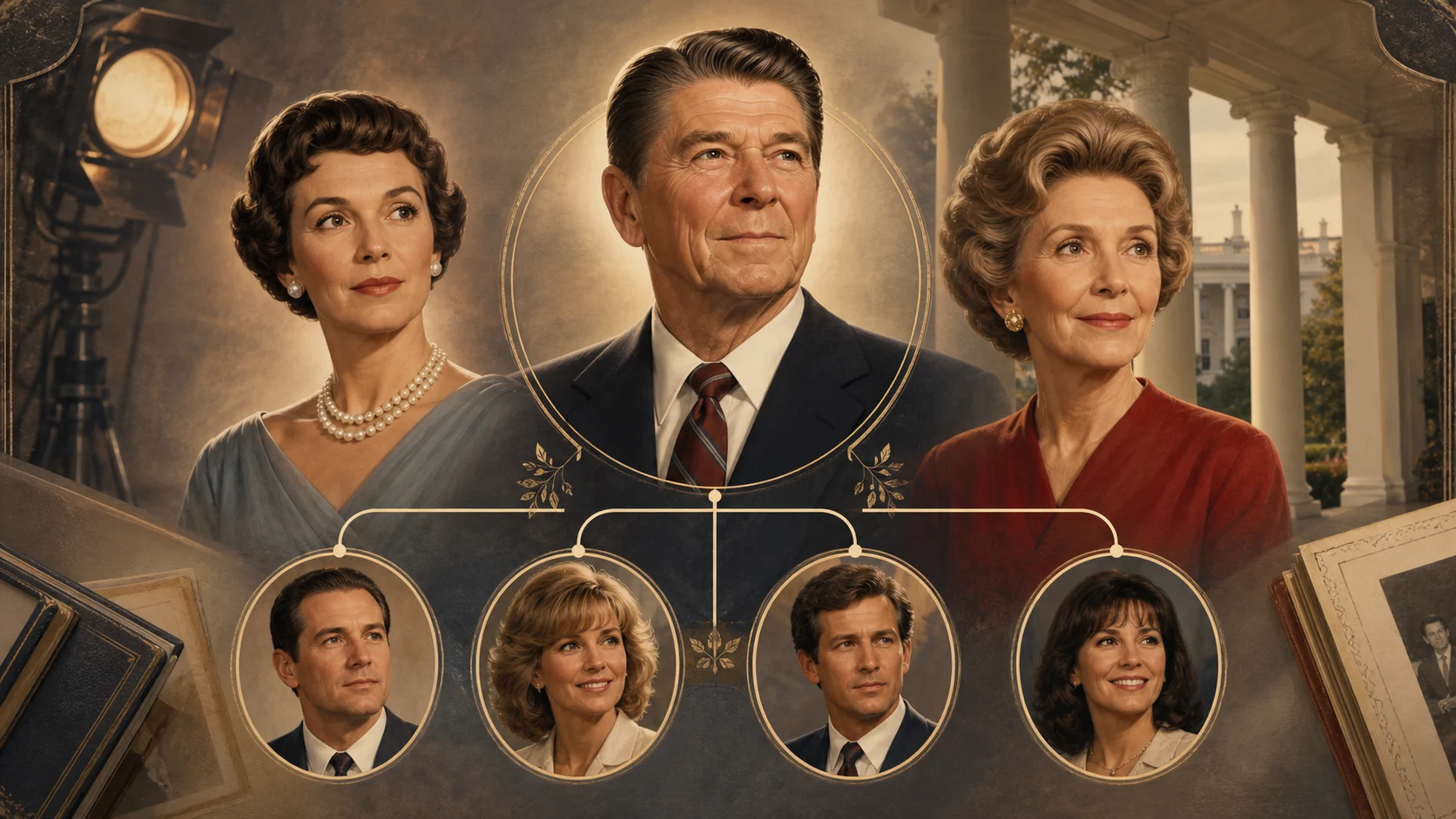
Tracing the lineage of a United States president offers a fascinating lens into how dynastic families evolve across generations. While some political families, such as the Adamses, Roosevelts, and Bushes, built multi-generational political machines, the Reagan family tree took a markedly different trajectory. Ronald Reagan was married twice: first to actress Jane Wyman, with whom he had Maureen and adopted Michael, and later to Nancy Davis, with whom he had Patti and Ron. In modern America, these descendants occupy diverse spaces far removed from the daily grind of Washington, D.C., though the weight of the Reagan name continues to shape their public profiles, creative endeavors, and civic commentary.
The Reagan Family Tree: An Overview of Lineage and Marriages
Understanding the modern status of the Ronald Reagan descendants requires examining the complex structure of his blended family. Ronald Reagan’s domestic life spanned the golden age of Hollywood and the height of Cold War geopolitics. His first marriage to Jane Wyman produced two biological children and an adopted son. Following their divorce, Reagan married Nancy Davis in 1952, establishing a partnership that defined his political ascent and presidency.
Each branch of the family tree has interacted differently with public life. Some descendants leaned into the media spotlight, while others carved out private careers in business, science, or the arts. The table below outlines Ronald Reagan’s children and their immediate offspring, illustrating the scope of the family across generations.
| Generation | Name | Relationship to Ronald Reagan | Notable Career / Focus |
|---|---|---|---|
| First Generation | Maureen Reagan | Daughter (with Jane Wyman) | Political activist, author, co-chair of RNC |
| First Generation | Michael Reagan | Adopted Son (with Jane Wyman) | Conservative talk radio host, author, speaker |
| First Generation | Patti Davis | Daughter (with Nancy Reagan) | Author, novelist, essayist |
| First Generation | Ron Reagan | Son (with Nancy Reagan) | Television host, political commentator, dancer |
| Second Generation | Cameron Reagan | Grandson (Son of Michael) | Private sector, real estate and sales |
| Second Generation | Ashley Reagan | Granddaughter (Daughter of Michael) | Private life, education support |
| Second Generation | Amanda Beggs | Granddaughter (Daughter of Maureen) | Private professional career |
Michael Reagan and the Conservative Media Sphere
As the adopted son of Ronald Reagan and Jane Wyman, Michael Reagan has been one of the most publicly vocal descendants of the 40th president. Throughout his adult life, Michael carved out a distinct identity in conservative political commentary. Operating extensively as a syndicated talk radio host and conservative author, he frequently invoked his father’s political philosophies, economic principles, and leadership style to interpret contemporary American politics.
Michael Reagan also established the Reagan Group and founded the The Reagan Cast, engaging digital audiences with commentary on governance and family legacy. Beyond media, he has been an active voice in adoption advocacy, drawing directly from his personal life story. His children, Cameron Reagan and Ashley Reagan, represent the third generation of this branch. While Cameron has occasionally participated in public events commemorating his grandfather—such as library dedications and historical retrospectives—both have largely maintained private professional lives outside the intense scrutiny of elected office or national media broadcasting.
Patti Davis and Ron Reagan: Navigating Public Expectations and Independence
The children born to Ronald and Nancy Reagan—Patti Davis and Ron Reagan—pursued paths that frequently diverged from the staunch conservatism of their father’s administration, creating dynamic public narratives throughout the 1980s and beyond.
Patti Davis, born Patricia Ann Reagan, initially pursued acting and creative writing, legally changing her last name to distance herself from her parents' political identity during her father's presidency. Over the decades, Davis evolved into a prolific author, penning autobiographies, novels, and nonfiction works exploring family dynamics, grief, and aging. Her later works, including books on navigating Alzheimer's disease—which afflicted Ronald Reagan in his post-presidency years—offered intimate reflections on caregiving and reconciliation. In modern America, Davis maintains a prominent public voice through essays and writing workshops, frequently counseling individuals on how to cope with familial estrangement and memory loss.
Ron Reagan, the younger son, eschewed traditional politics entirely. He trained as a ballet dancer with the Joffrey Ballet and later transitioned into television broadcasting, hosting programs on networks like MSNBC and contributing to various cultural commentary outlets. Ron Reagan is also an outspoken advocate for secularism and scientific research, notably campaigning for embryonic stem cell research during debates that intersected with his father's medical diagnosis. Neither Patti nor Ron pursued elected office, choosing instead to build independent cultural careers while remaining standard-bearers for their father's personal history.
The Legacy of Maureen Reagan and the Extended Family
The eldest child, Maureen Reagan, who passed away in 2001, blazed a distinct trail as an active participant in Republican Party politics. Unlike her siblings, Maureen sought elected office, running unsuccessfully for the U.S. Senate from California in 1982. She served as co-chair of the Republican National Committee and was an outspoken advocate for women's rights within the party, often bridging traditional conservative economics with moderate social viewpoints.
Maureen’s daughter, Margaret "Misha" Maureen Reva (raised as Amanda Beggs), was adopted by Maureen and her third husband, Dennis Revell. Amanda Beggs has generally avoided the political spotlight, prioritizing a private family life and corporate professional pursuits. The preservation of the Reagan legacy across these disparate branches is largely sustained through institutional entities rather than familial political dynasties. Organizations such as the Ronald Reagan Presidential Foundation and Institute in Simi Valley, California, manage the official historical record, scholarly research, and public exhibitions, relieving the descendants of the day-to-day burden of political curation.
Contemporary Cultural Relevance and Historical Preservation
In contemporary American society, the descendants of Ronald Reagan operate within a political landscape vastly different from the Reagan Revolution of the 1980s. Modern conservatism and the broader American electorate have shifted through subsequent political realignments, yet the memory of Reagan remains a powerful touchstone in political rhetoric.
While none of the surviving children or grandchildren have sought public office, their occasional essays, media appearances, and interviews serve as primary-source touchstones for historians and biographers. They offer nuanced perspectives that balance the mythos of the presidency with the realities of growing up inside a high-profile political household. Whether through Patti Davis's literary explorations of forgiveness, Michael Reagan’s conservative broadcasting, or Ron Reagan’s cultural commentary, the descendants demonstrate that a famous surname can coexist with independent professional identities in modern America.
Frequently Asked Questions
Are any of Ronald Reagan's children active in politics today?
None of Ronald Reagan's surviving children hold elected office or serve in formal political roles. While Michael Reagan remains active in conservative media commentary and writing, and Maureen Reagan was active in party leadership prior to her passing, Patti Davis and Ron Reagan focus on writing, media, and cultural advocacy rather than partisan politics.
How many children did Ronald Reagan have?
Ronald Reagan had four children across two marriages. With his first wife, Jane Wyman, he had Maureen Reagan and adopted Michael Reagan (a third child, Christine, died shortly after birth in 1947). With his second wife, Nancy Reagan, he had Patti Davis and Ron Reagan.
Do the Reagan descendants manage the Ronald Reagan Presidential Library?
No. The Ronald Reagan Presidential Library and Museum, located in Simi Valley, California, is administered by the National Archives and Records Administration (NARA) in partnership with the non-profit Ronald Reagan Presidential Foundation and Institute. The family members do not operate the facility, though they frequently participate in historical commemorations and library events.
What career paths did the Reagan grandchildren pursue?
The grandchildren, including Cameron Reagan, Ashley Reagan, and Amanda Beggs, have generally chosen careers in the private sector rather than public service or media. Their professional lives encompass fields such as business, sales, education support, and real estate, keeping them largely outside the national political spotlight.
How have the Reagan children contributed to public health awareness?
Patti Davis and other family members have written extensively about aging, family relationships, and Alzheimer’s disease. Following Ronald Reagan’s public disclosure of his Alzheimer’s diagnosis in 1994, family members utilized their platform to support caregiving networks and encourage medical research discussions.
Conclusion
The descendants of Ronald Reagan illustrate a unique chapter in American political genealogy, balancing the weight of a monumental historical legacy with personal autonomy. By pursuing careers in literature, broadcasting, and private enterprise rather than seeking political dynasties, they have redefined what it means to carry one of the most recognizable surnames in modern American history.
Image Gallery