Understanding the Characters in the Of Mice and Men Film Adaptations
The characters in the film adaptations of Of Mice and Men, specifically the definitive 1992 version directed by Gary Sinise and the classic 1939 version, serve as archetypes of the human condition during the Great Depression. These cha...
The characters in the film adaptations of Of Mice and Men, specifically the definitive 1992 version directed by Gary Sinise and the classic 1939 version, serve as archetypes of the human condition during the Great Depression. These characters represent the struggle for dignity, the weight of responsibility, and the crushing reality of failed American dreams within a predatory social hierarchy.
Contents
John Steinbeck’s 1937 novella is a staple of American literature, but its cinematic adaptations have arguably done the most to cement the visual identities of its protagonists and antagonists. Whether viewing the 1992 film starring John Malkovich and Gary Sinise or the 1939 version featuring Burgess Meredith and Lon Chaney Jr., the character dynamics remain a masterclass in tragedy. As of 2026, these films continue to be primary resources for students and cinema enthusiasts seeking to understand the psychological depth of Steinbeck’s work.
George Milton: The Pragmatic Protector
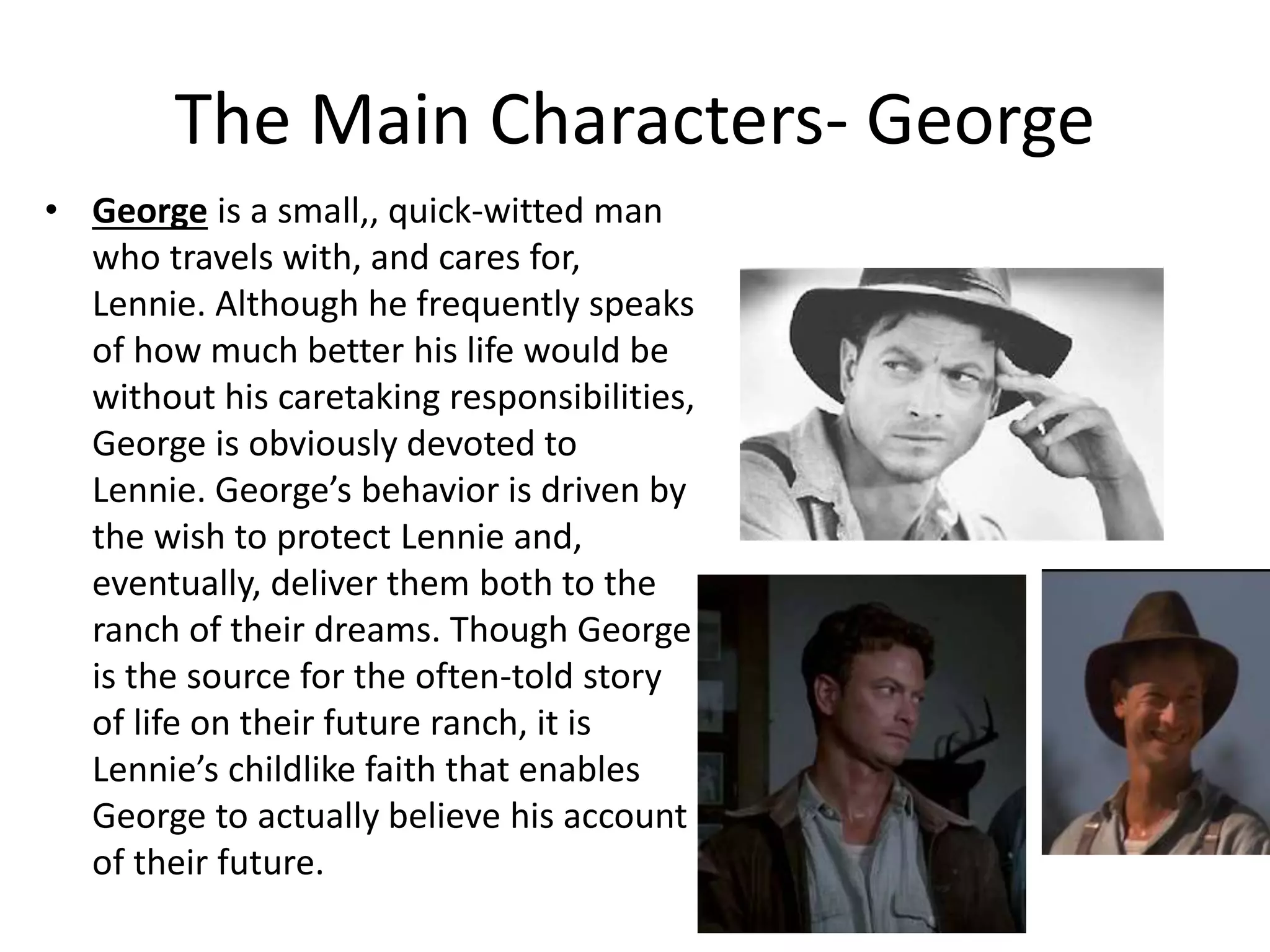
George Milton is the emotional and intellectual anchor of the story. In the 1992 film, Gary Sinise portrays George with a blend of sharp cynicism and profound weariness. Unlike many other ranch hands, George is defined by his agency and his capacity for selfless devotion.
The Burden of Responsibility
George’s primary conflict is the tension between his desire for independence and his loyalty to Lennie. While he frequently rants about how much easier his life would be without Lennie—stating he could take his "fifty bucks" and stay in a "cat house" or buy a gallon of whiskey—his actions consistently prove the opposite. The film utilizes close-up shots of George’s face to show the internal toll of this responsibility. He is not just a friend; he is a guardian, a parent figure, and a moral compass in a world that lacks morality.
The Architect of the Dream
George is the narrator of their shared "American Dream." He recites the story of the small farm, the "fatta the lan’," and the rabbits like a secular prayer. In the film, this dream serves a dual purpose: it soothes Lennie’s anxiety and provides George with a psychological escape from the grueling reality of itinerant labor. His tragedy lies in the fact that he is intelligent enough to know the dream is likely impossible, yet he clings to it for Lennie’s sake—and eventually, his own.
Lennie Small: The Innocent Catalyst
Lennie Small is a character of immense physical strength and limited cognitive capacity. The films often struggle to balance his "giant" stature with his mental fragility, but John Malkovich’s 1992 performance is widely considered the gold standard for portraying Lennie’s sensory-driven world.
The Danger of Unconscious Power
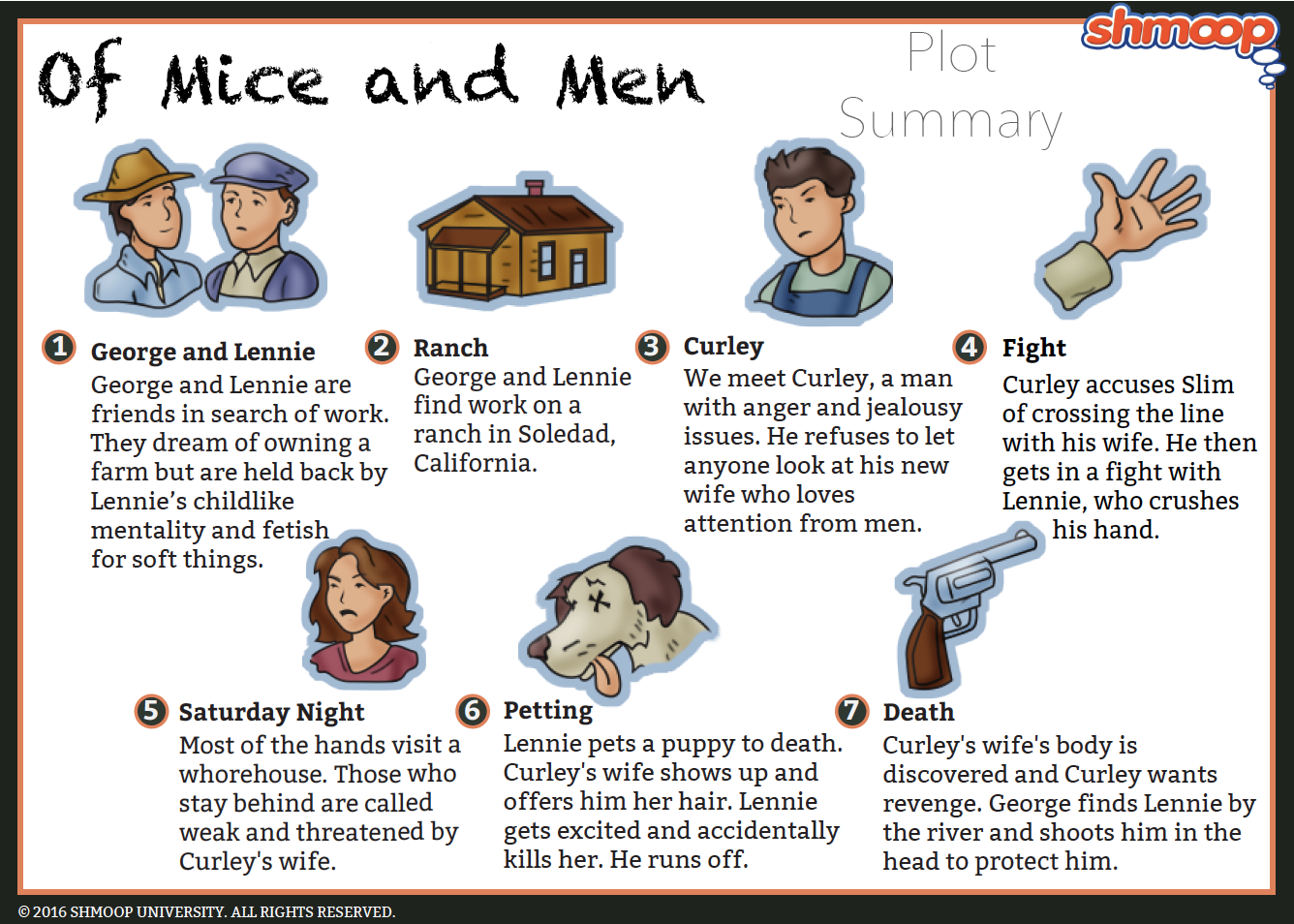
Lennie is not "bad" in a moral sense; he is amoral in the way an animal or a young child is. His obsession with "petting soft things" (mice, puppies, fabric, and eventually Curley’s wife’s hair) is the driving force behind the plot’s escalating violence. The films emphasize Lennie’s hands—large, powerful, and often moving restlessly—to symbolize the danger he poses without intending to. He does not understand his own strength, which makes him a lethal force in a world that does not accommodate the "different."
The Symbol of Innocence
Lennie represents the purity of the human spirit before it is corrupted by the cynicism of the ranch. He has no hidden motives and no malice. When Lennie dies at the end of the film, it symbolizes the death of the dream and the impossibility of maintaining innocence in a predatory society. His character forces the audience to question whether a "mercy killing" is an act of ultimate love or ultimate failure.
The Antagonists: Curley and the Forces of Insecurity
Conflict on the ranch is primarily driven by Curley, the boss’s son. In the films, Curley is portrayed as a "lightweight" boxer who suffers from a massive inferiority complex.
- Physical Aggression: Curley wears a work glove full of Vaseline on one hand (ostensibly for his wife) and high-heeled boots to distinguish himself from the laborers. He seeks out larger men like Lennie to pick fights, knowing that his status as the boss’s son protects him from retaliation.
- The Catalyst for Violence: Curley’s insecurity regarding his wife’s whereabouts and his own masculinity creates the pressure cooker environment that leads to the film's climax. He is the antithesis of Slim; where Slim leads by respect, Curley attempts to lead by fear and status.
Curley’s Wife: The Nameless Victim of Isolation
One of the most significant differences between Steinbeck’s novella and the film adaptations is the humanization of Curley’s Wife. In the 1992 film, played by Sherilyn Fenn, she is given more screen time to express her profound loneliness.
The Search for an Audience
Often dismissed by the ranch hands as a "tart" or "jailbait," the films reveal her as a young woman whose own dreams of being a Hollywood actress were stifled by a repressive marriage. She is the only woman on the ranch, surrounded by men who are terrified that talking to her will get them fired. Her constant "searching" for Curley is a transparent excuse for human interaction.
The Red Motif
In cinematic terms, she is often associated with the color red (red lips, red shoes, red dresses). While the men interpret this as a sign of her "loose" character, it actually symbolizes her desire to be noticed—to be more than a ghost in her own life. Her accidental death at Lennie’s hands is tragic because it happens at the very moment she thinks she has found someone who will actually listen to her.
The Supporting Ranch Community
The secondary characters represent different facets of life on the margins of society. Each interacts with George and Lennie in ways that highlight the protagonists' unique bond.
Slim: The Moral Authority
Slim is the "Prince of the Ranch." He is a jerkline skinner whose word is law. In the films, Slim is the only character who possesses true wisdom. He recognizes the bond between George and Lennie as something rare and beautiful rather than "funny." Slim represents the ideal man: strong, empathetic, and balanced. He is the one who ultimately validates George’s final decision, telling him, "You hadda, George. I swear you hadda."
Candy: The Fear of Obsolescence
Candy is the aging "swamper" with one hand. His character is defined by his old dog, which Carlson eventually shoots because it is "no good to itself." This act serves as a heavy-handed foreshadowing of Lennie’s fate and Candy’s own fear that once he is no longer useful, he will be discarded. Candy’s offer to put up his life savings for the farm is what makes the dream briefly feel like a reality.
Crooks: The Reality of Segregation
Crooks, the Black stable hand, lives in forced isolation. His character provides the most biting social commentary in the films. In the 1992 version, the scene in his room highlights the "hierarchy of pain." Crooks is at the bottom of the social ladder due to the systemic racism of 1930s America. He initially mocks the dream of the farm because he has seen "hundreds of men" with the same idea, none of whom ever succeeded.
Character Comparison: 1939 vs. 1992 Films
| Feature | 1939 Film (Milestone) | 1992 Film (Sinise) |
|---|---|---|
| George Milton | Burgess Meredith: More energetic and vocal. | Gary Sinise: More reserved, internal, and weary. |
| Lennie Small | Lon Chaney Jr.: Portrayed with a more lumbering, "monster-like" physicality. | John Malkovich: Portrayed with more childlike mannerisms and vocal tics. |
| Curley's Wife | Played by Betty Field: Portrayed as more of a "temptress" archetype. | Played by Sherilyn Fenn: Portrayed with more vulnerability and loneliness. |
| Cinematic Tone | Noir-adjacent, high contrast, theatrical. | Naturalistic, pastoral, melancholic. |
| Key Theme | The struggle against fate. | The sanctity and tragedy of friendship. |
Symbolic Elements in Character Development
The films use visual shorthand to deepen our understanding of these characters. The recurring motif of rabbits represents the fragile nature of Lennie’s hopes. Every time Lennie mentions "tending the rabbits," the film's lighting often softens, creating a dream-like atmosphere that contrasts with the harsh, dusty reality of the ranch.
Similarly, the death of Candy’s dog is a pivotal character-building moment for Carlson and Slim. Carlson’s insistence on shooting the dog shows his lack of empathy and his purely utilitarian view of life. Slim’s permission to let it happen shows his pragmatism—he knows the dog is suffering. This mirrors the final scene between George and Lennie, where George must adopt Carlson’s weapon but Slim’s mindset to end Lennie’s life.
Frequently Asked Questions
Why is Curley’s Wife never given a name in the films?
Steinbeck intentionally left her nameless to emphasize her lack of identity and her status as "property" of Curley. In the films, this underscores her isolation; she is defined only by her relationship to a man she doesn't love, making her more of an object in the eyes of the ranch hands than a person.
Does George really want to kill Lennie at the end?
No. The films make it clear through George’s trembling hands and emotional distress that killing Lennie is the hardest thing he has ever done. He does it to protect Lennie from a violent lynch mob led by Curley, which would have been far more cruel. It is presented as an act of mercy and the final sacrifice of their friendship.
What does Slim represent in the character hierarchy?
Slim represents the "ideal" human. He is the only character who isn't driven by fear, greed, or insecurity. He has "God-like" eyes in the novella, and the films treat him as the ultimate judge of character. His friendship with George at the end suggests that George might find a way to survive, though he will never be the same.
Why is the character of Crooks important to the film's message?
Crooks highlights the themes of loneliness and the "cruelty of the weak." Because he is oppressed by the white ranch hands, he briefly tries to exert power over Lennie by taunting him about George not returning. He shows that even the most marginalized people will try to find someone "lower" to dominate, illustrating the predatory nature of their world.
How does the 1992 film change our view of Lennie compared to the book?
John Malkovich’s portrayal emphasizes Lennie’s sensory processing issues and his total lack of guile. While the book can sometimes make Lennie feel like a symbol of "the worker," the 1992 film makes him feel like a specific, breathing human being, which makes the inevitable tragedy much more intimate for the audience.
Final Recommendation for Viewers
To fully appreciate the character depth of Of Mice and Men, it is highly recommended to watch the 1992 Gary Sinise version first. Its focus on the emotional interiority of George and Lennie, combined with its humanization of Curley’s Wife, provides the most comprehensive understanding of the story's themes. After viewing, compare the ending of the film to the opening scene; the cyclical nature of the river setting emphasizes that for men like George, the road is long, and the dreams are few.
Image Gallery