Why Columbia University’s MS Tuition Per Credit Matters for You
Understanding Columbia University’s Master of Science (MS) tuition structure is essential because the university utilizes a per-credit billing model, which directly links your total financial obligation to the specific number of credit...
Understanding Columbia University’s Master of Science (MS) tuition structure is essential because the university utilizes a per-credit billing model, which directly links your total financial obligation to the specific number of credits required for your chosen degree program. Unlike institutions that charge a flat fee per semester regardless of course load, Columbia’s credit-based billing means your final cost is highly sensitive to the length of your program, your pace of completion, and the necessity of any prerequisite coursework or optional electives you may choose to take.
Contents
Deciphering the Per-Credit Billing Model
At Columbia University, the tuition rate for graduate programs is typically set on a per-credit or per-point basis. For most Master of Science programs within the Graduate School of Arts and Sciences, the School of Engineering and Applied Science, or the School of Professional Studies, you are billed according to the number of academic points (credits) for which you register during each term.
This structure is designed to provide flexibility for students who may balance part-time study with professional commitments. However, it also introduces a variable cost architecture. If a program requires 30 credits for graduation, your tuition is effectively the per-credit rate multiplied by 30, plus mandatory fees. If you decide to take an additional course for personal enrichment or to gain specialized skills outside your degree requirement, your total tuition bill increases proportionally. This transparency allows students to project costs with high precision, provided they understand their program’s specific credit requirements.
The Financial Impact of Program Duration
The per-credit model effectively decentralizes your tuition payments over the life of your degree. Because you pay for what you take, you are not paying for "unused" capacity in a semester where you might carry a lighter load. Conversely, this structure necessitates careful planning of your academic timeline.
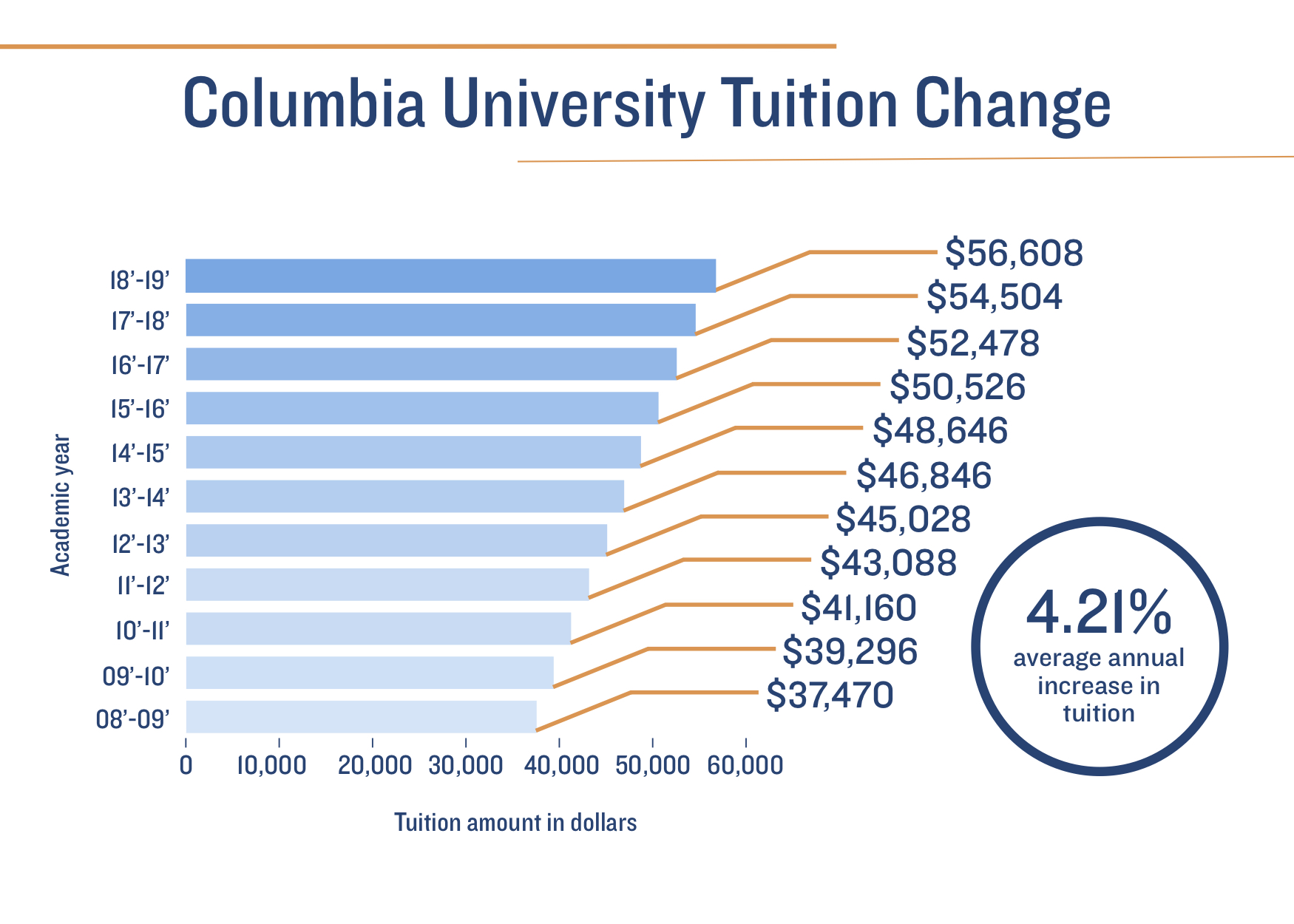
If you extend your program beyond the standard duration—perhaps by taking fewer credits per semester to manage a heavy workload—you are not necessarily paying more in tuition for the total credits required. However, you must account for annual tuition increases. Columbia University, like most major private research universities, historically adjusts tuition rates annually. If you drag your completion period over several years, the cost of the credits you take in your final year will likely be higher than the rate during your first year. Consequently, completing your degree within the intended timeframe is a primary factor in cost containment.
Essential Components of Your Total Investment
Beyond the base per-credit tuition, your financial planning must account for several other critical components. These factors can significantly influence the actual "out-of-pocket" cost for your MS degree.
- University Fees: Columbia charges a range of mandatory fees, including the University Services and Support Fee, technology fees, and health service fees. These are often charged per semester and do not necessarily scale linearly with the number of credits.
- Health Insurance: Students are required to have adequate health insurance. If you do not have a qualifying private plan, you will be enrolled in the Columbia University Student Health Insurance Plan, which adds a significant annual cost.
- Course-Specific Expenses: Some technical or laboratory-based MS programs may have additional "lab fees" or material costs associated with specific high-credit-value courses.
- Living Expenses: While tuition is a fixed per-credit cost, the duration of your study (which you control via your credit load) dictates how many months you must pay for housing, food, and transportation in New York City.
Comparing Billing Structures
To visualize how Columbia's per-credit billing interacts with your financial planning, consider the following comparison of typical billing models used in higher education.
| Billing Model | Payment Trigger | Financial Implications |
|---|---|---|
| Per-Credit (Columbia) | Registered points | Highly predictable; pay exactly for what you consume; sensitive to yearly rate hikes. |
| Flat-Rate (Full-Time) | Enrollment status | Often cheaper for high-credit loads; expensive if you take fewer than the max; "all-you-can-eat" access. |
| Program-Fee | Fixed degree cost | Maximum predictability; ignores individual course count; common in professional cohorts. |
Strategic Planning for Prospective Students
When evaluating the financial burden of an MS at Columbia, you should begin by creating an "Academic Budget Map."
First, confirm the total number of credits required for your specific degree. This information is available in the Graduate School Bulletin for the current academic year. Do not assume all MS programs within the same school have identical credit requirements; interdisciplinary programs often vary.
Second, map out your intended registration schedule. If you plan to finish in three semesters rather than four, your total tuition cost will be concentrated into fewer, higher-value billing cycles. This is advantageous if you are concerned about year-over-year inflationary tuition increases, as you are essentially "locking in" the cost of the degree at the current rates for a shorter window of time.
Third, consult with your department regarding "transfer credits" or "waiver exams." Some programs allow students to waive specific core requirements based on prior academic performance or professional certification. If you successfully waive a 3-credit course, you reduce your overall tuition obligation by exactly the cost of three credits.
Common Pitfalls and Troubleshooting
One of the most common mistakes students make is underestimating the cost of "rounding out" their degree. Often, students find themselves needing one or two additional credits to reach the graduation threshold, or they may find a elective that adds value but exceeds their original budget.
- Registration Holds: If your tuition is not paid according to the University’s billing cycles, you may face registration holds. Because per-credit billing is tied to your active registration, a hold can prevent you from dropping or adding courses, potentially leaving you locked into a tuition liability for a course you intended to drop.
- Withdrawal Deadlines: Familiarize yourself with the "Add/Drop" period. Withdrawing from a course after the designated refund deadline does not eliminate your tuition liability for those credits. In the per-credit model, this means you pay for the full cost of the credit even if you do not complete the course.
Frequently Asked Questions
How does Columbia adjust per-credit rates annually? Tuition rates are typically reviewed and adjusted by the Board of Trustees each spring for the upcoming academic year. You can view the finalized rates for the current year on the Student Financial Services website.
Does a full-time status affect my per-credit billing? While you must be enrolled in a certain number of credits to be considered "full-time" for visa or loan purposes, you are still billed per credit. Being full-time does not grant you a discount or a flat-rate structure; it simply confirms your registration volume.
Can I use federal financial aid to cover per-credit tuition? Yes, federal loans and graduate aid packages can be applied toward your tuition. However, you must ensure that your enrollment matches the criteria of your aid package, as some grants require a minimum number of credits per semester.
What happens if I take more than the required number of credits? You will be billed for every credit you register for beyond the degree requirement. If you are pursuing a dual degree or a certificate concurrently with your MS, ensure you understand how those credits are categorized, as they will be added to your total tuition bill.
Where can I find my specific program's credit requirements? Visit the official department page or the Graduate School Bulletin. Every MS program at Columbia is required to publish a clear curriculum guide that lists the specific number of credits required for conferral of the degree.
Next Steps for Financial Readiness
If you are a prospective student, your immediate next step is to verify the "Cost of Attendance" (COA) for your specific year of entry. Use the university’s online financial calculators to estimate your total credit load and multiply this by the current per-credit rate. Do not rely on estimates from previous years, as inflationary adjustments can shift the bottom line. By proactively mapping your credit load and identifying potential waivers or transfer credits, you take full control of your investment in your education at Columbia.
Image Gallery