The US Navy SEAL Helicopter in Operations: Technical Specs and Tactical Roles
US Navy SEALs rely on specialized helicopters, primarily the MH-60M Black Hawk and MH-47G Chinook, to execute high-stakes maritime and overland missions. These aircraft, often operated by the 160th Special Operations Aviation Regiment...
US Navy SEALs rely on specialized helicopters, primarily the MH-60M Black Hawk and MH-47G Chinook, to execute high-stakes maritime and overland missions. These aircraft, often operated by the 160th Special Operations Aviation Regiment (SOAR), feature advanced avionics, aerial refueling probes, and signature-reduction technologies essential for clandestine insertion, extraction, and direct-action operations.
Contents
The Intersection of Naval Special Warfare and Special Operations Aviation
While the US Navy SEALs (Sea, Air, and Land teams) are the primary maritime component of the United States Special Operations Command (USSOCOM), they do not typically operate their own fleet of dedicated "attack" or "stealth" helicopters for deep-penetration missions. Instead, they rely on a close-knit synergy with specialized aviation units. The most prominent of these is the Army’s 160th Special Operations Aviation Regiment (SOAR), known as the "Night Stalkers."
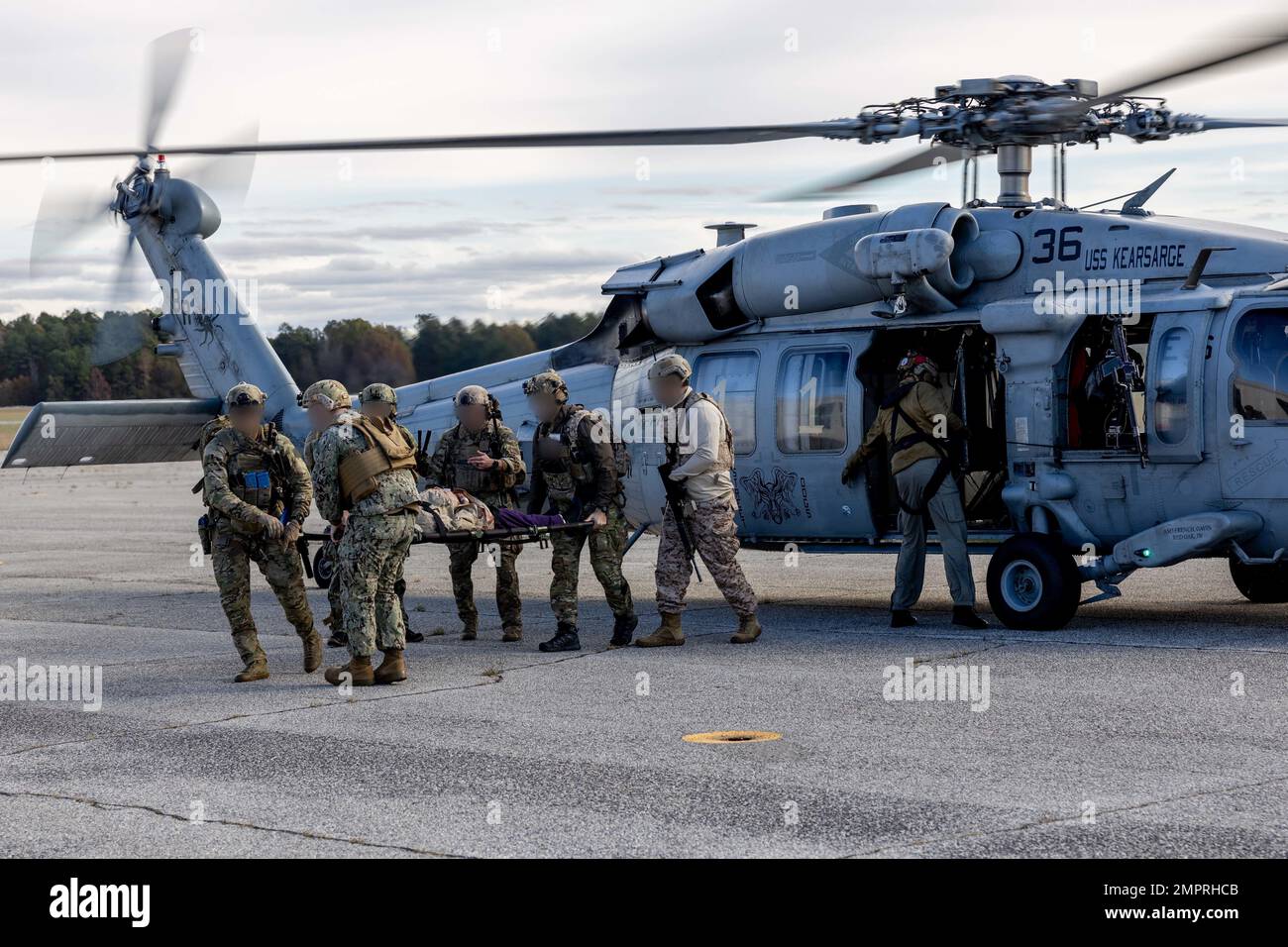
Historically, the Navy maintained specific reserve squadrons, such as HSC-85 (Firehawks), dedicated to supporting Naval Special Warfare (NSW). However, as of 2026, the operational burden for high-end kinetic entries and clandestine insertions has shifted increasingly toward the joint-service model provided by SOCOM’s centralized aviation assets. The relationship between the SEAL operator and the helicopter pilot is one of total trust, built on thousands of hours of joint training in Visit, Board, Search, and Seizure (VBSS) maneuvers and "brown water" riverine extractions.
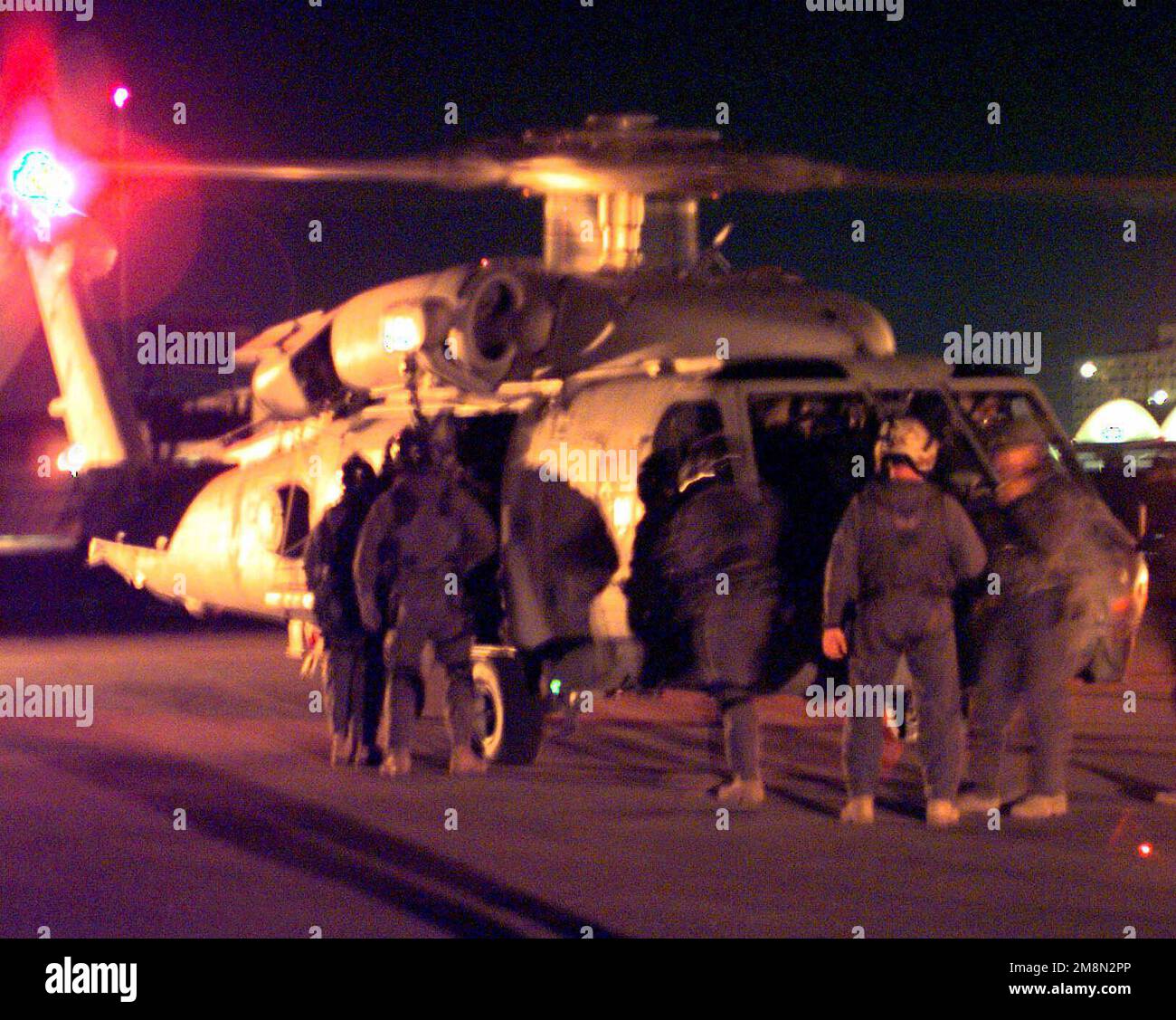
The primary requirement for a Navy SEAL helicopter in operations is survivability and precision. Missions often occur in "zero-illumination" environments, requiring pilots to fly at extremely low altitudes using Forward-Looking Infrared (FLIR) and night-vision goggles (NVG) to avoid detection by enemy radar and integrated air defense systems (IADS).
Primary Helicopter Models Used in SEAL Operations
The "Navy SEAL helicopter" is not a single model but a suite of airframes tailored to specific mission profiles. Each aircraft is heavily modified from its conventional counterpart to meet the rigorous demands of special operations.
MH-60M Black Hawk: The Tactical Workhorse
The MH-60M is the special operations version of the ubiquitous UH-60. For SEAL operations, the "Mike" model is indispensable. It features the Common Avionics Architecture System (CAAS), which integrates multiple communication and navigation systems into a single glass cockpit.
Key modifications include:
- T700-GE-701D Engines: Providing extra lift capacity for high-altitude or "hot and heavy" extractions.
- Aerial Refueling Probe: Allowing the aircraft to stay airborne for extended durations by connecting with HC-130J tankers.
- External Stores Support System (ESSS): Enabling the carriage of external fuel tanks or weapon systems like Hellfire missiles and 2.75-inch rockets.
MH-47G Chinook: The Heavy Lifter
When a SEAL platoon needs to move a large amount of gear, a Rigid Hull Inflatable Boat (RHIB), or a high volume of personnel, the MH-47G is the platform of choice. Its tandem-rotor design provides exceptional stability in mountainous terrain and high-wind maritime environments. The "G" variant is specific to SOCOM and includes specialized terrain-following and terrain-avoidance radar, allowing it to fly "nap-of-the-earth" in total darkness.
MH-6M Little Bird: The Urban Infiltrator
Affectionately known as the "Killer Egg," the MH-6M is used for rapid insertion into tight urban spaces or onto the decks of moving ships where larger helicopters cannot fit. SEALs often ride on external benches (pods) for immediate "fast-rope" or "off-ramp" deployment. Its agility makes it the premier choice for sniper overwatch and precision fire support in crowded littoral environments.
Technical Specifications Comparison (2026 Standards)
The following table outlines the performance characteristics of the primary rotary-wing assets utilized by SEAL teams in current operations.
| Feature | MH-60M Black Hawk | MH-47G Chinook | MH-6M Little Bird |
|---|---|---|---|
| Primary Role | Infiltration / Utility | Heavy Lift / Long Range | Rapid Insertion / CAS |
| Max Speed | 150+ knots | 170+ knots | 150+ knots |
| Combat Radius | ~250 nm (Unrefueled) | ~300 nm (Unrefueled) | ~150 nm |
| Specialized Gear | FLIR, Refueling Probe | Terrain-Following Radar | External Seating Benches |
| Armament | 2x 7.62mm Miniguns | 2x 7.62mm Miniguns | GAUs, Rockets, Hellfires |
| Capacity | 10-12 Operators | 30+ Operators | 4-6 Operators (External) |
Stealth and Signature Management in SEAL Missions
The legacy of the 2011 Abbottabad raid brought the concept of "Stealth Black Hawks" into the public consciousness. While the Department of Defense remains tight-lipped about current-gen low-observable technology, it is widely understood that signature management is a core component of SEAL helicopter operations in 2026.
Signature management involves more than just "stealth" paint or angled fuselage panels. It includes:
- Acoustic Reduction: Specialized rotor blade designs that minimize the "slap" sound, allowing the helicopter to get closer to a target before being heard.
- Infrared (IR) Suppression: Advanced exhaust mixers that cool engine gasses before they exit the airframe, making it harder for heat-seeking missiles to lock on.
- Electronic Warfare (EW): Active jamming suites that can deceive enemy radar or disable remote-detonated improvised explosive devices (IEDs) during a low-level flyover.
These technologies are critical when SEALs are operating in "contested environments" where the adversary possesses advanced detection capabilities. The goal is to achieve "tactical surprise," where the first indication of a SEAL presence is the sound of boots hitting the floor.
Tactical Insertion and Extraction Techniques
The helicopter serves as more than just a taxi; it is a dynamic platform for specialized insertion and extraction techniques that are unique to the SEAL community.
Fast-Rope Insertion Extraction System (FRIES)
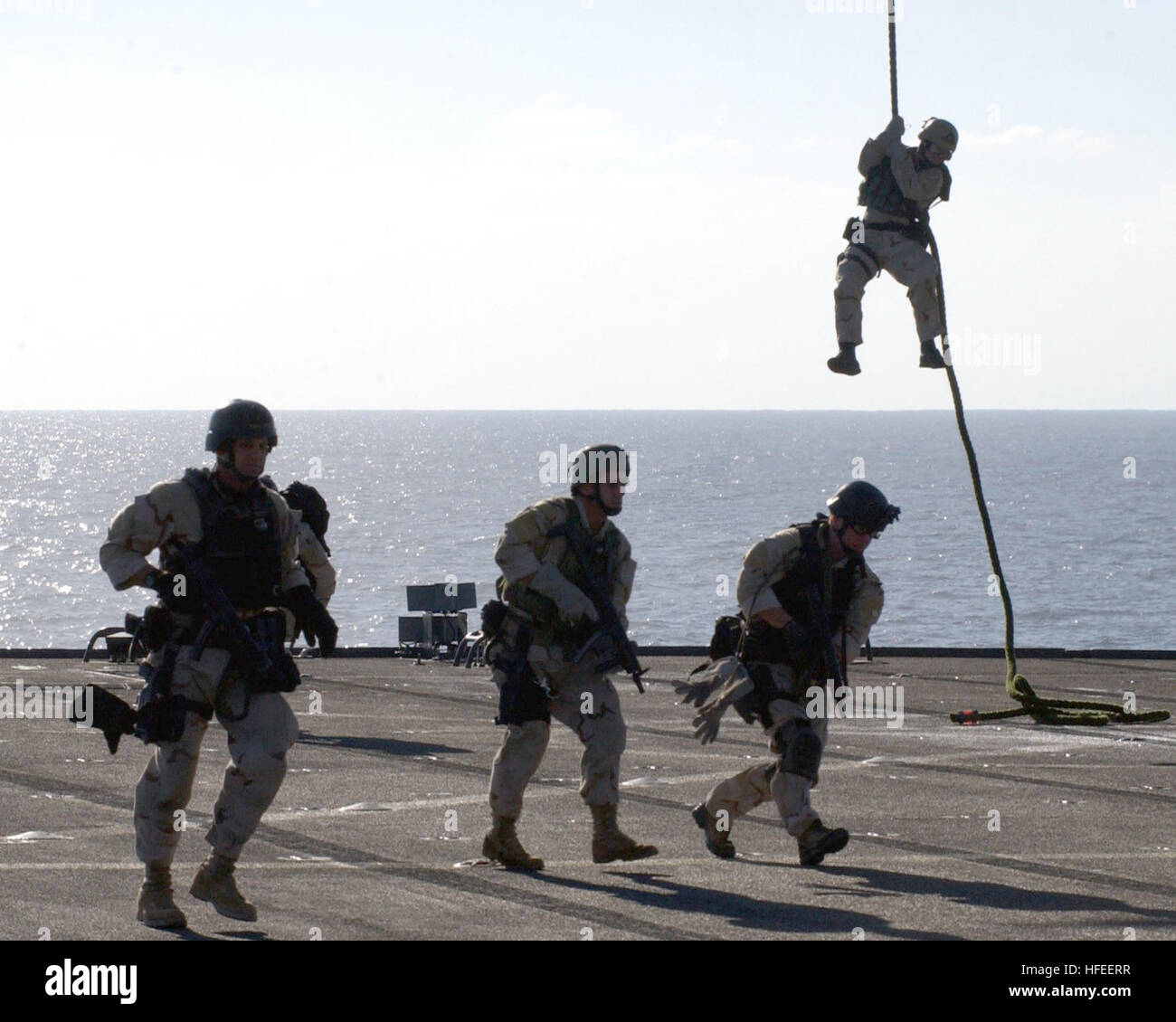
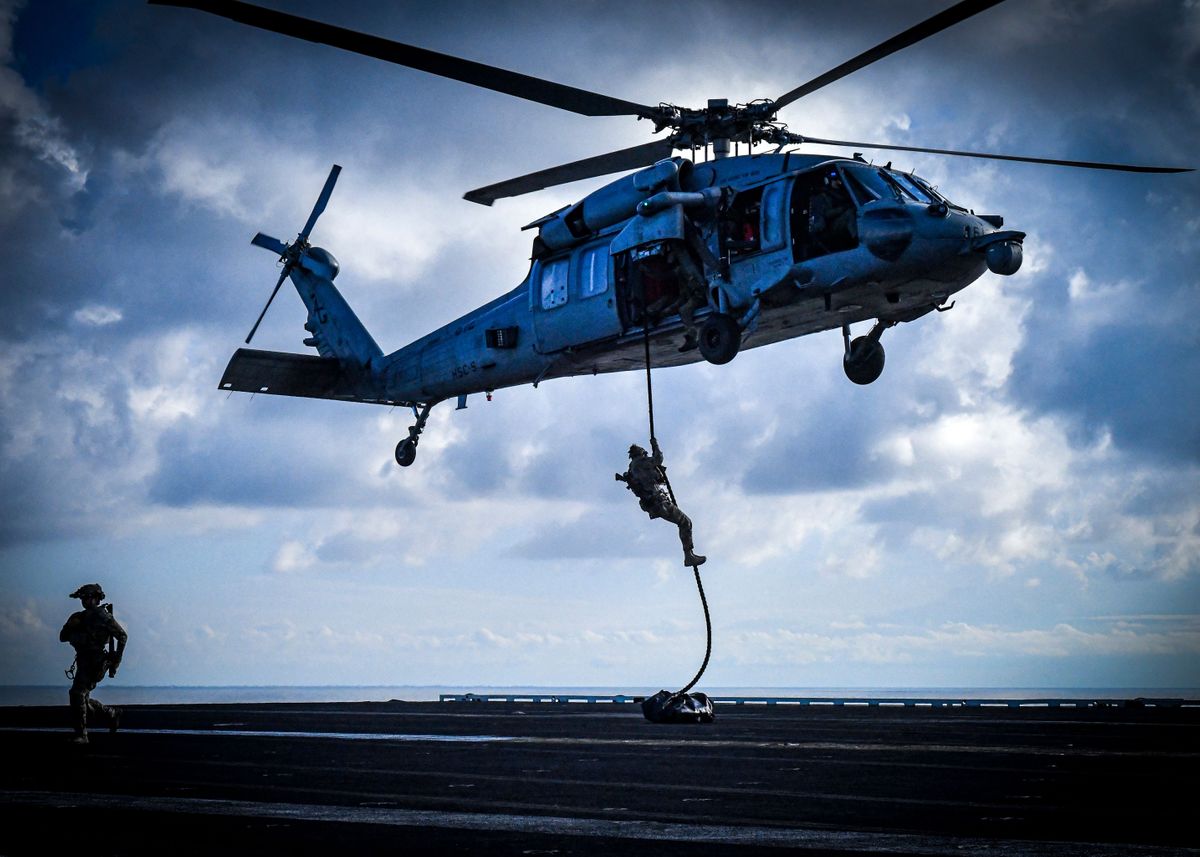
Fast-roping is the most common method for inserting SEALs onto a rooftop or ship deck where landing is impossible. Operators slide down a thick, weighted rope without being clipped in, allowing an entire 12-man squad to exit the aircraft in under 30 seconds. This minimizes the helicopter's "hover time," which is when it is most vulnerable to ground fire.
Special Patrol Insertion/Extraction (SPIE)
The SPIE rig is used for extractions in areas where the helicopter cannot land, such as dense jungles or heavy seas. SEALs clip into a single long line suspended beneath the helicopter. The aircraft then lifts off, carrying the team hanging beneath it to a safe "drop zone" or onto the deck of a ship. While visually dramatic, it is a high-risk maneuver reserved for situations where no other extraction method is viable.
Helocasting
In maritime environments, SEALs utilize "helocasting," where the helicopter flies low and slow (approx. 10 knots at 10 feet) over the water. The SEALs and their inflatable boats are cast directly into the ocean. This allows the team to approach a coastal target via water, leaving no trace of the helicopter's proximity to the objective.
Maintenance and Operational Logistics in 2026
Operating these sophisticated machines in saltwater environments presents massive logistical challenges. Saltwater is highly corrosive to turbine engines and airframes. Consequently, helicopters supporting SEAL operations undergo rigorous "freshwater wash-downs" after every maritime sortie.
The maintenance ratio for special operations helicopters is significantly higher than for conventional units. For every hour of flight time, dozens of man-hours are spent on preventative maintenance, sensor calibration, and structural inspections. In 2026, the use of predictive maintenance AI has become standard, allowing ground crews to identify component failures before they occur by analyzing vibration data and thermal signatures from the aircraft’s onboard health monitoring systems.
Frequently Asked Questions
Does the Navy have its own stealth helicopters?
The Navy does not publicly acknowledge a fleet of "stealth" helicopters. Most high-end, signature-reduced rotary assets are operated by the 160th SOAR (Army), which provides specialized aviation support to all branches of USSOCOM, including Navy SEALs.
How do SEALs communicate with the pilots during a mission?
SEALs use encrypted, multi-band radios (such as the PRC-148 or PRC-163) that interface directly with the helicopter's internal communication system (ICS). This allows the ground commander to speak directly to the pilot for "Talk-on-Target" CAS or to coordinate an emergency extraction.
Can these helicopters land on any Navy ship?
Most SOF-modified helicopters can land on any ship with a certified flight deck (Cruisers, Destroyers, Amphibious Assault Ships). However, the MH-47G Chinook’s large footprint requires a larger landing area, typically found on LHDs, LHAs, or aircraft carriers.
What is the difference between an MH-60S and an MH-60M?
The MH-60S (Seahawk) is a standard Navy utility helicopter used for search and rescue and logistics. The MH-60M (Black Hawk) is a highly specialized Army SOF variant with better engines, specialized sensors, and refueling capabilities specifically designed for special operations missions.
Are drones replacing helicopters in SEAL operations?
Drones (UAVs) are augmenting helicopters for reconnaissance and precision strikes, but they cannot yet replace the helicopter's role in "human-in-the-loop" insertion and extraction. The physical transport of a SEAL team into a room or onto a ship still requires a piloted or semi-autonomous rotary-wing aircraft.
Practical Recommendation for Further Research
For those seeking to understand the operational history and technical evolution of these aircraft, the official U.S. Army Special Operations Aviation Command (ARSOAC) fact sheets provide the most accurate technical baseline. Additionally, the Naval Special Warfare Command periodically releases unclassified reports on joint-training exercises (such as "Emerald Warrior") which showcase the integration of these helicopters in modern littoral combat scenarios. Those interested in the engineering aspects should monitor the Future Vertical Lift (FVL) program, as the replacements for the MH-60 and MH-47 are currently in advanced testing phases for deployment in the late 2020s.
Image Gallery