How Many Followers Is Considered an Influencer?
In 2026, you are generally considered an influencer once you reach 1,000 followers, the threshold for "nano-influencer" status. While 1,000 is the entry point, your classification—ranging from nano to mega-influencer—depends on your ni...
In 2026, you are generally considered an influencer once you reach 1,000 followers, the threshold for "nano-influencer" status. While 1,000 is the entry point, your classification—ranging from nano to mega-influencer—depends on your niche, engagement rates, and the specific platform’s algorithm for distributing content to non-followers.
Contents
The definition of an "influencer" has shifted significantly over the last few years. It is no longer a title reserved for celebrities or those with millions of followers. Instead, the industry now prioritizes the ability to drive specific actions within a community. Whether you are a creator looking to monetize your brand or a business seeking a partnership, understanding the nuances of these follower tiers is essential for navigating the modern creator economy.
The Evolution of Influence in 2026
In the current social media landscape, the raw follower count has become a secondary metric to active reach and community trust. For a long time, the industry relied on "vanity metrics"—numbers that looked good on paper but didn't necessarily result in sales or engagement. Today, platforms have shifted toward interest-based graphs rather than social graphs. This means an account with 5,000 followers can frequently outperform an account with 50,000 followers if their content is highly relevant to a specific audience.
Influence is now measured by the "conversion of intent." If a creator can post a recommendation and trigger a measurable spike in searches, sign-ups, or purchases, they are an influencer, regardless of whether their follower count is in the thousands or the millions.
Categorizing Influencers by Follower Count
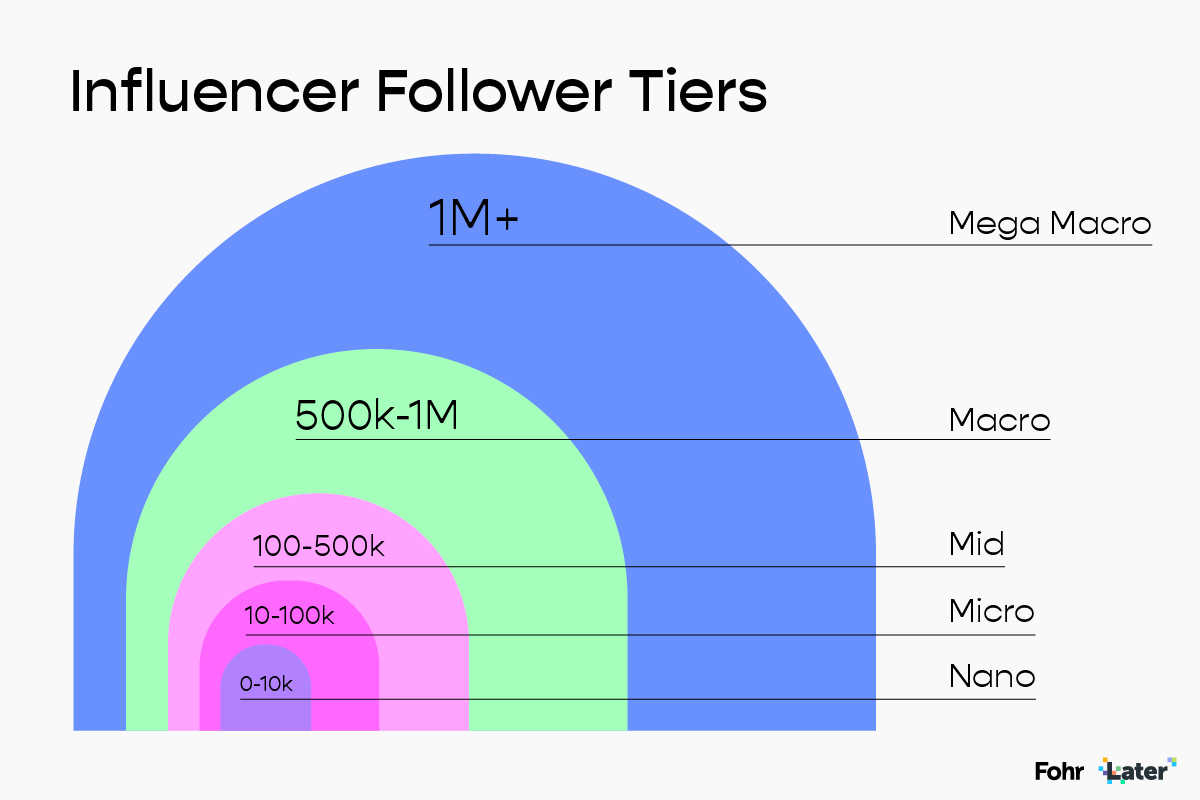
The marketing industry typically categorizes influencers into five distinct tiers. Each tier offers different benefits to brands and requires different strategies from the creator.
Nano-Influencers: 1,000 to 10,000 Followers
Nano-influencers are the grassroots of the creator economy. They typically have a very high engagement rate because they are often personally acquainted with a portion of their audience or are deeply embedded in a hyper-niche community (such as local birdwatching, specific coding languages, or mechanical keyboards).
- Why they matter: Brands value nano-influencers for their high levels of trust. In 2026, consumers are increasingly skeptical of large-scale advertisements. A recommendation from a nano-influencer feels like advice from a friend.
- Monetization: At this level, many creators receive "gifted" products, but high-performing nano-influencers in lucrative niches (like FinTech or Enterprise SaaS) can command professional fees for specialized content.
Micro-Influencers: 10,000 to 50,000 Followers
Micro-influencers are often considered the "sweet spot" for digital marketing. They have enough followers to provide meaningful reach but are still small enough to maintain a personal connection with their audience.
- Why they matter: They often have higher conversion rates than any other tier. They have moved past the "hobbyist" phase and usually have a consistent posting schedule and a defined aesthetic or "voice."
- Performance: Data from 2025 and 2026 shows that micro-influencers consistently deliver the highest Return on Investment (ROI) for mid-sized brands looking to build brand awareness without a celebrity-sized budget.
Mid-Tier Influencers: 50,000 to 500,000 Followers
Mid-tier influencers are seasoned content creators. They have likely built a presence across multiple platforms (e.g., Instagram, TikTok, and a newsletter).
- Why they matter: This group offers a balance between the intimacy of a micro-influencer and the reach of a macro-influencer. They are often "prosumers" who invest in high-quality production equipment and have a polished brand identity.
- Management: At this stage, most influencers have a manager or use an agency to handle brand deals, as the volume of inquiries becomes difficult to manage solo.
Macro-Influencers: 500,000 to 1 Million Followers
Macro-influencers have achieved significant fame within the digital space. Many of these creators are "internet famous" and may even cross over into mainstream media appearances.
- Why they matter: They are excellent for massive brand awareness campaigns. If a company is launching a new product and wants as many eyes on it as possible, macro-influencers are the primary target.
- Engagement: Engagement rates tend to dip at this level, as the audience is too large for the creator to interact with individually.
Mega-Influencers: 1 Million+ Followers
These are the A-list celebrities of the internet. This category includes movie stars, professional athletes, and "native" social media stars who have built empires (like top-tier YouTubers).
- Why they matter: Their influence is broad and spans multiple demographics. A single post from a mega-influencer can crash a website or sell out a product line within minutes.
- Cost: Working with mega-influencers requires a significant capital investment, often reaching into six or seven figures for a long-term campaign.
Influencer Tiers and Performance Benchmarks (2026 Data)
The following table outlines the expected engagement rates and typical uses for each influencer tier in the current market.
| Influencer Tier | Follower Range | Avg. Engagement Rate | Primary Use Case |
|---|---|---|---|
| Nano | 1k – 10k | 5% – 8% | Niche community building, high trust |
| Micro | 10k – 50k | 3% – 5% | Targeted conversions, ROI-focused |
| Mid-Tier | 50k – 500k | 2% – 3.5% | Reach + High-quality content production |
| Macro | 500k – 1M | 1% – 2% | Broad brand awareness, mass reach |
| Mega | 1M+ | 0.5% – 1.5% | Global campaigns, celebrity endorsement |
Why Platform Choice Changes the "Follower" Requirement
A follower on one platform is not equal to a follower on another. The technical requirements for being an "influencer" vary based on the platform's architecture.
LinkedIn: The Power of the Small Audience
On LinkedIn, 2,000 followers can make you a significant "Key Opinion Leader" (KOL). Because the platform is focused on B2B (business-to-business) transactions, the monetary value of a single follower is much higher. An influencer who reaches 5,000 CEOs is more valuable to a software company than a TikToker reaching 500,000 teenagers.
TikTok: The "Viral" Variable
On TikTok, follower counts are often secondary to the "For You Page" (FYP) algorithm. You might have 100,000 followers but only get 2,000 views on a video—or you might have 500 followers and get 2 million views. To be considered a "TikTok Influencer," brands look for a consistent "floor" of views (e.g., every video gets at least 10,000 views) rather than just the total follower number.
YouTube: Subscribers vs. Viewers
For YouTube, the "influencer" threshold is often tied to the YouTube Partner Program, which requires 1,000 subscribers and 4,000 watch hours. However, in the eyes of a sponsor, you aren't a mid-tier influencer until you are consistently hitting 20,000+ views within the first 48 hours of a video upload.
Metrics That Matter More Than Follower Count
If you are evaluating whether someone is an influencer, do not stop at the follower count. In 2026, savvy brands and creators look at "Deep Metrics."
- Saves and Shares: These are the most valuable actions in 2026. A "Like" is a passive action, but a "Save" indicates the content is valuable enough to revisit, and a "Share" indicates it is worth endorsing to others.
- Audience Demographics: An influencer with 100,000 followers is useless to a US-based brand if 90% of those followers are located in a region where the brand doesn't ship. Influence is geographic.
- Community Sentiment: Use tools to analyze the comments. Are people asking questions about the product? Are they tagging friends? High-quality comments are the hallmark of a true influencer.
- Consistency: An influencer who posts once a month is rarely effective. Influence is built through a "repetition of presence."
Common Mistakes in Defining Influence
- Buying Followers: This is the quickest way to destroy influencer status. Algorithms in 2026 are highly adept at identifying bot patterns. An account with 100k followers but only 50 likes per post is flagged as "low-quality," and its reach is throttled.
- Ignoring the Niche: A fitness influencer trying to sell cryptocurrency often fails. Influence is not transferable across all subjects; it is rooted in contextual authority.
- Over-Saturation: If every single post is a "sponsored" ad, the creator loses the trust of their audience. The most successful influencers maintain a ratio of roughly 80% organic value to 20% sponsored content.
How to Become a Recognized Influencer
If you are aiming to reach influencer status, the path in 2026 involves three specific steps:
- Define a Micro-Niche: Don't just be a "travel blogger." Be a "solo female travel blogger focusing on sustainable train travel in Eastern Europe." The more specific you are, the faster you will be recognized as an authority.
- Focus on Engagement First: Respond to every comment. Host live sessions. Build a community where followers talk to each other, not just to you.
- Use Multi-Format Content: Use short-form video for discovery (TikTok, Reels), long-form for authority (YouTube, Blogs), and community tools for retention (Discord, Newsletters).
Frequently Asked Questions
Can I be an influencer with only 500 followers?
While you won't be classified as a "nano-influencer" by most agencies, you can still have influence. In 2026, this is often called being a "Referral Advocate." If your 500 followers are highly engaged colleagues or friends, your recommendation may hold more weight than a macro-influencer’s ad. However, for professional sponsorship, 1,000 is the standard minimum.
Do brands pay nano-influencers?
Yes, but the payment is often proportional to the niche. In high-value industries like medical technology, legal services, or enterprise software, a nano-influencer with 2,000 followers may receive higher compensation than a lifestyle influencer with 20,000 followers.
What is the most important metric for an influencer in 2026?
Conversion Rate. Whether it’s signing up for a newsletter, using a discount code, or downloading an app, the ability to move a follower from "viewer" to "doer" is the ultimate measure of influence.
How do I check if someone's followers are real?
You can use audit tools like HypeAuditor or Modash to check for "audience credibility." Look for sudden spikes in follower growth (which suggest purchases) and check the "Followers-to-Following" ratio. If an account follows 5,000 people but only has 1,000 followers, they are likely using "follow-for-follow" tactics rather than organic growth.
Is the influencer market oversaturated in 2026?
The "generalist" influencer market is saturated. However, there is a massive shortage of "expert" influencers—professionals like engineers, doctors, carpenters, and scientists who can communicate effectively on social media.
Final Recommendation
If you are looking to determine if an account has "influencer" status, look for the 1,000-follower mark as the starting point, but prioritize the engagement-to-follower ratio. A creator with 2,000 followers and a 10% engagement rate is a far more powerful influencer than one with 20,000 followers and a 0.5% engagement rate. For creators, focus on building a deep, dedicated community rather than chasing a vanity number; in 2026, the industry rewards depth over breadth.
Image Gallery