Finding the Best CD Rates in Virginia: A Complete Depositor's Guide
Securing the best CD rates in Virginia requires comparing local credit unions, regional banks, and online institutions operating across the Commonwealth. Virginia depositors can maximize yields by analyzing Annual Percentage Yields (AP...
Securing the best CD rates in Virginia requires comparing local credit unions, regional banks, and online institutions operating across the Commonwealth. Virginia depositors can maximize yields by analyzing Annual Percentage Yields (APY), compounding frequencies, early withdrawal penalties, and deposit insurance limits through the FDIC or NCUA, while accounting for Virginia's state income tax on interest earned.
Contents
Understanding Virginia CD Rates and Market Dynamics
Certificates of Deposit (CDs) are fixed-income savings instruments that offer a guaranteed return over a specified term in exchange for locking up capital. In Virginia, the rate environment is shaped by macro-level interest rate policies set by the Federal Reserve, local market competition among financial institutions, and the distinct capitalization strategies of community banks versus national lenders.
When evaluating CD rates across Virginia, yield variation depends heavily on the type of financial institution holding the deposit. Institutions use high-yield CDs to attract core deposits to fund localized lending operations, such as commercial real estate in Northern Virginia or agricultural loans in the Shenandoah Valley.
- Federal Reserve Rate Benchmark
- Online Banks & National Chartered Entities
- Lower overhead, higher baseline APY across standard terms
- Local Virginia Credit Unions & Comm. Banks
- Targeted promo rates, relationship rates, regional reinvestment
- Online Banks & National Chartered Entities
How Federal Reserve Policies Influence Local Virginia Yields
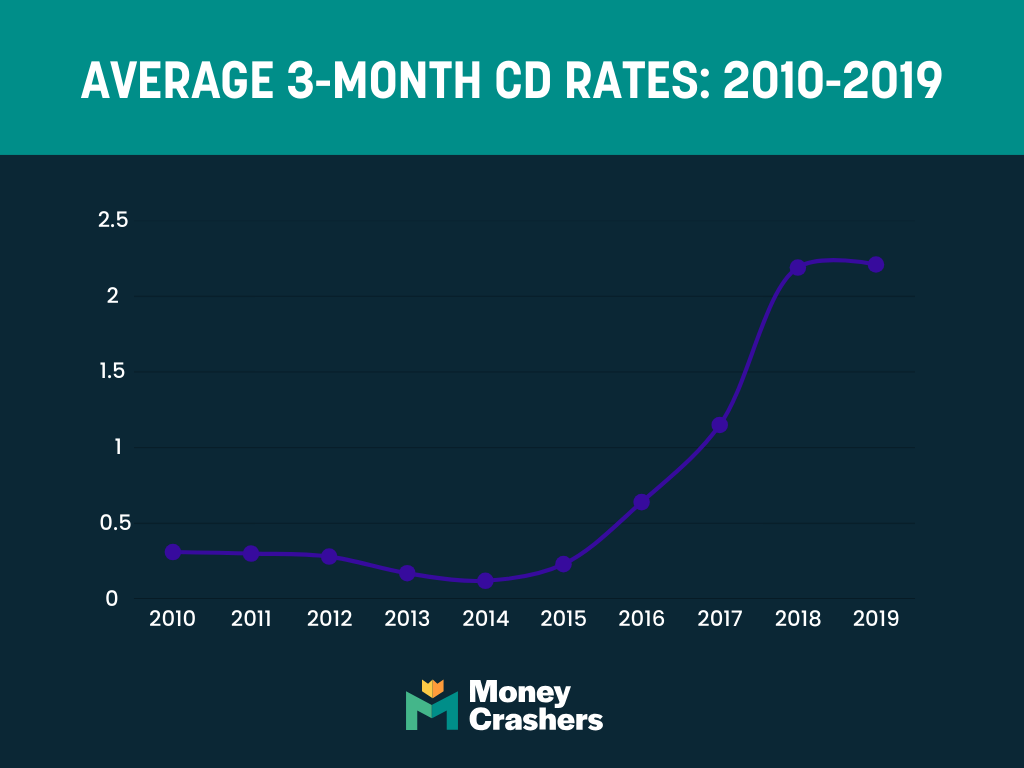
The interest rates offered on CDs by financial institutions throughout Virginia are tied to the Federal Funds Rate set by the Federal Open Market Committee (FOMC). When central bank policy shifts to manage inflation or economic growth, banks adjust their deposit pricing accordingly.
When the Federal Reserve maintains a higher benchmark rate, yields on short-term CDs (3 to 12 months) often outpace or equal long-term CDs (3 to 5 years), creating what is known as a flat or inverted yield curve. Conversely, in a declining or stable interest rate environment, long-term CDs allow depositors to lock in yield stability over multi-year horizons before market rates drop further.
Local Community Banks vs. Regional Giants vs. Credit Unions
Virginia offers a broad spectrum of deposit institutions, each presenting unique pricing structures for certificates:
- Credit Unions: Member-owned financial cooperatives, such as Virginia Credit Union (VACU), Navy Federal Credit Union, and Apple Federal Credit Union, frequently offer competitive short- and mid-term CD rates (often called Share Certificates). Because credit unions operate on a non-profit basis, surplus revenues are often returned to members in the form of higher yields.
- Regional & Community Banks: Institutions like Atlantic Union Bank, TowneBank, and Carter Bank & Trust cater directly to Virginia residents. They frequently market specialized promotional CDs with uncommon term lengths (such as 7-month, 11-month, or 15-month maturities) to attract local liquidity.
- National & Online Banks: Online banks accessible to Virginia residents often maintain lower overhead costs than brick-and-mortar competitors. As a result, they may offer higher baseline APYs on standard terms without requiring existing relationship balances.
Key Factors to Compare When Choosing a CD in Virginia
Evaluating a certificate of deposit involves more than simply selecting the highest advertised rate. Depositors must evaluate structural terms, fee schedules, and calculation methods to ensure the certificate aligns with their liquidity requirements and financial goals.
Annual Percentage Yield (APY) and Compounding Frequency
The Annual Percentage Yield (APY) reflects the total amount of interest earned on a deposit over one year, accounting for the effect of compounding. However, the frequency of compounding significantly dictates the final return:
- Daily Compounding: Interest is calculated every day and added to the principal balance, producing the highest potential yield.
- Monthly Compounding: Interest is calculated and credited once per month.
- Simple Interest: Interest is calculated solely on the principal deposit without compounding over the term.
Example: A $25,000 deposit placed in a 12-month CD with a 4.50% interest rate compounded daily yields a higher effective APY than the same rate compounded annually or paid out monthly via check.
Term Lengths and Maturity Horizons
Term lengths for Virginia CDs generally range from 1 month to 10 years. Matching term lengths to anticipated liquidity needs is critical to avoiding penalty fees.
- Short-Term CDs (1 to 12 Months): Ideal for capital needed in the near future, offering protection against rate volatility while keeping funds accessible on a shorter cycle.
- Intermediate-Term CDs (18 to 36 Months): Provide a balance between yield capture and medium-term asset allocation.
- Long-Term CDs (48 to 60+ Months): Lock in guaranteed returns over extended periods, protecting capital against future monetary policy easing.
Minimum Deposit Requirements and Tiered Pricing
Institutions across Virginia enforce varying entry thresholds. Standard consumer CDs may require a minimum deposit ranging between $500 and $1,000, while specialized "Jumbo CDs" typically require a minimum opening deposit of $100,000. Jumbo CDs may offer premium rate bumps, though competitive online standard CDs frequently match or exceed institutional Jumbo rates.
Early Withdrawal Penalties (EWP)
When opening a CD, the depositor agrees to maintain the funds in the account until the maturity date. Withdrawing principal prior to maturity incurs an Early Withdrawal Penalty (EWP). EWPs are generally structured as a forfeit of a specified number of days or months of simple interest:
- Short-Term Penalties (Terms $\le$ 12 Months): Typically equal 30 to 90 days of simple interest.
- Long-Term Penalties (Terms > 12 Months): Typically range from 180 to 365 days of simple interest.
If a CD is broken early in its term before sufficient interest has accrued, the penalty may be deducted directly from the initial principal balance.
Comparison of Virginia CD Options Across Financial Institutions
The table below outlines structural differences across institution types available to Virginia residents:
| Financial Institution Type | Primary Target Audience | Typical Term Range | Compounding Frequency | Early Withdrawal Penalty Structure | Insurance Coverage |
|---|---|---|---|---|---|
| Virginia Credit Unions | Members, local community, military/civilian employees | 3 to 60 Months | Daily or Monthly | 90 to 180 days of dividend loss | NCUA Insured (Up to $250,000) |
| Virginia Community Banks | Local retail & business depositors | 6 to 36 Months (Promotional Terms) | Daily or Monthly | 30 to 365 days of simple interest | FDIC Insured (Up to $250,000) |
| Regional Lenders | Regional retail clients needing branch access | 3 to 60 Months | Daily or Monthly | Graduated based on term length | FDIC Insured (Up to $250,000) |
| Direct / Online Banks | Rate-focused depositors nationwide | 3 to 60 Months | Daily | Fixed interest loss (e.g., 60-180 days) | FDIC Insured (Up to $250,000) |
Tax Considerations for Virginia CD Investors
Yields generated from certificates of deposit are treated as taxable income by both federal and state authorities. Failing to account for tax obligations can result in lower net real returns.
State Income Tax Impact on CD Yields
Interest income earned from bank CDs is subject to the Virginia Department of Taxation rules. Virginia taxes interest earnings as ordinary income. The state income tax structure features progressive brackets, with the top marginal rate capped at 5.75% for individual incomes over $17,000.
Because CD interest is taxed at both the federal level and the state level in Virginia, calculating the net nominal yield requires factoring in your combined marginal tax rate:
$$\text{Net Yield} = \text{Advertised APY} \times \left(1 - (\text{Federal Tax Rate} + \text{State Tax Rate})\right)$$
Example: A Virginia resident in the 22% federal tax bracket and 5.75% state tax bracket holding a 5.00% APY CD faces a combined marginal tax rate of 27.75%. The post-tax yield on the investment equals roughly 3.61%.
IRA CDs for Tax-Deferred Growth
To mitigate immediate tax liabilities, Virginia savers can hold certificates within an Individual Retirement Account (IRA). Financial institutions offer both Traditional IRA CDs and Roth IRA CDs:
- Traditional IRA CDs: Contributions may be tax-deductible, and interest earnings grow tax-deferred until distribution in retirement.
- Roth IRA CDs: Contributions are made with post-tax dollars, but interest grows completely tax-free, and qualified withdrawals incur zero federal or state tax.
Strategic CD Investing: Maximizing Returns in Virginia
Deploying strategic deposit structures helps manage liquidity risk and capture favorable rate trends while preserving FDIC or NCUA protections.
Implementing a CD Laddering Strategy
A CD ladder distributes capital across multiple certificates with staggered maturity dates. This strategy provides regular liquidity while capturing prevailing market yields.
- Initial Principal ($20,000 Total Allocation)
- $5,000: 12-Month CD (Reinvests into new 48-Month CD upon maturity)
- $5,000: 24-Month CD (Reinvests into new 48-Month CD upon maturity)
- $5,000: 36-Month CD (Reinvests into new 48-Month CD upon maturity)
- $5,000: 48-Month CD (Matures, providing liquidity or rollover option)
Steps to Build a 4-Year CD Ladder:
- Divide total investment capital into four equal tranches (e.g., four $5,000 deposits).
- Open four separate CDs: a 12-month, 24-month, 36-month, and 48-month term.
- As each CD reaches maturity, roll the proceeds into a new 4-year (48-month) CD.
- After three years, all tranches mature on a predictable, yearly schedule, providing ongoing liquidity and rate averaging.
No-Penalty and Add-On CDs
Specialty CD structures provide additional flexibility for changing interest rate markets:
- No-Penalty CDs: Allow depositors to withdraw the full balance and earned interest without penalty after an initial holding period (typically 6 to 7 days after funding). These instruments usually offer slightly lower APYs than fixed-term counterparts in exchange for complete liquidity.
- Bump-Up / Step-Up CDs: Grant the account holder the right to request a rate adjustment if the financial institution raises APYs on standard CDs during their term.
- Add-On CDs: Allow the depositor to make supplemental contributions to the principal balance throughout the term, subject to contract caps.
How to Open a CD in Virginia: Step-by-Step
Setting up a certificate of deposit with a financial institution licensed in Virginia involves a streamlined verification and funding workflow.
Step 1: Verify Institutional Insurance
Ensure the selected institution is backed by official government insurance:
- For banks, verify active status using the FDIC BankFind Suite tool.
- For credit unions, check federal insurance status using the NCUA Credit Union Locator.
Government insurance protects principal deposits and accrued interest up to $250,000 per depositor, per insured bank, for each ownership category.
Step 2: Select the Term and Account Structure
Determine whether the certificate should be held as a individual account, joint account, trust account, or tax-advantaged IRA account based on ownership requirements.
Step 3: Gather Required Identification and Documentation
Federal regulations under the USA PATRIOT Act require financial institutions to verify customer identity. Applicants must provide:
- Social Security Number (SSN) or Individual Taxpayer Identification Number (ITIN).
- Valid unexpired government-issued photo ID (Virginia Driver’s License, State ID, or Passport).
- Physical residential address in Virginia (PO Boxes generally require supplementary proof of residence).
- Contact details (phone number, email address).
Step 4: Fund the Account
Fund the CD within the institution's specified opening window (typically 7 to 14 calendar days). Common funding mechanisms include:
- Automated Clearing House (ACH) transfer from an existing external checking or savings account.
- Wire transfer.
- Official check or personal check mailed to/deposited at a physical branch.
Step 5: Establish Maturity Instructions
Specify what should happen when the term ends. Most Virginia institutions automatically renew CDs into standard terms upon maturity unless instructed otherwise. Most banks offer a grace period (typically 7 to 10 calendar days) post-maturity during which funds can be withdrawn, transferred, or reallocated without incurring early withdrawal penalties.
Frequently Asked Questions About Virginia CD Rates
Are interest earnings from CDs taxed in the state of Virginia?
Yes. The Virginia Department of Taxation taxes CD interest as ordinary income. Depending on your total taxable income, state tax rates range from 2.00% to a maximum marginal rate of 5.75%.
What happens if I move out of Virginia before my CD matures?
Your existing CD agreement remains intact and valid through its scheduled maturity date regardless of changes to your state of residency. However, your new state of residence may govern the taxation of interest income earned after your relocation.
Are credit union share certificates as safe as bank CDs in Virginia?
Yes. Deposit accounts at federally insured credit unions are backed by the National Credit Union Share Insurance Fund (NCUSIF), administered by the NCUA. This protection provides the exact same coverage level as FDIC deposit insurance—up to $250,000 per member, per institution, for each ownership category.
Can a bank change the interest rate on a fixed-rate CD after it is opened?
No. Once a fixed-rate CD is opened and funded, the bank cannot lower or alter the agreed APY during the term. Only variable-rate or step-up CDs have adjustable yields based on account agreement terms.
What is the difference between simple interest and APY on a CD?
Simple interest measures the base rate paid on the principal without factoring in compounding. APY (Annual Percentage Yield) calculates the total return including interest compounded over a full year. Financial institutions are legally required to disclose the APY so consumers can compare products accurately.
Recommended Action Plan for Virginia Savers
To maximize returns while preserving safety and liquidity when investing in Virginia CDs:
- Assess Short-Term Liquidity Needs: Reserve emergency funds in liquid high-yield savings accounts before allocating capital to fixed-term CDs.
- Evaluate Local Credit Unions and Regional Banks: Compare promotional rate terms (such as 7-month or 13-month specials) against national online yields.
- Deploy a Ladder Strategy: Stagger maturities across 12- to 48-month terms to balance current yields with consistent liquidity.
- Confirm Deposit Limits: Ensure total balances held at any single bank or credit union remain within federal insurance limits ($250,000 per depositor/category).
- Set Maturity Reminders: Track maturity dates in your calendar to take action within the 7-to-10-day post-maturity grace period.
Disclaimer: Financial regulations, tax laws, and rate environments change over time. Consult a certified financial planner or qualified tax professional regarding your personal financial circumstances.
Image Gallery