Understanding the Limit of Liability Coverage in Workers' Compensation Policies
Understanding the limit of liability coverage within a workers' compensation policy is essential for business owners navigating employment risk, statutory obligations, and commercial insurance structures. While standard workers' compen...
Understanding the limit of liability coverage within a workers' compensation policy is essential for business owners navigating employment risk, statutory obligations, and commercial insurance structures. While standard workers' compensation insurance covers medical expenses and lost wages for injured employees regardless of fault, employers' liability insurance—integrated directly into Part Two of most standard workers' compensation policies—protects the business against lawsuits brought by employees or their families for bodily injury or occupational disease outside the strict boundaries of statutory no-fault systems. Grasping how these liability limits function, what they include, and where they fall short helps organizations mitigate catastrophic financial exposure.
Contents
The Core Structure of Workers' Compensation Policies
A standard workers' compensation and employers' liability policy is divided into distinct sections, most notably Part One and Part Two. Understanding the interplay between these sections is critical for evaluating corporate insurance needs.
Part One outlines statutory benefits. It obligates the insurance carrier to pay all medical costs, rehabilitation expenses, and disability compensation mandated by the workers' compensation laws of the state where the injury occurred. Crucially, Part One contains no dollar limit. If an employee suffers a severe, lifelong disability requiring millions of dollars in continuous medical care, Part One covers those expenses up to the statutory requirements of the jurisdiction, subject only to the terms of the policy contract.
Part Two governs employers' liability. This section steps in when an injured worker, or a third party affected by the workplace injury, files a lawsuit against the employer outside of the standard administrative workers' compensation system. Examples include third-party-over actions, loss of consortium claims brought by an injured worker's spouse, or dual-capacity claims. Unlike Part One, Part Two is subject to explicit coverage limits, making it a critical focal point for corporate risk management.
Decoding Part Two Limits: The Standard 100/500/100 Limit
Employers' liability insurance limits are typically expressed as a set of three distinct figures, such as $100,000 / $500,000 / $100,000. Each component of this standard configuration serves a specific risk-transfer function:
- Bodily Injury by Accident (Each Accident): The maximum amount the insurer will pay for all claims arising out of any single accident, regardless of how many employees are injured in that specific incident.
- Bodily Injury by Disease (Policy Limit): The aggregate maximum amount the insurer will pay for all claims resulting from occupational diseases during the policy period, regardless of the number of disease claims filed.
- Bodily Injury by Disease (Each Employee): The maximum amount the insurer will pay for damages arising out of the occupational disease of a single employee.
| Limit Component | Standard Statutory Baseline | Description of Risk Covered |
|---|---|---|
| Bodily Injury by Accident | $100,000 per accident | Maximum payout for all combined injuries stemming from a single traumatic event. |
| Bodily Injury by Disease | $500,000 policy aggregate | Total ceiling for all occupational disease claims combined within a 12-month policy term. |
| Bodily Injury by Employee | $100,000 per employee | Maximum limit available for an individual worker contracting an occupational illness. |
While these baseline limits are automatically included in standard workers' compensation policies across most jurisdictions, they are often insufficient for modern businesses operating in litigious environments or hazardous industries.
Why Standard Limits May Prove Inadequate
Relying solely on baseline employers' liability limits exposes a business to severe financial vulnerability. Although statutory workers' compensation is ostensibly an exclusive remedy protecting employers from tort liability, numerous legal exceptions allow injured employees to sue their employers directly.
Third-party-over actions represent a primary source of severe liability exposure. For example, if an employee is injured by defective machinery on the job, they may sue the equipment manufacturer. If the manufacturer is found liable, they may implead the employer, arguing that improper maintenance or employer negligence contributed to the accident. If the court awards a multi-million-dollar judgment against the manufacturer, and the employer is found partially at fault, the employers' liability limits under Part Two absorb the defense costs and indemnity payouts up to the policy ceiling.
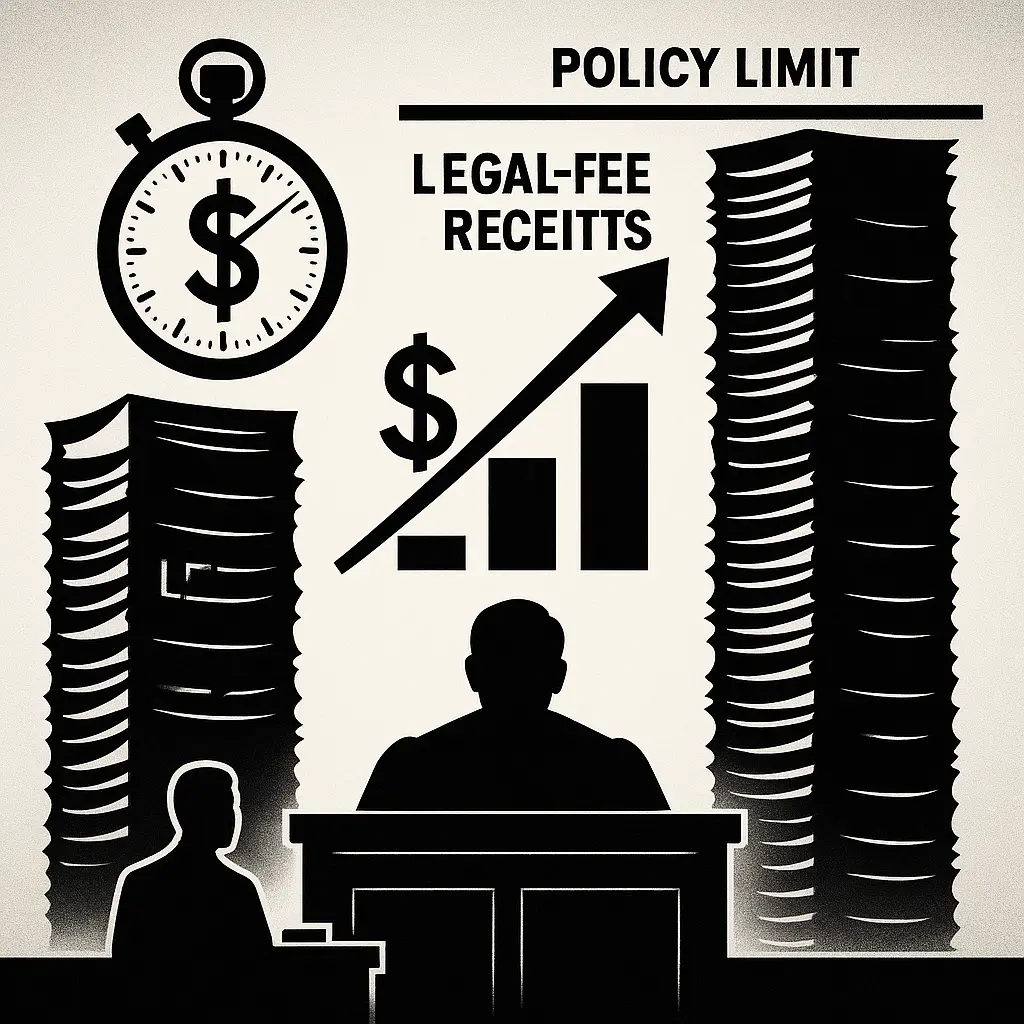
Furthermore, legal defense costs are typically included within these limits in many standard policy forms, meaning that mounting legal fees consumed during protracted litigation directly deplete the funds available to pay ultimate judgments or settlements.
Strategies for Enhancing Liability Limits
Businesses seeking to insulate themselves from catastrophic employment-related litigation can pursue several structural adjustments to their insurance portfolios:
Purchasing Increased Limits
Most insurance carriers permit policyholders to increase their Part Two employers' liability limits from the baseline 100/500/100 structure to higher thresholds, such as $500,000 / $500,000 / $500,000 or $1,000,000 / $1,000,000 / $1,000,000, for a relatively modest incremental premium increase.
Utilizing Commercial Umbrella and Excess Policies
For comprehensive asset protection, organizations frequently purchase commercial umbrella or excess liability policies. However, underwriters of umbrella policies typically mandate that the underlying workers' compensation policy maintain higher mandatory minimum employers' liability limits—such as $1,000,000 across all three metrics—before the umbrella policy will sit on top of the risk and provide broader secondary coverage.
Common Misconceptions Regarding Workers' Compensation Limits
Misunderstandings about policy limits can lead to dangerous gaps in corporate risk coverage. Business leadership must distinguish between administrative compensation rules and civil tort exposure.
A common myth is that workers' compensation insurance has an overall policy cap that limits the insurer's total payout for medical and wage-loss benefits under Part One. In reality, statutory benefits under Part One are open-ended and governed by state law rather than arbitrary policy dollar caps. The limits apply strictly to Part Two employers' liability protections.
Another frequent error is assuming that general liability policies cover employee lawsuits. Standard Commercial General Liability (CGL) policies contain strict exclusions for bodily injury sustained by employees arising out of and in the course of their employment. Consequently, relying on a CGL policy to cover an employee lawsuit will result in a formal denial of coverage, leaving the business wholly unprotected without a properly structured workers' compensation and employers' liability policy.
Frequently Asked Questions
Do workers' compensation limits vary by state?
Yes. While employers' liability limits (Part Two) are standard contractually across most jurisdictions, statutory benefit structures, mandatory coverage thresholds, and monopolistic state fund requirements (where employers must purchase coverage directly from a state-operated entity) vary significantly by state.
Are legal defense costs paid in addition to the liability limits?
In standard workers' compensation and employers' liability policies, defense costs are generally inside the limits. This means that attorney fees, court costs, and expert witness fees reduce the remaining policy limit available to pay settlements or judgments.
What is a stop-gap endorsement?
A stop-gap endorsement provides employers' liability coverage in monopolistic state fund jurisdictions (such as Ohio, Washington, North Dakota, and Wyoming) where the state fund provides statutory Part One benefits but does not automatically include Part Two employers' liability insurance.
Can an employee sue an employer for pain and suffering?
Generally, the exclusive remedy doctrine prevents employees from suing their employers for pain and suffering in exchange for guaranteed no-fault statutory benefits. However, exceptions exist, including intentional torts, gross negligence, third-party-over actions, and loss of consortium claims brought by family members.
Next Actions for Risk Management
Business owners and risk managers should immediately review their current commercial insurance declarations page to verify their existing Part Two employers' liability limits. If the policy reflects baseline 100/500/100 limits, consulting an independent insurance broker or commercial risk advisor is recommended to evaluate whether increasing limits to $1,000,000 aligns better with the organization's operational footprint, employee headcount, and exposure profile. Ensuring seamless alignment between primary workers' compensation policies and commercial umbrella coverage prevents unexpected gaps during litigation.
Image Gallery