Navigating Auto and Homeowners Insurance Companies in Missouri Rated
Finding reliable protection for your vehicles and property in Missouri requires understanding how major carriers are rated by policyholders, independent industry analysts, and state regulatory bodies. When evaluating auto and homeowner...
Finding reliable protection for your vehicles and property in Missouri requires understanding how major carriers are rated by policyholders, independent industry analysts, and state regulatory bodies. When evaluating auto and homeowners insurance companies in Missouri rated across various performance metrics, consumers must balance financial stability, customer satisfaction, claims handling efficiency, and regional pricing structures that reflect the state's unique weather hazards and urban-rural traffic environments.
Contents
Missouri drivers and homeowners face a dynamic insurance marketplace shaped by state-specific regulations enforced by the Missouri Department of Commerce and Insurance (DCI). Whether you are shopping for a standalone policy or seeking a multi-policy bundle to lower your premiums, evaluating carrier ratings helps separate marketing claims from operational reality. This guide examines how insurance companies are evaluated in Missouri, what top-tier carriers offer, and how you can select the right coverage for your lifestyle and budget.
Understanding Insurance Ratings and Consumer Metrics
Insurance ratings are not established by a single entity; rather, they are aggregated from several independent financial rating agencies, consumer satisfaction surveys, and complaint indices maintained by state regulators. To make an informed decision, you must look beyond raw pricing and analyze the structural integrity of the company insuring your assets.
Financial Strength Ratings
Financial strength ratings measure an insurance company's ability to pay out claims, especially during widespread catastrophe events such as severe spring thunderstorms, tornadoes, or ice storms. Major agencies such as AM Best, Moody's, and Standard & Poor's evaluate insurers based on capitalization, investment risk, and operating performance.
- AM Best Ratings: Typically ranging from A++ (Superior) down to D (Poor), AM Best is the gold standard for insurance financial evaluation. Sticking with carriers rated A- or higher ensures the company has sufficient reserves to handle catastrophic regional losses without facing insolvency.
- Moody's and S&P: These agencies offer broader corporate credit ratings that assess the overall debt and financial health of the parent corporation backing the insurer.
Consumer Satisfaction and Complaint Indices
Financial stability alone does not guarantee a positive customer experience. Consumer satisfaction is measured through independent studies—most notably the J.D. Power U.S. Auto Insurance Study and U.S. Property Claims Satisfaction Study—which rank companies based on customer interactions, policy offerings, and digital tools.
Additionally, the Missouri Department of Commerce and Insurance tracks consumer complaints filed against licensed carriers. The National Association of Insurance Commissioners (NAIC) calculates a national complaint index, comparing a company's share of complaints relative to its size. A score below 1.0 indicates fewer complaints than average for the industry, while a score above 1.0 signals elevated consumer dissatisfaction.
Top-Rated Auto Insurance Options in Missouri
Missouri operates under a tort liability system for auto insurance, meaning the driver at fault for an accident is financially responsible for resulting injuries and property damage. State law requires all motorists to carry minimum liability coverage of 25/50/25:
- $25,000 for bodily injury per person per accident.
- $50,000 for total bodily injury per accident.
- $25,000 for property damage per accident.
Furthermore, Missouri mandates uninsured motorist (UM) coverage for bodily injury ($25,000 per person and $50,000 per accident), which protects you if you are hit by a driver who lacks valid insurance.
High-Performing Auto Carriers in the State
When examining auto insurance companies in Missouri rated for performance and value, several national and regional brands consistently score well:
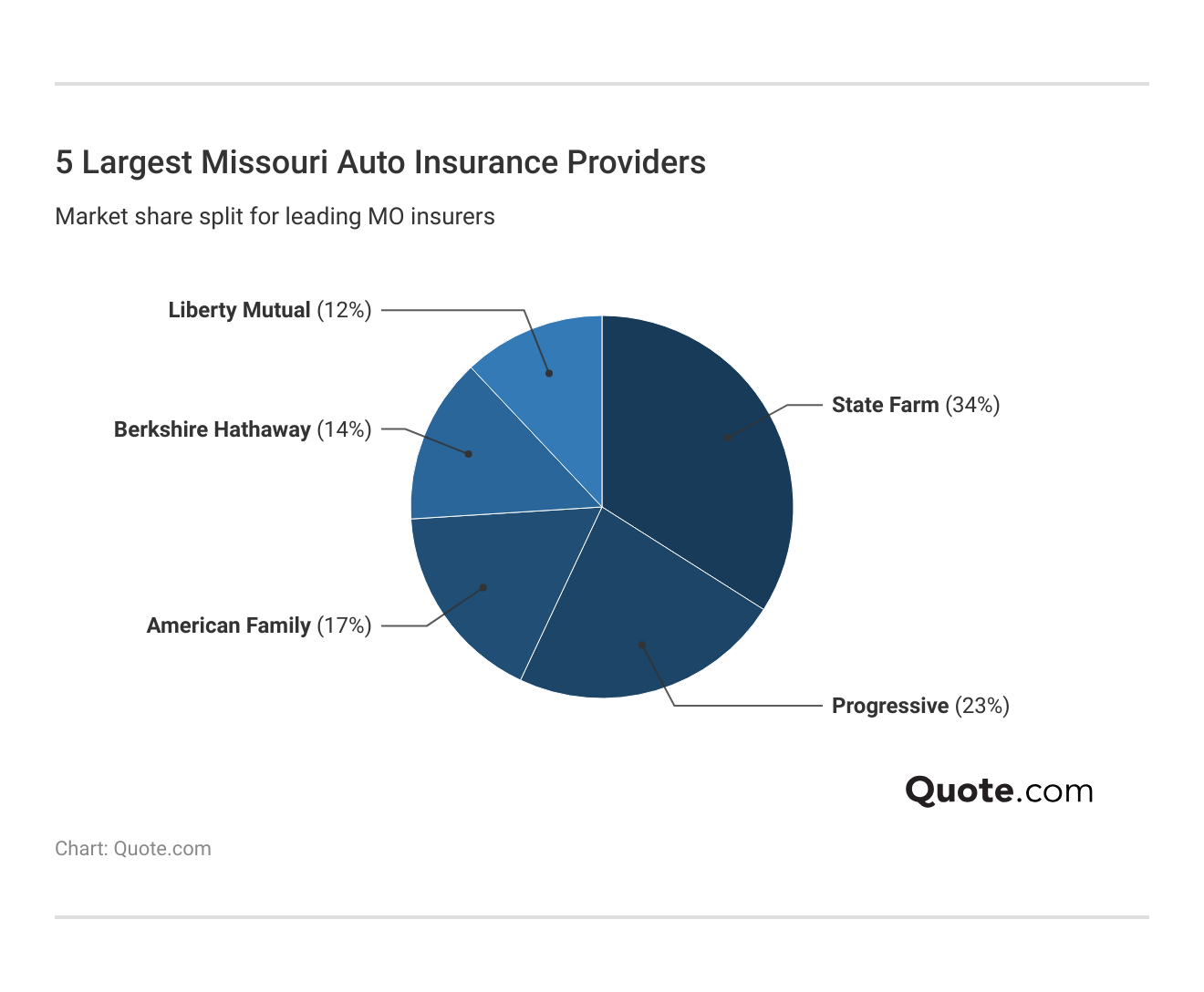
- State Farm: As one of the largest writers of auto insurance in Missouri, State Farm frequently scores high in regional J.D. Power studies. Policyholders benefit from an extensive network of local agents across St. Louis, Kansas City, Springfield, and rural counties, alongside telematics programs like Steer Clear and Drive Safe & Save.
- USAA: Restricted to military members, veterans, and their eligible family members, USAA consistently achieves top-tier marks across financial strength, claims processing, and customer retention.
- Progressive: Known for competitive pricing and digital tool integration, Progressive is a strong option for drivers with diverse risk profiles, including those seeking non-standard auto coverage or specialized vehicle endorsements.
- American Family: Headquartered regionally, American Family maintains a strong footprint in Missouri, offering robust accident forgiveness programs and customizable bundling discounts.
Evaluating Homeowners Insurance in Missouri
Missouri homeowners face distinct climatic vulnerabilities. The state is susceptible to severe convective storms, straight-line winds, hail, and the occasional seismic threat along the New Madrid Fault Zone. Consequently, standard homeowners policies (typically HO-3 forms) must be evaluated carefully regarding coverage exclusions, deductible structures, and endorsement availability.
Key Factors in Missouri Home Insurance Ratings
When looking at homeowners insurance companies in Missouri rated by claims satisfaction, pay attention to how carriers handle weather-related losses:
- Wind and Hail Deductibles: Many insurers in Missouri apply percentage-based deductibles (e.g., 1% to 5% of the dwelling's insured value) for windstorm and hail damage, rather than a flat dollar amount. Understanding these terms prevents unexpected out-of-pocket costs after a severe spring storm.
- Replacement Cost vs. Actual Cash Value: Ensure your policy covers the dwelling on an extended or guaranteed replacement cost basis. Construction material and labor costs fluctuate, and basic actual cash value (ACV) policies factor in depreciation, leaving a significant gap in payout amounts.
- Ordinance or Law Coverage: Older homes in historic districts throughout St. Louis or Kansas City require ordinance or law endorsements to cover the added costs of bringing a structure up to current building codes during repairs.
Major Homeowners Insurers in Missouri
- Liberty Mutual: Recognized for flexible policy customization and comprehensive digital claims tracking, though consumers should carefully review localized rate adjustments.
- Allstate: Offers robust coverage additions such as disappearing deductibles and green home rebuild endorsements, backed by a wide agent network.
- Farmers Insurance: Provides strong policy customization options and specialized coverage tiers, though premium costs can lean higher than direct-to-consumer alternatives.
| Insurance Company | Typical Auto Rating Strengths | Typical Homeowners Rating Strengths | Key Considerations in Missouri |
|---|---|---|---|
| State Farm | Extensive local agent network; strong telematics discounts. | High policyholder retention; reliable local claims handling. | Premium rates can vary significantly between urban and rural zip codes. |
| USAA | Exceptional customer satisfaction; competitive military pricing. | Streamlined digital claims; top-tier financial strength. | Membership eligibility restricted to military community. |
| Progressive | Flexible coverage options; robust online quoting tools. | Partnerships with third-party home underwriters. | Rates heavily influenced by driving record and credit-based insurance scores. |
| American Family | Strong bundling options; accident forgiveness programs. | Regional weather expertise; customizable endorsements. | Percentage deductibles for wind/hail require careful policy review. |
Cost Factors and Premium Influences in Missouri
Insurance rates in Missouri vary widely depending on geographic location, demographic factors, and individual risk profiles. Insurers evaluate several core metrics when determining your specific premium:
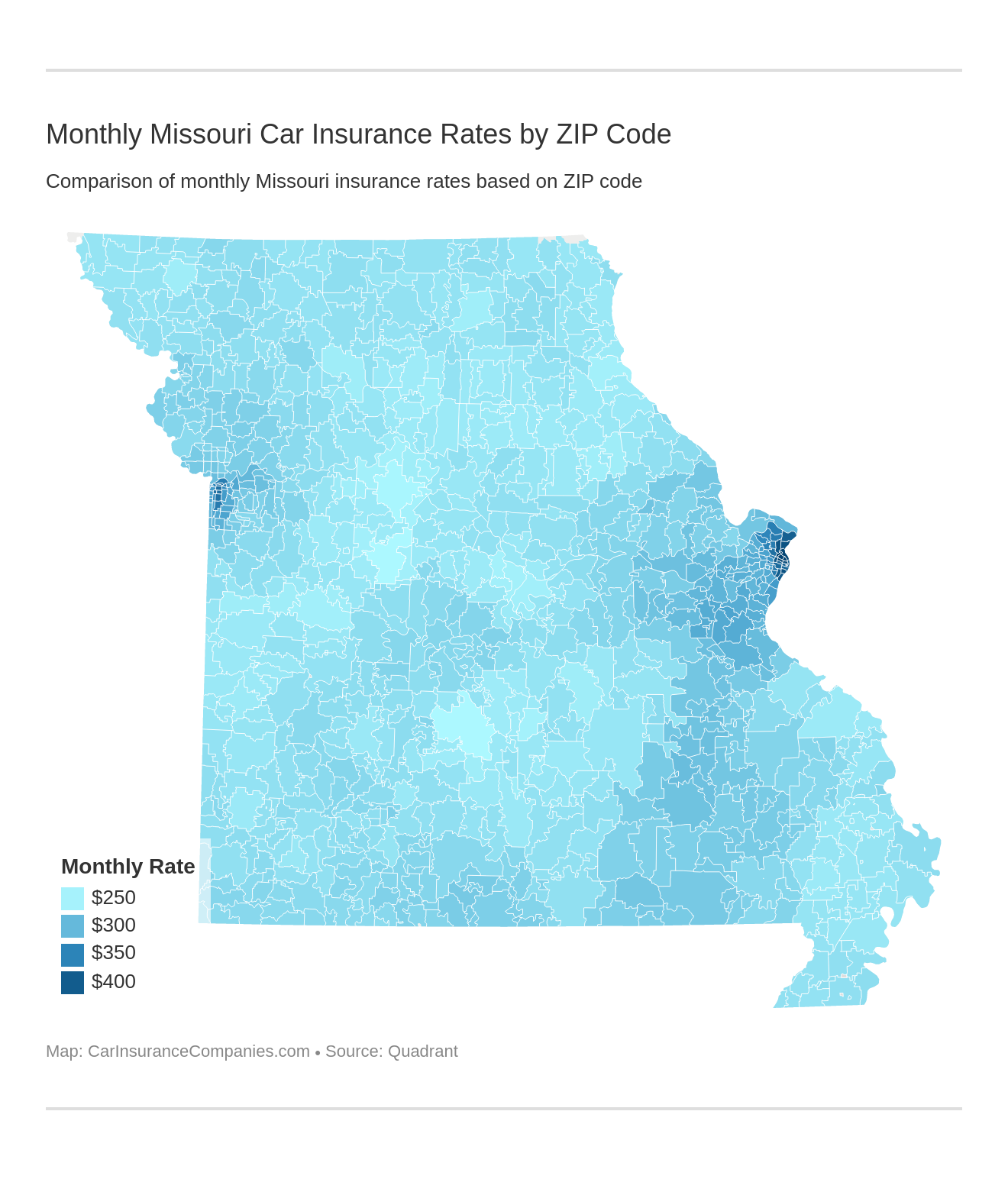
- Geography and Zip Code: Urban centers like St. Louis and Kansas City generally experience higher auto insurance premiums due to traffic density, vehicle theft rates, and collision frequencies. Conversely, homeowners in Tornado Alley regions or flood-prone river valleys may see elevated property insurance rates.
- Credit-Based Insurance Scores: Under Missouri law, insurers are permitted to use credit history as a rating factor to determine insurance scores, which correlate with the statistical likelihood of filing a claim.
- Claims History: Submitting multiple claims within a three- to five-year window can categorize you as a high-risk insured, resulting in surcharges or the loss of claims-free discounts.
- Deductible Selections: Opting for higher deductibles (e.g., raising comprehensive and collision auto deductibles from $500 to $1,000) reduces annual premium costs but increases immediate financial exposure during an incident.
Frequently Asked Questions
How do I check an insurance company's complaint record in Missouri?
You can review consumer complaint records and verify whether an insurance company is licensed in good standing by visiting the Missouri Department of Commerce and Insurance website. Additionally, the National Association of Insurance Commissioners (NAIC) consumer database provides national complaint indexes for individual carriers.
Is gap insurance necessary for auto financing in Missouri?
Gap insurance is highly recommended if you finance or lease a new vehicle. Because cars depreciate rapidly the moment you drive them off the lot, standard auto insurance payout limits based on actual cash value may fall short of your remaining loan balance if the vehicle is totaled.
Does standard homeowners insurance cover flood damage in Missouri?
No. Standard homeowners insurance policies explicitly exclude damage caused by rising surface water or flooding. Missouri residents living near the Mississippi or Missouri rivers, or in designated flood zones, must purchase a separate flood insurance policy through the National Flood Insurance Program (NFIP) or a private flood insurance market.
Can my insurance company drop my policy after I file a weather claim?
In Missouri, insurance companies generally cannot cancel an active policy arbitrarily, but they can choose not to renew your policy at the annual renewal date if your property accumulates multiple claims or is deemed to carry excessive risk. State regulations require insurers to provide written notice within a specified timeframe prior to non-renewal.
How can I lower my combined auto and home insurance rates?
The most effective way to reduce costs is bundling your auto and homeowners insurance with the same carrier. Additionally, maintaining a clean driving record, improving home security features, increasing deductibles, and inquiring about paperless billing or defensive driving course discounts can yield meaningful savings.
Next Steps for Missouri Policyholders
Evaluating auto and homeowners insurance companies in Missouri rated across financial strength and customer service requires gathering multiple quotes tailored to your exact coverage limits. Begin by auditing your current policies to ensure you meet Missouri's mandatory minimum liability requirements while maintaining adequate property replacement cost protection. Request quotes from at least three distinct carriers—balancing national brands with strong regional insurers—and compare their financial ratings, deductible structures, and customer reviews before finalizing your coverage.
Image Gallery