Understanding Why Mecca Is Considered the Center of the Earth
The perception of Mecca as the "center of the Earth" is a concept rooted in a blend of theological significance, historical cartography, and contemporary debates regarding geographic alignment. While modern geodesy defines the Earth’s...
The perception of Mecca as the "center of the Earth" is a concept rooted in a blend of theological significance, historical cartography, and contemporary debates regarding geographic alignment. While modern geodesy defines the Earth’s center through physical parameters such as the center of mass, the status of Mecca—specifically the Kaaba—is primarily framed within Islamic cosmology as the Qibla, the focal point of prayer and spiritual orientation for Muslims worldwide.
Contents
The Theological and Cosmological Context
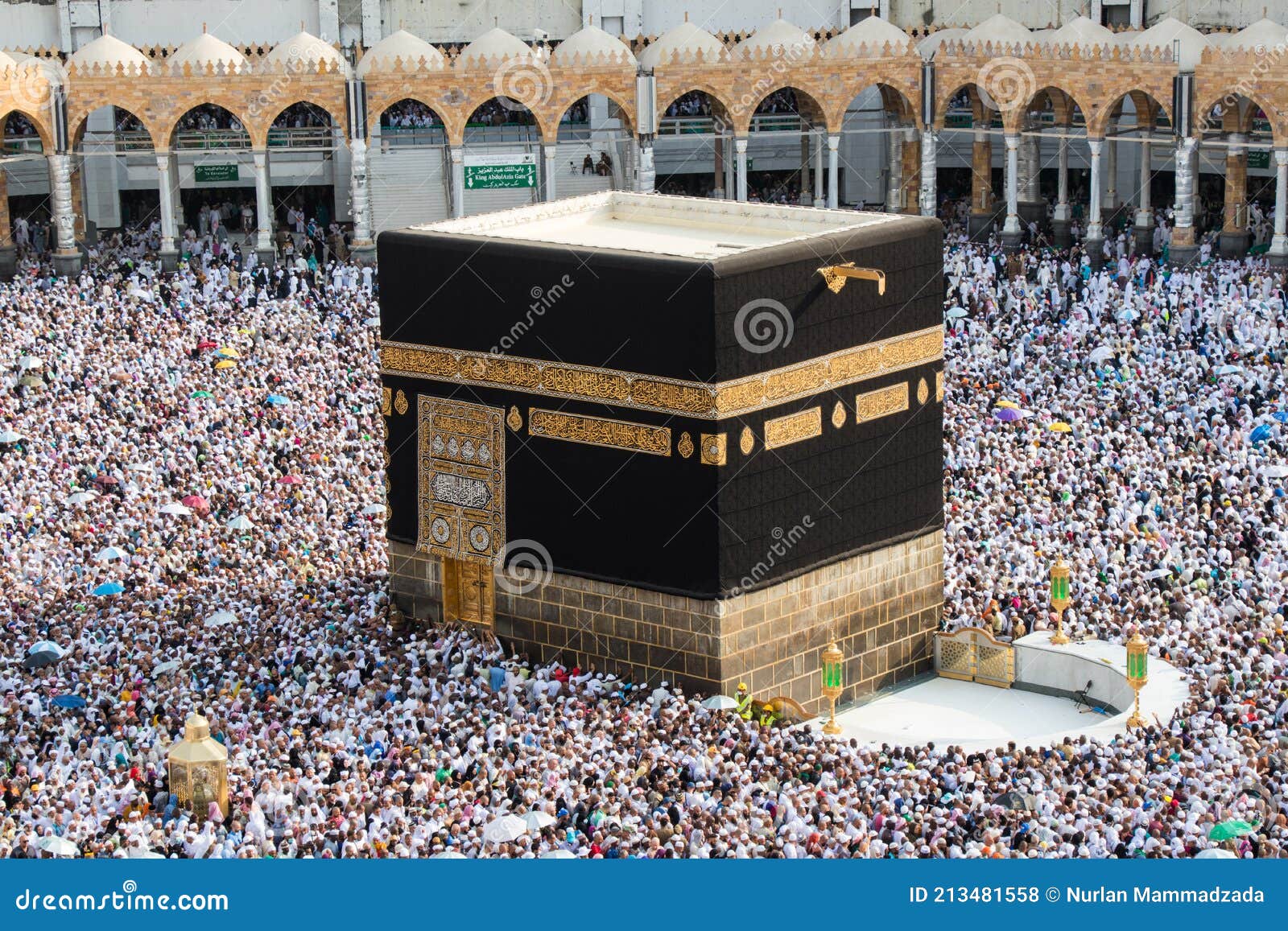
In Islamic tradition, the city of Mecca holds a status of unparalleled sanctity. Central to this is the Kaaba, the cuboid building at the center of the Masjid al-Haram. According to various interpretations of Islamic texts, the site is viewed as the first place of worship established on Earth. This spiritual centrality is reflected in the requirement for all Muslims to face the direction of the Kaaba during their daily prayers, a practice known as facing the Qibla.
For many believers, the term "center of the Earth" is not a claim about planetary geology but an expression of axis mundi—a spiritual center that connects the heavens and the Earth. This perspective suggests that while the physical Earth rotates on an axis determined by physics, the spiritual geography of the Islamic world is anchored to the site of the Kaaba, acting as a metaphysical midpoint that organizes the devotional life of over two billion people.
Historical Cartography and Global Orientation
Throughout the Middle Ages, the concept of a "center of the world" was common in map-making traditions across various civilizations. Before the universal adoption of the Prime Meridian in Greenwich, London, in 1884, cartographers often placed their own cultural or religious centers at the heart of their maps.
Early Islamic geographers, such as Al-Biruni and Al-Idrisi, developed sophisticated methods for calculating the Qibla—the shortest distance on a sphere between any point and the Kaaba. These calculations required an advanced understanding of spherical trigonometry. Because these scholars were attempting to reconcile the geometry of a sphere with the spiritual importance of Mecca, their maps often emphasized the city's role as a global reference point. Consequently, the idea of Mecca as a central coordinate became deeply embedded in the intellectual history of the Islamic Golden Age.
Scientific Misconceptions and Modern Geodesy
In the late 20th and early 21st centuries, some popular discourse has conflated spiritual significance with modern geodetic measurements. Certain claims emerged suggesting that the "Golden Ratio" or specific geographic alignments make Mecca the exact physical center of the Earth’s landmass.
From a scientific standpoint, the "center of the Earth" is defined as the center of mass (the geocenter). The crustal plates, continents, and oceans are in constant motion due to plate tectonics, meaning that any calculation regarding the "center of the landmass" is transient and depends entirely on the criteria used to define the boundaries of continents.
Geographers generally note the following regarding these scientific claims:
- Geodetic Center: The center of mass of the Earth is located at the planet's core, approximately 6,371 kilometers beneath the surface.
- Geometric Center: A geometric center of the Earth’s landmass is an abstract concept that changes based on how one defines the limits of the continents and whether islands are included.
- The Prime Meridian Debate: Discussions regarding Mecca versus Greenwich as a "prime" reference point often stem from an argument for historical or cultural fairness, rather than a geodetic necessity.
Comparative Perspective: Spiritual vs. Physical Geography
To understand why the concept persists, it is helpful to categorize the definitions used when describing "centrality."
| Perspective | Definition | Primary Focus |
|---|---|---|
| Spiritual/Cosmological | The Axis Mundi or focal point for prayer. | Religious orientation and sanctity. |
| Historical Cartographic | The reference point for early global navigation. | Determining direction (Qibla). |
| Physical/Geodetic | The center of mass (Geocenter). | Physics, gravity, and planetary rotation. |
| Geometric | The mathematical center of the Earth's crust. | Variable based on map projection. |
This table illustrates that the "center of the Earth" carries different meanings depending on the domain. The theological importance of Mecca is absolute within its tradition, while the scientific center of the Earth remains a constant defined by physical laws, independent of human cultural or religious geography.
The Role of Technology in Qibla Determination
The quest to locate the "center" for the purpose of daily prayer has driven technological innovation. In 2026, mobile applications and sophisticated satellite systems allow Muslims to calculate the Qibla direction with extreme precision from anywhere on the planet.
These tools demonstrate that the spiritual "centrality" of Mecca is a functional, actionable requirement. While a user may be thousands of miles away, the geometry of the Earth (treated as an oblate spheroid) allows for a precise calculation of the shortest path—the great-circle route—to the Kaaba. This reinforces the idea that Mecca serves as the definitive reference point for the global Islamic community, regardless of the user's physical location.
Common Misunderstandings and Clarifications
A frequent point of confusion is whether the "center" claim is intended to be a scientific theory. Most Islamic scholars and theologians distinguish between the metaphysical centrality of the Kaaba and the material properties of the Earth.
- Is Mecca at the exact center of the landmass? There is no universal, peer-reviewed scientific consensus that places Mecca at the geometric center of Earth’s landmass. Such claims are typically based on specific, non-standard projections of the world map.
- Does the Earth's rotation favor Mecca? There is no physical evidence that the Earth’s rotation or magnetic field is centered upon or influenced by the city of Mecca.
- Why do these claims persist? They often arise from a desire to find physical, tangible evidence for spiritual truth. For many, the idea that the most sacred site is also physically central provides an intuitive, poetic harmony between their faith and the structure of the world.
Conclusion: Distinguishing Meaning from Measurement
The assertion that Mecca is the "center of the Earth" is best understood as a statement of spiritual, cultural, and historical significance rather than a claim rooted in geology or geophysics. While the physical Earth operates under the laws of gravity and planetary motion, the human experience of the world is often organized around sites of deep symbolic importance.
Recognizing Mecca as the center of the Earth is a way of acknowledging its role as the anchor of the Islamic faith and a long-standing reference point in the history of human geography. By respecting the distinction between these two realms—the measurable world of science and the meaningful world of belief—one gains a clearer understanding of why this concept remains relevant and profound for millions of people.
Frequently Asked Questions
Why is Mecca so important to Muslims? Mecca is the birthplace of the Prophet Muhammad and the location of the Kaaba, the most sacred site in Islam. It is the destination of the Hajj pilgrimage and the focal point of the daily prayer.
Does science support the claim that Mecca is the center of the world? From a strict scientific and geodetic perspective, there is no "center of the world" in terms of geography, as Earth is a sphere. The geocenter is at the core, while the geographic center of the landmass is a shifting variable depending on measurement techniques.
What is the Qibla and how is it determined? The Qibla is the direction of the Kaaba. It is determined using spherical trigonometry to find the great-circle path from any point on Earth to Mecca.
Are there different ways to define the "center" of the Earth? Yes. You can define the center through physics (center of mass), geometry (midpoint of landmass), or theology (the spiritual point of convergence for human worship).
Should the "center of the earth" claim be treated as a scientific fact? No. It is a theological and historical concept. Treating it as a scientific fact mischaracterizes the nature of religious symbolism and the principles of modern geophysics.
Next Steps for Further Exploration For those interested in the history of Islamic science, researching the works of medieval scholars like Al-Biruni offers deep insight into how geometry was used to facilitate religious practices. Additionally, examining modern geodetic studies regarding the shape of the Earth can provide a clearer picture of how coordinates are calculated in the 21st century.
Image Gallery