The Difference Between Type R and Si Explained for You
The primary difference between the Honda Civic Type R and the Civic Si lies in their intended purpose: the Si is a sport-tuned daily driver offering a balance of performance and efficiency, while the Type R is a track-ready powerhouse...
The primary difference between the Honda Civic Type R and the Civic Si lies in their intended purpose: the Si is a sport-tuned daily driver offering a balance of performance and efficiency, while the Type R is a track-ready powerhouse with significantly more horsepower, advanced suspension, and aggressive aerodynamics.
Contents
For decades, Honda has maintained a distinct hierarchy within its performance lineup. While both vehicles share the foundational architecture of the Honda Civic, they are engineered for vastly different experiences. As we look at the landscape in 2026, these two trims continue to define the "attainable" performance market, though they cater to different budgets and driving styles. Whether you are looking for a spirited commute or a weekend track weapon, understanding the mechanical and philosophical gaps between the Si and the Type R is essential before making a purchase.
The Core Philosophy: Street vs. Track
To understand the technical differences, one must first understand the design philosophy behind each badge. The Si (Sport Injected) trim has historically served as the "middle child" of the Civic family. It is designed for the enthusiast who needs a single car to do everything—commuting, grocery runs, and the occasional canyon carve. It prioritizes fuel economy and ride comfort alongside its performance upgrades.
Conversely, the Type R is a "Racing" homologation of the Civic platform. It is a halo car designed to set lap records. Every component, from the engine cooling to the seat bolsters, is optimized for high-intensity driving. While the modern Type R is more refined than its predecessors, it remains a stiff, uncompromising machine compared to the more compliant Si.
Engine and Powertrain: The Power Gap
The most quantifiable difference between these two models is what lies under the hood. While both utilize turbocharged four-cylinder engines, their displacements and outputs are worlds apart.
The Civic Si: The 1.5L Turbo
The 2026 Civic Si utilizes a high-output version of Honda’s 1.5-liter turbocharged engine (L15CA). This engine is tuned to provide a broad torque curve, making it exceptionally punchy in city traffic. It produces approximately 200 horsepower and 192 lb-ft of torque.
One of the Si's greatest strengths is its accessibility. It achieves impressive fuel economy (often exceeding 30 MPG combined) while providing enough power to feel "quick" without being overwhelming. The Si is exclusively paired with a short-throw six-speed manual transmission, featuring a rev-match system that helps drivers execute perfect downshifts every time.
The Civic Type R: The 2.0L K20C1
The Type R steps up to the legendary 2.0-liter K20C1 turbocharged engine. This is a significantly more robust powerplant designed for high-heat environments and sustained high-RPM usage. In its current iteration, it produces 315 horsepower and 310 lb-ft of torque.
The Type R’s engine utilizes a larger turbocharger, a more efficient intercooler, and a specialized exhaust system with three outlets to manage backpressure. This results in a 0–60 mph time of approximately 4.9 seconds, nearly two seconds faster than the Si. Like the Si, the Type R is manual-only, but its gearbox is reinforced to handle the massive increase in torque and features an even more sophisticated rev-matching algorithm.
Chassis, Suspension, and Handling
While horsepower gets the headlines, the suspension and chassis tuning represent the most significant engineering gap between the two cars.
Dual-Axis Struts vs. Standard MacPherson
The Civic Si uses a traditional MacPherson strut front suspension, which is reinforced and tuned with stiffer springs and dampers than the standard Civic. It is agile and playful, but it is susceptible to "torque steer"—the tendency of a high-torque front-wheel-drive car to pull to one side under hard acceleration.
To combat this, the Type R features a Dual-Axis Strut front suspension. This complex engineering feat separates the steering and suspension functions, significantly reducing torque steer and allowing the car to put its 315 horsepower down with surgical precision. Additionally, the Type R comes standard with Adaptive Damper System (ADS), which allows the driver to toggle between Comfort, Sport, and +R modes, adjusting the firmness of the ride in real-time.
Differential and Braking
Both cars utilize a Helical Limited-Slip Differential (LSD). This mechanical component ensures that power is distributed to the wheel with the most grip during cornering, preventing the inside wheel from spinning aimlessly. However, the Type R's LSD is tuned for much more aggressive corner-exit speeds.
Braking performance also differs drastically. The Si uses upgraded ventilated front discs that are more than adequate for street use. The Type R, however, is equipped with a massive Brembo braking system featuring four-piston calipers and two-piece rotors. These are designed to resist "brake fade"—the loss of stopping power due to heat—during 20-minute track sessions.
Exterior Design and Aerodynamics
You can tell the difference between these two models from a block away. The Si is understated; it features a unique honeycomb grille, blacked-out trim, and a subtle rear spoiler. It is the "sleeper" of the lineup, blending into traffic while still looking sporty to those in the know.
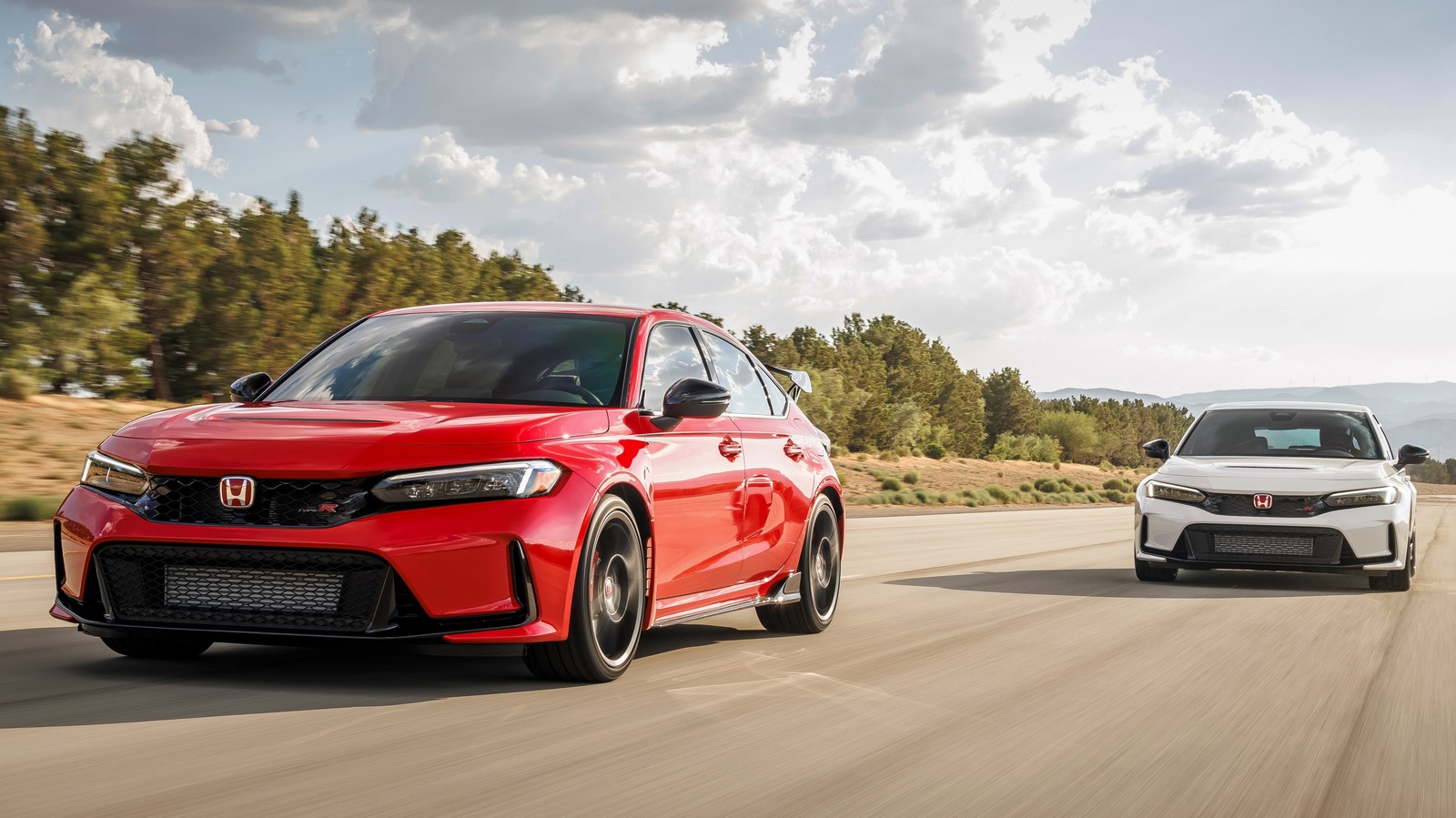
The Type R is unapologetically aggressive. In 2026, the design remains focused on airflow and downforce. Key visual and functional differences include:
- Wider Fenders: The Type R has a wider track and flared wheel arches to accommodate wider tires (typically 265mm vs the Si’s 235mm).
- Functional Vents: The hood scoop and fender vents are not just for show; they extract heat from the engine bay and reduce air pressure in the wheel wells.
- The Rear Wing: The massive, pedestaled rear wing provides actual downforce at highway and track speeds, keeping the rear end stable during high-speed cornering.
Interior Layout and Daily Usability
The interior is where potential buyers often face their toughest decision, as the Type R makes several sacrifices in the name of performance.
| Feature | Civic Si | Civic Type R |
|---|---|---|
| Seating Capacity | 5 Passengers | 4 Passengers (Rear Middle Seat Removed) |
| Front Seats | Sport Cloth (Black/Red Accents) | High-Bolster Racing Buckets (Signature Red) |
| Audio System | 12-Speaker Bose Premium | 12-Speaker Bose Premium |
| Climate Control | Dual-Zone Automatic | Dual-Zone Automatic |
| Ride Quality | Firm but compliant for daily use | Adjustable (Stiff to Very Stiff) |
| Cargo Space | Standard Trunk/Hatch | Standard Hatch (Greater Versatility) |
A crucial distinction is the seating capacity. The Civic Si is a standard five-seater. The Type R, however, removes the center seat in the rear, replacing it with permanent cupholders. This makes it a strict four-seater. Furthermore, the Type R’s red suede seats are heavily bolstered; while they hold you perfectly during high-G cornering, they can be more difficult to climb in and out of for daily errands compared to the Si’s sport seats.
Cost of Ownership and Value Proposition
The price gap between the two is substantial. As of 2026, a new Civic Si typically carries an MSRP in the $30,000–$32,000 range. It is one of the best performance bargains on the market, offering low insurance premiums and excellent fuel economy.
The Civic Type R commands a much higher entry price, usually starting around $46,000–$48,000, with market adjustments often pushing it higher. Beyond the purchase price, the Type R is more expensive to maintain. Its high-performance tires (like the Michelin Pilot Sport 4S) wear out quickly and are expensive to replace. The Brembo brakes and specialized suspension components also carry higher service costs. However, the Type R has historically shown incredible resale value, often retaining a higher percentage of its MSRP than almost any other car in its class.
Frequently Asked Questions
Is the Type R significantly faster than the Si in daily traffic?
While the Type R has over 100 more horsepower, the difference is less noticeable in low-speed city traffic. The Si’s smaller turbocharger spools up very quickly, providing immediate "zip." The Type R’s power truly shines on highway on-ramps and open roads, where its superior mid-range and top-end power can be fully utilized.
Can I get an automatic transmission in either the Si or Type R?
No. As of 2026, both the Civic Si and the Civic Type R remain exclusively available with a six-speed manual transmission. Honda maintains that the manual gearbox is central to the engagement and "connected" feeling these specific trims are designed to provide. If you require an automatic, you would need to look at the Acura Integra or the standard Civic trims.
Is the Type R too stiff for a daily driver?
This is subjective. Thanks to its Adaptive Damper System, the Type R in "Comfort" mode is surprisingly civil, though it remains firmer than a standard Civic or the Si. However, the low-profile tires and 19-inch wheels mean you will feel potholes and road imperfections more acutely than you would in the Si.
Which car is better for winter driving?
Both are front-wheel drive and benefit significantly from a dedicated set of winter tires. The Si has a slight advantage for winter use because its 18-inch wheels allow for tires with more sidewall, which handle hidden potholes better. The Type R’s low ground clearance and wide tires can make deep snow more challenging, though its mechanical LSD helps with traction on icy surfaces.
Does the Si or Type R have better technology features?
In the current generation, both cars are well-equipped with the Honda Sensing suite of safety tech (Adaptive Cruise Control, Lane Keeping Assist, etc.). Both feature wireless Apple CarPlay and Android Auto. The Type R includes the LogR datalogger, a specialized on-board computer that tracks lap times, G-forces, and engine thermals—features the Si lacks.
Final Recommendation: Which One is for You?
The choice between the Type R and the Si depends entirely on your lifestyle and how you plan to use the car.
Choose the Honda Civic Si if:
- You want a fun, engaging manual car for under $35,000.
- You prioritize fuel economy and lower insurance costs.
- You need five seats for family or carpooling.
- You want a "stealthy" performance car that doesn't draw unwanted attention.
Choose the Honda Civic Type R if:
- You plan to attend track days or autocross events regularly.
- You want the absolute pinnacle of front-wheel-drive engineering.
- You value rarity and high resale value over initial cost.
- You enjoy the bold, aggressive styling of a "track star" on the road.
Both vehicles represent the peak of their respective sub-segments. The Si remains the gold standard for the "everyman" enthusiast, while the Type R continues its reign as the king of the hot hatchbacks.
Image Gallery