Where to Stay Near Lucerne, Switzerland: The Comprehensive Neighborhood Guide
Deciding where to stay near Lucerne, Switzerland, depends entirely on whether you prefer the historic energy of the Old Town, the dramatic lakeside luxury of Weggis and Vitznau, or the alpine adventure gateway of Engelberg. Visitors lo...
Deciding where to stay near Lucerne, Switzerland, depends entirely on whether you prefer the historic energy of the Old Town, the dramatic lakeside luxury of Weggis and Vitznau, or the alpine adventure gateway of Engelberg. Visitors looking for seamless access to boat cruises, rail connections, and mountain excursions will find that Lucerne and its surrounding lakeside and mountain villages offer distinct accommodation profiles tailored to varying travel styles, budgets, and itineraries.
Contents
Understanding the Lucerne Region: City Center vs. Lakeside and Mountains
When planning a trip to Central Switzerland, travelers often assume they must stay directly inside the urban boundary of Lucerne. However, the region functions as an interconnected transit network powered by the Swiss Federal Railways (SBB), Lake Lucerne Navigation Company (SGV) paddle steamers, and mountain cogwheel railways. Choosing your base requires balancing your primary activities—such as attending cultural events, shopping, or hiking—with your preferred morning view.
The immediate city center offers unmatched convenience for first-time visitors and train-dependent travelers. Stepping out of the Lucerne railway station places you within walking distance of the Chapel Bridge (Kapellbrücke), the Jesuit Church, and numerous museums like the Swiss Museum of Transport. Conversely, the shores of Lake Lucerne—often referred to as the Vierwaldstättersee—host resort towns that provide a slower pace, wellness retreats, and direct panoramas of Mount Rigi and Mount Pilatus.
Choosing a location outside the city center does not mean sacrificing mobility. Switzerland’s integrated public transit system ensures that ferry rides and regional buses operate on dependable, synchronized timetables. Evaluating your accommodation options across the region involves examining neighborhood characteristics, transit links, cost structures, and proximity to major attractions.
Best Neighborhoods and Areas to Stay
Lucerne Old Town (Altstadt) and City Center
Staying in the Altstadt puts you at the historical heartbeat of the city. Characterized by car-free cobblestone streets, frescoed medieval guild houses, and vibrant public squares like Weinmarkt and Kornmarkt, this area suits travelers who want to walk everywhere.
- Atmosphere: Lively, historic, and picturesque, with bustling cafes and boutique shops right outside your door.
- Convenience: A 5-to-10-minute walk to the central railway station (Zentralbahnhof) and the main ferry docks.
- Considerations: Accommodations here often occupy historic buildings, which can mean smaller room sizes, historical architectural quirks (such as winding staircases without elevators), and higher nightly rates. Street noise from evening diners may affect rooms facing main pedestrian zones.
Lake Lucerne Waterfront (Nationalquai and Haldenstrasse)
For travelers seeking grand hotels, classic Swiss lakeside hospitality, and uninterrupted views of the water and surrounding peaks, the waterfront stretching along Nationalquai is the premier choice.
- Atmosphere: Elegant, upscale, and tranquil, featuring grand 19th-century properties and manicured lakeside promenades.
- Convenience: A pleasant walk or a short bus ride into the Altstadt and the train station. Ferries depart frequently from piers directly adjacent to this stretch.
- Considerations: This is one of the most expensive micro-markets in Central Switzerland. Budget-conscious travelers will find very few options here, as properties skew toward upscale and luxury segments.
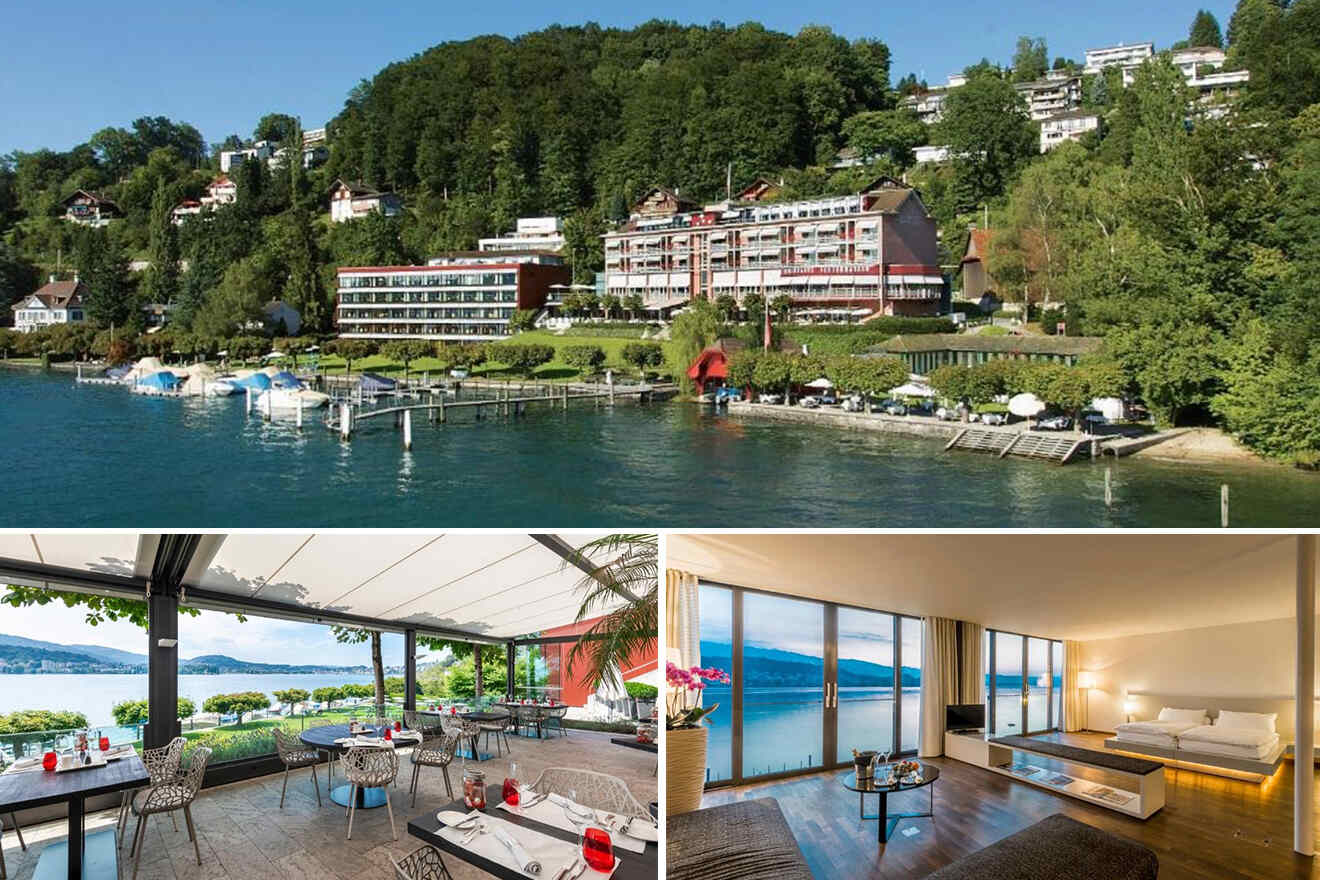
Weggis and Vitznau (The Riviera of Lake Lucerne)
Located on the northern shore of the lake at the foot of Mount Rigi, Weggis and Vitznau offer a Mediterranean microclimate and a resort atmosphere roughly 30 to 45 minutes from Lucerne by boat or bus.
- Atmosphere: Scenic, relaxing, and nature-focused. Weggis is known for its floral promenades, while Vitznau serves as the direct departure point for the historical cogwheel train up to Mount Rigi Kulm.
- Convenience: Excellent boat connections to Lucerne and surrounding lakeside villages. Traveling by car is also straightforward, though parking can be limited at historic hotels.
- Considerations: Nightlife is minimal compared to the city center. Dining options are generally confined to hotel restaurants and a few local lakeside cafes, making it ideal for quiet getaways rather than urban exploration.
Engelberg
Positioned south of Lucerne in a high-alpine valley, Engelberg is technically a separate municipality but serves as a primary hub for visitors prioritizing mountain sports and proximity to Mount Titlis.
- Atmosphere: Alpine, rugged, and active. It attracts skiers in the winter and hikers and mountaineers in the summer.
- Convenience: Connected to Lucerne via a direct, scenic regional train journey operated by the Zentralbahn, taking approximately 45 minutes.
- Considerations: If your primary goal is exploring Lake Lucerne or catching evening events in the city, the daily rail commute adds transit time. However, for alpine access, it is superior to staying lakeside.
| Location | Primary Vibe | Best For | Transit to Lucerne City Center | Price Range |
|---|---|---|---|---|
| Lucerne Old Town | Historic & Vibrant | Sightseeing, dining, train travelers | Walkable (0–10 mins) | High |
| Lake Waterfront | Upscale & Scenic | Luxury stays, romantic trips | Walk or short bus (5–15 mins) | Luxury |
| Weggis / Vitznau | Resort & Relaxed | Mount Rigi access, lake views | Boat or bus (30–45 mins) | Mid to High |
| Engelberg | Alpine & Active | Hiking, skiing, Mount Titlis | Train via Zentralbahn (45 mins) | Mid to High |
Cost Considerations and Budgeting
Accommodation pricing in and around Lucerne varies significantly by season, elevation, and proximity to the water. Understanding these financial dynamics helps prevent unexpected expenses during your trip.
Seasonal Fluctuations
Lucerne experiences distinct high and low seasons. The summer months (June through August) and the December holiday season—driven by the famous Lucerne Christmas Market and winter tourism—represent peak demand periods. During these times, room rates reach their maximum, and availability diminishes months in advance.
The shoulder seasons (spring from April to May, and autumn from September to October) offer a balance of milder weather, manageable crowds, and more competitive pricing. Winter months outside of the Christmas holidays often feature the lowest accommodation rates, though some mountain-adjacent properties may close briefly for maintenance.
City Taxes and Included Benefits
Most accommodations in Lucerne add a mandatory visitor’s tax (Kurtaxe), which is calculated per person, per night. In return, registered guests receive the Lucerne Guest Card at check-in. This digital or physical card provides free use of public bus and train networks within the city zone (Zone 10), along with discounts on various mountain railways, museums, and excursions. Always confirm with your hotel whether the visitor's tax is included in your quoted online rate or billed separately upon arrival.
Practical Logistics and Transit Tips
Navigating the Lucerne region relies heavily on intermodal transit. When choosing where to stay, factor in how you plan to arrive and move around:
- Arriving by Train: If you are traveling via the Swiss rail network from Zurich Airport or Bern, staying within walking distance of Lucerne’s main station eliminates the need for taxi transfers with heavy luggage.
- Traveling by Car: Many hotels in the historic Old Town do not have on-site parking due to pedestrianization rules. If you are driving a rental car, check in advance whether your accommodation offers partner parking garages or if you will need to park in municipal structures such as the Bahnhof-Parking.
- Luggage Forwarding: Swiss Federal Railways offers luggage services where you can send bags from the airport directly to participating hotels, or vice versa, allowing you to explore transit-heavy regions unencumbered.
Frequently Asked Questions
Is it better to stay in Lucerne city or by the lake?
Staying in the city center is ideal if you want nightlife, extensive dining choices, and immediate access to the main railway station for day trips. Staying by the lake in towns like Weggis or Vitznau is better if you prioritize panoramic views, quiet evenings, and a resort-style environment, accepting a short daily boat or bus commute to reach urban sights.
Do I need a car when staying near Lucerne?
No, a car is generally unnecessary and can be a financial liability due to high parking fees and restricted zones. The region is designed around public transit, including trains, buses, and lake steamers, which connect all major accommodation hubs efficiently.
How far is Mount Titlis from Lucerne hotels?
Mount Titlis is accessed via Engelberg. If you stay in Lucerne city, you can take a direct 45-minute train to Engelberg station, followed by a short free shuttle or walk to the Titlis Express cable car station. Staying in Engelberg places you at the base of the mountain immediately.
What is the Lucerne Guest Card, and how do I get it?
The Lucerne Guest Card is issued automatically to visitors staying overnight in commercial accommodations within the Lucerne tourism perimeter. It grants free travel on local city buses and boats within specified zones, alongside various excursion discounts.
Are hotels in Lucerne air-conditioned?
Not all historic or mid-range hotels in Lucerne feature air conditioning, as traditional European alpine architecture relies on thick masonry and natural ventilation. If summer travel requires climate control, verify that your chosen hotel room specifically lists air conditioning among its amenities before booking.
Final Recommendation
For a balanced first-time itinerary that minimizes transit friction, book a hotel within a 10-minute walking radius of the Lucerne railway station or the Old Town. This ensures seamless arrival with luggage and effortless daily departures for boat cruises and mountain excursions. If your trip focuses purely on relaxation and alpine scenery, choose a lakeside resort in Weggis or Vitznau to experience the signature beauty of Central Switzerland at a slower, more deliberate pace.
Image Gallery