Fusion Versus Fission: Understanding the Fundamental Mechanisms of Nuclear Energy
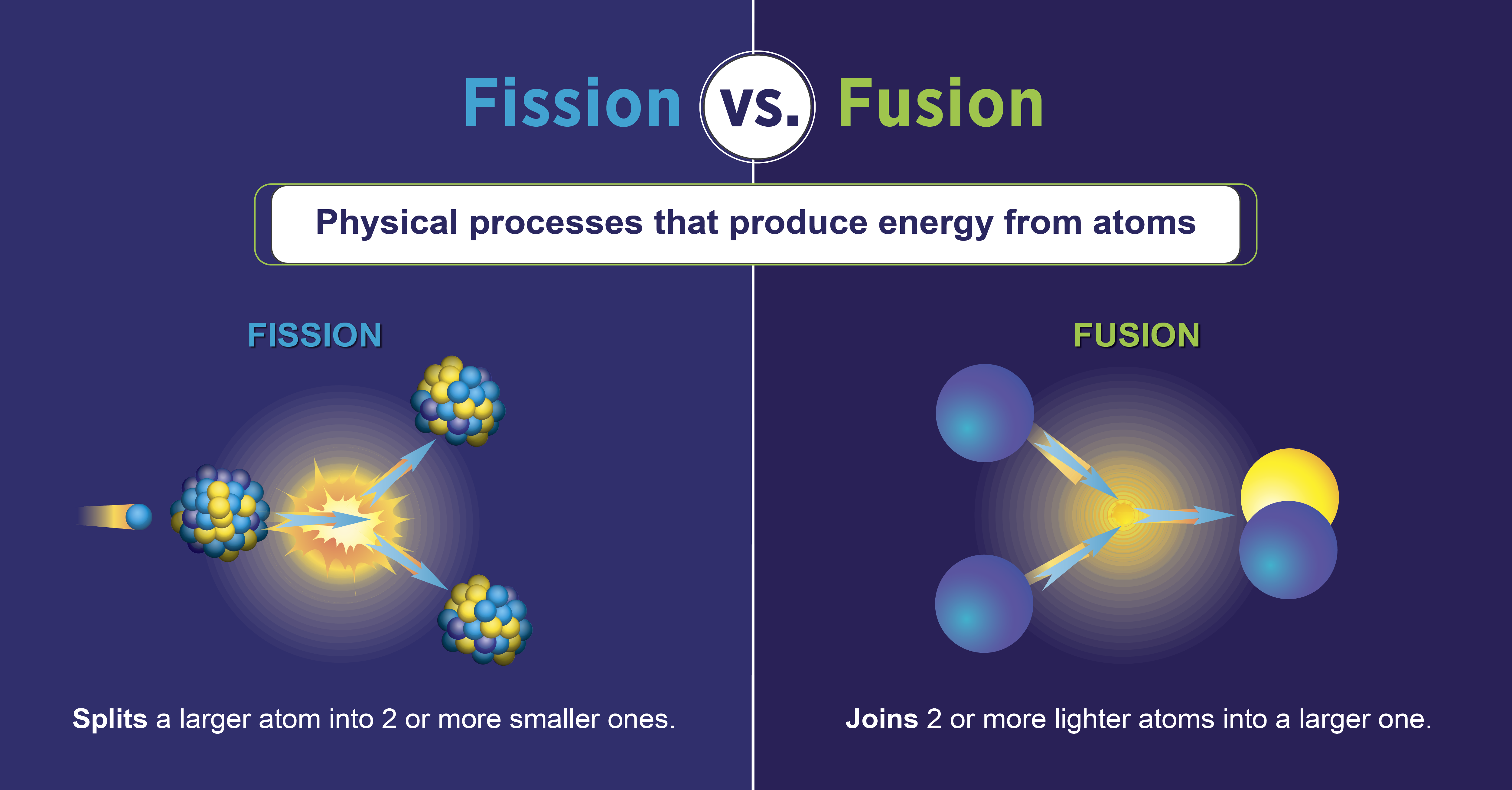
Nuclear energy is generated through two distinct physical processes: fission, which splits heavy atomic nuclei to release energy, and fusion, which combines light atomic nuclei to achieve a similar result. While both methods provide ma...
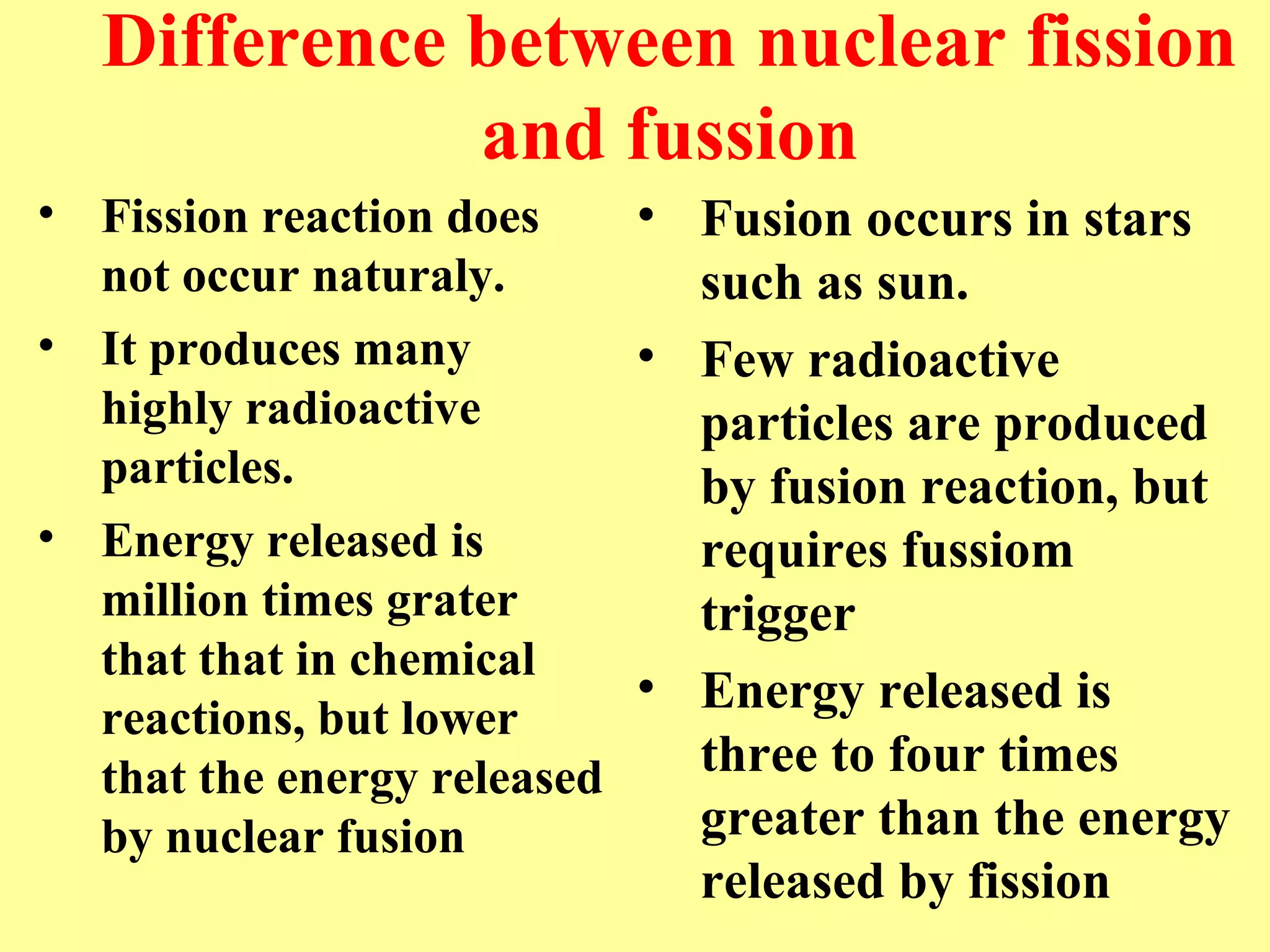
Nuclear energy is generated through two distinct physical processes: fission, which splits heavy atomic nuclei to release energy, and fusion, which combines light atomic nuclei to achieve a similar result. While both methods provide massive energy density compared to chemical fuels, they differ significantly in their operational requirements, fuel availability, waste profiles, and technical maturity.
Contents
The Physics of Nuclear Fission
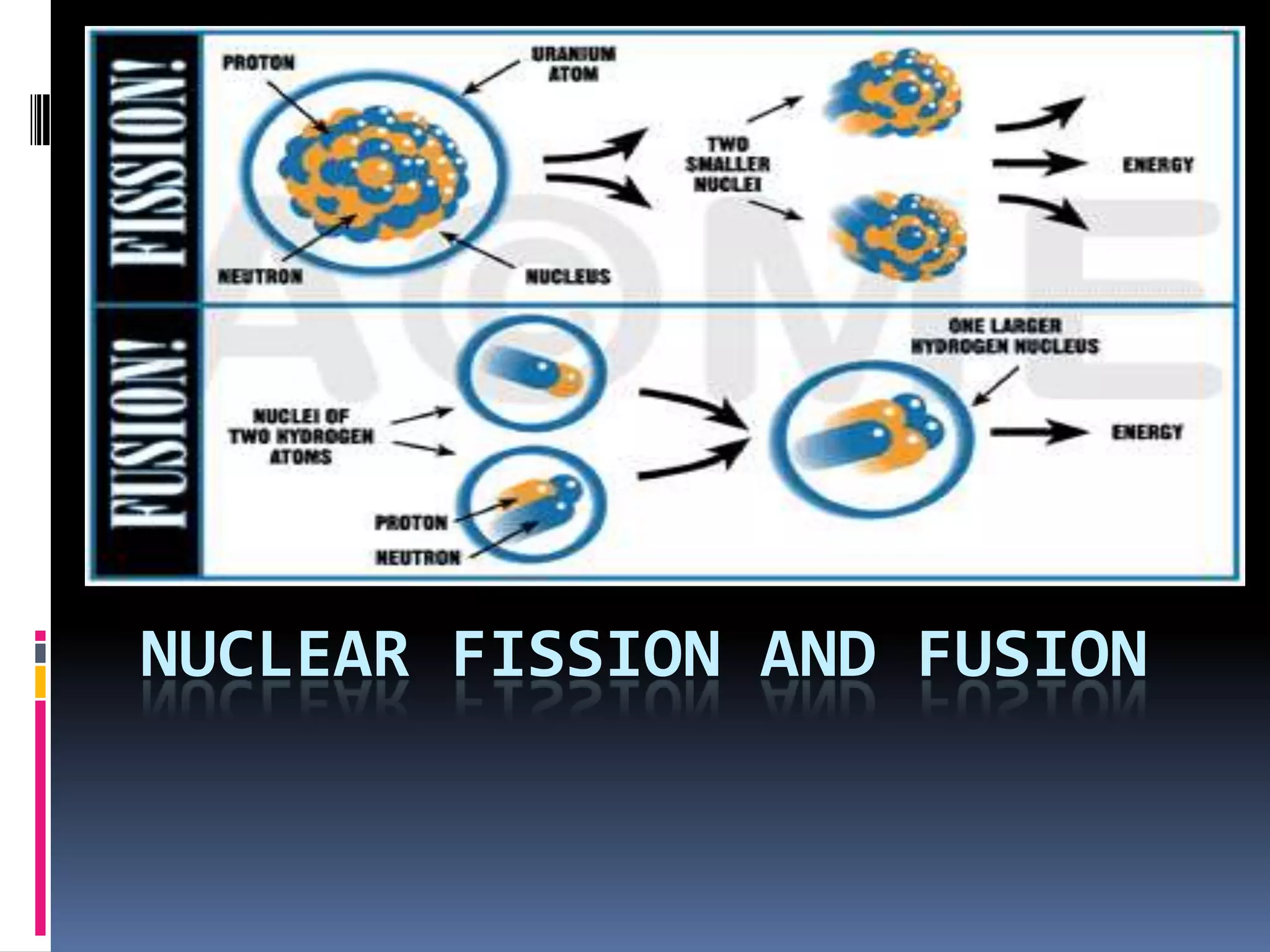
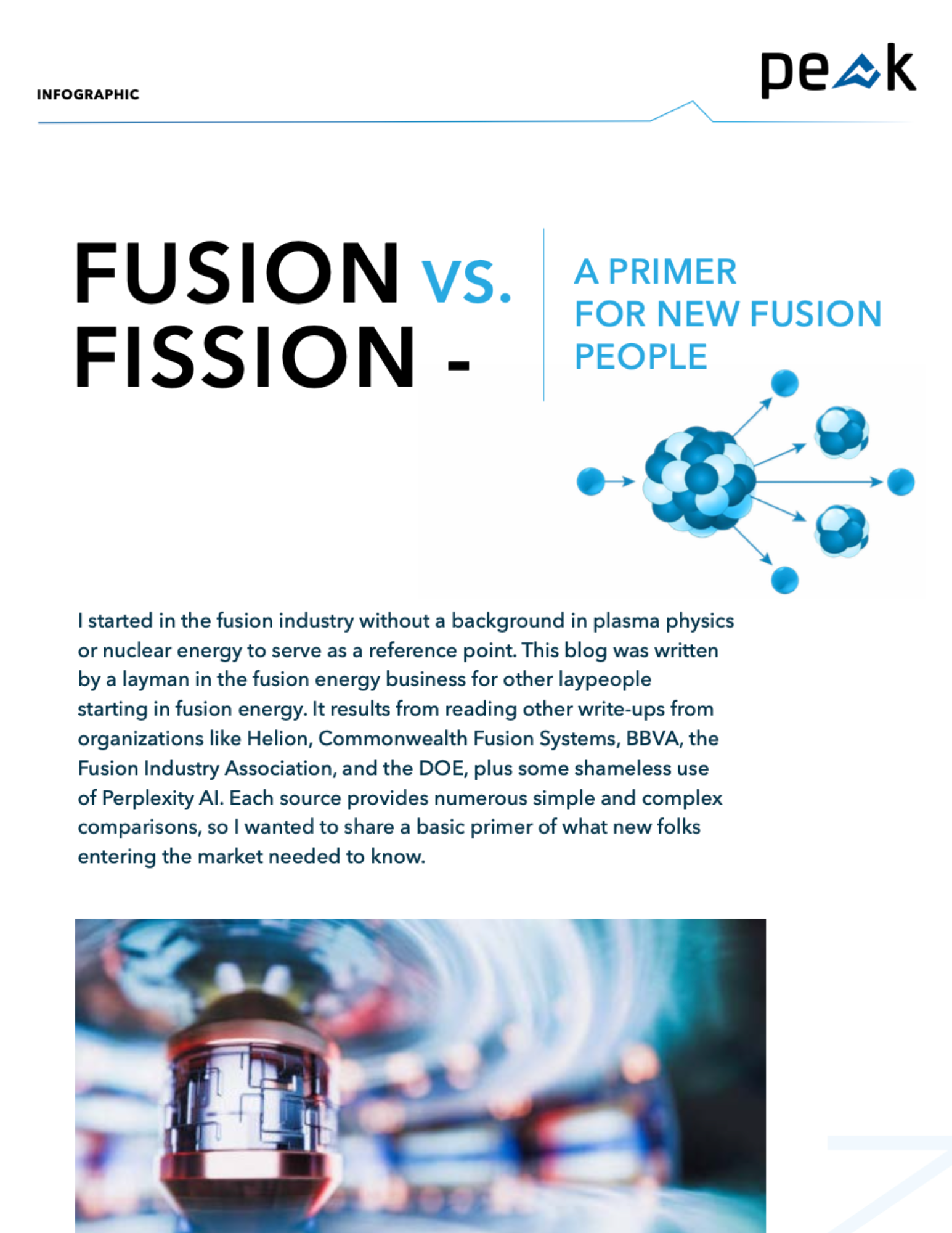
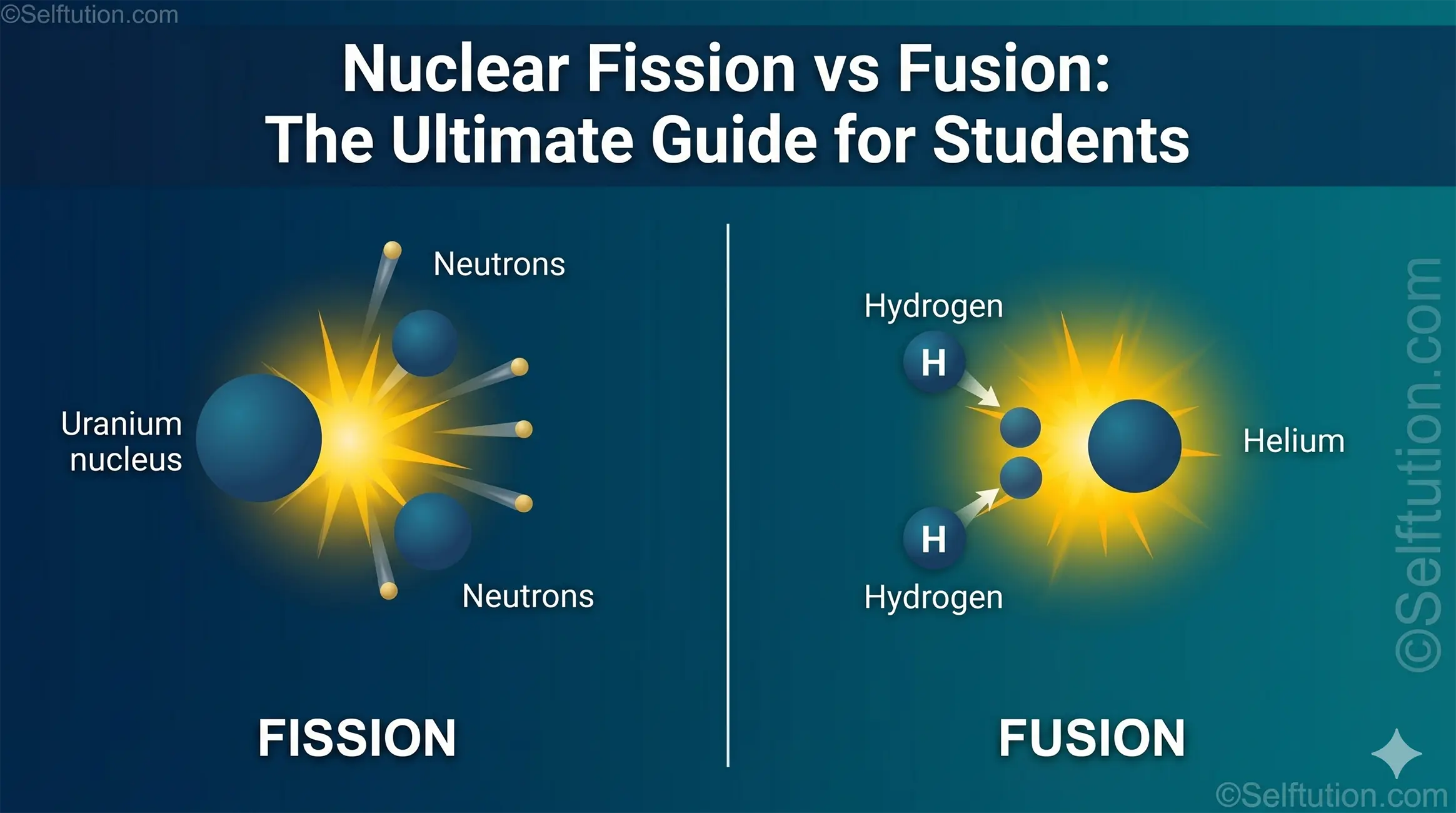
Nuclear fission is a process where the nucleus of a heavy atom, typically uranium-235 or plutonium-239, absorbs a neutron and becomes unstable. This instability causes the nucleus to split into two smaller, lighter nuclei—often referred to as fission products—while releasing a substantial amount of kinetic energy, gamma radiation, and additional neutrons.
These released neutrons are critical to the process. If these neutrons strike other nearby heavy nuclei, they can induce further fission events, creating a self-sustaining chain reaction. In a nuclear power plant, this reaction is carefully managed using control rods (which absorb excess neutrons) to maintain a steady state of heat production. This heat is subsequently used to boil water, create steam, and drive turbines to generate electricity. Because fission is a proven, reliable technology, it serves as the backbone of the global nuclear power industry as of 2026.
The Physics of Nuclear Fusion
Nuclear fusion is the inverse of fission. It involves forcing two light atomic nuclei, typically isotopes of hydrogen such as deuterium and tritium, to overcome their electrostatic repulsion and combine into a single, heavier nucleus, such as helium. This process releases a massive amount of energy because the mass of the resulting helium nucleus is slightly less than the sum of the initial hydrogen nuclei; the "missing" mass is converted into energy according to Einstein’s mass-energy equivalence principle, $E=mc^2$.
Achieving fusion on Earth requires extreme conditions: temperatures reaching tens of millions of degrees Celsius and high pressure, or extreme magnetic confinement, to create a plasma state where nuclei can collide frequently. While this process powers the sun and other stars, sustaining it in a controlled environment for power generation remains a complex engineering challenge.
Key Operational and Technical Differences
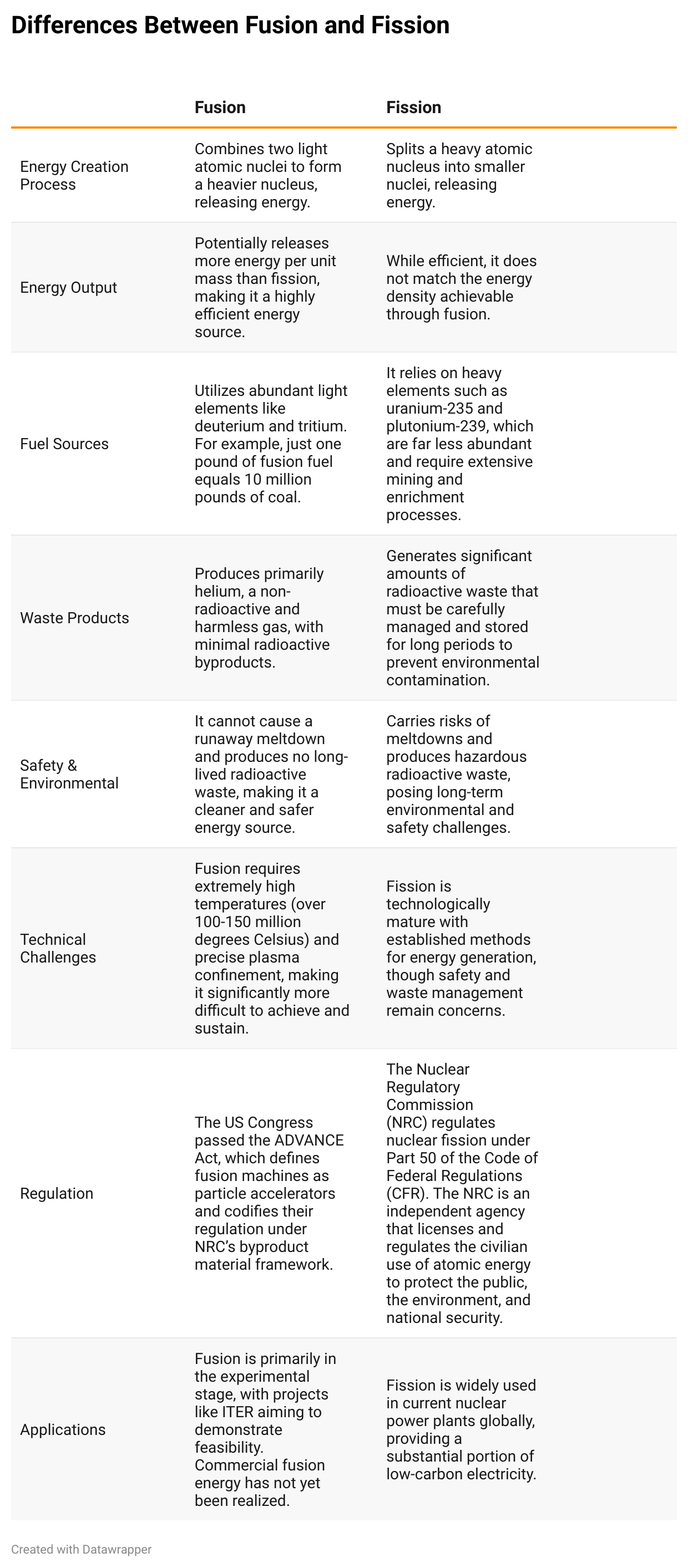
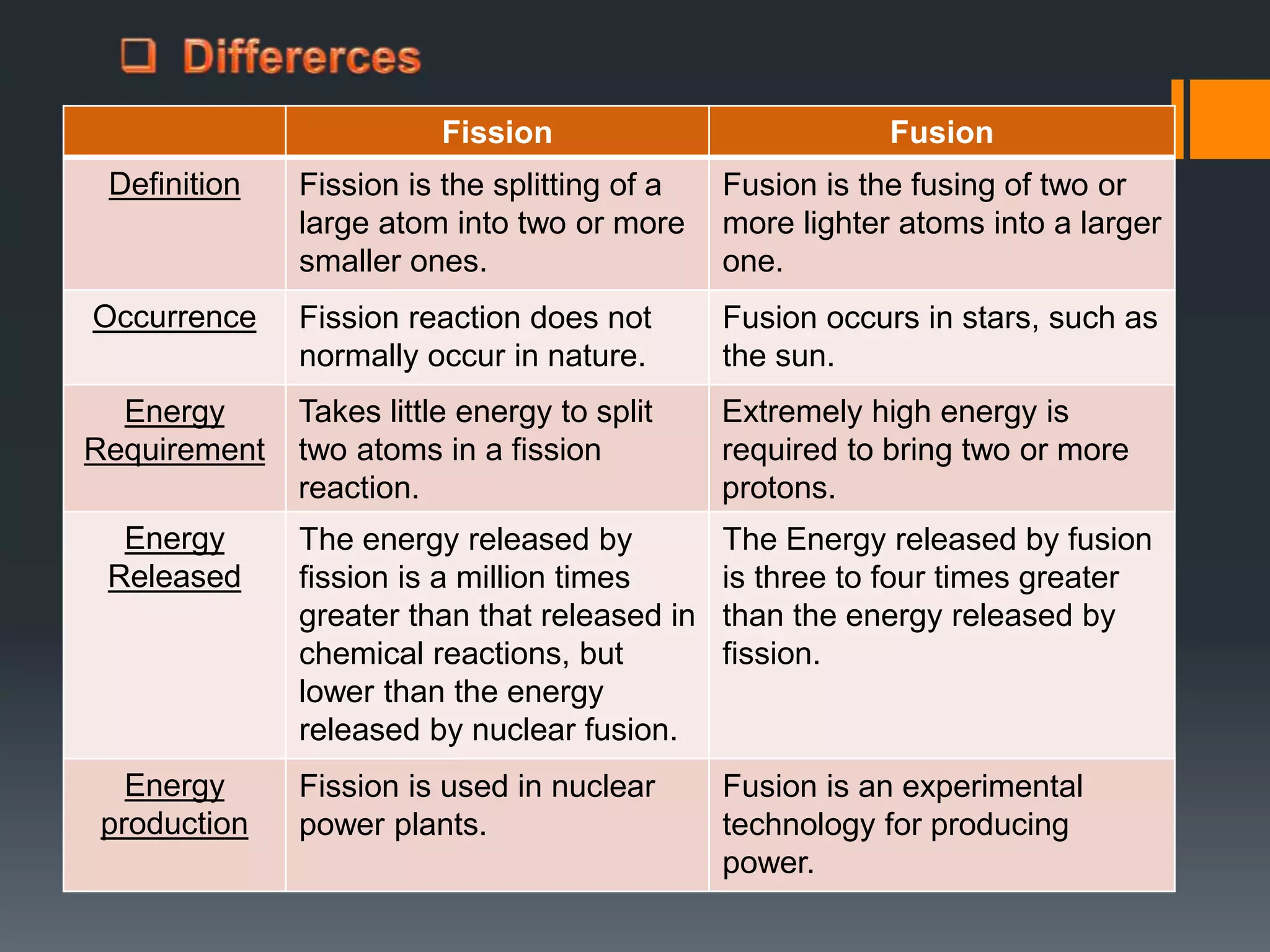
The distinction between these two processes extends beyond the direction of the atomic reaction. The following table compares the essential characteristics of fission and fusion as they relate to energy production.
| Feature | Nuclear Fission | Nuclear Fusion |
|---|---|---|
| Basic Mechanism | Splitting heavy atoms | Fusing light atoms |
| Fuel Source | Uranium or Plutonium | Deuterium and Tritium |
| Waste Profile | High-level radioactive waste | Helium and activated materials |
| Chain Reaction | Self-sustaining if critical | Requires continuous input |
| Safety Risk | Potential for meltdown if uncontrolled | Plasma instability ends the reaction |
| Operational Status | Industrial standard since the 1950s | Experimental/Pilot phases in 2026 |
Fuel Availability and Sustainability
Fission relies on heavy elements like uranium. Uranium mining is a well-established industry, though the resource is finite. Furthermore, the enrichment process required to make uranium suitable for fuel is energy-intensive and subject to strict international oversight to prevent nuclear proliferation.
Fusion, by contrast, offers a virtually inexhaustible fuel source. Deuterium can be extracted from seawater, and tritium can be produced from lithium, which is abundant in the Earth's crust. This makes fusion an incredibly attractive long-term prospect for global energy security, as it theoretically eliminates the geopolitical pressures associated with fossil fuel and uranium supply chains.
Radioactive Waste and Environmental Impact
One of the primary public concerns regarding fission is the management of long-lived radioactive waste. Spent nuclear fuel remains hazardous for thousands of years, requiring sophisticated geological disposal methods to prevent environmental contamination. Decommissioning fission plants also involves significant costs and environmental management of irradiated materials.
Fusion produces minimal high-level, long-lived waste. The primary byproduct of the reaction is helium, an inert gas. However, the high-energy neutrons produced during the D-T (deuterium-tritium) fusion reaction can make the surrounding reactor structure radioactive over time. While this "activated material" requires handling, its half-life is generally much shorter than that of spent fission fuel, potentially simplifying the waste management process significantly.
Safety and Risk Mitigation
The risk of a catastrophic accident in a fission reactor, such as a core meltdown, arises from the decay heat generated by the fuel after the chain reaction has been stopped. If the cooling systems fail, the heat can damage the reactor core.
Fusion reactors are inherently different in their risk profile. The fusion process is extremely sensitive to operating conditions. If any aspect of the plasma confinement fails—whether due to a power outage or a mechanical error—the plasma cools rapidly, and the fusion reaction ceases instantaneously. There is no risk of a "runaway" chain reaction, making the technology fundamentally safer from the perspective of uncontrolled thermal release.
Frequently Asked Questions
Why is fusion energy not yet powering the grid? The challenge is the "break-even" point. Creating the extreme temperatures and pressures required to sustain a plasma reaction consumes more energy than the reactor currently produces. Scientists are working to achieve "ignition," where the fusion process produces a net surplus of energy.
Does fusion require uranium? No. Fusion utilizes isotopes of hydrogen. It is entirely independent of the uranium fuel cycle used in conventional fission reactors.
Is fusion radioactive? The fusion process itself is clean, but the intense neutron radiation produced in D-T fusion causes the reactor walls to become radioactive over time. This makes the structural materials secondary waste, though it is easier to manage than fission waste.
What happens if a fusion reactor fails? If a fusion reactor loses confinement, the reaction stops automatically because the plasma disperses and cools. There is no fuel "melt-down" scenario analogous to fission.
Which is more energy-efficient? Fusion is vastly more energy-dense. Pound-for-pound, fusion releases significantly more energy than fission, which in turn releases millions of times more energy than chemical combustion.
Strategic Outlook
As of 2026, nuclear fission remains a mature and indispensable tool for carbon-neutral baseload power. Efforts are currently focused on Small Modular Reactors (SMRs) to improve safety and flexibility. Meanwhile, fusion remains a transformative research priority. While technical and material science hurdles persist, the potential for a clean, safe, and abundant energy source continues to drive significant international collaboration and private sector investment.
Image Gallery