How Much Does an MBA Make: Salary Insights for 2023
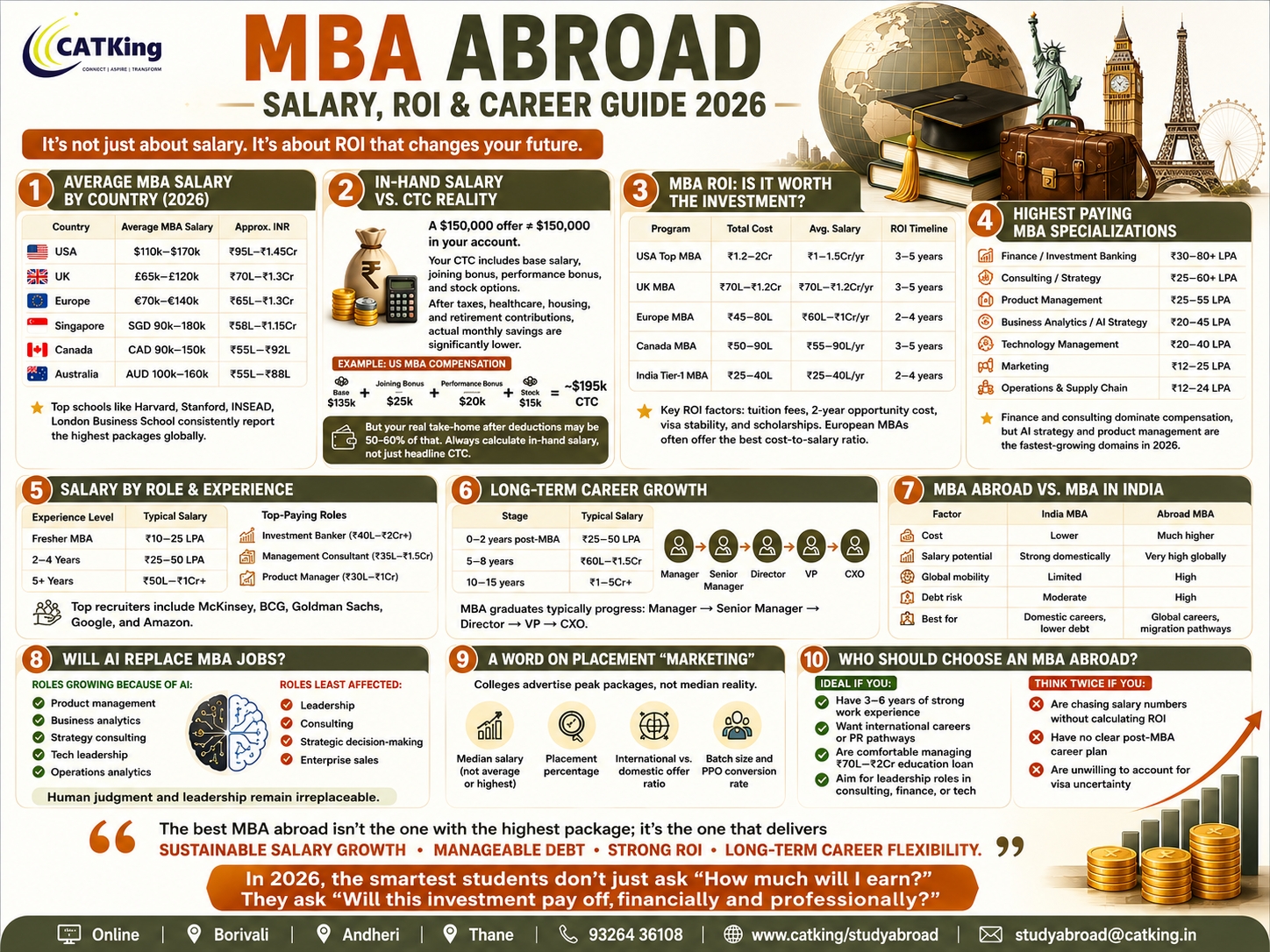
MBA graduates generally command strong starting salaries, with average base compensations ranging from $115,000 to over $175,000 annually depending on school tier, geography, industry, and prior work experience, while total compensatio...
MBA graduates generally command strong starting salaries, with average base compensations ranging from $115,000 to over $175,000 annually depending on school tier, geography, industry, and prior work experience, while total compensation packages frequently exceed $200,000 when signing bonuses and performance incentives are included.
Contents
Evaluating the financial return on investment (ROI) of a Master of Business Administration (MBA) requires looking past raw tuition costs and examining actual marketplace compensation data. For professionals weighing whether to leave the workforce for a full-time program or pursue an executive or online track, understanding compensation mechanics is critical. Graduate business education has long positioned itself as a primary accelerator for corporate leadership, strategic consulting, and financial services careers. However, earning potential varies widely based on institutional prestige, geographic labor markets, functional roles, and pre-degree professional backgrounds.
The Baseline: Average MBA Salaries and Total Compensation
When analyzing graduate earnings, market researchers typically distinguish between base salary and total compensation. While base salary provides a stable foundation, top-tier industries rely heavily on variable pay structures, including signing bonuses, relocation assistance, annual performance bonuses, and stock options or equity grants.
Data compiled from major business school employment reports consistently highlights a steady upward trajectory in graduate pay. For graduates from top-tier institutions—often referenced as the "M7" schools (Harvard, Stanford, Wharton, Columbia, Chicago Booth, MIT Sloan, and Northwestern Kellogg)—median base salaries sit comfortably between $175,000 and $200,000. When factoring in standard signing bonuses (which frequently range from $30,000 to $50,000) and guaranteed first-year performance bonuses, total first-year compensation for elite graduates often surpasses $230,000 to $250,000.
For graduates from top-20 and top-50 programs, baseline metrics adjust downward proportionally, though they remain significantly higher than pre-MBA earnings for most candidates. Median base salaries for top-20 programs typically hover between $140,000 and $165,000, while regional accredited institutions report average post-MBA starting salaries closer to $115,000 to $130,000.
Industry Breakdown: Where MBA Graduates Earn the Most
The industry a graduate enters exerts the single greatest influence on earning potential. Certain sectors systematically outpace others due to high revenue generation per employee, complex deal structures, or hyper-competitive talent markets.
Management Consulting
Management consulting remains one of the largest employers of MBA talent and historically offers the highest standardized starting base salaries. Firms such as McKinsey & Company, Boston Consulting Group (BCG), and Bain & Company maintain lockstep compensation models. For post-MBA associates entering top-tier strategy consulting firms, base salaries typically start around $175,000 to $192,000, accompanied by performance bonuses that can reach 30% to 50% of the base salary, plus signing bonuses.
Investment Banking and Private Equity
Financial services, particularly investment banking, offer lucrative base salaries paired with the market's highest variable bonus potential. Post-MBA associates at bulge-bracket investment banks and elite boutique advisory firms command base salaries comparable to consulting ($175,000 to $200,000). However, year-end cash bonuses in finance fluctuate heavily based on market conditions and individual deal flow, occasionally matching or exceeding the base salary itself. Private equity and venture capital roles for MBAs also offer exceptional long-term wealth accumulation via carried interest, though direct entry post-MBA remains intensely competitive.
Technology
Technology companies—spanning enterprise software, hardware, consumer internet, and cloud infrastructure—recruit heavily for product management, product marketing, corporate strategy, and finance leadership roles. Post-MBA product managers at major technology firms see base salaries ranging from $140,000 to $180,000. Total compensation packages in technology frequently lean more heavily on equity grants (such as Restricted Stock Units or stock options) than traditional cash bonuses, tying a portion of long-term earnings to public market performance or company valuation growth.
Corporate Leadership Development Programs (LDPs) and General Management
For professionals pursuing traditional corporate paths, Leadership Development Programs (LDPs) inside Fortune 500 manufacturing, consumer packaged goods (CPG), healthcare, and energy firms offer structured career progression. These roles typically yield starting base salaries between $115,000 and $145,000, with moderate signing bonuses and annual cash incentives of 10% to 20%.
| Industry Sector | Average Base Salary Range | Typical Signing Bonus | Primary Variable Compensation |
|---|---|---|---|
| Management Consulting | $175,000 – $192,000 | $30,000 – $40,000 | Performance bonuses (30%–50%+) |
| Investment Banking | $175,000 – $200,000 | $40,000 – $50,000 | Variable year-end cash bonuses |
| Technology (Product/Strategy) | $140,000 – $180,000 | $25,000 – $50,000 | Equity grants (RSUs/options) |
| Corporate LDPs / CPG | $115,000 – $145,000 | $10,000 – $30,000 | Annual performance bonuses |
| Nonprofit / Public Sector | $85,000 – $110,000 | Minimal | Rare; periodic stipends |
Geographic Variations and Cost of Living Adjustments
Where an MBA graduate works impacts nominal salary figures significantly. Major metropolitan areas with high concentrations of corporate headquarters, financial exchanges, and venture ecosystems pay premiums to offset local cost-of-living realities and intense local talent competition.
Financial and consulting hubs like New York City, San Francisco, and Boston command the highest baseline offers. Salaries in these markets regularly sit at the upper end of published averages. Conversely, graduates accepting positions in the Midwest, Southeast, or smaller regional markets may observe base salaries that are 15% to 25% lower. However, when evaluated through a purchasing power parity lens, lower-cost-of-living regions can sometimes yield comparable or superior net disposable income relative to high-tax, high-rent coastal metropolises.
Impact of Institutional Tier and Program Format
The prestige and network strength of the business school granting the degree play a major role in on-campus recruiting access and corporate valuation of the credential.
- Full-Time Elite Programs: Full-time programs at elite universities allow students to participate in formal on-campus recruiting (OCR), where major multinational corporations interview exclusively on site. This pipeline heavily drives top-tier compensation outcomes.
- Part-Time and Online Programs: Professionals who remain in the workforce while completing a part-time or online MBA often utilize the degree to secure internal promotions, lateral career pivots, or specialized industry transitions. While starting salaries for part-time graduates may not immediately match the campus-recruiting spikes of full-time elite cohorts, cumulative career earnings often benefit from uninterrupted employment and continuous professional seniority.
- Executive MBA (EMBA) Programs: EMBA candidates typically enter programs with 10 to 15+ years of prior work experience. Consequently, their baseline earnings are already elevated. EMBA graduates frequently leverage the credential to secure C-suite promotions, board appointments, or significant equity stakes, resulting in total compensation figures that routinely exceed $250,000.
Evaluating the True ROI of an MBA
Assessing whether an MBA makes financial sense requires balancing direct costs, opportunity costs, and post-graduation earning velocity.
Direct costs include tuition, fees, books, and living expenses during the study period. For a top-tier, two-year full-time program, total direct out-of-pocket expenses can easily exceed $150,000 to $200,000. Furthermore, the opportunity cost—forgone salary during two years out of the workforce—represents a substantial financial investment.
To determine the payback period, graduates divide total investment (direct costs plus foregone earnings) by the annual incremental increase in salary achieved post-MBA. For graduates entering high-paying sectors like investment banking or management consulting, the typical payback period ranges from 3 to 5 years. For graduates entering lower-paying sectors or regional markets, the payback period extends longer, reinforcing the importance of aligning program choice, debt load, and targeted post-graduation career paths.
Frequently Asked Questions
What is the average starting salary for an MBA graduate?
Average starting base salaries for MBA graduates typically range from $115,000 to over $175,000 per year. The exact figure depends heavily on the ranking of the business school, the chosen industry, geographic location, and the graduate's prior professional experience level.
How much do top-tier business school graduates make?
Graduates from elite business schools, such as Harvard, Stanford, and Wharton, frequently secure median base salaries between $175,000 and $200,000. When factoring in standard signing bonuses and first-year performance incentives, total compensation packages often exceed $230,000.
Which industries pay MBA graduates the highest salaries?
Management consulting and investment banking consistently offer the highest starting base salaries and cash bonus opportunities. Technology companies also offer competitive compensation, though a larger percentage of total pay is delivered via equity grants rather than cash bonuses.
Does prior work experience affect post-MBA salary?
Yes. Employers evaluate both the MBA credential and pre-degree professional experience. Candidates with specialized technical backgrounds, military leadership experience, or progressive corporate track records frequently command higher starting offers within the same graduating cohort.
Is an online MBA worth the financial investment?
Online and part-time MBA programs allow professionals to continue earning a salary while studying, which reduces opportunity costs. While initial post-graduation salary bumps may be more modest compared to full-time elite campus programs, online degrees offer strong ROI for internal promotions and career stability.
What factors should be considered when calculating MBA ROI?
Calculating the return on investment requires evaluating direct tuition costs, living expenses, foregone earnings during full-time study, student loan interest rates, and the expected post-graduation salary increase across your targeted career trajectory.
Strategic Next Steps
Prospective students and mid-career professionals evaluating an MBA should conduct a rigorous self-audit before committing capital and time. Begin by mapping out targeted post-MBA roles and verifying actual employment reports directly from target business schools rather than relying on generalized averages. Speak with alumni currently working within desired industries to understand hiring trends, sponsorship realities, and realistic total compensation figures. By matching personal career ambitions with accurate salary data, candidates can maximize the professional and financial return on their educational investment.
Image Gallery