Cute Cheap Jewelry Pricing Explained: How Materials and Manufacturing Drive Low Costs
Cute, affordable jewelry is priced low primarily due to the use of inexpensive base metals like zinc alloy or brass, high-volume automated manufacturing, and thin-margin retail models. By 2026, advancements in 3D wax printing and strea...
Cute, affordable jewelry is priced low primarily due to the use of inexpensive base metals like zinc alloy or brass, high-volume automated manufacturing, and thin-margin retail models. By 2026, advancements in 3D wax printing and streamlined global logistics have further reduced production costs, allowing brands to offer trendy designs at prices ranging from $5 to $25.
Contents
The Foundation of Affordability: Material Composition
The most significant factor in the pricing of "cute and cheap" jewelry is the choice of raw materials. Unlike fine jewelry, which utilizes solid gold, silver, or platinum, affordable fashion jewelry relies on base metals and synthetic embellishments. Understanding these materials is essential for evaluating why a piece is priced at a specific point and how long it is likely to last.
Base Metals and Alloys
Most affordable jewelry starts with a core of zinc alloy or brass. Zinc alloy is favored for mass production because it has a low melting point, making it incredibly easy to cast into intricate, "cute" shapes using high-speed injection molding. Brass, an alloy of copper and zinc, is slightly more expensive but offers better durability and a weight that more closely mimics precious metals.
In the 2026 market, many manufacturers have moved toward "lead-free" and "nickel-free" alloys to comply with stricter international safety standards. While these safer alloys cost marginally more than older, unregulated materials, the sheer scale of production keeps the per-unit cost for a pair of earrings or a necklace base under $0.50 in many cases.
The Science of Plating
The "gold" or "silver" look on cheap jewelry is achieved through electroplating. This process involves dipping the base metal into a chemical bath and using an electric current to deposit a microscopic layer of precious metal onto the surface.
- Flash Plating: This is the standard for the cheapest jewelry. It involves a layer of gold less than 0.25 microns thick. It provides an immediate shine but wears off quickly with skin contact.
- Physical Vapor Deposition (PVD): By 2026, PVD coating has become more common in the "affordable luxury" segment of cheap jewelry. It is a vacuum coating process that is significantly more durable than traditional electroplating, explaining why some "cheap" pieces now boast water-resistant properties.
Synthetic Gemstones and Accents
The "sparkle" in affordable jewelry comes from Cubic Zirconia (CZ), glass, or acrylic. CZ is a lab-grown gemstone that mimics the refractive index of a diamond. Because it is mass-produced in laboratories, a one-carat equivalent CZ stone can cost a manufacturer less than $0.10. High-quality glass crystals, such as those produced by reputable brands like Swarovski or Preciosa, are more expensive than generic glass but still far below the cost of natural gemstones.
Manufacturing: From Manual Craft to Robotic Precision
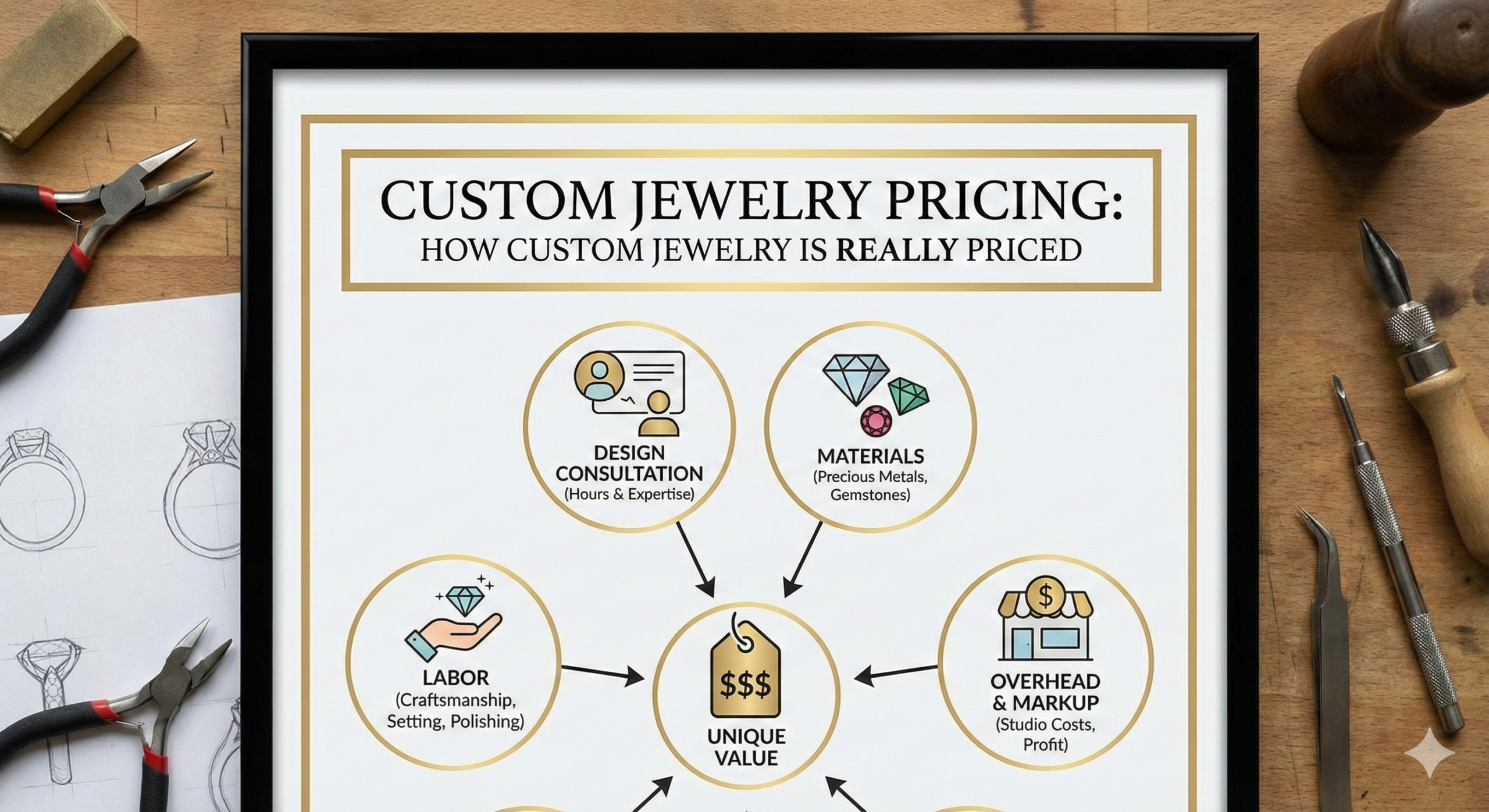
The transition from handmade artisanal jewelry to mass-produced fashion jewelry is where the most dramatic price drops occur. The cost of labor is often the highest variable in jewelry pricing, and "cheap" jewelry brands minimize this through automation.
Injection Molding and Casting
To produce thousands of identical "cute" charms or ring settings, manufacturers use high-pressure die casting. A steel mold is created—often using 3D design software—and molten alloy is injected into it. This process can produce hundreds of components per hour with minimal human intervention. Once the pieces are cast, they are tumbled in vibrating machines with abrasive media to smooth the edges, replacing the need for manual polishing.
3D Wax Printing
In 2026, the jewelry industry has fully embraced high-speed 3D wax printing for the creation of master molds. This technology allows brands to respond to social media trends almost instantly. A design that goes viral on Monday can be turned into a 3D-printed master by Tuesday, with mass production beginning by the end of the week. This speed reduces the "trend risk" for companies, allowing them to price items lower because they are guaranteed to sell while the trend is peaking.
Assembly Line Logistics
Even "cheap" jewelry requires some assembly—attaching clasps, jumping rings, or setting stones. This is typically done in large-scale facilities where workers specialize in a single repetitive task. By optimizing the assembly line, the labor cost per piece is often reduced to a few cents.
Business Models and Retail Markup
The final price you see on a website or in a store is not just the cost of the metal and labor; it includes the brand's overhead and profit margins. However, the "cheap" jewelry sector operates on different math than traditional retail.
The Direct-to-Consumer (DTC) Advantage
Many affordable jewelry brands sell exclusively online. By cutting out the "middleman" (traditional department stores), they avoid the standard 50% wholesale-to-retail markup. A necklace that costs $2 to manufacture might be sold for $12 directly to the consumer. This covers the cost of goods, digital marketing, and shipping while still appearing "cheap" to the buyer.
High-Volume, Low-Margin Strategy
Fast-fashion giants (like Shein or Temu) and specialized jewelry retailers (like Claire’s or Lovisa) rely on volume. They may only make a profit of $1 or $2 per item, but they sell millions of items. This "pennies-on-the-dollar" strategy requires immense logistical scale and sophisticated inventory management systems to ensure that unsold stock doesn't eat into the narrow profits.
Packaging and Branding
Packaging is a hidden cost that varies wildly. "Cheap" jewelry often arrives in simple plastic bags or on cardboard backing. This minimizes both the cost of the packaging itself and the weight for shipping. In contrast, "cute" brands that charge slightly more ($20–$30) often invest in aesthetic pouches or boxes, which can add $1 to $3 to the final retail price but justify the higher tier of "affordable."
Comparative Pricing and Longevity
To better understand where your money goes, it is helpful to compare the different tiers of affordable jewelry available in 2026.
| Jewelry Tier | Primary Materials | Est. Wholesale Cost | Retail Price Range | Typical Lifespan |
|---|---|---|---|---|
| Ultra-Fast Fashion | Zinc Alloy, Acrylic, Flash Plating | $0.10 – $0.80 | $1.00 – $7.00 | 1–3 months |
| Standard Fashion | Brass, Glass/CZ, 0.5 micron Plating | $1.50 – $4.00 | $10.00 – $25.00 | 6–12 months |
| Demi-Fine/Affordable | Sterling Silver, PVD Gold, High-grade CZ | $5.00 – $15.00 | $35.00 – $75.00 | 2+ years |
| Handmade/Boutique | Various (often Gold-filled or Vermeil) | $8.00 – $20.00 | $40.00 – $120.00 | 3+ years |
Hidden Costs: The Trade-offs of "Cheap"
While the sticker price of cute jewelry is low, there are externalized costs and personal trade-offs that consumers should consider.
Skin Sensitivity and Oxidation
Cheap jewelry is prone to oxidation, the chemical reaction that turns your skin green. This is usually caused by the copper content in brass reacting with the acidity of your skin or sweat. While protective coatings have improved by 2026, they eventually wear down. Furthermore, those with nickel allergies must be cautious, as trace amounts of nickel can sometimes be found in the lowest-cost alloys, leading to contact dermatitis.
Environmental Impact
The "disposable" nature of cheap jewelry contributes to significant environmental waste. Because these pieces are difficult to repair and nearly impossible to recycle due to the mixed-metal alloys and adhesives used, the majority end up in landfills. The mining of base metals and the chemical intensive electroplating process also carry an ecological footprint that is rarely reflected in the $5 price tag.
Labor Practices
Maintaining ultra-low prices often requires manufacturing in regions with low labor costs and potentially lax safety regulations. Responsible consumers in 2026 increasingly look for "Fair Trade" or "Ethical Production" certifications, though these items typically sit at the higher end of the "cheap" pricing spectrum.
Frequently Asked Questions
Why does some cheap jewelry turn my skin green?
This is a natural chemical reaction called oxidation. It occurs when the copper in the jewelry's base metal (usually brass) reacts with moisture, sweat, or lotions on your skin. This creates copper carbonate, which is green. It is not harmful, but it indicates that the protective plating on the jewelry has worn off.
Is "Gold-Filled" jewelry considered cheap?
Gold-filled jewelry is a mid-tier option. It is significantly more expensive than gold-plated jewelry because it involves mechanically bonding a thick layer of gold to a base metal. While it is more affordable than solid gold, it is generally not categorized as "cheap" jewelry, as it is designed to last for years rather than months.
Can I make cheap jewelry last longer?
Yes. To extend the life of affordable jewelry, keep it away from water, perfumes, and lotions. Store pieces in individual airtight bags to prevent oxidation from the air, and never wear them while exercising or sleeping. Applying a thin layer of clear nail polish to the inside of rings can also create a barrier against skin discoloration.
What is the difference between "Vermeil" and "Plated" jewelry?
Vermeil is a specific type of high-quality plating. To be legally called vermeil, the base metal must be sterling silver, and the gold plating must be at least 2.5 microns thick. Standard "plated" jewelry usually uses cheaper brass or zinc and a much thinner layer of gold, which is why vermeil is priced higher.
Why is handmade jewelry more expensive than factory-made "cute" jewelry?
Handmade jewelry includes the "labor cost of the artist," which is much higher than automated factory labor. Small-scale makers also cannot buy materials in the same massive bulk as large corporations, meaning their raw material costs are higher. You are paying for the design's uniqueness and the craftsman's time.
Recommended Next Steps
When shopping for cute cheap jewelry, the best strategy is to look for PVD coating or "stainless steel" bases. In 2026, stainless steel has become a favorite for affordable brands because it is naturally tarnish-resistant and hypoallergenic, offering much better value than zinc alloys for just a few dollars more. Always check the "Materials" or "Specifications" tab on a product page to verify what you are buying before being swayed by a low price.
Image Gallery