BT Fleet Overview: History, Evolution, and Modern Management Solutions
BT Fleet, historically the vehicle management arm of the British telecommunications giant BT Group, represents one of the most significant evolutions in the UK’s automotive and logistics sectors. As of 2026, the entity formerly known a...
BT Fleet, historically the vehicle management arm of the British telecommunications giant BT Group, represents one of the most significant evolutions in the UK’s automotive and logistics sectors. As of 2026, the entity formerly known as BT Fleet has largely transitioned into two distinct areas: the commercial fleet management provider now known as Rivus, and the internal BT Group Fleet, which continues to operate one of the largest private vehicle cohorts in Europe.
Contents
For businesses and logistics professionals, understanding the "BT Fleet" ecosystem involves navigating this transition from an in-house utility department to a market-leading commercial provider, while also observing how BT Group itself manages its massive internal logistics to meet stringent 2030 net-zero targets. This overview details the services, technical capabilities, and the strategic shift toward electrification that defines the current landscape.
The Disambiguation of BT Fleet: From Internal Dept to Commercial Powerhouse
To understand the current state of BT Fleet in 2026, one must distinguish between the service provider and the actual fleet of vehicles owned by BT Group.
Originally, BT Fleet was an internal division of British Telecommunications PLC, tasked with maintaining the thousands of vans used by engineers. Recognizing the value of its massive workshop network, BT began offering these services to external corporate clients. In 2019, this commercial arm was acquired by the investment firm Aurelius and subsequently rebranded as Rivus Fleet Management Solutions.
Today, while many still search for "BT Fleet" when seeking commercial vehicle maintenance, they are typically looking for the infrastructure now managed by Rivus. Conversely, the "BT Group Fleet" remains an internal entity focused on the operational logistics of Openreach and BT’s engineering divisions.
Key Milestones in the BT Fleet Evolution
- Pre-2019: BT Fleet operates as the UK’s largest end-to-end fleet management provider under BT Group.
- September 2019: BT Group agrees to sell BT Fleet Solutions to Aurelius.
- November 2019: Rebranding to Rivus Fleet Management Solutions occurs, though many service contracts with major UK utilities remain.
- 2020–2025: BT Group accelerates its "Electric First" policy, aiming to transition its remaining internal fleet to Zero Emission Vehicles (ZEVs).
- 2026: BT Group’s internal fleet serves as a primary case study for large-scale EV adoption in the telecommunications sector.
Comprehensive Fleet Management Services
The legacy of BT Fleet is built upon a "mission-critical" service model. Because telecommunications engineers provide essential national infrastructure, their vehicles cannot afford downtime. This philosophy translated into a suite of services that now define high-end fleet management in the UK.
1. Service, Maintenance, and Repair (SMR)
The backbone of the operation is a nationwide network of workshops. These facilities are designed to handle everything from standard car MOTs to complex HGV (Heavy Goods Vehicle) hydraulics.
- Preventative Maintenance: Utilizing data-driven schedules to service vehicles before parts fail.
- Mobile Technicians: For fleets that cannot return to a central hub, mobile units provide on-site repairs, a crucial factor for utility companies operating in remote areas.
2. Specialist Vehicle Engineering
BT’s fleet has always been more than just vans; it includes "cherry pickers" (mobile elevating work platforms), cable-layering trucks, and all-terrain vehicles. The engineering expertise involves:
- Custom Conversions: Designing internal racking systems and power take-off (PTO) units for specialized tools.
- Weight Management: Ensuring that heavily laden engineering vans remain within legal payload limits while carrying essential equipment.
3. Accident and Risk Management
Managing a fleet of over 30,000 vehicles requires a robust response to incidents. The management framework includes:
- First Notification of Loss (FNOL): 24/7 call centers to manage the immediate aftermath of a collision.
- Driver Training: Utilizing telematics data to identify "at-risk" drivers and providing remedial training to reduce insurance premiums and repair costs.
BT Group’s Internal Fleet: The Path to Net Zero 2030
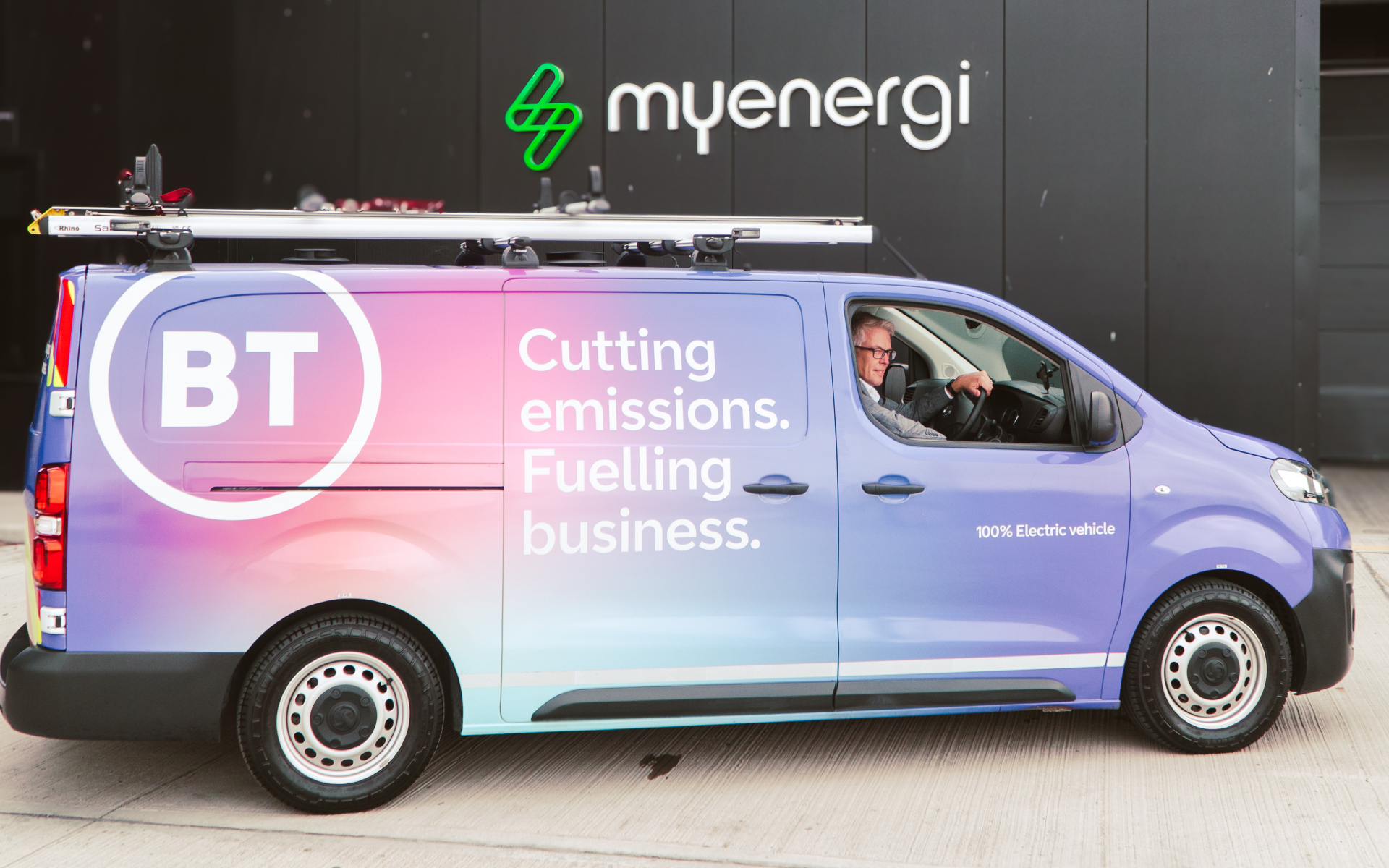
As of 2026, the BT Group internal fleet is a central pillar of the company’s environmental, social, and governance (ESG) strategy. Operating approximately 33,000 vehicles—the majority of which serve the Openreach division—the transition to electric vehicles (EVs) has been one of the largest industrial undertakings in the UK transport sector.
The "Electric First" Strategy
BT Group committed to replacing its internal combustion engine (ICE) vehicles with electric alternatives wherever viable. By 2026, the company has successfully integrated thousands of medium and large electric vans into its daily operations.
- Infrastructure Challenges: A primary hurdle has been home-charging for engineers. Since many BT engineers keep their vans at home, the company has had to innovate with "work-place" charging hubs and partnerships with public charging networks like Shell Recharge.
- HGV Electrification: While small vans transitioned quickly, the electrification of 3.5-tonne to 7.5-tonne vehicles required significant testing of battery range versus payload capacity.
Fleet Composition Overview (Estimated 2026)
| Vehicle Category | Primary Use Case | Estimated Fleet Share | Fuel/Power Type |
|---|---|---|---|
| Small/Medium Vans | General Engineering & Maintenance | 65% | Primarily Electric (BEV) |
| Large Vans | Heavy Tooling & Cable Installation | 20% | Transitioning to BEV/Hydrogen |
| Specialist HGVs | Infrastructure Deployment (Poles/Cables) | 10% | Diesel/HVO/Electric Mix |
| Support Cars | Management & Site Surveying | 5% | 100% Electric |
Technical Depth: Telematics and Data Integration
The modern iteration of BT fleet management relies heavily on the "connected vehicle." In 2026, every vehicle in the fleet is equipped with advanced telematics that provide real-time data to central controllers.
Predictive Analytics
Rather than following fixed mileage intervals for oil changes or brake inspections, the system uses predictive maintenance. Sensors monitor engine health, battery degradation in EVs, and brake wear. This data is fed into a central management platform (often integrating with SAP or specialized fleet software) to trigger a booking only when necessary, significantly reducing unnecessary garage visits.
Route Optimization
For a fleet as large as BT’s, even a 1% reduction in mileage translates to millions of pounds in savings and significant carbon reductions. Route optimization software integrates with real-time traffic data and the engineer’s job list to ensure the most efficient path is taken, accounting for the range limitations of electric vehicles.
Requirements and Eligibility for Commercial Partnership
While BT Group manages its own fleet, businesses looking for the "BT Fleet" experience today must engage with Rivus. The eligibility for these high-tier fleet services generally requires:
- Minimum Fleet Size: Most commercial providers of this scale prefer "Blue Chip" clients or those with fleets exceeding 50 vehicles.
- Compliance Standards: Clients must adhere to strict safety and environmental reporting, which the management provider helps facilitate.
- Data Sharing: To benefit from predictive maintenance, clients must allow the integration of telematics hardware into their vehicles.
Common Challenges in Fleet Transition
Managing a legacy fleet as it moves toward the mid-2020s involves several recurring pain points that BT and its partners have had to address:
- Depreciation and Resale Value: The market for used diesel vans has shifted. Managing the "de-fleeting" process to ensure maximum return on investment (ROI) is critical.
- Charging "Graveyard" Shifts: Ensuring that EVs are fully charged for an 8:00 AM start without overloading local grid infrastructure.
- Global Supply Chain Volatility: Lead times for new electric vans can still fluctuate, requiring fleet managers to extend the lifespans of older vehicles through more intensive maintenance.
Frequently Asked Questions
Does BT still own BT Fleet?
No. BT Group sold its fleet management arm, BT Fleet Solutions, to the investment firm Aurelius in 2019. The company was subsequently rebranded as Rivus. BT Group remains a major customer of Rivus but no longer owns the commercial service provider.
How large is the BT Group internal fleet in 2026?
The internal fleet consists of approximately 33,000 vehicles. It remains one of the largest fleets in the United Kingdom, primarily supporting the Openreach division which maintains the national broadband and telephone network.
Is the entire BT fleet electric?
BT Group is on a trajectory to have a fully zero-emission fleet by 2030. As of 2026, a vast majority of the light commercial vehicles (LCVs) have been switched to electric, though some specialist heavy machinery and HGVs are still undergoing the transition or utilizing alternative fuels like HVO (Hydrotreated Vegetable Oil).
Can small businesses use BT’s fleet workshops?
Commercial workshops that were formerly part of BT Fleet (now Rivus) are generally available to business customers. While they specialize in large corporate contracts, many of their sites offer MOTs and SMR services to smaller local businesses and private van owners.
What is the role of Openreach in the fleet?
Openreach is a subsidiary of BT Group that maintains the physical infrastructure. They are the primary users of the fleet. Most of the "BT vans" seen by the public are actually Openreach vehicles, and their management is the core focus of BT’s internal fleet strategy.
Practical Recommendation for Fleet Managers
If you are a fleet manager looking to emulate the success of the BT Fleet model, your primary focus should be on data integration and electrification readiness. For 2026 and beyond, the "BT model" suggests that fleet management is no longer just about fixing vans; it is about managing energy (charging), data (telematics), and driver behavior.
For organizations with more than 100 vehicles, pursuing a partnership with a provider that offers integrated accident management and predictive SMR is essential to maintaining uptime. If your goal is to transition to an electric fleet, ensure you have a robust strategy for home-charging reimbursement, as this remains the most significant logistical hurdle for UK-based engineering fleets.
For further information on UK fleet regulations and zero-emission mandates, consult the UK Government's transition to zero-emission vehicles and the Energy Saving Trust.
Image Gallery