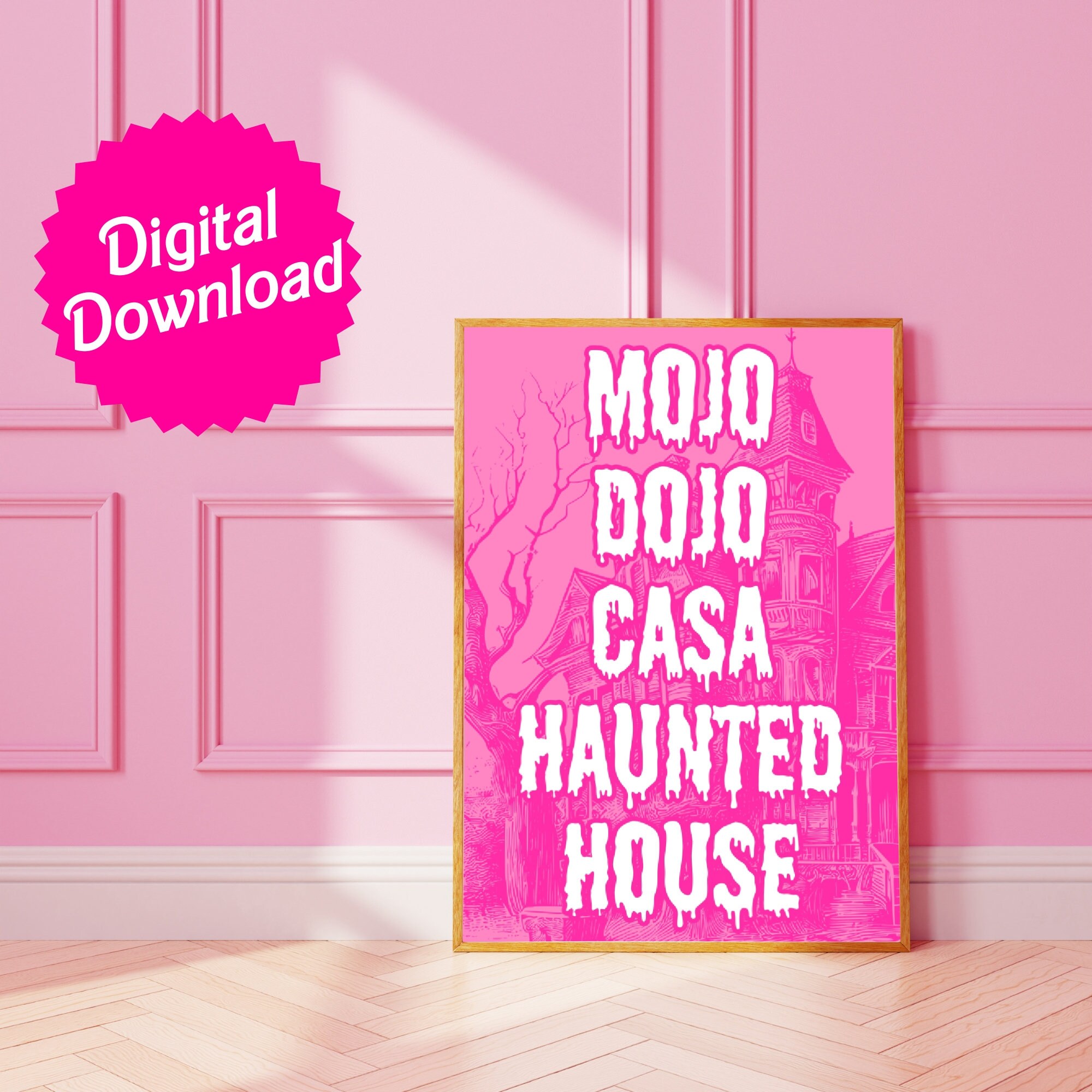
Why the Ken Mojo Dojo Casa House Matters for You
The Ken Mojo Dojo Casa House matters because it serves as a powerful cultural shorthand for the struggle to establish a personal identity independent of societal expectations. Beyond the memes of 2023, it remains a relevant 2026 touchs...
The Ken Mojo Dojo Casa House matters because it serves as a powerful cultural shorthand for the struggle to establish a personal identity independent of societal expectations. Beyond the memes of 2023, it remains a relevant 2026 touchstone for understanding how our physical environments reflect our internal search for belonging, purpose, and self-definition.
Contents
When the Barbie movie debuted in 2023, the transformation of the Barbie Dreamhouse into the "Mojo Dojo Casa House" was initially viewed as a comedic highlight. However, as we look back from the vantage point of 2026, the concept has evolved into a significant psychological and design-centric case study. It isn't just about Ryan Gosling’s Ken putting horse posters on the walls; it is about the universal human desire to claim a space and the hilarious, often clumsy ways we attempt to signal our "true selves" to the world.
The Origin and Symbolism of the Mojo Dojo Casa House
To understand why this matters for you, we must first look at what the Mojo Dojo Casa House actually is. In the context of the film, Ken returns from the "Real World" with a misguided and superficial understanding of patriarchy. He attempts to overwrite Barbie’s feminine, egalitarian utopia with a hyper-masculine, chaotic aesthetic.
The name itself—Mojo Dojo Casa House—is a linguistic tautology. "Casa" is Spanish for "house," making the title "Mojo Dojo House House." This redundancy is not accidental. It highlights the performative nature of the space. Ken doesn't actually know what he wants; he only knows he wants something that sounds powerful, important, and distinctively "not Barbie."
For the modern individual, this serves as a cautionary tale. We often surround ourselves with the trappings of what we think we should be—whether that is the "grind mindset" office, the "perfect parent" living room, or the "sophisticated intellectual" bookshelf—without questioning if those elements actually serve our needs. The Mojo Dojo Casa House is a monument to the "performative self," and recognizing it helps us identify when we are decorating our lives for an audience rather than for our own comfort.
The Psychology of "Kenergy" in Home Design
The term "Kenergy" emerged to describe a specific type of earnest but directionless masculine energy. In the realm of interior design and personal psychology, this manifests as a space that prioritizes symbols over substance.
Breaking the "Dreamhouse" Mold
Barbie's Dreamhouse was perfect, but it was also a "product." Every element had a place, and the rules of the house were dictated by a specific social order. When Ken revolted, he wasn't just being "bad"; he was attempting to break a mold that didn't have room for his specific needs.
For you, the Mojo Dojo Casa House matters because it validates the impulse to disrupt "perfect" environments. In 2026, where AI-generated perfection often dictates our aesthetic trends, the messiness of Ken’s vision reminds us that a home should be a reflection of the inhabitant's journey, even if that journey is currently a work in progress. It gives us "permission to be cringey" in the pursuit of finding our own style.
The Symbolism of Horses and Saloon Doors
Ken’s obsession with horses and saloon doors represents a longing for a bygone era of rugged independence that he never actually experienced. By installing saloon doors in a house that previously had no doors, Ken was attempting to establish boundaries and privacy—two things he lacked in Barbie Land.
This matters because it forces us to look at our own "saloon doors." What boundaries are we trying to set in our lives? Are we using symbols (like a closed office door or a specific style of dress) to communicate needs that we haven't yet learned how to vocalize? The Mojo Dojo Casa House is a masterclass in "spatial semiotics"—the study of how the objects in our space communicate our inner state.
Why the Aesthetic Still Resonates in 2026
While the immediate "Barbenheimer" trend has passed, the "Mojo Dojo" aesthetic has survived as a critique of modern consumerism. In 2026, we see a shift away from the sterile, minimalist "Millennial Grey" and toward more expressive, albeit sometimes chaotic, personal spaces.
| Feature | Barbie Dreamhouse (The "Before") | Mojo Dojo Casa House (The "After") | Psychological Significance |
|---|---|---|---|
| Primary Theme | Community and Perfection | Autonomy and Performance | Shift from social harmony to individual identity. |
| Key Furniture | Open-air social lounges | Recliners and mini-fridges | Transition from hosting others to self-comfort. |
| Color Palette | Pink, Pastel, Monochromatic | Brown, Black, Leather, Neon | Rejection of the "standard" in favor of the "counter-culture." |
| Architecture | No doors, open visibility | Saloon doors, obstructed views | The sudden need for privacy and "man-cave" seclusion. |
| Symbolism | Hearts, Flowers, Stars | Horses, Toolboxes, Weights | Replacing generic femininity with generic masculinity. |
The "Casa House" as a Metaphor for Personal Growth
Perhaps the most important reason the Ken Mojo Dojo Casa House matters for you is its role in the cycle of self-discovery. In the movie, Ken eventually realizes that he doesn't actually want the Mojo Dojo Casa House; he just wanted to be seen. He was "Kenough" all along, without the leather fringe or the horse posters.
Many of us go through "Mojo Dojo" phases. This might look like:
- The Over-Correction: After a breakup or a job loss, we completely change our environment or lifestyle to prove we are "fine" or "different."
- The Identity Crisis: Adopting a subculture's entire aesthetic (the "hustle culture" enthusiast, the "minimalist" nomad) because we don't yet know who we are without a label.
- The Redundant House: Building a life that is "Casa House"—full of things that mean the same thing, repetitive and loud, because we are afraid of the silence that comes with true self-reflection.
By 2026, the cultural consensus has shifted to view the Mojo Dojo Casa House not as a failure of taste, but as a necessary step in the process of individuation. You have to build the wrong house to figure out what the right one looks like.
Practical Lessons for Your Own Space
You can apply the lessons of the Mojo Dojo Casa House to your life today by auditing your environment. Ask yourself the following questions:
- Is this a "Horse" or a "Need"? Are you buying things because they represent an identity you want to project (the "horse"), or because they actually improve your quality of life (the "need")?
- Are your "Saloon Doors" functional? Are the boundaries you've set in your personal and professional life actually working, or are they just decorative barriers that people can easily walk through?
- Are you "Kenough" in your space? Does your home make you feel like you have to perform a certain role, or does it allow you to simply exist?
The Ken Mojo Dojo Casa House matters because it is a mirror. It reflects our insecurities, our desire for power when we feel powerless, and our hilarious attempts to navigate a world that often feels like it wasn't built for us.
Frequently Asked Questions
What does "Mojo Dojo Casa House" actually mean?
The name is a collection of words Ken associated with masculinity and "coolness" during his brief time in the real world. "Mojo" refers to influence or charm, "Dojo" is a place for martial arts training, and "Casa House" is a redundant phrase meaning "House House." Together, they represent a disorganized and superficial attempt to create a "manly" sanctuary.
Why did Ken choose horses as the main theme?
Ken misinterpreted the "Real World" (specifically Los Angeles) by believing that patriarchy was primarily about men and horses. He saw statues of men on horses and historical imagery, concluding that horses were the "engines" of male power. The horses in the Mojo Dojo Casa House represent his misplaced belief that power is derived from specific symbols rather than internal confidence.
Is the Mojo Dojo Casa House a real interior design style?
While not a formal design movement, it falls under the umbrella of "Maximalism" or "Kitsch." In 2026, it is often used as a satirical term for "Bachelor Pad" aesthetics that prioritize stereotypical masculine items—like giant TVs, leather recliners, and sports memorabilia—over cohesive design or comfort for guests.
What is the final fate of the Mojo Dojo Casa House?
In the film, after the Barbies take back Barbie Land, the house is restored to its original Dreamhouse state. However, the experience leaves Ken with a better understanding of himself. This transition matters because it shows that our "identity crises" are often temporary but necessary for growth.
How can I avoid making my own home a "Mojo Dojo Casa House"?
The key is intentionality. Instead of adopting an entire "vibe" or "aesthetic" from social media, choose items that have personal meaning. Avoid "linguistic and visual redundancies"—you don't need every item in your room to scream the same message. Balance is the antidote to the Mojo Dojo effect.
Next Actions for the Reader
To truly move past your own "Mojo Dojo" phase, take a moment to look at one room in your home. Identify one item you bought purely for the "aesthetic" or to impress someone else, and one item that genuinely makes you feel at peace. The goal for 2026 should be to gradually shift the balance toward the latter. Remember, you don't need a "Casa House" to be "Kenough." Embrace your space as a functional sanctuary rather than a stage for a performance.
Image Gallery