Understanding the Volvo XC90 Maintenance Schedule and Costs
Maintaining a Volvo XC90 requires a proactive approach to preserve its sophisticated engineering and safety systems. On average, owners should expect a service interval of every 10,000 miles or 12 months, with annual maintenance costs...
Maintaining a Volvo XC90 requires a proactive approach to preserve its sophisticated engineering and safety systems. On average, owners should expect a service interval of every 10,000 miles or 12 months, with annual maintenance costs ranging from $700 to $1,200 depending on the vehicle's age and mileage. Adhering to the factory-recommended schedule ensures the longevity of the engine and complex electronic components.
Contents
The Volvo XC90 has long been a benchmark for the luxury SUV segment, known for its Swedish design, advanced safety tech, and diverse powertrain options including the mild-hybrid B-series and the plug-in hybrid Recharge (T8) models. As we navigate through 2026, many second-generation XC90s are entering their high-mileage years, while newer models continue to refine the Scalable Product Architecture (SPA) platform. Understanding the nuances of the maintenance schedule is the difference between a vehicle that lasts 200,000 miles and one that becomes a financial burden due to neglected preventive care.
The Foundation of Volvo Maintenance: The 10,000-Mile Rule
Volvo utilizes a standardized maintenance cadence for the XC90. Since the introduction of the modern Drive-E engines, the factory recommendation has remained consistent: every 10,000 miles or once per year, whichever occurs first. This schedule is designed to address the specific needs of high-compression, turbocharged, and often supercharged 2.0-liter engines.
Why 10,000 Miles?
Modern synthetic oils and advanced filtration allow for longer intervals than the 3,000-mile cycles of the past. However, because the XC90 often operates in "severe" conditions—such as stop-and-go city traffic, extreme cold, or towing—stretching this interval further is not recommended. The oil in these engines does more than lubricate; it acts as a hydraulic fluid for variable valve timing systems and a coolant for the turbocharger bearings. Using the correct Volvo-spec VCC RBS0-2AE 0W-20 synthetic oil is mandatory to prevent premature engine wear and sludge buildup.
Detailed Breakdown of Service Intervals
Maintenance for the XC90 is typically grouped into three categories: Minor, Intermediate, and Major services. As the vehicle ages, the complexity of these services increases to include more than just fluid changes.
10,000, 30,000, and 50,000 Miles: Minor Service
These are the most frequent visits. The primary goal is to refresh the engine's "blood" and conduct a health check on safety systems.
- Oil and Filter Change: Replacing the oil and the cartridge-style filter.
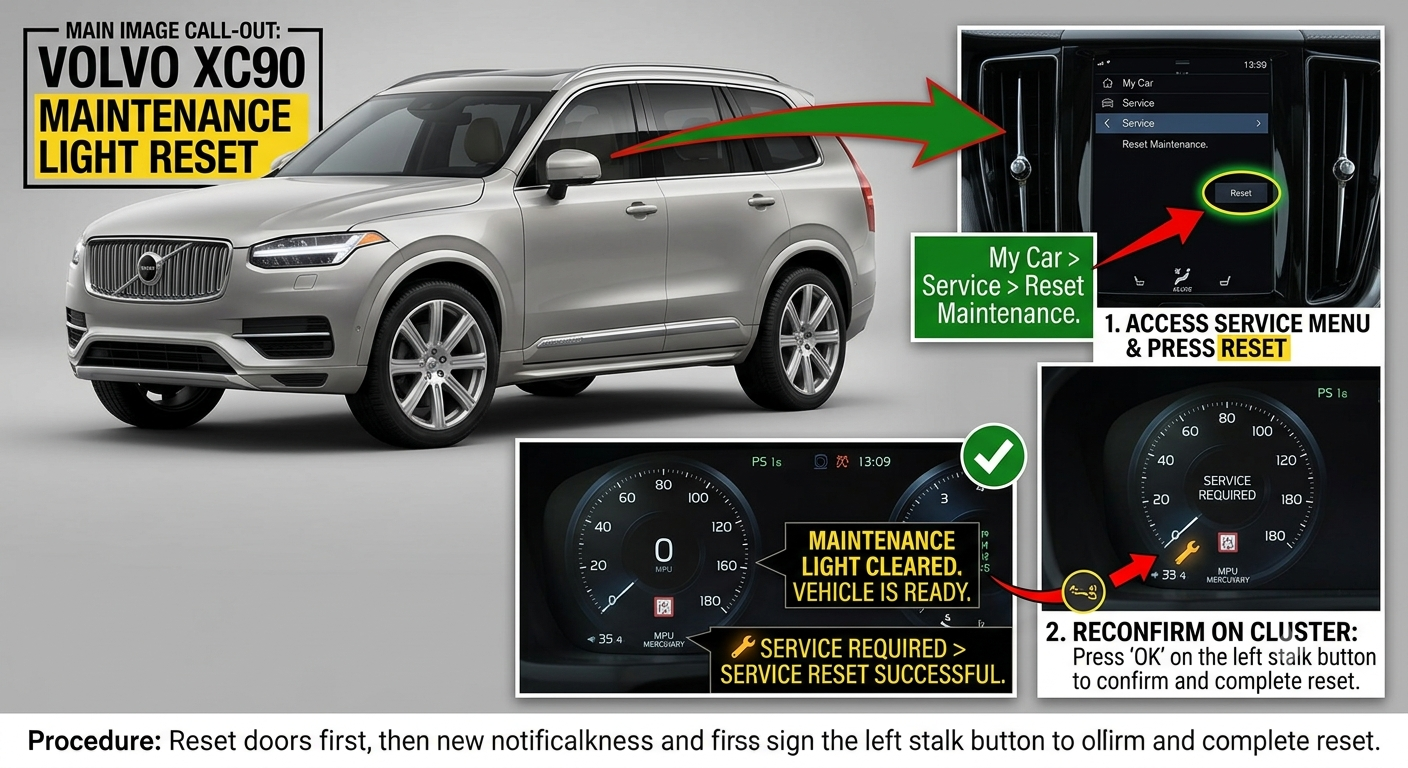
- Maintenance Reminder Reset: Updating the vehicle's onboard diagnostic system.
- Multi-Point Inspection: Checking brake pad thickness, tire tread depth, and fluid levels (coolant, brake fluid, windshield washer fluid).
- Software Updates: Volvo frequently releases "Service 2.0" software updates that optimize engine performance and infotainment stability.
20,000 and 60,000 Miles: Intermediate Service
At these milestones, the focus shifts toward the cabin environment and more rigorous mechanical checks.
- Cabin Air Filter Replacement: Crucial for maintaining the "Clean Zone" air quality Volvo is famous for.
- Brake Fluid Flush: Every two years (regardless of mileage), the brake fluid should be replaced to prevent moisture contamination, which can degrade the ABS and stability control actuators.
- Driveline Inspection: Checking the propeller shaft, CV boots, and suspension bushings for signs of wear or grease leakage.
40,000 and 80,000 Miles: Major Service
These are the most comprehensive (and expensive) scheduled visits.
- Engine Air Filter: Replacing the intake filter to ensure the turbocharger isn't working harder than necessary.
- Spark Plug Replacement: On the XC90, spark plugs are typically replaced every 40,000 to 60,000 miles. Worn plugs can lead to ignition coil failure, which is a common and more expensive repair.
- Fuel Filter: While some modern Volvos have "lifetime" filters, certain regional specifications or earlier SPA models require a fuel filter replacement at this stage.
| Interval (Miles) | Key Actions | Estimated Cost (Dealer) | Estimated Cost (Indy) |
|---|---|---|---|
| 10,000 | Oil change, safety check, software update | $250 - $350 | $150 - $220 |
| 20,000 | Oil change, cabin filter, brake fluid flush | $500 - $700 | $350 - $500 |
| 30,000 | Oil change, comprehensive inspection | $250 - $400 | $150 - $250 |
| 40,000 | Oil, air filter, cabin filter, spark plugs | $800 - $1,200 | $600 - $900 |
| 60,000 | Oil, brake fluid, spark plugs, belt check | $900 - $1,400 | $700 - $1,100 |
| 100,000+ | All filters, fluids, and auxiliary drive belts | $1,200 - $1,800 | $900 - $1,400 |
The Recharge Factor: Maintenance for Plug-In Hybrids (T8)
If you own the XC90 Recharge, your maintenance schedule includes additional checks for the electrification components. While the internal combustion engine (ICE) follows the standard 10,000-mile rule, the hybrid system requires specific attention.
- Brake System Longevity: Because the Recharge models use regenerative braking, the physical brake pads often last much longer—sometimes up to 80,000 miles. However, the calipers must be inspected regularly for "seizing" due to lack of use in corrosive environments.
- Coolant Systems: The T8 has separate cooling loops for the engine and the high-voltage battery/inverter. These must be checked for clarity and levels, as an overheated battery can lead to significant performance degradation.
- ERAD Service: The Electric Rear Axle Drive (ERAD) contains its own oil. While often labeled "fill for life," many specialists recommend a fluid change at 60,000 miles to ensure the longevity of the rear electric motor.
High-Mileage Considerations: Beyond 100,000 Miles
In 2026, many early second-generation XC90s (2016-2018 models) are surpassing the 100,000-mile mark. At this stage, maintenance becomes more about "preventive replacement" than simple inspections.
Timing Belt and Auxiliary Belts
For most Volvo XC90 engines, the timing belt replacement interval is 150,000 miles or 10 years. However, mechanics often recommend performing this service at 120,000 miles as a safety margin. A snapped timing belt on an interference engine like Volvo's will typically result in total engine destruction.
Air Suspension Components
If your XC90 is equipped with the optional 4-Corner Air Suspension, the air bags and compressor are wear items. By year 8 or 100,000 miles, the rubber bellows can develop micro-cracks. Replacing these before the compressor burns out from overworking is a critical cost-saving measure.
Transmission Fluid
Volvo officially states that the Aisin-Warner 8-speed automatic transmission fluid is "lifetime." However, transmission experts and the manufacturer of the transmission (Aisin) suggest a "drain and fill" every 60,000 to 80,000 miles, especially if the vehicle is used for towing or heavy loads.
Estimating Real-World Maintenance Costs
Maintenance costs are influenced by your choice of service provider.
- The Dealership: Expect the highest prices but also the most specialized care. Dealerships offer the "Service by Volvo" promise, which often includes free software updates, alternative transportation (loaner cars), and a Lifetime Parts & Labor Warranty on non-wear items purchased and installed at the dealer.
- Independent Specialists: A certified European auto repair shop can often save owners 20-30% on labor costs. It is vital to ensure they use Volvo-compliant fluids and have the VIDA (Vehicle Information and Diagnostics for Aftersales) software to properly communicate with the car's computers.
According to data from RepairPal, the average annual cost for repairs and maintenance on a Volvo XC90 is approximately $851, which is higher than the average for midsize SUVs ($573) but lower than many German competitors like the BMW X5 or Audi Q7.
Common Issues and "Hidden" Costs
While routine maintenance is predictable, there are "known issues" with the XC90 platform that owners should budget for:
- Brake Rotors: Volvo's factory rotors are relatively soft for better braking performance. They often cannot be "turned" or resurfaced and must be replaced along with the pads, doubling the cost of a standard brake job.
- Sunroof Drains: If not cleaned during routine service, the sunroof drains can clog, leading to water intrusion that damages expensive electrical modules under the seats.
- Tires: Due to its weight (especially the Recharge models) and AWD system, the XC90 can be hard on tires. Expect to replace a set every 30,000 to 40,000 miles, with costs ranging from $1,000 to $1,600 for high-quality touring tires.
Frequently Asked Questions
Does Volvo offer free maintenance?
For new vehicles, Volvo typically includes Complimentary Factory Scheduled Maintenance for the first three services (10,000, 20,000, and 30,000 miles). After this period, owners are responsible for costs unless they purchase an extended prepaid maintenance plan.
Can I skip the 10,000-mile service if I don't drive much?
No. Oil degrades over time due to oxidation and moisture contamination, even if the vehicle isn't moving. Volvo requires service at least once every 12 months to maintain the powertrain warranty.
Is the Volvo XC90 expensive to maintain compared to a Lexus or Acura?
Generally, yes. Volvo is a European luxury brand, and its parts are sourced globally. While the XC90 is more complex and uses higher-grade materials (like specialized synthetic oils and sophisticated sensors), its maintenance costs are higher than Japanese luxury brands but usually slightly lower than Mercedes-Benz or Porsche.
What is the most expensive maintenance item on an XC90?
The most expensive "scheduled" item is the timing belt and water pump service (around $1,200–$1,800). The most expensive "unscheduled" common repair is usually the replacement of air suspension components or the supercharger/turbocharger assembly on T6 models.
Final Recommendation: How to Manage Your XC90's Health
To maximize the value and reliability of your Volvo XC90 in 2026, the best course of action is to follow the 10,000-mile schedule religiously and keep a detailed service log. If your vehicle is out of warranty, find a reputable independent European car specialist to handle mechanical repairs, but consider visiting the dealer once every two years for a "software health check." This hybrid approach ensures you get the best value while keeping the vehicle’s complex digital architecture up to date.
Image Gallery