How Do Currency Swaps Work? A Comprehensive Guide to Cross-Currency Swaps
A currency swap is a financial derivative contract in which two counterparties exchange principal and interest payments in different currencies over a predetermined period. At inception, the parties exchange principal amounts at the pr...
A currency swap is a financial derivative contract in which two counterparties exchange principal and interest payments in different currencies over a predetermined period. At inception, the parties exchange principal amounts at the prevailing spot exchange rate, make periodic coupon payments in each other’s currency during the tenor, and re-exchange the original principal amounts at maturity.
Contents
What Is a Currency Swap?
A currency swap—often referred to as a cross-currency interest rate swap—is an agreement between two institutional parties to exchange financial obligations denominated in different currencies. These instruments allow corporations, financial institutions, and sovereign entities to secure access to foreign capital, manage foreign exchange (FX) exposure, and optimize borrowing costs by taking advantage of comparative advantages in local credit markets.
Unlike standard interest rate swaps, which involve exchanging interest cash flows in a single currency, currency swaps involve cash flows in two distinct currencies. Crucially, currency swaps typically involve the exchange of principal both at the beginning of the transaction and at maturity, insulating the participants from mid-term foreign exchange rate fluctuations for that specific principal sum.
Disambiguation: Currency Swaps vs. FX Swaps
In institutional finance, market participants distinguish between foreign exchange (FX) swaps and cross-currency swaps:
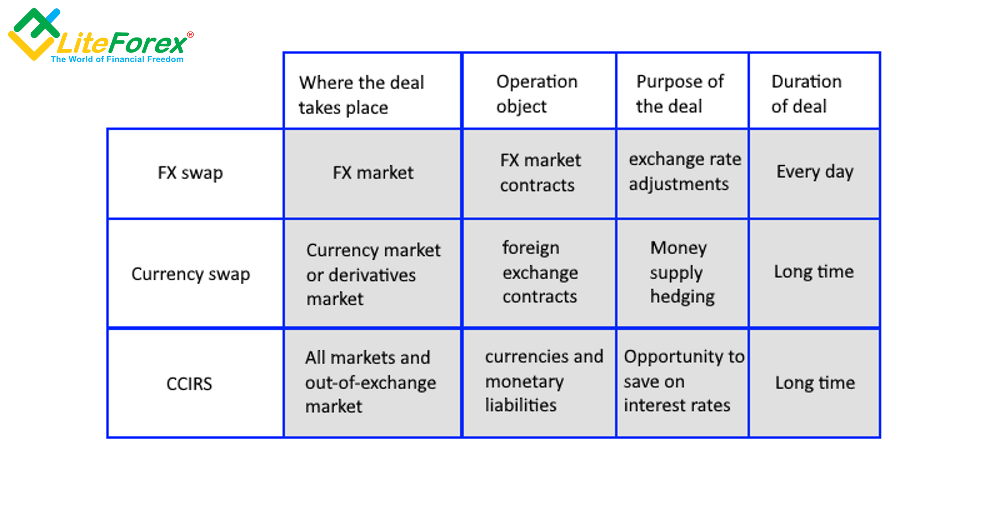
- FX Swaps: Short-tenor transactions (typically under one year) that combine a spot currency transaction with a forward currency transaction. They generally do not involve intermediate interest payments.
- Cross-Currency Swaps (Currency Swaps): Long-tenor contracts (ranging from 2 to 30 years) that require ongoing, periodic interest rate cash flows in addition to the initial and final principal exchanges.
Mechanics of a Currency Swap: Step-by-Step
To understand how currency swaps operate in practice, it is necessary to examine the three distinct phases of a standard cross-currency contract: inception, periodic interest payments, and maturity.
Phase 1: Inception (Initial Exchange) Party A ------------ Principal in Currency X ------------> Party B Party A <----------- Principal in Currency Y ------------ Party B Phase 2: Life of Contract (Periodic Interest Payments) Party A ------------ Interest in Currency Y -------------> Party B Party A <----------- Interest in Currency X -------------- Party B Phase 3: Maturity (Final Principal Re-Exchange) Party A ------------ Principal in Currency Y ------------> Party B Party A <----------- Principal in Currency X ------------ Party B
Phase 1: Initial Exchange of Principal
At the start date of the swap (the effective date), the counterparties exchange the underlying principal amounts at the current spot exchange rate. For example, if a U.S. firm and a European firm enter into a swap when the EUR/USD exchange rate is 1.10, the U.S. firm might provide $110 million USD to the European firm in exchange for €100 million EUR.
Note: In some institutional structures (known as non-deliverable or mark-to-market currency swaps), the physical exchange of initial principal is omitted, and cash flows are settled synthetically, but the financial mechanics remain tied to the nominal principal amounts.
Phase 2: Periodic Interest Payments
Throughout the life of the agreement, each party makes regular interest payments to the other in the currency it received:
- The U.S. company pays interest in Euros on the €100 million it received.
- The European company pays interest in U.S. Dollars on the $110 million it received.
These coupon payments occur at fixed intervals (semiannually or annually) and can be structured as fixed rates or floating reference rates (such as the Secured Overnight Financing Rate [SOFR] for USD or the Euro Short-Term Rate [€STR] / EURIBOR for EUR).
Phase 3: Final Re-Exchange of Principal
At the maturity date, the counterparties re-exchange the original principal amounts at the exact same exchange rate agreed upon at inception, regardless of where the market spot rate trades at that time. The U.S. company returns the €100 million to the European firm, and the European firm returns the $110 million to the U.S. company. This final swap eliminates currency risk on the returned capital sum.
Primary Structures of Currency Swaps
Currency swaps can be customized based on the interest rate obligations of each party. The three primary structural formats include:
1. Fixed-for-Fixed Currency Swap
In a fixed-for-fixed swap, Party A pays a predetermined, fixed interest rate in Currency X, while Party B pays a predetermined, fixed interest rate in Currency Y. This structure provides absolute predictability over interest expense and foreign exchange rates for both institutions.
2. Fixed-for-Floating Currency Swap
In this hybrid structure, one party pays a fixed interest rate in one currency, while the counterparty pays a floating benchmark rate (such as SOFR + spread) in another currency. Corporations frequently use this format when transitioning fixed-rate debt issued in a foreign market back into variable-rate funding in their functional currency.
3. Floating-for-Floating Swap (Cross-Currency Basis Swap)
In a floating-for-floating swap, both counterparties pay variable interest rates tied to their respective currency benchmark rates (for instance, 3-month SOFR vs. 3-month EURIBOR). Because demand for specific currencies fluctuates in global funding markets, one party usually pays or receives an additional adjustment fee known as the cross-currency basis spread.
Real-World Example: Lowering Corporate Borrowing Costs
Consider a U.S.-based multinational corporation (US Corp) seeking to fund a €100 million capital expansion project in Germany for five years. Simultaneously, a European corporation (Euro Corp) seeks $110 million in USD funding to expand operations in Texas.
Market Conditions & Credit Spreads
Due to local brand recognition and credit market presence, each company enjoys cheaper borrowing terms in its home market:
| Issuer | 5-Year Fixed USD Borrowing Rate | 5-Year Fixed EUR Borrowing Rate |
|---|---|---|
| US Corp | 4.50% | 3.80% |
| Euro Corp | 5.80% | 3.00% |
If US Corp borrows directly in Europe, it pays 3.80% in EUR due to limited European credit visibility. If Euro Corp borrows directly in the United States, it pays 5.80% in USD.
The Swap Execution
To optimize funding costs, the two entities utilize a currency swap:
- Direct Issuance: US Corp issues 5-year domestic USD bonds at 4.50% raising $110 million. Euro Corp issues 5-year domestic EUR bonds at 3.00% raising €100 million.
- Initial Swap: US Corp gives its $110 million to Euro Corp; Euro Corp gives its €100 million to US Corp.
- Interest Service: US Corp pays Euro Corp 3.00% on the €100 million (€3.0 million annually), which Euro Corp uses to service its EUR bond obligations. Euro Corp pays US Corp 4.50% on the $110 million ($4.95 million annually), which US Corp uses to service its USD bond obligations.
- Maturity Re-Exchange: At year five, US Corp returns €100 million to Euro Corp, and Euro Corp returns $110 million to US Corp. Each returns the funds to their respective local bondholders.
Through this arrangement, US Corp secured EUR funding at 3.00% (saving 80 basis points compared to direct EUR borrowing), while Euro Corp secured USD funding at 4.50% (saving 130 basis points compared to direct USD borrowing).
Why Institutions Use Currency Swaps
Institutional market participants, including corporate treasurers, asset managers, and sovereign central banks, utilize currency swaps for three core reasons:
1. Comparative Advantage and Debt Cost Arbitrage
As illustrated in the example above, credit markets do not price foreign issuers identically to domestic issuers. Corporations leverage currency swaps to borrow in markets where they possess the highest credit reputation and lowest credit spread, subsequently swapping those proceeds into the currency they actually require.
2. FX and Interest Rate Risk Management
Multinational entities with foreign subsidiaries face cash flow mismatches when revenue is generated in one currency while debt service is owed in another. Currency swaps align revenue currencies with liabilities, eliminating foreign exchange volatility from financial statements.
3. Central Bank Liquidity Provision
During periods of global financial stress, foreign institutions may experience shortages of key funding currencies (primarily U.S. Dollars). Central banks utilize international currency swap lines—such as those between the U.S. Federal Reserve, the European Central Bank, the Bank of England, and the Bank of Japan—to supply liquidity to domestic commercial banks without exhausting foreign exchange reserves.
Comparing Currency Swaps to Related Derivatives
To understand where currency swaps fit into corporate treasury toolkits, compare their core specifications against FX swaps and standard interest rate swaps:
| Feature | Currency Swap (Cross-Currency) | Foreign Exchange (FX) Swap | Interest Rate Swap (IRS) |
|---|---|---|---|
| Currencies Involved | Two different currencies | Two different currencies | Single currency |
| Principal Exchange | Yes (At start and maturity) | Yes (At start and maturity) | No (Notional only) |
| Intermediate Cash Flows | Yes (Periodic coupon payments) | No (Single forward payment) | Yes (Net interest differential) |
| Standard Tenor | Long-term (2 to 30 years) | Short-term (Overnight to 1 year) | Medium-to-Long (1 to 30 years) |
| Primary Purpose | Long-term debt restructuring & hedging | Short-term liquidity & FX roll | Interest rate risk management |
| Governance | ISDA Master Agreement | ISDA Master Agreement / IFEMA | ISDA Master Agreement |
Risks and Operational Requirements
While currency swaps provide flexibility, they introduce distinct institutional risks and operational overhead:
Credit and Counterparty Risk
Because currency swaps involve full principal exchanges at maturity, the exposure to counterparty default is significantly higher than in single-currency interest rate swaps (where only net interest payments are exchanged). If a counterparty defaults prior to maturity while exchange rates have moved dramatically, the non-defaulting party faces significant replacement cost.
To mitigate counterparty credit risk, institutional swap agreements rely on International Swaps and Derivatives Association (ISDA) master contracts accompanied by a Credit Support Annex (CSA). CSAs mandate two-way daily variation margin posting, requiring the out-of-the-money counterparty to post cash or government bonds as collateral.
Foreign Exchange and Basis Risk
If a currency swap does not perfectly match the underlying debt obligations in maturity, call dates, or payment schedules, the enterprise retains residual exposure. Furthermore, in floating-for-floating swaps, changes in the cross-currency basis spread can affect the net mark-to-market value of the swap position over time.
Frequently Asked Questions
What happens if the exchange rate changes during a currency swap?
The periodic principal cash flows returned at maturity are fixed at the initial spot rate agreed upon at inception. Market exchange rate movements throughout the life of the swap change the contract's mark-to-market valuation (requiring collateral transfers under a Credit Support Annex), but they do not alter the final principal amount re-exchanged by the counterparties.
Are currency swaps traded on public exchanges?
No. Currency swaps are over-the-counter (OTC) derivatives negotiated privately between institutions or arranged through intermediate swap dealers (major international investment banks). However, post-2008 financial reforms require standardized OTC swaps to be processed through central clearinghouses (CCPs) to reduce systemic counterparty risk.
What is the cross-currency basis spread?
The cross-currency basis spread represents the additional cost charged by financial markets to swap one floating-rate currency into another. It reflects supply and demand imbalances for specific currencies in foreign exchange markets, as well as counterparty risk and balance-sheet constraints among global bank market makers.
How are currency swaps treated accounting-wise?
Under international financial standards (such as IFRS 9 or US GAAP ASC 815), currency swaps can be designated as cash flow hedges, fair value hedges, or net investment hedges. When proper hedge accounting documentation is maintained, gains and losses on the swap offset foreign currency fluctuations on the underlying debt, minimizing earnings volatility.
Implementation Guidance for Corporate Treasurers
For institutional treasury departments considering a currency swap structure, execute the following operational steps:
- Conduct Debt and Exposure Audits: Map all foreign-currency cash inflows, subsidiary funding needs, and existing balance-sheet liabilities to identify structural currency mismatches.
- Evaluate Direct vs. Synthetic Issuance Costs: Compare the all-in yield of issuing bonds directly in a target foreign market against issuing domestic bonds and overlaying a cross-currency swap. Include underwriting fees, legal expenses, and cross-currency basis spreads in the calculation.
- Establish ISDA/CSA Infrastructure: Ensure active ISDA Master Agreements and Credit Support Annexes are negotiated with Tier-1 liquidity providers to facilitate collateral management and compliance with clearing regulations.
- Confirm Accounting Treatment: Coordinate with internal controllers and external auditors prior to execution to establish qualify-for-hedge accounting status, avoiding unwanted mark-to-market volatility in quarterly income statements.
Disclaimer: This article is provided for educational and informational purposes only and does not constitute financial, legal, or investment advice. Institutional financial decisions involving derivative products should be made in consultation with qualified treasury consultants, legal counsel, and certified public accountants.
Image Gallery