Cloud Computing Security Architecture: A Comprehensive Guide (2026)
Cloud computing security architecture is a hierarchical framework of policies, technologies, and controls designed to protect data, applications, and the underlying infrastructure of cloud environments. It ensures confidentiality, inte...
Cloud computing security architecture is a hierarchical framework of policies, technologies, and controls designed to protect data, applications, and the underlying infrastructure of cloud environments. It ensures confidentiality, integrity, and availability by defining how security measures integrate across physical, network, and application layers in multi-tenant or private cloud ecosystems.
Contents
Understanding Cloud Security Architecture in 2026
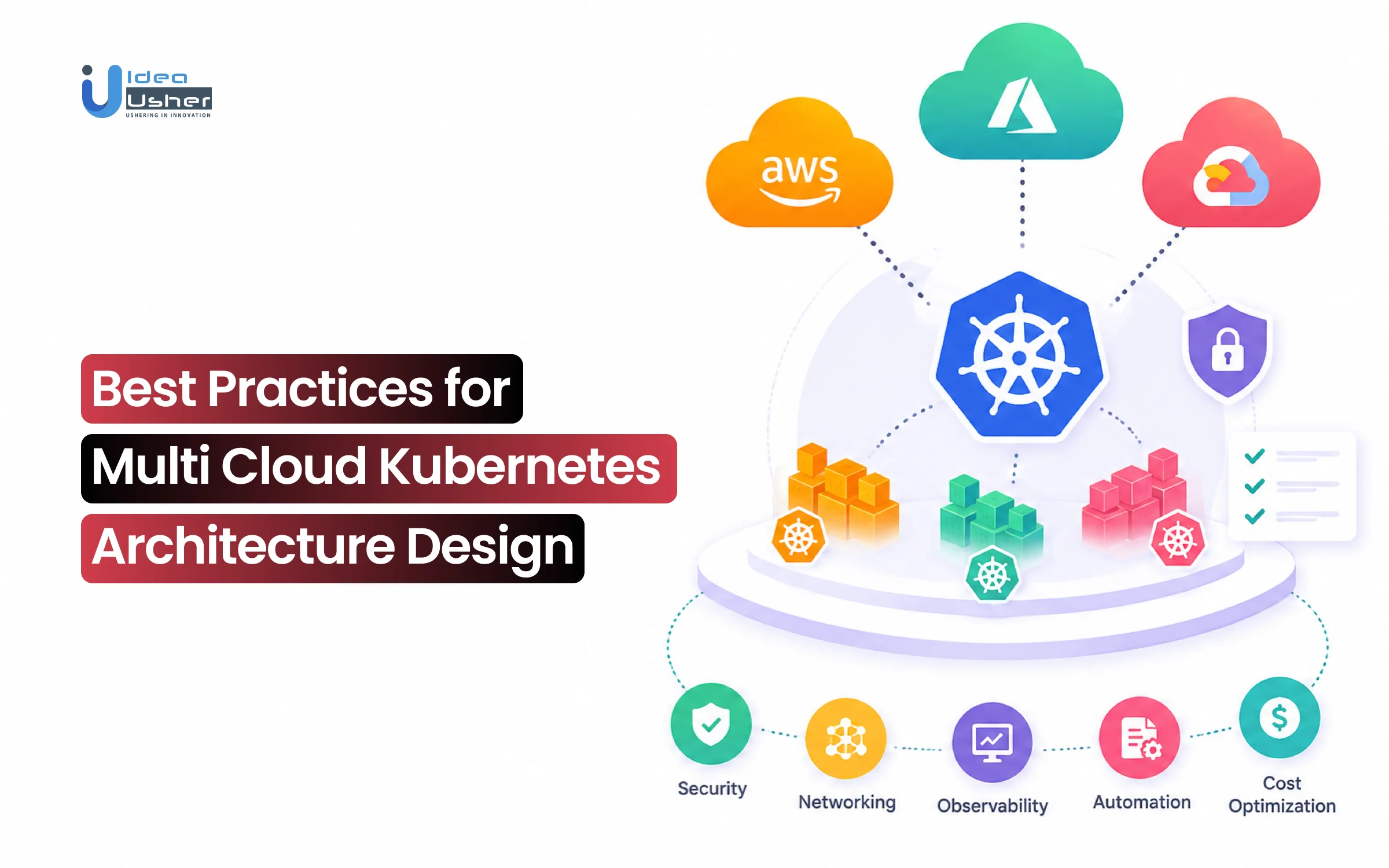
In 2026, the maturity of cloud environments has moved beyond basic perimeter defense toward a comprehensive, identity-centric architecture. Cloud computing security architecture is not a single product but a cohesive strategy that governs how an organization interacts with cloud service providers (CSPs). As businesses increasingly adopt multi-cloud and hybrid-cloud strategies, the architecture must remain flexible enough to secure data regardless of where it resides.
The primary goal of this architecture is to mitigate risks associated with data breaches, unauthorized access, and service disruptions. It operates on the principle of "Security by Design," where security is baked into the deployment lifecycle rather than added as an afterthought. This involves a deep integration of automated threat detection, encryption protocols, and strict identity governance.
The Shared Responsibility Model
The bedrock of any cloud security architecture is the Shared Responsibility Model. This model defines the division of labor between the cloud service provider and the customer. Misunderstanding this division remains a primary cause of security failures in enterprise environments.
Provider Responsibilities
The CSP (such as AWS, Microsoft Azure, or Google Cloud) is responsible for the "Security of the Cloud." This encompasses the physical security of data centers, the hardware, the virtualization layer, and the foundational networking infrastructure. They ensure that the physical servers are protected against intrusion and that the hypervisors are hardened against escape attacks.
Customer Responsibilities
The customer is responsible for "Security in the Cloud." This includes securing the data they upload, managing user identities and permissions (IAM), configuring firewalls (Security Groups), and ensuring that applications are free of vulnerabilities. In 2026, this responsibility has expanded to include the security of CI/CD pipelines and the configuration of serverless functions.
Logical Layers of Cloud Security Architecture
A robust security architecture is organized into several logical layers. This "defense-in-depth" approach ensures that if one control fails, others are in place to prevent a total compromise.
1. The Physical Layer
While customers do not manage this, the architecture must account for the provider’s compliance certifications (such as SOC 2 or ISO 27001). This layer includes the physical hardware, power supplies, and cooling systems. Security at this level is maintained through biometric access, surveillance, and geographic redundancy.
2. The Network Layer
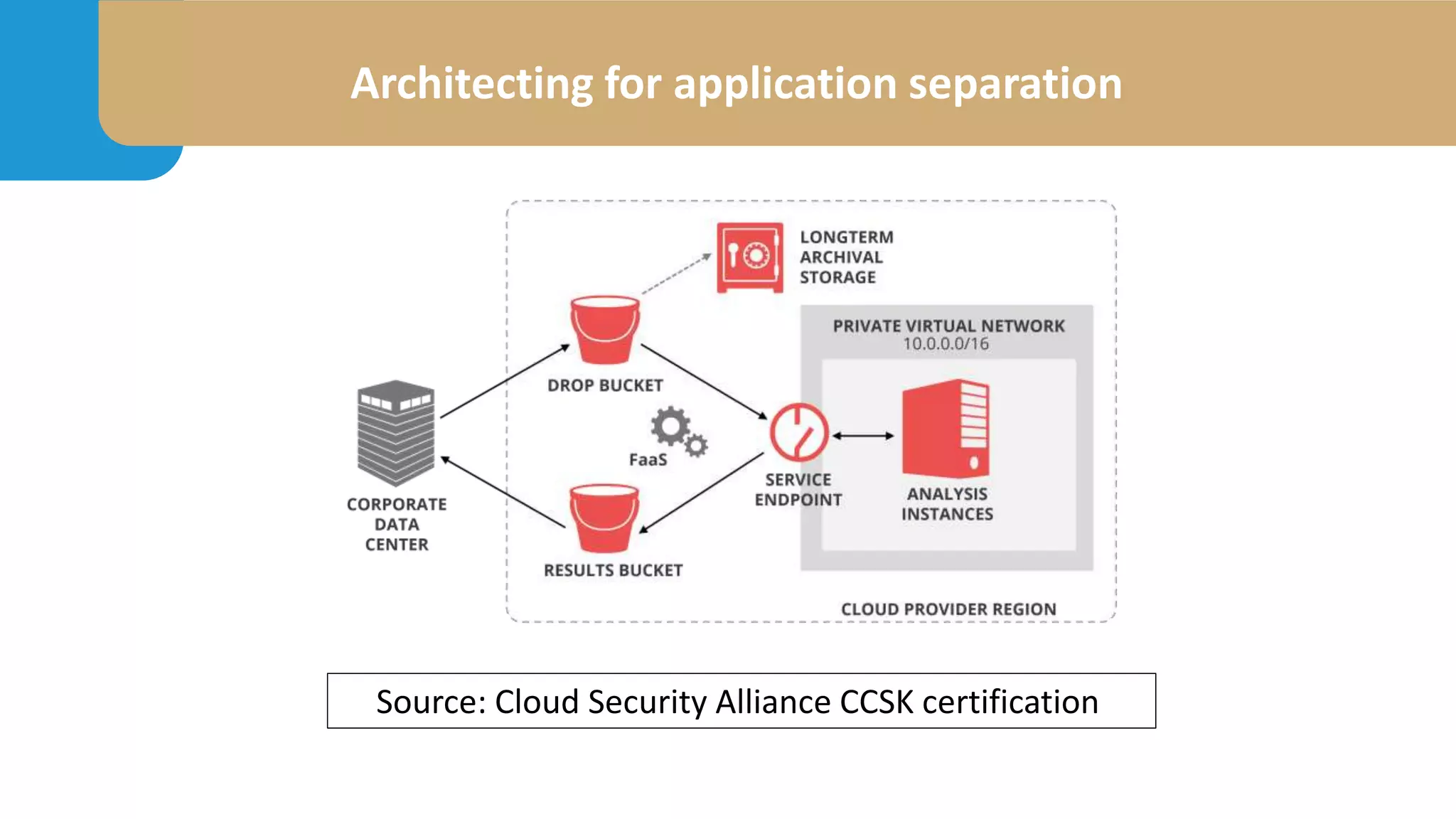
The network layer focuses on isolating resources and controlling the flow of traffic. In modern cloud architecture, this is achieved through:
- Virtual Private Clouds (VPC): Creating logically isolated sections of the cloud.
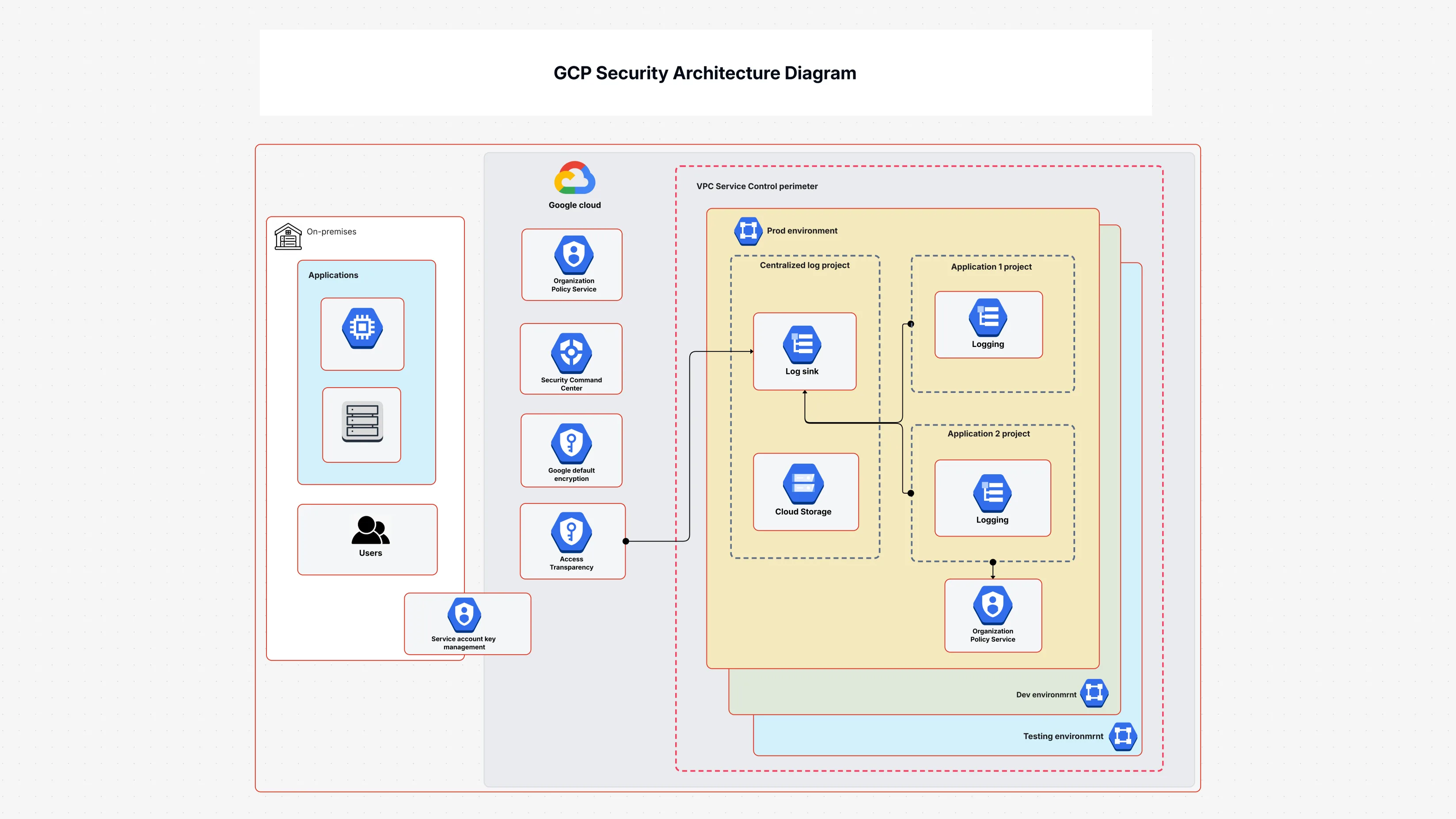
- Micro-segmentation: Dividing the network into smaller, granular zones to limit lateral movement by attackers.
- Software-Defined Perimeters (SDP): Implementing a "black cloud" approach where resources are invisible to unauthorized users.
3. The Compute/Host Layer
This layer involves securing the virtual machines (VMs), containers, and serverless instances. Security architecture here involves using hardened machine images, regular patching schedules, and runtime security tools that monitor for anomalous behavior within containerized environments like Kubernetes.
4. The Application Layer
Applications are often the most exposed part of the cloud stack. Security architecture at this level incorporates Web Application Firewalls (WAF), API gateways, and rigorous input validation. By 2026, the use of Application Security Orchestration and Correlation (ASOC) tools has become standard for managing vulnerabilities across complex microservices.
5. The Data Layer
Data is the ultimate target of most attacks. Security architecture prioritizes data protection through:
- Encryption at Rest: Protecting data stored on disks using AES-256 or similar standards.
- Encryption in Transit: Using TLS 1.3 to secure data moving between the user and the cloud or between cloud services.
- Confidential Computing: Utilizing Hardware-based Trusted Execution Environments (TEEs) to encrypt data even while it is being processed in memory.
Comparison of Security Responsibilities by Service Model
The level of control and responsibility varies significantly depending on whether you are using Infrastructure as a Service (IaaS), Platform as a Service (PaaS), or Software as a Service (SaaS).
| Component | IaaS (e.g., EC2) | PaaS (e.g., App Service) | SaaS (e.g., M365) |
|---|---|---|---|
| Data & Governance | Customer | Customer | Customer |
| Identity & Access | Customer | Customer | Customer |
| Application Security | Customer | Customer | Shared/Provider |
| Operating System | Customer | Provider | Provider |
| Network Controls | Customer | Shared/Provider | Provider |
| Physical Security | Provider | Provider | Provider |
Key Security Controls and Mechanisms
To implement the architecture effectively, several key technical controls must be deployed. These mechanisms act as the functional components of the security framework.
Identity and Access Management (IAM)
IAM is often described as the "new perimeter." In a cloud environment, traditional IP-based firewalls are less effective because workloads are highly dynamic. IAM architecture relies on Zero Trust principles: never trust, always verify. This includes Multi-Factor Authentication (MFA), Single Sign-On (SSO), and the Principle of Least Privilege (PoLP), ensuring users only have access to the specific resources required for their role.
Security Information and Event Management (SIEM)
A cloud-native SIEM collects logs and telemetry from across the cloud environment. It uses machine learning to correlate events and identify patterns that might indicate a breach. In 2026, these systems are increasingly integrated with Security Orchestration, Automation, and Response (SOAR) platforms to automatically block malicious IP addresses or quarantine compromised accounts in real-time.
Cloud Security Posture Management (CSPM)
CSPM tools are essential for identifying misconfigurations. Many cloud data breaches occur not because of sophisticated hacking, but because a storage bucket (like an Amazon S3 bucket) was accidentally left open to the public. CSPM continuously monitors the environment against security benchmarks and compliance standards, providing automated remediation for risky configurations.
Designing a Secure Cloud Architecture: Best Practices
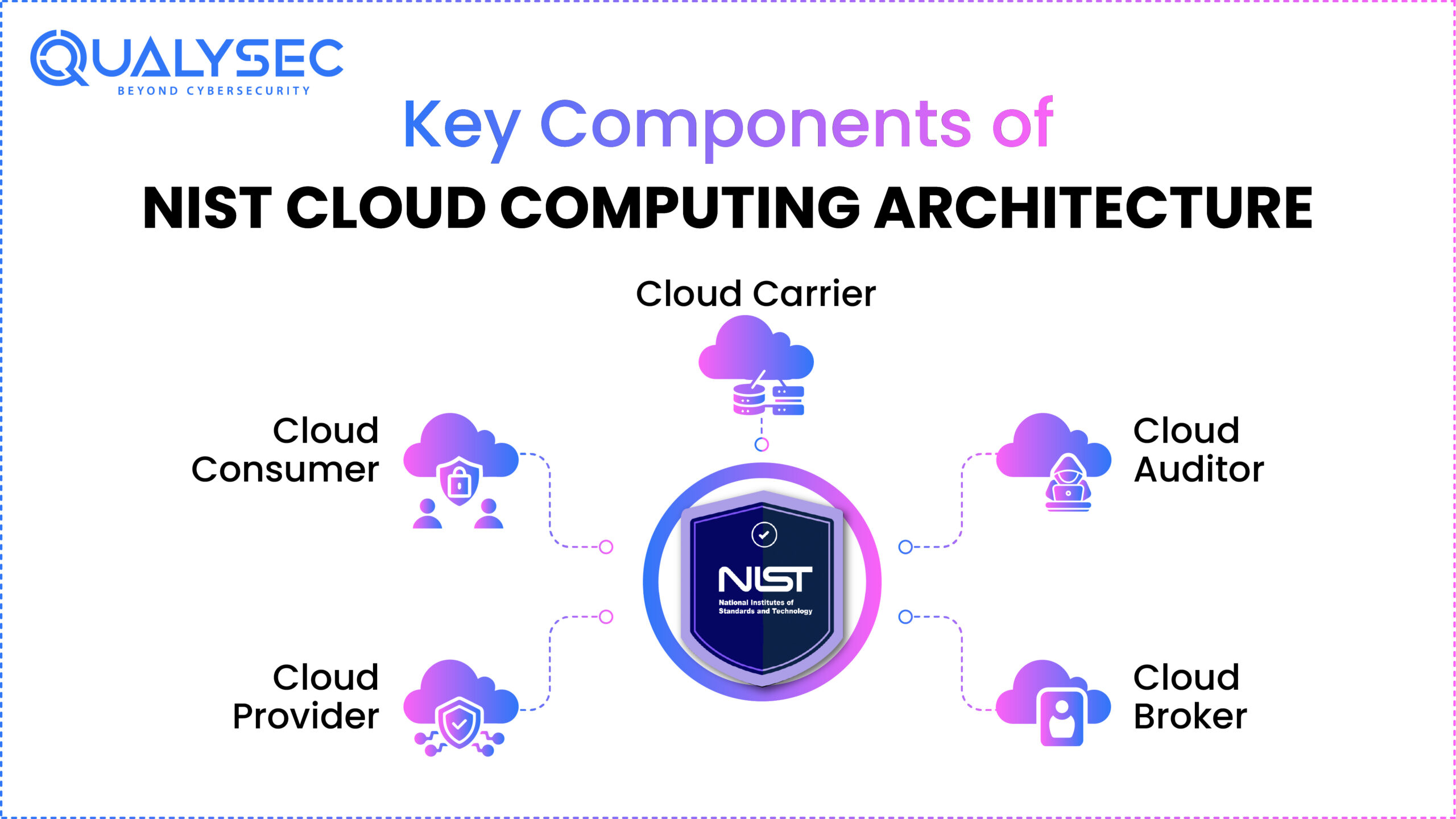
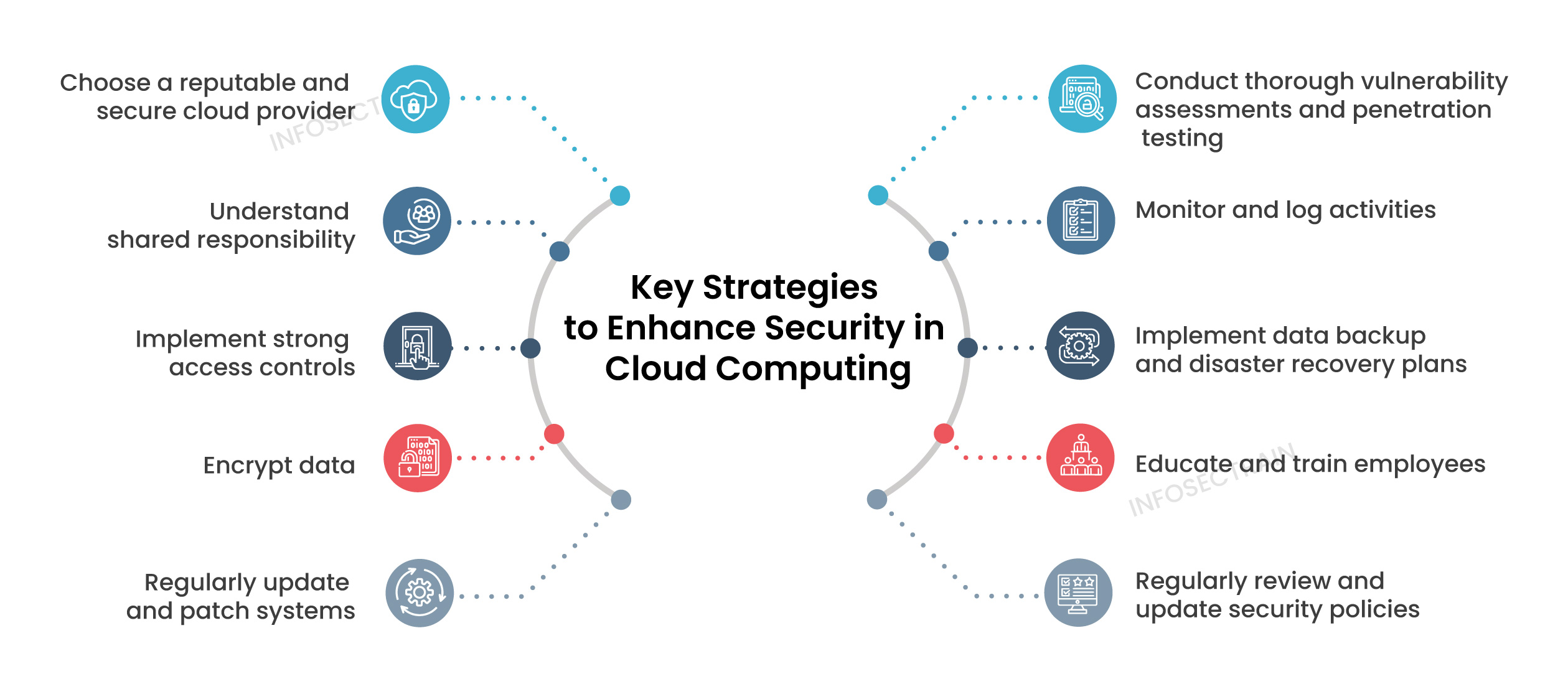
Building a secure architecture requires following established frameworks such as the NIST Cloud Computing Security Reference Architecture or the Cloud Security Alliance (CSA) Cloud Controls Matrix.
- Centralize Identity: Use a single identity provider across all cloud services to ensure consistent policy enforcement and simplified auditing.
- Automate Compliance: Use "Infrastructure as Code" (IaC) to deploy resources. By embedding security checks into Terraform or CloudFormation templates, you ensure that every resource is secure by default.
- Implement Logging and Monitoring: Enable detailed logging for all API calls (e.g., AWS CloudTrail). Without logs, it is impossible to conduct forensics after a security incident.
- Data Sovereignty and Residency: Ensure the architecture accounts for legal requirements regarding where data is stored, especially for organizations operating in the EU under GDPR or other regional data protection laws.
Common Challenges in Cloud Security Architecture
Despite the advanced tools available in 2026, architects face several persistent challenges. Visibility is often the greatest hurdle; in large, decentralized organizations, "Shadow IT" (the use of cloud services without IT approval) can create blind spots.
Furthermore, the complexity of multi-cloud environments can lead to inconsistent security policies. An IAM policy in Azure does not translate directly to Google Cloud, requiring architects to use cross-platform management tools to maintain a unified security posture. Lastly, the skills gap remains significant, as the pace of cloud innovation often outstrips the availability of trained security professionals.
Frequently Asked Questions
What is the difference between cloud security and traditional IT security?
Traditional security focuses on protecting a physical perimeter (the "castle and moat" model). Cloud security architecture focuses on protecting data and identities across a distributed environment where the underlying hardware is managed by a third party. It relies heavily on APIs and software-defined controls rather than physical appliances.
Why is Zero Trust important in cloud architecture?
Zero Trust assumes that the network is already compromised. It requires every access request to be fully authenticated, authorized, and encrypted regardless of where the request originates. This is vital in the cloud because the traditional "internal network" no longer exists in a meaningful way.
How does encryption work in a multi-tenant cloud?
Cloud providers use sophisticated key management systems (KMS) to ensure that even though multiple customers share the same physical hardware, their data remains isolated. Each customer’s data is encrypted with unique keys that the provider cannot access without explicit permission (or via "Bring Your Own Key" models).
What are the risks of "Cloud Misconfiguration"?
Misconfiguration occurs when security settings are not properly implemented, such as leaving database ports open to the internet or failing to enable logging. It is the leading cause of cloud data breaches because it creates easy-to-exploit vulnerabilities that automated scanners can find in seconds.
Is cloud computing more secure than on-premises?
In 2026, cloud computing is generally considered more secure for most organizations because CSPs invest billions in security infrastructure that few private companies can match. However, the security of the data inside the cloud remains the customer’s responsibility, and poor configuration can make a cloud environment less secure than a well-managed on-premises server.
Next Steps for Implementation
To begin securing your cloud environment, start by performing a gap analysis against the CIS Benchmarks for your specific provider. Prioritize the implementation of Multi-Factor Authentication (MFA) across all accounts and deploy a Cloud Security Posture Management (CSPM) tool to identify immediate risks. Moving forward, transition your deployment processes to Infrastructure as Code (IaC) to ensure that security is an automated, repeatable part of your architecture.
Image Gallery