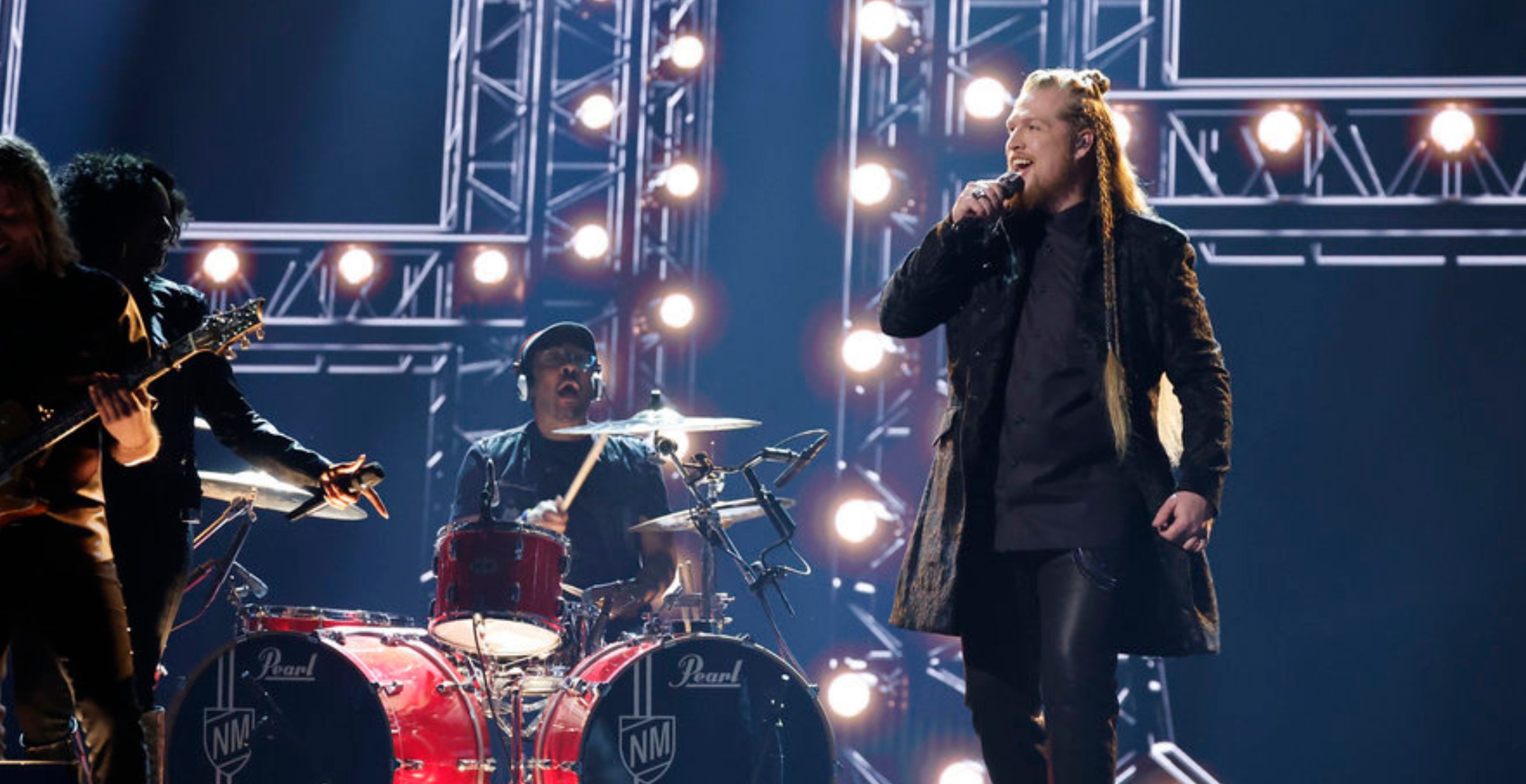
Huntley on The Voice: How His Soulful Legacy Quietly Transforms Home Sound Systems
The victory of Michael Huntley, known simply as Huntley, on Season 24 of The Voice has catalyzed a significant shift in home audio preferences. By 2026, his influence has moved beyond television ratings into the living rooms of music e...
The victory of Michael Huntley, known simply as Huntley, on Season 24 of The Voice has catalyzed a significant shift in home audio preferences. By 2026, his influence has moved beyond television ratings into the living rooms of music enthusiasts, driving a renewed demand for high-fidelity (Hi-Fi) equipment capable of capturing the raw, textured "soul-rock" vocal style he popularized.
Contents
The Huntley Effect: Why Vocal Texture Matters in 2026
When Huntley first stepped onto the stage of The Voice, his rendition of "She Talks to Angels" signaled more than just a talented contestant; it heralded a return to organic, unfiltered vocal performances. His voice is characterized by a unique combination of power, grit, and subtle emotional nuances. In the years following his win, this specific vocal profile—often referred to as "the Huntley rasp"—has become the benchmark for testing home audio equipment.
In the early 2020s, the consumer market was dominated by convenient but sonically compressed Bluetooth speakers. However, as of 2026, there is a visible "Huntley Effect" in the industry. Listeners have realized that the heavy compression used in standard streaming formats and low-end hardware strips away the very grit and breathiness that make Huntley’s performances compelling. This has led to a "quiet transformation" where homeowners are trading convenience for acoustic depth, seeking systems that can reproduce the 2kHz to 5kHz frequency range where vocal "bite" and texture reside.
Decoding the Technical Requirements for Soulful Audio
To truly appreciate the nuances of a performer like Huntley, a home sound system must excel in three specific areas: dynamic range, midrange clarity, and harmonic warmth. Standard smart speakers often struggle with these elements, leading to a "muddy" sound where the vocals are buried beneath artificial bass.
Dynamic Range and Vocal Peaks
Huntley’s style involves rapid transitions from a whisper to a full-throated roar. Systems with poor dynamic range will "clip" these peaks or utilize aggressive limiters that flatten the excitement of the performance. By 2026, mid-range home theater and stereo setups have increasingly adopted high-current amplifiers that provide the "headroom" necessary to handle these vocal surges without distortion.
Midrange Fidelity
The human voice lives in the midrange. Huntley’s specific gravelly tone is rich in even-order harmonics. To reproduce this accurately, listeners are moving toward three-way speaker designs (tweeter, midrange driver, and woofer) rather than two-way designs. A dedicated midrange driver ensures that the "body" of the voice is not lost between the high-frequency sparkle and the low-frequency thud.
The Analog Renaissance: Vinyl and Tube Amplification
A significant part of the transformation in home sound is the move back to analog components. While digital streaming is ubiquitous, the "Huntley sound" has become a primary driver for the vinyl revival among younger demographics.
The Appeal of Tube Amps
Vacuum tube amplifiers, once considered obsolete relics, have seen a massive resurgence by 2026. The "warmth" provided by tube amplification complements the raspy rock aesthetic perfectly. Unlike solid-state transistors, which can sound clinical or "harsh" on gritty vocals, tube amps add a subtle saturation that makes a recorded Huntley track feel like a live performance in the room.
High-Resolution Streaming Tiers
For those sticking to digital, the influence of The Voice winners has pushed mainstream services to prioritize lossless and high-resolution audio (24-bit/192kHz). Consumers now understand that to hear the intake of breath before a chorus or the slight crack in a vocal cord during a ballad, they need a bitrate higher than the standard 320kbps.
Comparative Audio Setups for Vocal-Centric Listening
Choosing the right equipment depends on the listener's budget and the desired level of intimacy with the music. The following table compares three common tiers of home sound systems in 2026 and how they handle soulful, rock-oriented vocals.
| Feature | Entry-Level (Smart Soundbar) | Enthusiast (Integrated Hi-Fi) | Audiophile (Component System) |
|---|---|---|---|
| Vocal Clarity | Moderate; often processed by DSP. | High; natural and uncolored. | Exceptional; holographic imaging. |
| Grit Reproduction | Smooths over textures; loses detail. | Captures the "rasp" accurately. | Reveals micro-details and breath. |
| Soundstage | Narrow; focused on the screen. | Wide; feels like a front-row seat. | Three-dimensional; immersive. |
| Primary Media | Bluetooth/Standard Streaming. | Lossless Streaming/CD. | Vinyl/High-Res Digital Masters. |
| Best For | Casual background listening. | Dedicated music rooms. | Critical listening and archives. |
Transforming the Physical Space: Acoustic Treatment
The "quiet transformation" of home sound isn't just about the electronics; it is also about the room itself. A voice like Huntley’s, powerful and resonant, can easily overwhelm a room with too many hard surfaces, leading to "standing waves" and echo.
In 2026, home decor trends have shifted to include functional acoustic elements. This includes:
- Acoustic Art Panels: Canvas prints that double as sound absorbers to reduce high-frequency reflections.
- Bass Traps: Subtle furniture placements or corner treatments that prevent low-end frequencies from becoming "boomy."
- Diffusers: Wooden or composite wall hangings that scatter sound waves, creating a larger, more "live" feeling in a small room.
These changes allow the home listener to recreate the controlled environment of a studio or the atmospheric resonance of The Voice stage. By managing the "slap back" of sound off walls, the listener can focus on the centered, powerful image of the vocalist.
The Role of Spatial Audio and Atmos in 2026
While stereo (two-channel) remains the gold standard for many, Dolby Atmos for Music has transformed how fans experience Huntley’s performances. In a spatial audio mix, the lead vocal is often "placed" in a virtual space that feels detached from the speakers.
For a track featuring a heavy rock arrangement—drums, electric guitars, and keyboards—spatial audio allows the instruments to be spread out in a 360-degree arc. This creates a "pocket" in the center for the vocals to sit without being masked by the high-frequency clash of cymbals or the midrange density of distorted guitars. Homeowners are increasingly installing in-ceiling or up-firing speakers to take advantage of these immersive mixes, which were once only available in professional cinemas.
Common Mistakes in Home Audio Upgrades
When attempting to capture a specific "live" vocal sound, many enthusiasts fall into common traps.
- Over-indexing on Bass: Many consumers buy the largest subwoofer possible, thinking it improves "power." In reality, excessive bass masks the lower-midrange frequencies of the human voice, making a singer like Huntley sound muffled.
- Poor Speaker Placement: Placing speakers inside bookshelves or against corners creates boundary interference. For the best vocal imaging, speakers should be at least 12-18 inches from the wall and "toed-in" toward the listener's ears.
- Ignoring the Source: Even a $10,000 system will sound poor if the source is a low-quality YouTube rip. Ensuring the use of high-bitrate files or physical media is the first step in any transformation.
Frequently Asked Questions
Why is Huntley’s voice used to test speakers?
Huntley’s voice contains a broad spectrum of frequencies, from deep chest resonance to high-frequency raspy overtones. This makes it an ideal "stress test" for speakers, as it reveals whether a system can handle complex textures without sounding muddy or "tinny."
Do I need a turntable to hear the "soul" in the music?
While vinyl provides a specific harmonic warmth that many associate with soul and rock, it is not strictly necessary. A high-quality Digital-to-Analog Converter (DAC) paired with lossless streaming can provide the same level of detail, though some prefer the "tangible" experience of analog.
Can a soundbar accurately reproduce a performer like Huntley?
Most standard soundbars are designed for dialogue and movie explosions. For music, a dedicated 2.0 or 2.1 stereo system is generally superior, as it provides better channel separation and a more accurate soundstage for vocal performances.
How much should I spend to upgrade my home sound?
In 2026, a "sweet spot" for a noticeable transformation is typically between $800 and $1,500. This budget allows for a pair of high-quality bookshelf speakers and a decent integrated amplifier or high-end streaming bridge.
Is spatial audio better than stereo for soulful vocals?
It depends on the mix. Stereo offers a more traditional, "focused" performance, while spatial audio (like Dolby Atmos) provides an "immersive" experience. For intimate ballads, stereo is often preferred; for stadium-rock anthems, spatial audio excels.
Practical Next Steps for Listeners
To begin your own home sound transformation, start with your source material. Switch to a lossless streaming tier and listen to a track with high vocal complexity. If the voice feels "trapped" inside the speakers rather than floating in the room, consider upgrading your speakers to a pair with dedicated midrange drivers. Finally, look at your room's acoustics; even a simple area rug can significantly improve the clarity of the vocals you hear. By prioritizing these elements, you can bring the raw, soulful energy of The Voice directly into your home.
Image Gallery