How Long Does Steak Take to Cook in the Kitchen
Cooking a steak in a standard home kitchen typically takes anywhere from 4 to 12 minutes of active cooking time, depending on the cut's thickness, the desired level of doneness, and the chosen culinary technique. For a standard 1-inch...
Cooking a steak in a standard home kitchen typically takes anywhere from 4 to 12 minutes of active cooking time, depending on the cut's thickness, the desired level of doneness, and the chosen culinary technique. For a standard 1-inch thick cut using a traditional stovetop pan-searing method, you will generally need about 3 to 4 minutes per side for a medium-rare finish, followed by a mandatory resting period of 5 to 10 minutes.
Contents
Mastering the culinary art of preparing beef in a residential setting requires an understanding of thermodynamics, meat anatomy, heat transfer, and precise timing. Whether you are working with a thin flank steak or a thick-cut ribeye, knowing the exact variables that dictate cooking duration will prevent overcooking and ensure a tender, juicy result every time.
Understanding the Core Variables of Cooking Steak
Before placing any cut of beef onto a hot surface, you must evaluate several physical and environmental factors. The time required to reach a specific internal temperature is never a universal constant; it varies based on individual steak characteristics and kitchen setup.
Thickness and Cut of the Meat
The single most influential factor in determining kitchen cooking duration is the physical thickness of the steak, rather than its overall weight. A thin 0.5-inch skirt steak cooks through in a matter of seconds per side, whereas a thick 2-inch Tomahawk ribeye requires a combined stovetop and oven approach to cook the interior without burning the exterior. Standard grocery store cuts generally fall into categories of 1 inch or 1.5 inches. Thicker cuts demand a more nuanced application of heat to ensure the center reaches thermal equilibrium without scorching the outer layer.
Initial Temperature of the Beef
Placing a freezing or refrigerator-cold steak directly onto a hot skillet creates a thermal shock. The exterior will sear rapidly, while the interior remains cold, drastically increasing the time required to bring the center to your target temperature. Allowing the beef to sit at room temperature for 20 to 30 minutes prior to cooking allows the muscle fibers to relax and narrows the temperature gap between the outside and the inside, resulting in a more uniform cook time and even texture.
Intensity and Type of Heat Source
The heating medium in your kitchen dictates how energy transfers into the meat. Cast-iron skillets retain and distribute intense radiant heat, yielding a rapid crust development through the Maillard reaction. Stainless steel pans require careful temperature management and oil application to prevent sticking, while broiling utilizes direct overhead infrared radiation. Each method transfers thermal energy at different rates, directly altering the total duration the steak spends on the heat.
Primary Cooking Techniques and Their Timings
Different kitchen methods alter the timeline of how long a steak takes to cook. Selecting the appropriate technique depends on your available equipment and the specific cut of meat you are preparing.
Stovetop Pan-Searing
Pan-searing is the most common method for preparing steaks under 1.5 inches thick in a home kitchen. Using a heavy-bottomed skillet—preferably cast iron or carbon steel—heated to a high temperature, the steak is cooked primarily from the bottom up while absorbing heat through direct contact.
For a standard 1-inch thick New York strip or ribeye cooked to medium-rare:
- Heat the skillet with a high-smoke-point oil until it shimmers.
- Place the steak in the pan and sear the first side for approximately 3 to 4 minutes without moving it.
- Flip the steak and cook the second side for another 3 to 3.5 minutes.
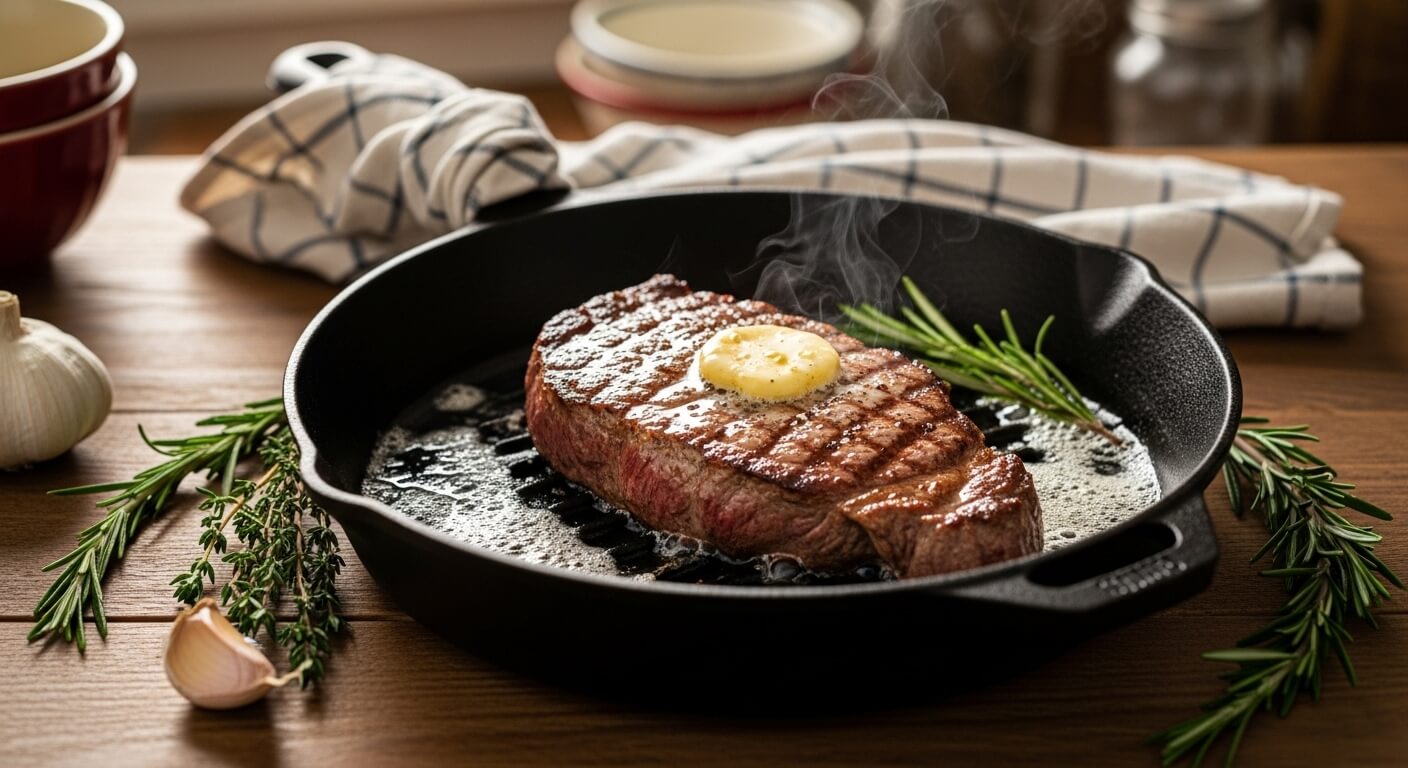
- Add butter, garlic, and herbs during the final minute of cooking, spooning the melted fat continuously over the top of the meat.
The Reverse Sear Method
For thick cuts exceeding 1.5 inches, the reverse sear method provides superior control. In this technique, the steak is cooked slowly in a low-temperature oven first, then finished with a high-heat sear on the stovetop.
- Preheat your kitchen oven to 275°F (135°C).
- Place the seasoned steak on a wire rack inside a baking sheet.
- Bake the steak in the oven for 25 to 45 minutes, depending on thickness, until the internal temperature sits roughly 10 degrees below your target doneness.
- Remove the steak from the oven and pat it completely dry.
- Sear the steak in a blazing hot cast-iron skillet for 1 to 2 minutes per side to develop a deep, crisp crust.
Broiling in the Kitchen Oven
Oven broiling uses the top heating element of your kitchen range to cook the steak from above, mimicking an upside-down grill. This method works well for flat cuts like flank or hanger steak.
- Position the oven rack about 4 to 6 inches away from the broiler element.
- Preheat the broiler on high for 5 to 10 minutes, along with a heavy broiler pan or cast-iron skillet.
- Place the oiled and seasoned steak onto the preheated pan.
- Broil for 4 to 6 minutes for the first side, flip carefully, and broil for an additional 3 to 5 minutes for the second side, monitoring closely to avoid burning.
| Steak Cut & Thickness | Cooking Method | Total Heat Time (Medium-Rare) | Resting Duration |
|---|---|---|---|
| Ribeye (1-inch) | Stovetop Pan-Sear | 6 to 8 minutes | 5 to 8 minutes |
| Filet Mignon (1.5-inch) | Pan-Sear & Butter Baste | 8 to 10 minutes | 5 minutes |
| New York Strip (2-inch) | Reverse Sear (Oven + Pan) | 35 to 50 minutes (Oven) + 2 mins (Sear) | 10 minutes |
| Flank Steak (0.75-inch) | Broiler or Skillet | 6 to 9 minutes | 5 to 7 minutes |
| Sirloin (1-inch) | Stovetop Pan-Sear | 5 to 7 minutes | 5 minutes |
Internal Temperature Standards for Doneness
Relying solely on visual appearance or timing can lead to inconsistent results. Culinary professionals rely on internal temperature to determine exactly when a steak has finished cooking. Always insert an instant-read digital meat thermometer into the thickest part of the steak, avoiding any large pockets of fat or bone.
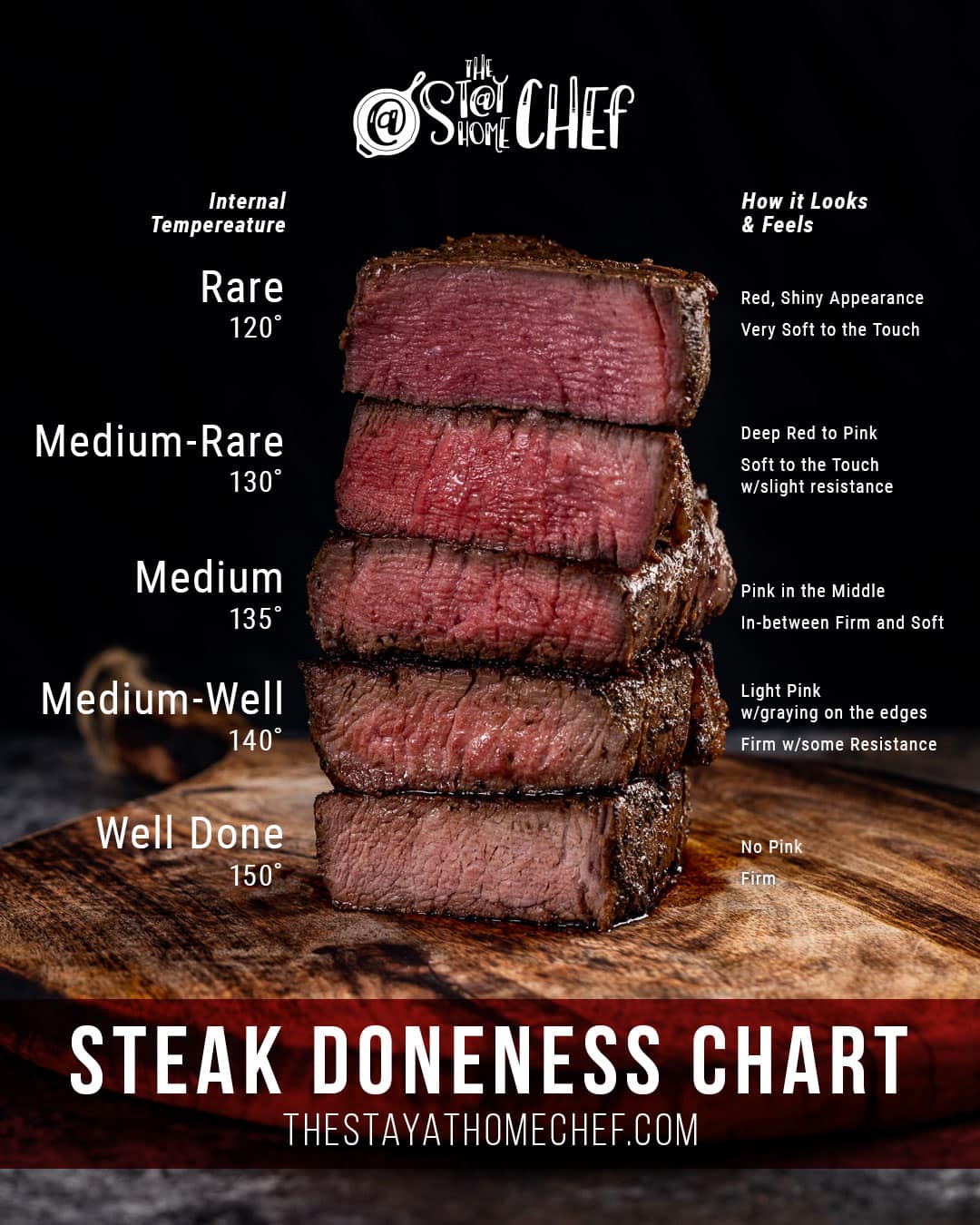
- Rare (Cool, Red Center): 120°F to 125°F (49°C to 52°C). Cooking time is approximately 2 to 3 minutes per side for a 1-inch cut.
- Medium-Rare (Warm, Red-Pink Center): 130°F to 135°F (54°C to 57°C). Cooking time is approximately 3 to 4 minutes per side for a 1-inch cut. This is widely considered the optimal temperature for tenderness and flavor retention.
- Medium (Warm, Pink Center): 140°F to 145°F (60°C to 63°C). Cooking time is approximately 4 to 5 minutes per side for a 1-inch cut.
- Medium-Well (Slight Hint of Pink): 150°F to 155°F (65°C to 68°C). Cooking time exceeds 5 minutes per side.
- Well-Done (Fully Brown throughout): 160°F+ (71°C+). The muscle fibers are fully contracted, and natural moisture is heavily reduced.
Note that residual cooking continues after you remove the meat from the heat source. Pull the steak from the stove or oven when its internal temperature is roughly 5°F below your desired final target.
The Critical Role of the Resting Period
Many home cooks underestimate the importance of resting a steak after it finishes cooking. When heat is applied to meat, muscle fibers contract and push moisture toward the outer edges of the cut.
If you slice into a steak immediately after it leaves the pan, the pressurized juices will run out onto the cutting board, leaving the meat dry and fibrous. Allowing the steak to rest loosely under a tent of aluminum foil for 5 to 10 minutes lets the muscle fibers relax and reabsorb those flavorful juices evenly throughout the cut. During this resting phase, residual thermal energy will continue to cook the interior, raising the internal temperature by a few degrees to achieve the final desired doneness.
Common Mistakes That Affect Cooking Time
Several miscalculations can disrupt your timing and ruin the texture of your steak in the kitchen:
- Overcrowding the Pan: Putting multiple cold steaks into a single pan drops the surface temperature of the skillet instantly. Instead of searing, the meat stews in its own juices, drastically extending cooking time and preventing crust formation.
- Skipping the Surface Drying Step: Moisture is the enemy of a good sear. If a steak is wet when it hits the pan, the heat must first expend energy evaporating that water before browning can begin. Always pat the meat thoroughly dry with paper towels before seasoning.
- Flipping Too Frequently: While constant flipping is a modern technique used by some chefs for thin cuts, turning a thick steak back and forth haphazardly disrupts the steady accumulation of heat required to cook the interior properly. Stick to one or two well-timed flips for standard cuts.
- Using Low-Quality Cooking Oils: Using butter or extra virgin olive oil at the start of a high-heat pan-sear will cause the fat to burn and smoke rapidly. Opt for high-smoke-point oils such as avocado, canola, or grapeseed oil for the sear, saving butter for the final basting stage.
Frequently Asked Questions
How long should I cook a 1-inch steak for medium-rare?
For a standard 1-inch thick steak cooked in a hot skillet, aim for 3 to 4 minutes on the first side, then flip and cook for an additional 3 minutes. Always verify the doneness using a digital thermometer to confirm an internal temperature of 130°F to 135°F before resting.
Should I wash my steak before cooking it?
No. Washing raw beef under the kitchen faucet does not kill bacteria; instead, it splashes water droplets containing microorganisms across your countertops, sink, and utensils, creating a significant cross-contamination hazard. Cooking the meat at high temperatures eliminates surface bacteria safely.
Why is my steak grey and rubbery instead of brown?
If your steak turned grey without developing a crisp crust, your pan was likely not hot enough, or the meat was too wet when it entered the skillet. High heat and a dry surface are mandatory to trigger the Maillard reaction, which creates savory browning.
Can I cook a frozen steak directly in the kitchen?
Yes, you can cook a frozen steak using the reverse-sear method or by searing it directly from frozen, though it will take significantly longer. A frozen steak requires roughly 50% more cooking time in the oven or pan compared to a thawed cut, and it will not absorb marinades or seasonings as effectively on the frozen exterior.
How do I know when the steak is resting long enough?
As a general rule of thumb, allow your steak to rest for roughly half the total time it spent cooking. For a pan-seared steak that took 8 minutes to cook, a 5-minute rest is sufficient. Thicker steaks that underwent a 45-minute reverse sear should rest for a full 10 minutes.
Next Actions for Your Next Kitchen Session
To achieve optimal results on your next attempt, select a high-quality cut of beef at least 1 inch thick, ensure you have an accurate digital meat thermometer on hand, and let the meat temper at room temperature for 25 minutes prior to cooking. Preheat your heavy skillet until it is smoking slightly, dry the exterior completely, and monitor the internal temperature rather than relying solely on the clock.
Image Gallery