Understanding the I Shouldn’t Feel This Way Book: A Guide to Emotional Clarity
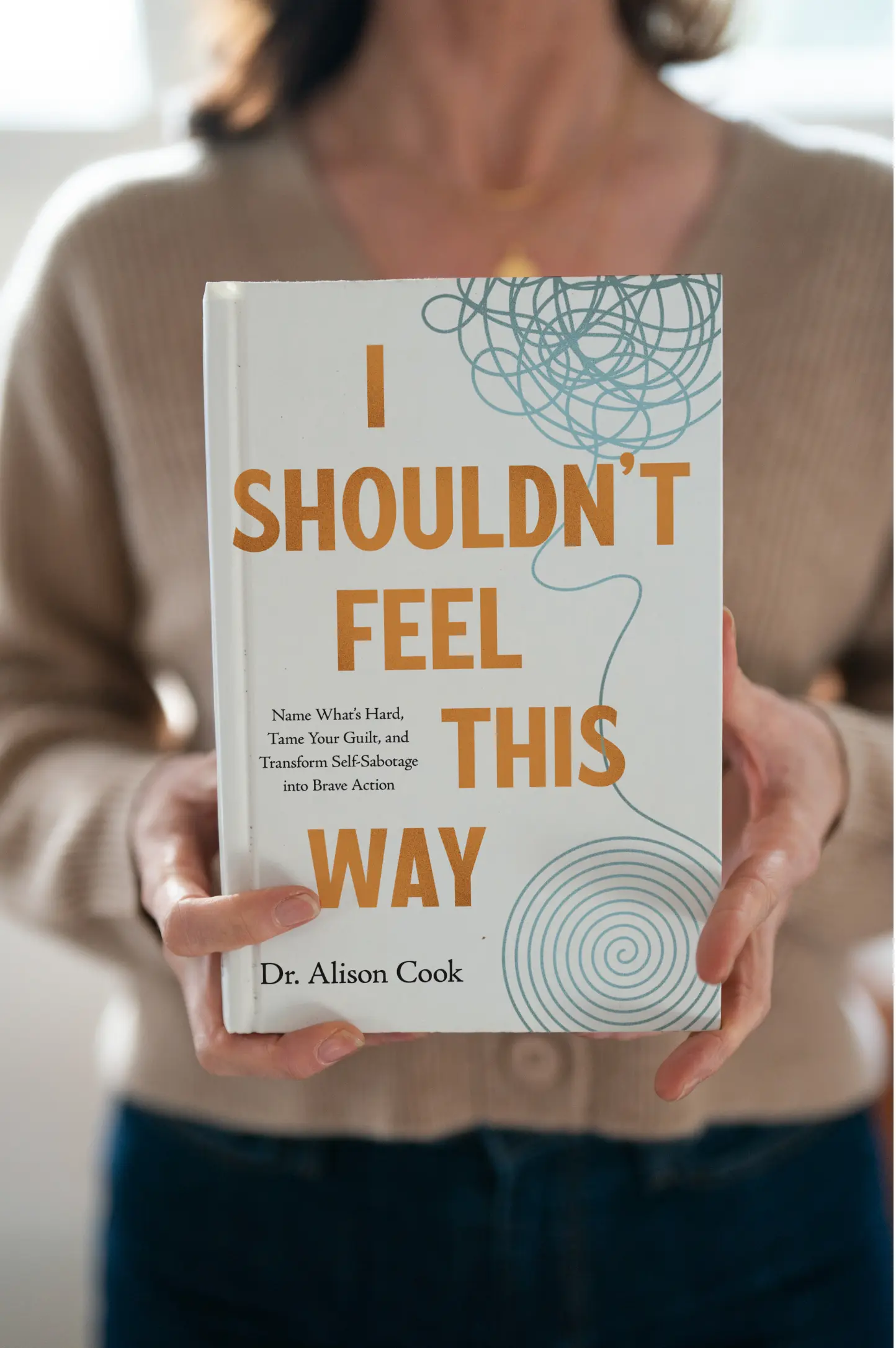
Understanding the I Shouldn’t Feel This Way book involves recognizing it as a psychological and spiritual roadmap for resolving internal conflict. Written by Dr. Alison Cook, the book teaches readers to stop suppressing difficult emoti...
Understanding the I Shouldn’t Feel This Way book involves recognizing it as a psychological and spiritual roadmap for resolving internal conflict. Written by Dr. Alison Cook, the book teaches readers to stop suppressing difficult emotions—such as anger, sadness, or anxiety—and instead use curiosity and "Both/And" thinking to achieve emotional healing and self-leadership.
Contents
Released in 2024, I Shouldn’t Feel This Way: Name What’s Hard, Tame Your Guilt, and Transform Your Self-Talk has become a cornerstone text for individuals struggling with "emotional gaslighting"—the habit of invalidating one's own feelings. As of 2026, its methodology remains highly relevant for those navigating the intersection of mental health and personal belief systems. Dr. Alison Cook, a psychologist with over two decades of experience, utilizes this work to bridge the gap between clinical psychology and practical, everyday self-care.
The Core Philosophy: Why We Gaslight Our Own Emotions
The central premise of the book is that most people carry an internal critic that tells them their feelings are "wrong," "unproductive," or "not what a good person should feel." Dr. Cook identifies this as self-inflicted emotional gaslighting. Just as a gaslighter in a relationship makes a victim doubt their reality, we often do the same to ourselves. For example, a person might feel deep resentment toward a family member but immediately tell themselves, "I shouldn't feel this way; they've done so much for me."
This internal dismissal doesn't make the feeling go away; instead, it pushes the emotion into the subconscious where it manifests as chronic anxiety, burnout, or physical symptoms. The book argues that "shoulding" on yourself is a defense mechanism designed to maintain a certain self-image or to avoid the discomfort of a complex reality. By understanding that every emotion serves as a messenger, readers can begin to dismantle the shame that keeps them stuck in cycles of repression.
The Psychological Foundation: Internal Family Systems (IFS)
To understand the mechanics of the book, one must understand Internal Family Systems (IFS), a therapeutic model that Dr. Cook adapts for a general audience. IFS suggests that the human psyche is not a singular "I," but a collection of "parts." Each part has its own perspective, motivations, and burdens.
Understanding Your "Parts"
The book categorizes these internal parts into roles such as the "Inner Critic," the "Pleaser," or the "Perfectionist." When you say, "I shouldn't feel this way," it is usually one part of you (the Critic or the Judge) attacking another part of you (the part that is hurting or angry). Dr. Cook explains that these parts are often trying to protect you in some way, even if their methods are outdated or harmful. For instance, the part of you that feels guilty might be trying to protect you from social rejection or divine punishment.
The Role of the Compassionate Observer
A major goal of the book is to help readers access what IFS calls the "Self"—a core essence characterized by calmness, curiosity, and compassion. Dr. Cook refers to this as becoming a "Compassionate Observer." Instead of being caught in the crossfire of your conflicting emotions, you learn to step back and lead your internal world like a wise, loving parent. This shift from being in the emotion to observing the emotion is the first step toward lasting change.
Breaking the Cycle of Religious and Social Guilt
For many readers, the "I shouldn't feel this way" mantra is rooted in religious or cultural upbringing. There is often a perceived conflict between being a "good" or "faithful" person and experiencing "negative" emotions like anger, doubt, or deep sadness. Dr. Cook specifically addresses this by integrating psychological principles with spiritual health.
She posits that spiritual maturity is not the absence of difficult emotions, but the ability to bring those emotions into the light. The book emphasizes that being honest about one's internal state is actually a prerequisite for genuine spiritual and emotional growth. By taming the guilt associated with "unacceptable" feelings, individuals can move toward a more integrated and authentic version of themselves.
Practical Application: The Three-Step Transformation Process
The book is structured to move beyond theory and into actionable practice. Dr. Cook outlines a specific progression to help readers process their internal conflicts:
1. Naming What Is Hard
Naming is a powerful psychological tool. When we label an emotion—a process known as "affect labeling"—we reduce the activity in the amygdala, the brain's fear center. Dr. Cook encourages readers to get specific. Instead of saying "I'm stressed," one might say, "A part of me feels overlooked and undervalued in my workplace." This precision moves the experience from a vague, overwhelming cloud to a tangible issue that can be addressed.
2. Taming the Guilt
Once an emotion is named, the "I shouldn't feel this way" part usually arrives with a payload of guilt. Taming this guilt involves recognizing that feelings are not facts, nor are they sins. They are biological and psychological responses to our environment and history. The book provides scripts and mental exercises to talk back to the guilt-inducing parts of the mind, acknowledging their presence without giving them the steering wheel.
3. Transforming Self-Talk
The final step is moving from critical self-talk to "Compassionate Self-Leadership." This involves asking the difficult parts of yourself what they need and how you can help them. This transformative dialogue changes the internal environment from a battlefield to a sanctuary. Instead of "Why am I so lazy?" the self-talk becomes, "A part of me is incredibly exhausted and is trying to protect my remaining energy; how can I rest effectively?"
The "Both/And" Strategy: Navigating Complexity
One of the most valuable concepts in the book is the "Both/And" strategy. Human experience is rarely binary, yet we often force ourselves to choose one "correct" feeling.
- "I am both grateful for my job and I am frustrated by the lack of boundaries."
- "I both love my partner and I am deeply hurt by their recent actions."
- "I am both a person of faith and I am struggling with deep doubt."
By using "Both/And" thinking, the reader stops the internal tug-of-war. This allows for the coexistence of seemingly contradictory truths, which reduces the pressure to "fix" or "eliminate" one half of the experience. It honors the complexity of being human in a broken world.
Summary of Key Strategies and Concepts
The following table summarizes the shift in perspective that the book encourages:
| Feature | The Old "Should" Mindset | The "I Shouldn't Feel This Way" Approach |
|---|---|---|
| Primary Goal | Suppress or eliminate "bad" emotions. | Understand and integrate all emotions. |
| Internal Dialogue | Critical, judgmental, and demanding. | Curious, compassionate, and observant. |
| View of Conflict | A sign of weakness or spiritual failure. | An opportunity for growth and healing. |
| Tool for Logic | "Either/Or" (I must be happy or I'm ungrateful). | "Both/And" (I am grateful and I am hurting). |
| Self-Perception | I am my emotions (I am an angry person). | I have "parts" (A part of me feels angry). |
| Outcome | Burnout, resentment, and anxiety. | Emotional resilience and self-leadership. |
Who Is This Book For?
The I Shouldn’t Feel This Way book is particularly effective for several specific demographics:
- The Over-Functioner: Individuals who are used to taking care of everyone else and feel they don't have the "right" to have their own needs or struggles.
- The Spiritually Conflicted: People who feel that their mental health struggles are a sign of a lack of faith or character flaw.
- The Chronic Self-Critic: Those whose internal monologue is dominated by a harsh, judgmental voice that minimizes their pain.
- Therapy Seekers: It serves as an excellent companion to professional counseling, particularly for those working through trauma or attachment issues using the IFS model.
Potential Limitations and Considerations
While the book is a powerful resource, it is important to note that self-help literature is a supplement to, not a replacement for, professional medical or psychological care. For individuals dealing with severe clinical depression, complex PTSD, or bipolar disorder, the "naming and taming" process should ideally be done under the guidance of a licensed therapist. The book’s focus on internal parts is highly effective, but deep-seated trauma often requires an external, safe container provided by a clinical professional.
Frequently Asked Questions
Is "I Shouldn’t Feel This Way" a religious book?
While Dr. Alison Cook writes from a Christian perspective and often integrates faith-based insights, the psychological principles—specifically the IFS framework—are universal. The book is widely read by both religious and secular audiences because the struggle with self-guilt and internal conflict is a common human experience.
What does "emotional gaslighting" mean in this context?
In this book, emotional gaslighting refers to the process of denying your own emotional reality. It is when you tell yourself that your feelings aren't valid, didn't happen, or are "crazy," often to keep the peace with others or to avoid dealing with a painful truth.
How is this different from "toxic positivity"?
Toxic positivity is the external or internal pressure to maintain a happy disposition regardless of the circumstances. I Shouldn’t Feel This Way is the antidote to toxic positivity. It argues that true health comes from acknowledging the "un-positive" parts of our lives and giving them a seat at the table.
Can I apply these principles if I don't know anything about IFS?
Yes. Dr. Cook explains the concept of "parts" in a very accessible way. You do not need a background in psychology to follow the exercises or understand the framework. The book is designed for the layperson and focuses on practical application rather than academic theory.
How long does it take to see results from these practices?
The "Naming" and "Both/And" strategies can provide immediate relief from the intensity of an emotional spike. However, transforming long-term self-talk and dismantling deep-seated guilt is a gradual process. Most readers find that consistent application over several months leads to a significant shift in their baseline anxiety and self-compassion.
Next Steps and Final Recommendations
If you find yourself constantly saying "I shouldn't feel this way," your first action should be to stop and simply observe that thought. Recognize that the "should" is a part of you trying to keep you safe or compliant, but it is also keeping you from healing.
To get the most out of Dr. Cook's work, consider keeping a journal specifically for the "Both/And" exercises. When a difficult emotion arises, write down both the feeling and the conflicting "should," then reframe them using the "Both/And" technique. For those who prefer audio learning, Dr. Cook also hosts The Best of You podcast, which frequently expands on the themes found in the book. By moving from self-judgment to self-curiosity, you begin the journey toward the emotional freedom the book describes.
Image Gallery