Understanding the Forklift Stacking Height Limit
Understanding the forklift stacking height limit requires evaluating the interplay between the machine's rated capacity, mast type, load center, and vertical stability dynamics. Overlooking these physical constraints can lead to catast...
Understanding the forklift stacking height limit requires evaluating the interplay between the machine's rated capacity, mast type, load center, and vertical stability dynamics. Overlooking these physical constraints can lead to catastrophic tip-overs, dropped loads, and severe structural damage within high-density warehouse environments.
Contents
Operating material handling equipment at elevated positions demands a comprehensive grasp of physics, equipment design ratings, and safety protocols. As warehouses increasingly scale vertically to maximize cubic storage capacity, safety managers and forklift operators must look beyond basic mast capabilities. The vertical reach of a forklift is not an isolated specification; it is heavily dictated by load weight distribution, center of gravity shifts, and ground conditions.
Ensuring safe vertical material handling requires a systematic approach to equipment specifications, load dimensions, and the operational boundaries established by regulatory bodies such as the Occupational Safety and Health Administration (OSHA). This guide breaks down the critical mechanics of forklift stacking height limits, the engineering principles governing vertical capacity reduction, and the practical steps needed to establish safe operational protocols in industrial settings.
The Engineering Fundamentals of Forklift Vertical Reach
The maximum height a forklift can lift a load is determined primarily by the design of its mast and the hydraulic cylinders that extend it. However, the mechanical capability of the mast to reach a certain elevation does not equate to the machine's ability to lift a heavy load at that same elevation.
Forklift masts generally fall into three structural categories, each affecting stacking height and vertical clearance differently:
- Single-Stage (Simplex) Masts: Feature a single rail channel that provides a limited lift height, typically used where overhead clearance is not an issue, but stacking heights are low.
- Two-Stage (Duplex) Masts: Feature two stages and often include a "full free lift" feature, allowing the forks to rise a certain distance before the inner mast sections begin to extend, making them ideal for low-ceiling trailers and standard racking.
- Three-Stage (Triplex) Masts: The most common configuration for high-bay warehousing. Triplex masts feature three nested rails that extend sequentially, allowing for significant reach heights while maintaining a low collapsed height to pass through standard doorways.
When evaluating a mast, operators must distinguish between maximum fork height (the elevation of the forks at full extension) and overall extended height (the total height of the mast assembly, including the load backrest, at maximum extension). Overhead clearance obstructions, such as fire suppression sprinkler systems, overhead lighting, and ductwork, often dictate the practical stacking height limit long before the mechanical limits of the forklift are reached.
Load Centers and the Degradation of Lifting Capacity
The single most critical concept in understanding forklift stacking height limits is the load center. A standard forklift rating is established based on a specific load center—most commonly a 24-inch or 48-inch cube where the weight is evenly distributed.
As a forklift raises a load higher into the air, its overall stability triangle changes dramatically. The center of gravity of both the forklift and the load shifts upward and forward. Consequently, the maximum weight the forklift can safely lift decreases as the stacking height increases. This relationship is detailed on the manufacturer’s capacity data plate, which outlines how lifting capacity degrades at specific height and load center milestones.
| Stacking Height Range | Standard Rated Capacity (24" Load Center) | Reduced Capacity at Max Height (Example) | Primary Stability Risk |
|---|---|---|---|
| Ground Level (0 - 5 ft) | 5,000 lbs | 5,000 lbs | Longitudinal tipping from overload |
| Mid-Level Racking (5 - 15 ft) | 5,000 lbs | 4,200 lbs | Dynamic sway during mast extension |
| High-Bay Stacking (15 - 25+ ft) | 5,000 lbs | 3,200 lbs | Critical center-of-gravity elevation |
| Maximum Lift Limit (25+ ft) | 5,000 lbs | 2,500 lbs or less | Combined lateral/longitudinal tip-over |
Failing to consult the capacity data plate when lifting loads to high-tier warehouse racking can result in sudden destabilization. Even if a forklift can physically lift 5,000 pounds to a height of 20 feet, the capacity reduction curve might dictate a safe working limit of only 3,500 pounds at that elevation.
Regulatory Standards and Compliance Requirements
Regulatory frameworks place strict compliance mandates on employers and operators regarding vertical material handling. Under OSHA standard 29 CFR 1910.178, industrial trucks must be operated within the manufacturer's rated capacity, and any modification that affects capacity or safe operation requires written approval from the original equipment manufacturer (OEM).
Furthermore, regulatory compliance extends beyond the machine itself to the operating environment:
- Floor Flatness and Levelness: High-mast forklifts operating at extreme heights are exceptionally sensitive to floor irregularities. A microscopic depression or bump in a concrete floor can translate into a massive lateral sway at a height of 25 feet, drastically increasing tip-over risks. Facilities utilizing high-bay stacking often adhere to specialized industrial floor flatness standards (such as TR34 or DIN 18202).
- Racking Integrity: Pallet racks must be structurally sound, anchored correctly to the concrete slab, and rated to support the cumulative weight of stacked pallets. Overloading a top-tier rack beam due to miscalculated stacking heights can lead to catastrophic rack collapse.
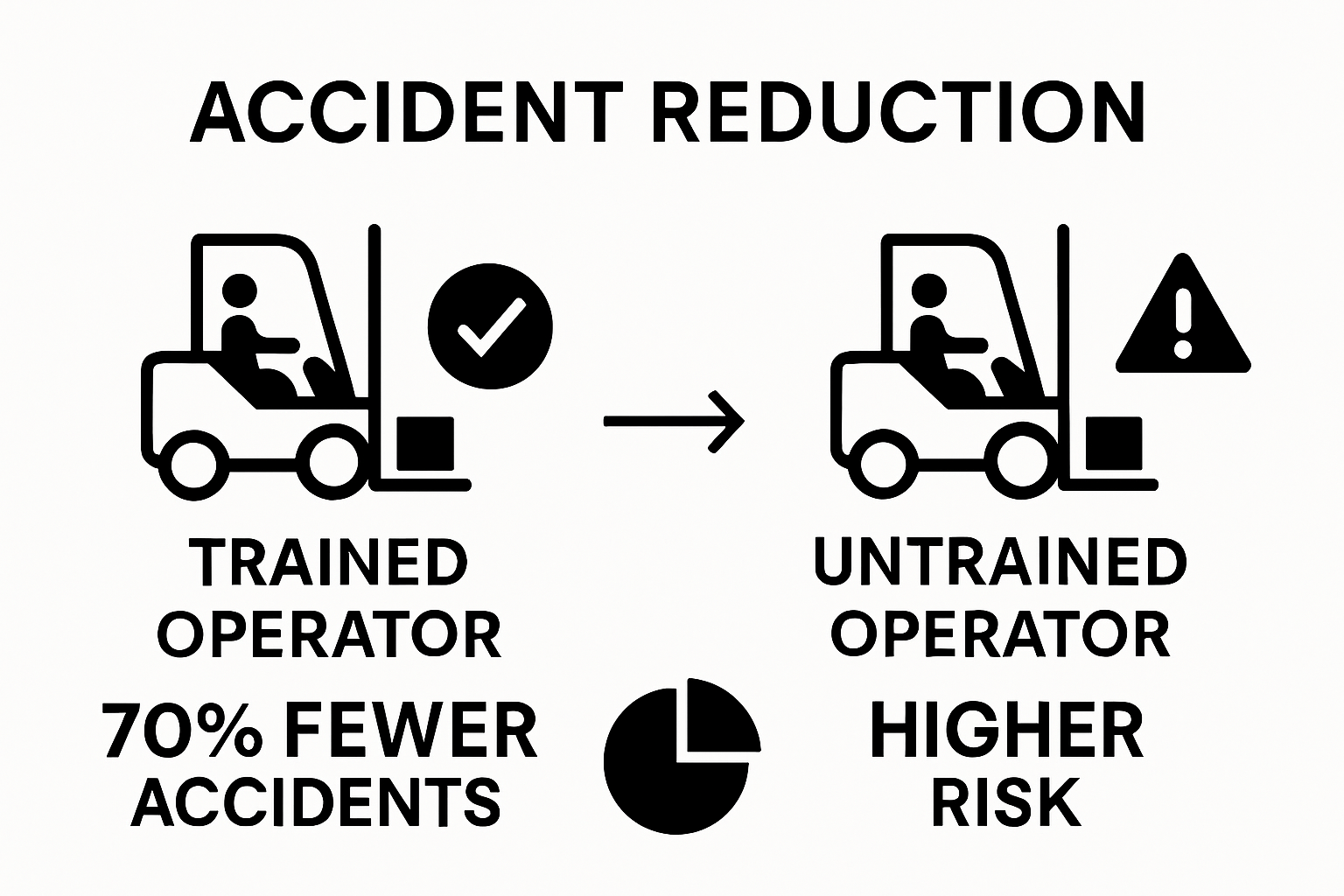
- Operator Training and Authorization: Operators must be specifically trained on the elevated stability characteristics of the exact class of forklift they operate. General warehouse certification does not automatically qualify an operator for high-reach narrow-aisle equipment.
Common Operational Mistakes in High-Bay Stacking
When pushing industrial reach trucks and counterbalance forklifts toward their maximum vertical limits, several recurring operational errors compromise safety and productivity. Recognizing these pitfalls helps warehouse managers establish robust standard operating procedures.
Tilting the Mast Incorrectly at Elevation
A frequent operational error involves tilting the mast forward while elevated. When a load is raised, tilting the mast forward shifts the center of gravity further away from the front wheels, rapidly inducing a forward tip-over. Mast tilt should generally be restricted to leveling the forks for pick-up or placement, and any backward tilt at height must be executed with extreme caution.
Ignoring Off-Center Loads
If a palletized load is unbalanced or off-center, the lateral stability of the forklift is compromised. When that off-center load is raised to maximum height, the uneven weight distribution creates a dangerous sideways moment. Operators must ensure loads are square, shrink-wrapped, and centered on the forks prior to vertical transport.
Travelling with Elevated Loads
Operating a forklift with the load raised above safe travel height (typically maintained 4 to 6 inches above the floor) while navigating warehouse aisles is a major safety violation. Stacking height limits apply strictly to the placement and retrieval phase; horizontal transit must always occur with the mast lowered and tilted back.
Best Practices for Maximizing Stacking Safety
To maintain high productivity without sacrificing safety, facilities must implement a comprehensive approach to vertical material handling. Integrating administrative controls, engineering checks, and continuous training ensures long-term operational resilience.
- Verify the Data Plate: Ensure every operator is trained to read and interpret the specific capacity data plate mounted on their assigned vehicle, noting how height and load dimensions interact.
- Conduct Pre-Shift Inspections: Check hydraulic lines, lift chains, mast rollers, and tire conditions daily. Worn tires or loose chains can cause a raised mast to lean, shifting the load unpredictably at height.
- Implement Laser Guidance and Height Indicators: Modern high-reach forklifts often feature laser height indicators or camera systems mounted on the carriage. These tools assist operators in aligning forks precisely with high rack tiers, reducing positioning errors.
- Enforce Strict Aisle Maintenance: Keep warehouse floors clean of debris, packaging straps, and liquid spills that could cause a high-reach truck to lose traction or destabilize while handling elevated loads.
Frequently Asked Questions
What happens to a forklift's lifting capacity as it goes higher?
A forklift's lifting capacity decreases as the load is elevated higher into the air. Because the combined center of gravity of the machine and the load shifts upward and forward, the maximum safe lifting weight drops significantly compared to the machine's baseline ground-level rating.
Can I use attachments like jib booms or carton clamps at maximum stacking height?
Attachments add significant weight and extend the load center forward. Using attachments drastically reduces the forklift's remaining capacity. Operators must reference a specialized capacity data plate modified specifically for that attachment before attempting high-tier stacking.
How does floor condition affect forklift stacking height limits?
Floor flatness is critical for high-bay operations. Even minor bumps, cracks, or dips in the concrete slab become magnified at heights of 20 feet or more, causing the mast to sway and threatening lateral stability. Facilities must ensure floors meet strict industrial flatness standards for high-reach applications.
What is the difference between maximum fork height and overall extended height?
Maximum fork height refers to the vertical distance the forks can travel from the ground. Overall extended height includes the entire physical structure of the mast and load backrest at full extension, which determines whether the machine will strike overhead building elements like lights or sprinklers.
Are operators required to have specialized training for high-reach stacking?
Yes. OSHA mandates that employers ensure operators are competent to operate industrial trucks safely, demonstrated by successful completion of training and evaluation. Operating in narrow aisles or high-bay environments requires specialized instruction regarding high-mast stability dynamics.
Conclusion
Understanding the forklift stacking height limit goes far beyond checking the highest number on a specification sheet. It requires continuous awareness of load centers, capacity reduction curves, floor integrity, and overhead clearance. By respecting the engineering boundaries of industrial equipment and enforcing strict operational protocols, facilities can safely maximize their vertical storage capacity while protecting personnel and inventory from avoidable accidents.
Image Gallery