Understanding World Health Organization Responsibilities for Global Health
The World Health Organization (WHO) coordinates international public health responses, establishes evidence-based norms and standards, shapes health research agendas, and provides technical assistance to member states during health eme...
The World Health Organization (WHO) coordinates international public health responses, establishes evidence-based norms and standards, shapes health research agendas, and provides technical assistance to member states during health emergencies. As the directing authority on international health within the United Nations system, the agency addresses systemic vulnerabilities, combats infectious and chronic diseases, and works to strengthen vulnerable healthcare infrastructures worldwide.
Contents
Introduction to the World Health Organization and Global Public Health Architecture
The global public health landscape relies on international cooperation to prevent the cross-border spread of disease, ensure equitable access to essential medicines, and protect populations from systemic health crises. Established in 1948 as a specialized agency of the United Nations, the World Health Organization serves as the preeminent coordinating authority for international public health. Its foundational mission is the attainment by all peoples of the highest possible level of health.
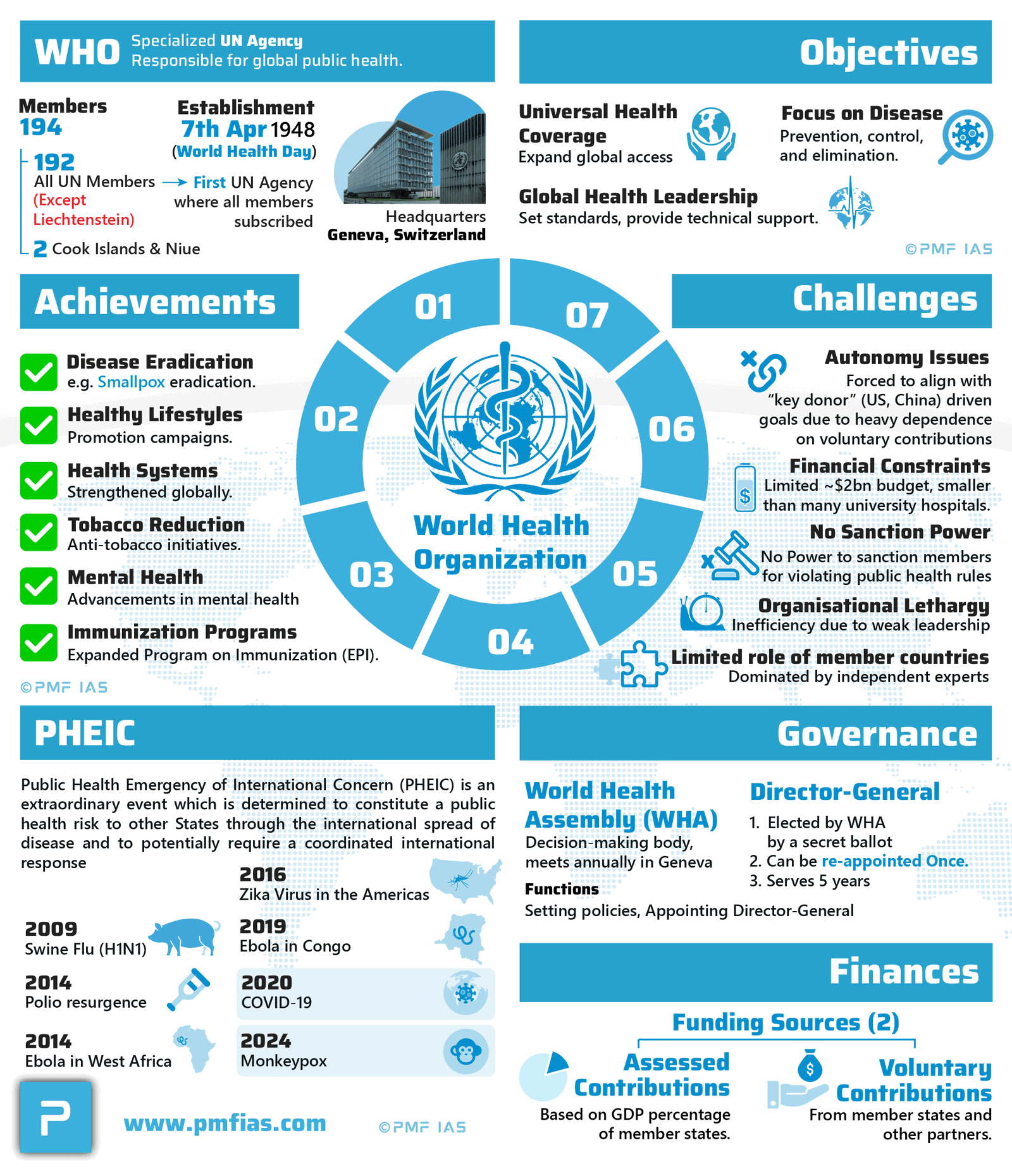
Operating across 150 country offices, six regional offices, and its headquarters in Geneva, Switzerland, the agency unites 194 member states to address complex medical and sanitary challenges. Navigating the modern health landscape requires a clear understanding of these institutional responsibilities, how normative guidance translates into local action, and the mechanisms the organization uses to protect global populations against biological threats.
Normative Leadership and Evidence-Based Global Standards
One of the foundational responsibilities of the World Health Organization is the establishment of normative guidance, clinical standards, and technical benchmarks that shape medicine and public health administration globally. Rather than merely offering advisory suggestions, the agency synthesizes global research to create authoritative frameworks that governments, regulatory bodies, and medical institutions adopt into domestic policy.
Developing Clinical Guidelines and Treatment Protocols
When new pathogens emerge or chronic disease trends shift, medical practitioners require reliable, unbiased therapeutic protocols. The organization manages a rigorous guideline development process governed by the WHO Guidelines Review Committee. This system ensures that clinical recommendations rely on systematic reviews of scientific evidence, balancing the benefits of interventions against potential harms, resource utilization, and patient values.
- Evidence Grading: Utilizing the Grading of Recommendations Assessment, Development and Evaluation (GRADE) framework to assess the certainty of scientific evidence.
- Independent Panels: Convening external panels of epidemiologists, clinicians, ethicists, and patient representatives to eliminate institutional bias.
- Universal Applicability: Adapting treatment protocols so they function effectively in both advanced clinical settings and resource-limited environments.
International Classifications and Nomenclature
Standardized language is vital for epidemiological tracking, healthcare administration, and medical research. The agency maintains foundational reference tools utilized by every major health system on earth. The International Classification of Diseases (ICD), now in its eleventh revision (ICD-11), provides a standardized diagnostic taxonomy for mortality and morbidity statistics. This standardization allows public health officials to compare health data across borders, identify emerging epidemiological anomalies, and allocate resources efficiently.
Emergency Preparedness and Health Security Operations
In an interconnected global economy, infectious diseases can cross international boundaries within hours. The World Health Organization acts as the operational nerve center for international health security, coordinating responses to biological threats, natural disasters, and humanitarian emergencies.
The International Health Regulations (IHR)
The International Health Regulations (2005) constitute a legally binding instrument of international law designed to prevent, protect against, control, and provide a public health response to the international spread of disease. Member states are obligated under the IHR to develop core public health capacities for surveillance and response, and to notify the agency within 24 hours of any events that may constitute a Public Health Emergency of International Concern (PHEIC).
| Emergency Designation | Primary Criteria | Agency Operational Action |
|---|---|---|
| Public Health Emergency of International Concern (PHEIC) | Extraordinary event posing a public health risk through international spread; potentially requiring a coordinated international response. | Convening the Emergency Committee, issuing temporary recommendations, coordinating material aid, and deploying technical experts. |
| Grade 3 Emergency | Substantial public health consequences requiring a substantial WHO response and mobilization of the global health cluster. | Scaling up internal emergency management structures, launching flash appeals for funding, and directing operational assets on the ground. |
| Grade 1 or 2 Emergency | Moderate to severe health crises that can be managed utilizing regional or existing country office capacities with targeted support. | Providing technical assistance, logistical support, and coordinating localized humanitarian partners. |
The WHO Health Emergencies Programme
Operationalizing disease containment requires rapid deployment capabilities. The WHO Health Emergencies Programme integrates emergency preparedness with prompt operational response. Through initiatives like the Global Outbreak Alert and Response Network (GOARN), the agency coordinates technical and operational resources from hundreds of scientific institutions and networks worldwide to assist nations facing acute outbreaks of diseases such as Ebola, cholera, avian influenza, and Marburg virus disease.
Strengthening Health Systems and Universal Health Coverage
Emergency response represents only one facet of the mandate. Long-term population health relies on resilient, equitable health systems capable of delivering continuous primary care. The World Health Organization assists governments in reforming structural deficiencies, training healthcare workforces, and moving toward Universal Health Coverage (UHC).
Primary Health Care as the Cornerstone
Sustainable health systems depend on robust primary healthcare networks that address the majority of a person's health needs throughout their life—spanning promotion, prevention, treatment, rehabilitation, and palliative care. The agency provides technical blueprints for organizing health services around people rather than specific diseases, ensuring that community-level clinics receive adequate supplies, training, and institutional backing.
Workforce Development and Supply Chain Security
A severe global shortage of trained medical personnel undermines health security in many developing nations. The organization establishes policy frameworks on nursing and midwifery education, recruitment retention, and occupational safety. Furthermore, through normative oversight of medical products, the agency prequalifies vaccines, diagnostics, and therapeutics to ensure they meet stringent international standards for quality, safety, and efficacy, facilitating procurement by UNICEF and other international agencies.
Addressing Communicable and Non-Communicable Diseases
The burden of disease spans both infectious epidemics and chronic non-communicable conditions (NCDs). The agency directs global strategies tailored to mitigate these distinct categories of public health threats.
Eradicating and Controlling Communicable Diseases
Infectious disease mandates involve targeted eradication campaigns and long-term control programs. Historic achievements, such as the eradication of smallpox in 1980, demonstrate the power of coordinated global health campaigns. Current efforts focus on eradicating poliomyelitis, eliminating neglected tropical diseases (NTDs) such as trachoma and lymphatic filariasis, and scaling down the global mortality burden caused by malaria, tuberculosis, and HIV/AIDS.
Combating Non-Communicable Diseases and Risk Factors
Non-communicable diseases—including cardiovascular diseases, cancers, chronic respiratory diseases, and diabetes—account for the majority of premature deaths globally. The World Health Organization addresses these challenges by tackling preventable behavioral risk factors:
- Tobacco Control: Spearheading the WHO Framework Convention on Tobacco Control (WHO FCTC), an evidence-based treaty that reaffirms the right of all people to the highest standard of health through taxation, public smoking bans, and packaging regulations.
- Diet and Nutrition: Issuing guidelines on sugar, sodium, and trans-fat reduction, and supporting regulatory measures that restrict the marketing of unhealthy foods to children.
- Mental Health: Promoting integration of mental health services into primary care settings and addressing societal stigma associated with psychological disorders.
Data Collection, Health Metrics, and Research Coordination
Sound public health policy requires accurate, transparent epidemiological data. The agency functions as the global clearinghouse for health statistics, monitoring trends, and directing research priorities toward neglected areas of medicine.
Global Health Observatory and Surveillance
The World Health Organization collects, verifies, and analyzes health statistics from member states to publish comprehensive reports, including the flagship World Health Statistics series. This data tracking identifies demographic shifts, maternal and child mortality trends, and environmental health risks. By maintaining transparent statistical repositories, the organization enables researchers and policymakers to evaluate the real-world efficacy of public health interventions.
Shaping the Research Agenda
Through initiatives like the WHO R&D Blueprint for action to prevent epidemics, the agency identifies pathogens with epidemic potential that lack sufficient countermeasures. By convening academic researchers, pharmaceutical developers, and public health financiers, the organization accelerates the development of tests, treatments, and vaccines before the next major pathogen emerges, ensuring research priorities align with global public health needs rather than solely commercial incentives.
Frequently Asked Questions
What is the primary role of the World Health Organization in global health?
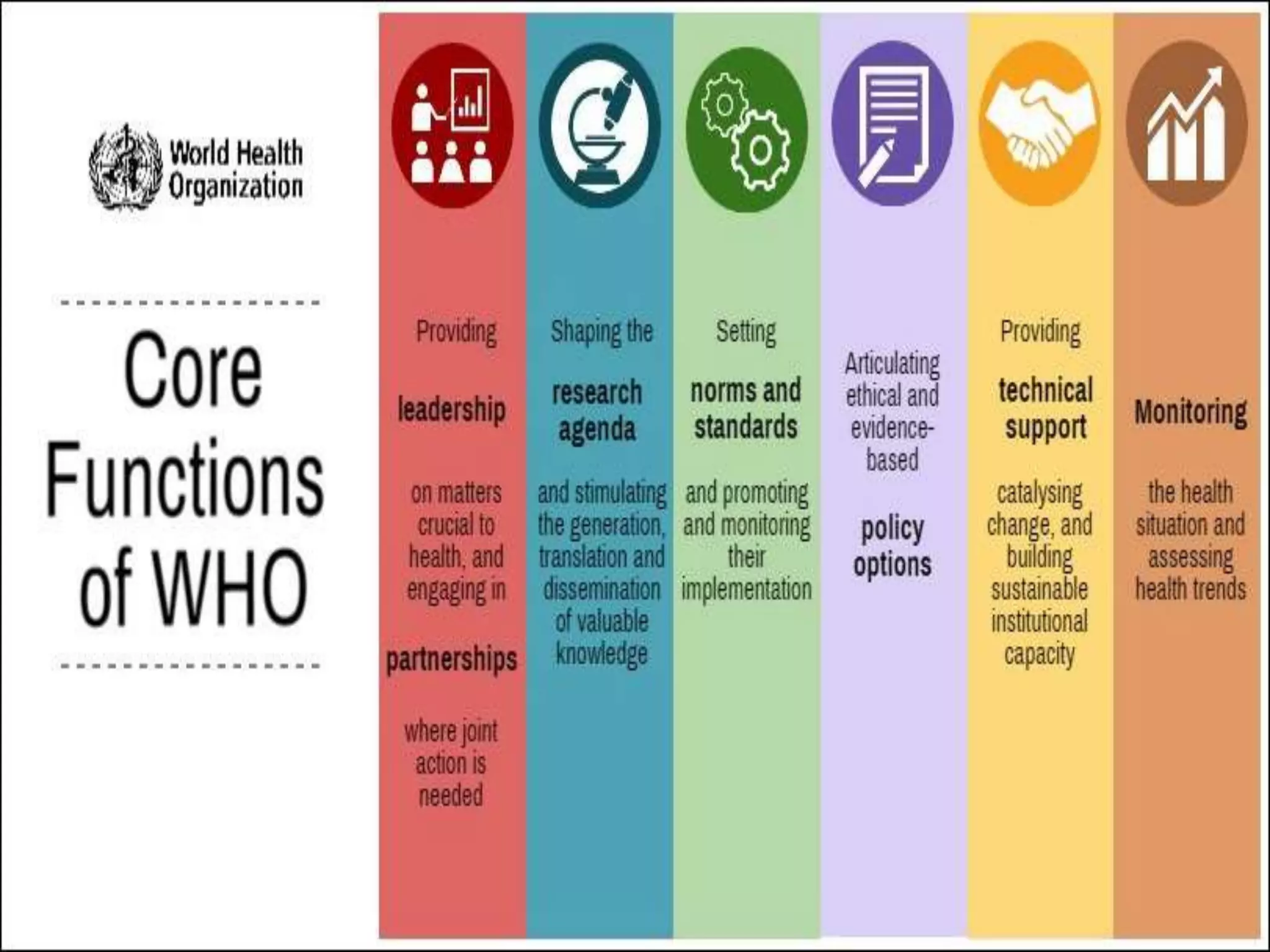
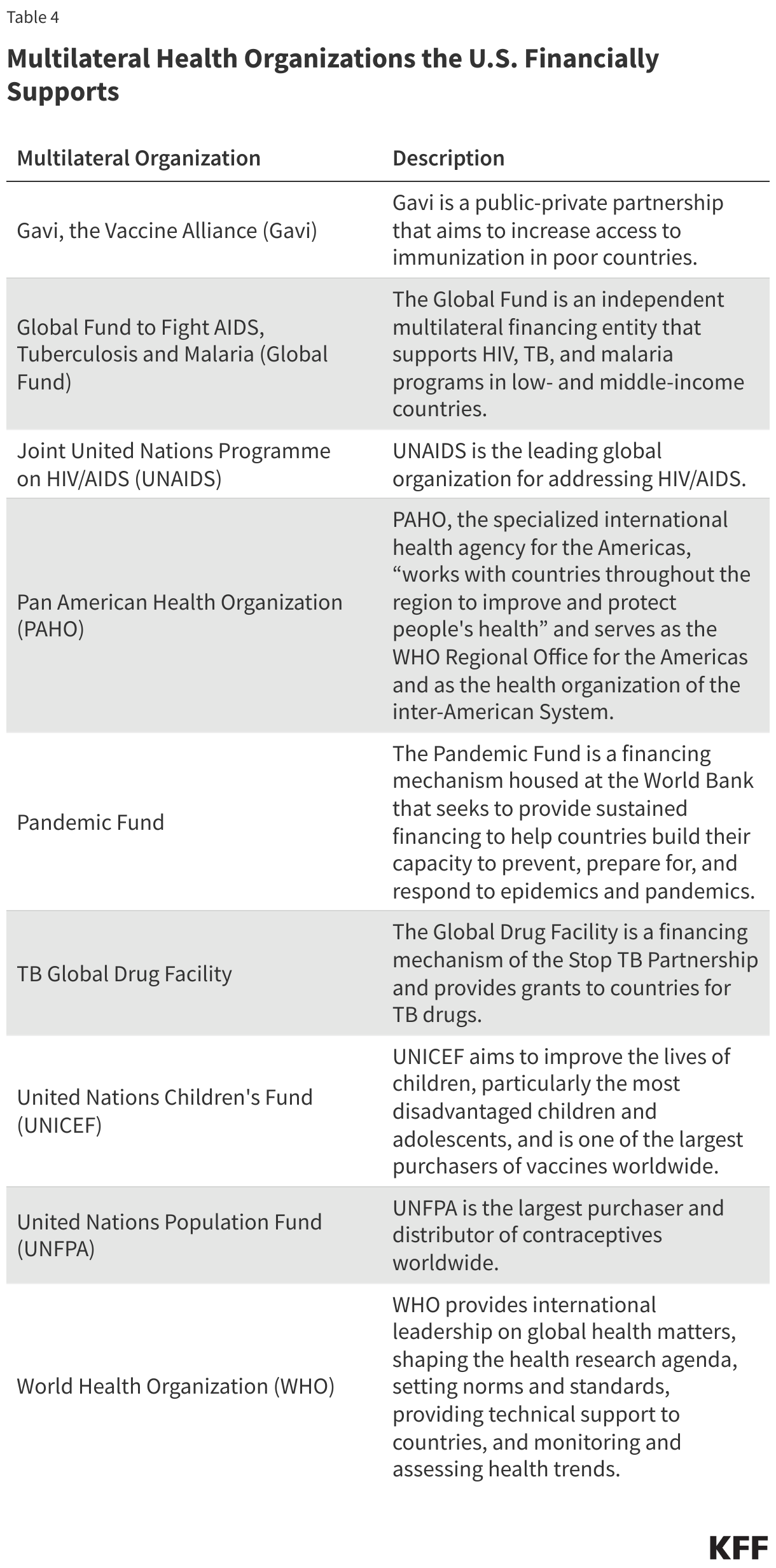
The World Health Organization acts as the directing and coordinating authority on international health within the United Nations system. Its primary role involves providing leadership on global health matters, shaping the health research agenda, setting norms and standards, articulating evidence-based policy options, providing technical support to countries, and monitoring health trends and emergencies.
How does the WHO respond to international health emergencies?
The organization responds to crises by activating the WHO Health Emergencies Programme, deploying technical experts, and coordinating the Global Outbreak Alert and Response Network. Under the legally binding International Health Regulations, the agency assesses biological threats, convenes emergency committees, and can declare a Public Health Emergency of International Concern to mobilize global resources.
Can the WHO enforce health laws or mandates in sovereign countries?
No. The agency does not possess sovereign enforcement powers over individual member states. Its authority is normative, derived from consensus, technical expertise, and international treaties such as the International Health Regulations and the Framework Convention on Tobacco Control, which nations voluntarily ratify and implement through their own domestic legal frameworks.
What is Universal Health Coverage and how does the WHO support it?
Universal Health Coverage means that all individuals and communities receive the health services they need without suffering financial hardship. The agency supports UHC by providing technical assistance to governments for health financing reforms, primary healthcare strengthening, essential medicines procurement, and healthcare workforce training.
How is the World Health Organization funded and governed?
The organization is governed by the World Health Assembly, which is composed of delegates from all 194 member states and meets annually to determine policies, supervise financial policies, and review the proposed program budget. Funding is derived from assessed contributions (dues paid by member states based on wealth and population) and voluntary contributions from member states, philanthropic foundations, international organizations, and the private sector.
Conclusion and Next Actions
The World Health Organization remains indispensable to global health security, bridging the gap between scientific research and actionable public health policy. Understanding its responsibilities—ranging from normative standard-setting and emergency preparedness to chronic disease mitigation and health system strengthening—allows policymakers, medical professionals, and researchers to align local actions with international frameworks. To engage further with these initiatives, professionals should consult the official WHO portal for technical guidance documents, review country-specific cooperation strategies, and adopt agency-backed clinical standards into institutional protocols.
Image Gallery