What Crocs’ Net Worth Reveals About the Brand’s Business Model and Market Power
Crocs, Inc. demonstrates how a footwear company can transform from a single-product novelty into a high-margin, multi-billion-dollar global powerhouse. While individual public corporations do not have a consumer "net worth," Crocs, Inc...
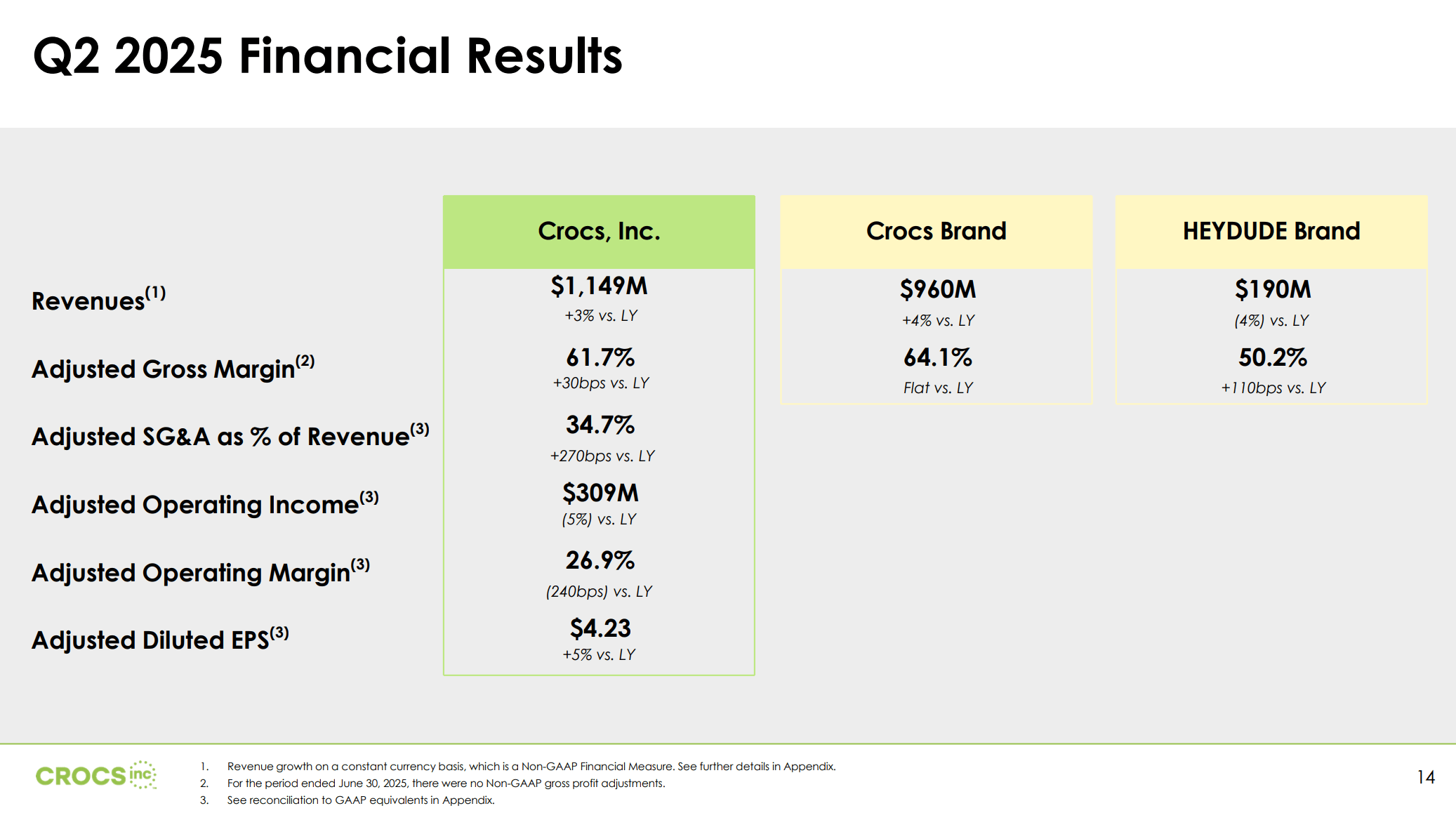
Crocs, Inc. demonstrates how a footwear company can transform from a single-product novelty into a high-margin, multi-billion-dollar global powerhouse. While individual public corporations do not have a consumer "net worth," Crocs, Inc. (NASDAQ: CROX) carries a market capitalization frequently valued between $5 billion and $8 billion, backed by annual revenues approaching $4 billion and industry-leading operating margins exceeding 25%. This financial valuation reveals a highly defensive business model powered by low manufacturing costs, immense pricing power, viral collaboration marketing, and significant capital efficiency.
Contents
Deconstructing the "Net Worth" of Crocs: Market Cap vs. Balance Sheet Realities
To understand what the valuation of Crocs reveals about the brand, it is necessary to look beyond surface-level figures. In corporate finance, a public company’s economic footprint is defined by three primary financial metrics: Market Capitalization (the total market value of its outstanding shares), Shareholders’ Equity (the net difference between total assets and total liabilities), and Enterprise Value (which accounts for net debt and overall corporate valuation).
| Crocs Financial Metric | Definition |
|---|---|
| Market Capitalization | Market value of shares |
| Shareholders' Equity | Assets minus total debt |
| Enterprise Value | Market Cap + Debt - Cash Reserves |
Crocs’ financial structure illustrates a company that generates substantial free cash flow relative to its physical asset base. Unlike traditional athletic shoe manufacturers that require complex multi-component assembly, stitching, and specialized tooling across dozens of material layers, Crocs relies primarily on a proprietary closed-cell resin called Croslite.
This lean production infrastructure yields gross profit margins consistently hovering between 55% and 60%. When financial analysts examine Crocs' balance sheet, the brand's valuation reflects not just physical footwear sales, but an exceptionally high return on invested capital (ROIC). The company’s market value signals to retail analysts that Crocs operates more like a high-margin consumer packaged goods (CPG) software-style licensor than a traditional labor-intensive apparel brand.
4 Core Insights Crocs’ Valuation Reveals About Its Brand Strategy
Analyzing Crocs' balance sheet, income statements, and market capital valuation exposes key operational truths about how the company built its market dominance.
1. The Power of Proprietary Material and Low Unit Costs
The cornerstone of Crocs’ profitability is Croslite, an ethylene-vinyl acetate (EVA) material formulation that is lightweight, durable, and inexpensive to produce. Because classic clogs are manufactured using injection-molding processes, factory throughput is rapid and labor requirements per unit are significantly lower than traditional leather or multi-fabric sneakers.
This structural cost advantage gives Crocs immune-like resilience against supply chain inflation. High gross margins allow the company to maintain competitive retail pricing while retaining sufficient capital to fund aggressive marketing campaigns and share repurchase programs.
2. Add-On Monetization Through Jibbitz Charms
One of the most revealing aspects of Crocs' financial performance is the margin contribution of Jibbitz—the small decorative charms designed to snap into the ventilation holes of Crocs clogs. Purchased by Crocs in 2006 for approximately $10 million, Jibbitz has evolved into an extraordinary profit center.
- Basic Clog Purchase: High Gross Margin (~55-60%)
- Jibbitz Add-On Sales: Extreme Gross Margin (~80-90%)
- Gamified Customization: Maximizes Lifetime Customer Value
From a financial perspective, Jibbitz charms carry gross margins estimated near 80% to 90%, requiring minimal shipping footprint and inventory storage expense. Financially, Jibbitz turns a single shoe sale into an ongoing transactional relationship. It transforms functional footwear into a personalized canvas, encouraging repeat purchases and boosting average order value (AOV) across direct-to-consumer (DTC) channels.
3. Mastery of High-Low Marketing and Scarcity Drops
Crocs turned polarizing aesthetic design into an enterprise asset through strategic collaboration playbooks. The brand systematically elevated its perception from utilitarian kitchen and gardening footwear to a fashion statement by partnering with diverse cultural icons, luxury fashion houses, and major entertainment franchises:
- High-Fashion Partnerships: Balenciaga and Christopher Kane introduced Crocs onto runway fashion shows, legitimizing the brand in high-end streetwear ecosystems.
- Pop Culture & Music: Collaborations with Post Malone, Bad Bunny, Justin Bieber, and Salehe Bembury generated massive media coverage and instant sell-outs.
- Enterprise IP Licenses: Custom releases with Disney, Pixar, Pokemon, and major beverage brands turned everyday clogs into limited-edition collectibles.
These limited-run drops act as high-efficiency customer acquisition engines. Rather than spending heavily on generic digital advertising, Crocs relies on viral scarcity marketing. This keeps inventory turn rates fast, limits product markdown risks, and preserves full-price selling discipline in wholesale and retail corridors.
4. Efficient Omnichannel Distribution Dynamics
Crocs balances revenue generation between wholesale accounts (such as Dick’s Sporting Goods, Foot Locker, and Amazon) and owned Direct-to-Consumer (DTC) channels, including corporate e-commerce platforms and brand outlet stores.
- Crocs Global Sales
- Wholesale Channel
- Broad Reach
- Volume Sales
- DTC & E-Comm
- Higher Margins
- Customer Data
- Wholesale Channel
This hybrid model lowers global customer acquisition costs. Wholesale partners provide broad global footprint and volume distribution, while DTC web storefronts deliver higher operating margins and capture valuable consumer buying data.
The HEYDUDE Acquisition: Scaling Capital and Managing Debt
To expand beyond its core silhouette, Crocs, Inc. completed a major strategic move in February 2022 by acquiring casual footwear brand HEYDUDE for $2.5 billion in cash and stock. This acquisition offers deep insight into how corporate financial decisions affect overall brand perception and investor sentiment.
| HEYDUDE Acquisition Financial Impact Area | Details |
|---|---|
| Growth Objective | Diversify casual footwear portfolio beyond Croslite clogs |
| Funding Mechanism | Took on substantial term loan debt to fund $2.5B purchase |
| Financial Outcome | Boosted top-line revenues, but increased balance sheet leverage |
| Operational Task | Pay down debt while repositioning HEYDUDE wholesale channels |
While HEYDUDE brought a lightweight fabric casual shoe line with strong demographic alignment, funding the transaction required taking on significant leverage. In the quarters following the deal, Crocs prioritized aggressive debt reduction using its cash reserves.
For investors and industry observers, the HEYDUDE integration revealed two structural realities:
- Portfolio Diversification Needs: Crocs acknowledged that relying solely on its core clog design left the enterprise vulnerable to sudden fashion cycle pivots.
- Capital Allocation Strategy: Crocs management demonstrated a willingness to leverage its balance sheet to acquire fast-growing, high-margin casual footwear brands, using its proven distribution playbook to scale acquired entities globally.
Progress on balance sheet deleveraging, inventory cleanup at retail accounts, and restoring top-line growth to HEYDUDE remain key determinants of Crocs’ overall enterprise value and price-to-earnings multiples.
Financial Metrics vs. Brand Indicators
The following table summarizes how key financial metrics reported by Crocs, Inc. translate directly into real-world corporate and operational strengths.
| Financial Metric / Balance Sheet Area | Typical Financial Range / Status | Brand & Operational Strategy Revealed |
|---|---|---|
| Gross Margin Percentage | 55% – 60%+ | Indicates extremely low unit manufacturing costs via injection-molded Croslite material, allowing strong pricing leverage. |
| Operating Margin | 25% – 30% | Demonstrates top-tier corporate overhead leverage and minimal marketing expense wastage due to viral collaborative drops. |
| Jibbitz Add-On Revenue | Multi-hundred million dollar ecosystem | Proves effective monetization of customization; drives high-margin repeat customer purchases. |
| DTC Sales Mix | ~45% – 50% of total enterprise sales | Highlights strong e-commerce direct engagement, reducing dependence on third-party wholesale retailers. |
| Long-Term Debt & Deleveraging | Managed via free cash flow allocation | Reflects disciplined debt service post-HEYDUDE acquisition to protect the credit profile and share repurchase flexibility. |
Strategic Vulnerabilities Hidden Behind Strong Financials
Despite robust profit margins and strong market capitalization, Crocs’ financial picture highlights key operational risks that management must navigate:
| Risk Factor | Details |
|---|---|
| 1. Fashion Cycle Volatility | Risk of trend fatigue for classic clogs |
| 2. Intellectual Property Defenses | Widespread counterfeit & knock-off market |
| 3. Channel Over-Saturation | Excess wholesale inventory risks retail discounting |
| 4. Acquisition Integration | Balancing growth capital between Crocs & HEYDUDE |
- Trend Saturation & Fashion Cycles: Crocs experienced a massive demand boom during the post-pandemic comfort-focused era. Sustaining valuation requiring proving that clogs are permanent casual fashion mainstays rather than cyclical novelties.
- Counterfeits and Design Imitation: Because injection molding is widely available globally, non-infringing lookalike EVA clogs flood discount market channels. Crocs spends heavily on legal trademark enforcement and IP litigation to defend its signature design rights.
- Retail Partner Over-Saturation: Pushing too much wholesale inventory into secondary retail channels risks brand equity dilution. Maintaining high gross margins requires careful management of inventory levels to avoid store clearance markdowns.
Frequently Asked Questions
What is Crocs’ enterprise value, and how does it differ from net worth?
In corporate finance, public companies do not use individual "net worth." Instead, analysts evaluate Market Capitalization (the aggregate market value of publicly traded shares) and Enterprise Value (which adds total debt obligations and subtracts cash reserves). For official balance sheet equity, investors review the quarterly consolidated balance sheets on the U.S. Securities and Exchange Commission (SEC) EDGAR database or via Crocs Investor Relations.
Why are Crocs' profit margins so much higher than conventional shoe brands?
Crocs utilizes proprietary Croslite molded foam resin. Manufacturing single-piece molded shoes requires fewer raw material inputs, less manual assembly labor, and faster production cycles than standard leather or fabric sneakers. This streamlined manufacturing process yields higher gross profit margins compared to traditional athletic footwear brands.
How do Jibbitz charms impact Crocs’ overall business value?
Jibbitz charms carry high gross profit margins (estimated near 80–90%). They increase average transaction values, encourage recurring direct-to-consumer online purchases, and transform a utility footwear product into an interactive personal expression platform.
How did the HEYDUDE acquisition affect Crocs’ financial health?
Acquiring HEYDUDE in 2022 for $2.5 billion expanded Crocs' product portfolio into fabric casual shoes, but increased corporate debt load. Crocs allocated significant free cash flow toward debt reduction, demonstrating a disciplined balance sheet recovery strategy while working to scale HEYDUDE internationally.
Does Crocs rely mostly on wholesale distribution or direct online sales?
Crocs maintains a balanced omnichannel strategy. Roughly half of its total sales flow through direct-to-consumer (DTC) channels—including e-commerce stores and brand outlet locations—while the remaining revenue comes from global wholesale partners, department stores, and specialty shoe outlets.
Key Takeaway & Strategic Assessment
Crocs’ financial health demonstrates how operational simplification, strategic co-branding, and high-margin accessories can build a durable corporate balance sheet. By converting a simple molded clog into an expandable canvas for pop-culture expression, Crocs created a self-funding business engine capable of generating robust free cash flow.
For business managers, retail investors, and brand strategist analysts, tracking Crocs' financial health requires focusing on three key indicators:
- Gross Margin Sustainability: Ensure Croslite manufacturing advantages and full-price selling discipline remain intact without excessive promotional discounting.
- Debt-to-EBITDA Deleveraging: Monitor quarterly reductions in long-term debt stemming from brand acquisitions.
- DTC Growth & International Expansion: Verify that international markets (specifically Europe and Asia-Pacific) continue showing organic unit sales expansion to insulate the brand against regional fashion market saturation.
Image Gallery