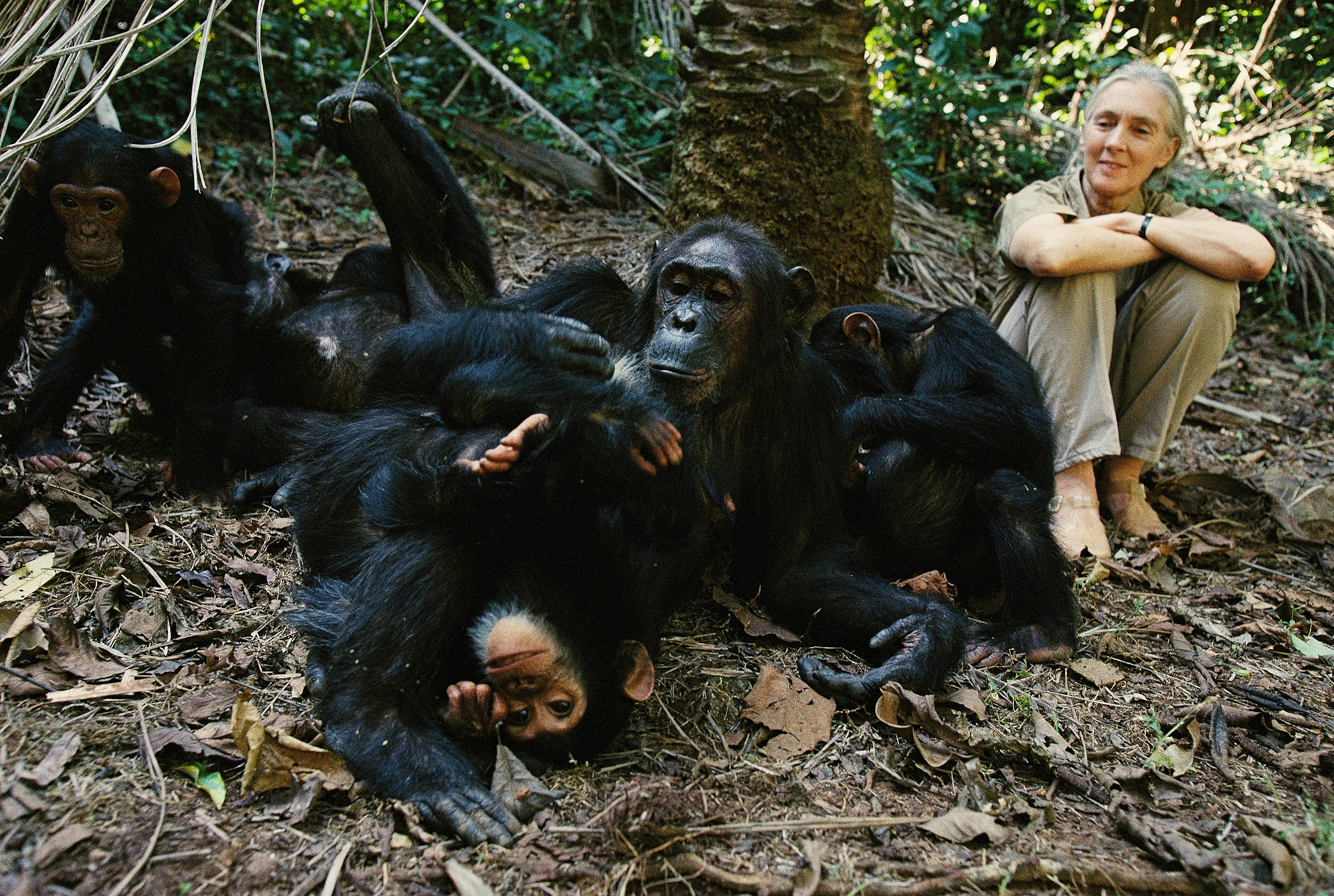
Pictures of Jane Goodall with Chimpanzees: History, Iconic Images, and Modern Legacy
Photographs of Dr. Jane Goodall interacting with wild chimpanzees in Gombe Stream National Park, Tanzania, represent some of the most influential imagery in 20th-century science. Captured primarily by Dutch wildlife filmmaker Hugo van...
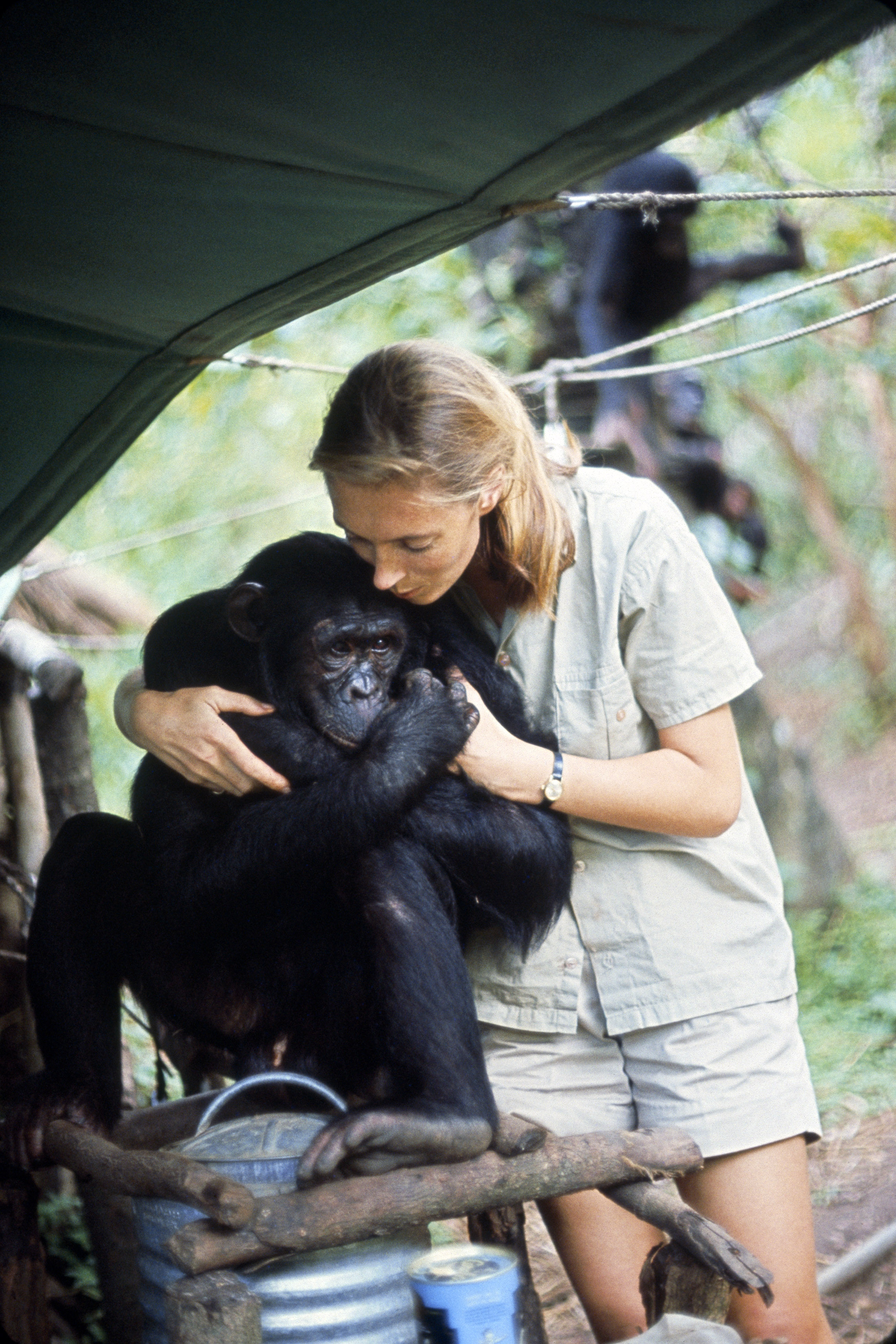
Photographs of Dr. Jane Goodall interacting with wild chimpanzees in Gombe Stream National Park, Tanzania, represent some of the most influential imagery in 20th-century science. Captured primarily by Dutch wildlife filmmaker Hugo van Lawick during the 1960s for the National Geographic Society, these images revolutionized human understanding of non-human animals by visually documenting tool usage, complex emotional bonds, and distinct individual personalities among wild primates.
Contents
Historical Context of the Gombe Photographs
When 26-year-old Jane Goodall arrived at the Gombe Stream Chimpanzee Reserve (now Gombe Stream National Park) in Tanganyika (now Tanzania) in July 1960, wildlife photography and field primatology were radically different from modern standards. Sent by paleoanthropologist Dr. Louis Leakey to study wild chimpanzees (Pan troglodytes) in hopes of illuminating early human behavior, Goodall faced initial skepticism from the scientific establishment due to her lack of formal academic credentials.
In her early months, the resident chimpanzees fled whenever Goodall approached. Progress was slow until an elder male chimpanzee with distinctive silver-grey facial hair—whom Goodall named David Greybeard—began accepting her presence. This initial breakthrough allowed Goodall to observe behaviors never before recorded by Western science, including chimpanzees fashioning tools from grass stems to fish for termites in subterranean mounds.
To validate her field notes to a skeptical scientific community, the National Geographic Society sponsored Dutch photographer and filmmaker Baron Hugo van Lawick to travel to Gombe in 1962. Van Lawick brought cinema-grade motion picture equipment and high-end 35mm cameras equipped with telephoto lenses. His photography transformed Goodall’s written observations into undeniable visual evidence, establishing a visual genre that combined rigorous scientific documentation with intimate, portrait-style wildlife photography.
Most Iconic Photographs of Jane Goodall and Chimpanzees
Several specific photographs captured during the 1960s at Gombe gained global renown, appearing on magazine covers, in textbooks, and in museum exhibitions worldwide.
Timeline of Iconic Visual Breakthroughs at Gombe
- 1960: Goodall arrives at Gombe; initial distance observation
- 1962: Hugo van Lawick arrives; photo-documentation begins
- 1964: "The Contact": David Greybeard reaches for Goodall
- 1965: Cover of National Geographic: Infant Flint and Jane
1. The Hand Contact with David Greybeard (1964)
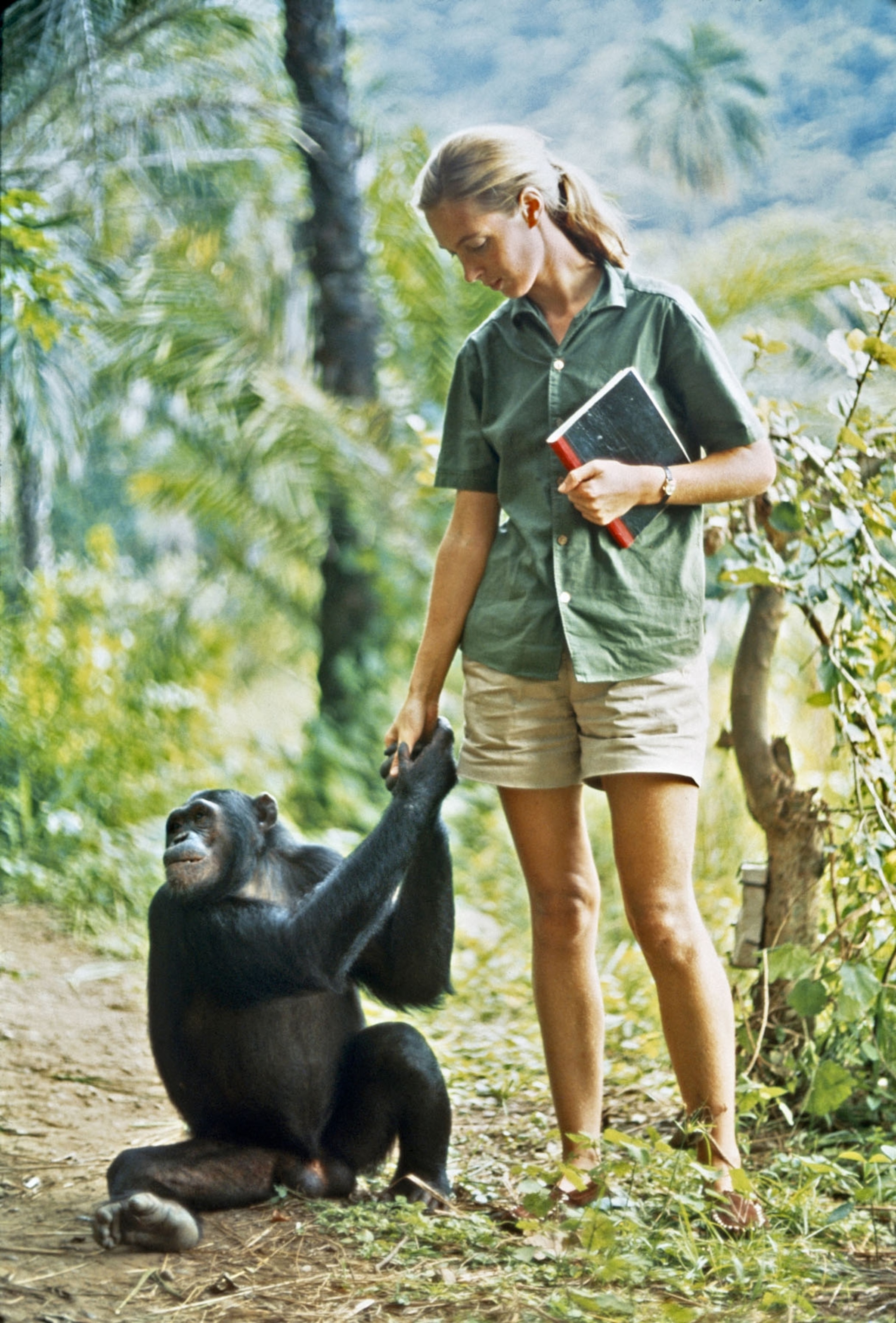
One of the most celebrated photographs in scientific history depicts Jane Goodall seated on the forest floor, extending her hand toward David Greybeard, who reaches out to touch her fingers. This image captured the exact moment mutual trust was established between a human researcher and a habituated wild ape.
The photograph served a dual purpose:
- Scientific Proof: It demonstrated that wild chimpanzees could accept human presence without showing aggression or fleeing.
- Cultural Impact: It challenged traditional Cartesian views that framed animals purely as unfeeling, instinct-driven automata, illustrating instead a bridge of shared sentience between species.
2. Infant Flint Reaching Out (December 1965 National Geographic Cover)
Appearing on the cover of National Geographic magazine in December 1965, this image depicts an infant chimpanzee named Flint reaching his small hand toward Goodall as she crouches near the Kasakela stream.
Flint was the first chimpanzee born at Gombe after Goodall began her study, allowing her to document mother-infant developmental stages in detail. The photograph captured public imagination worldwide, transforming Goodall into an international icon and generating sustained funding for the Gombe Stream Research Center.
3. Documenting Tool Manufacture and Use
Before Goodall's visual documentation, anthropology defined humans uniquely as "Man the Toolmaker." Van Lawick’s photographs captured David Greybeard and another male, Goliath, stripping leaves off twigs to insert them into termite mounds.
When Goodall telegraphed these findings alongside van Lawick's photographic proof to Louis Leakey, Leakey famously responded: "Now we must redefine tool, redefine Man, or accept chimpanzees as humans." The photographs provided permanent proof that tool creation was not unique to the genus Homo.
4. Panoramic Observations from the Peak
In addition to close-up interactions, van Lawick documented Goodall working in the rugged terrain of Gombe. Famous wide-angle shots depict Goodall sitting on a high ridge known as "The Peak," peering through a pair of lightweight binoculars across the Rift Valley forest canopy. These images emphasized the physical endurance, patience, and methodological rigor required for long-term field primatology.
Key Photographers and Archival Repositories
While Jane Goodall herself took operational snapshot photos during her early months, professional imagery of her work was created by world-class photojournalists.
Hugo van Lawick
Hugo van Lawick was the primary photographer behind the classic Gombe collection. His background in nature filming allowed him to capture candid, unobtrusive images of chimpanzees expressing emotions such as grief, joy, playfulness, and aggression. Van Lawick and Goodall married in 1964 and collaborated for years, producing books such as In the Shadow of Man (1971), which combined Goodall’s text with van Lawick's photographs.
Michael "Nick" Nichols
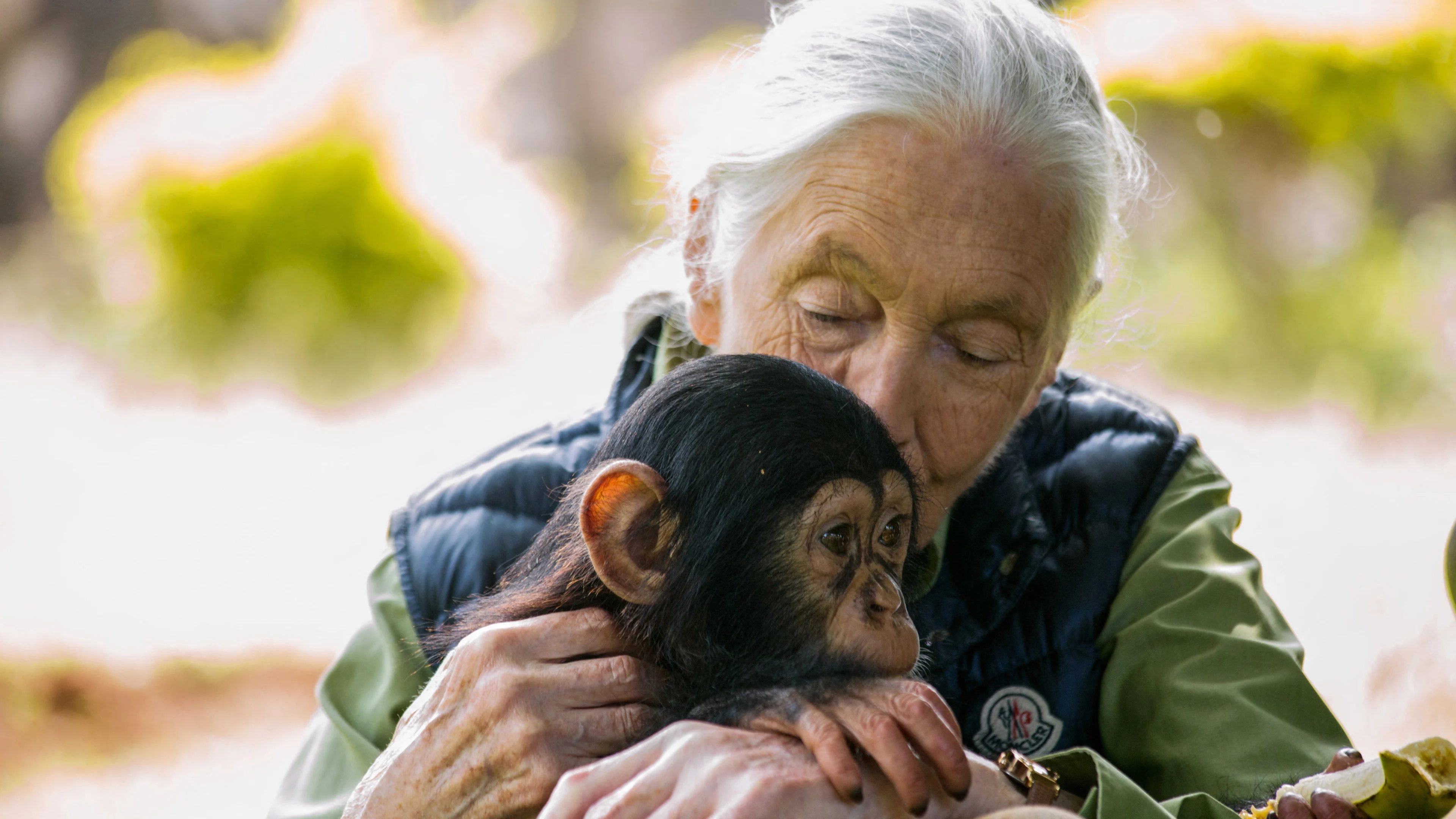
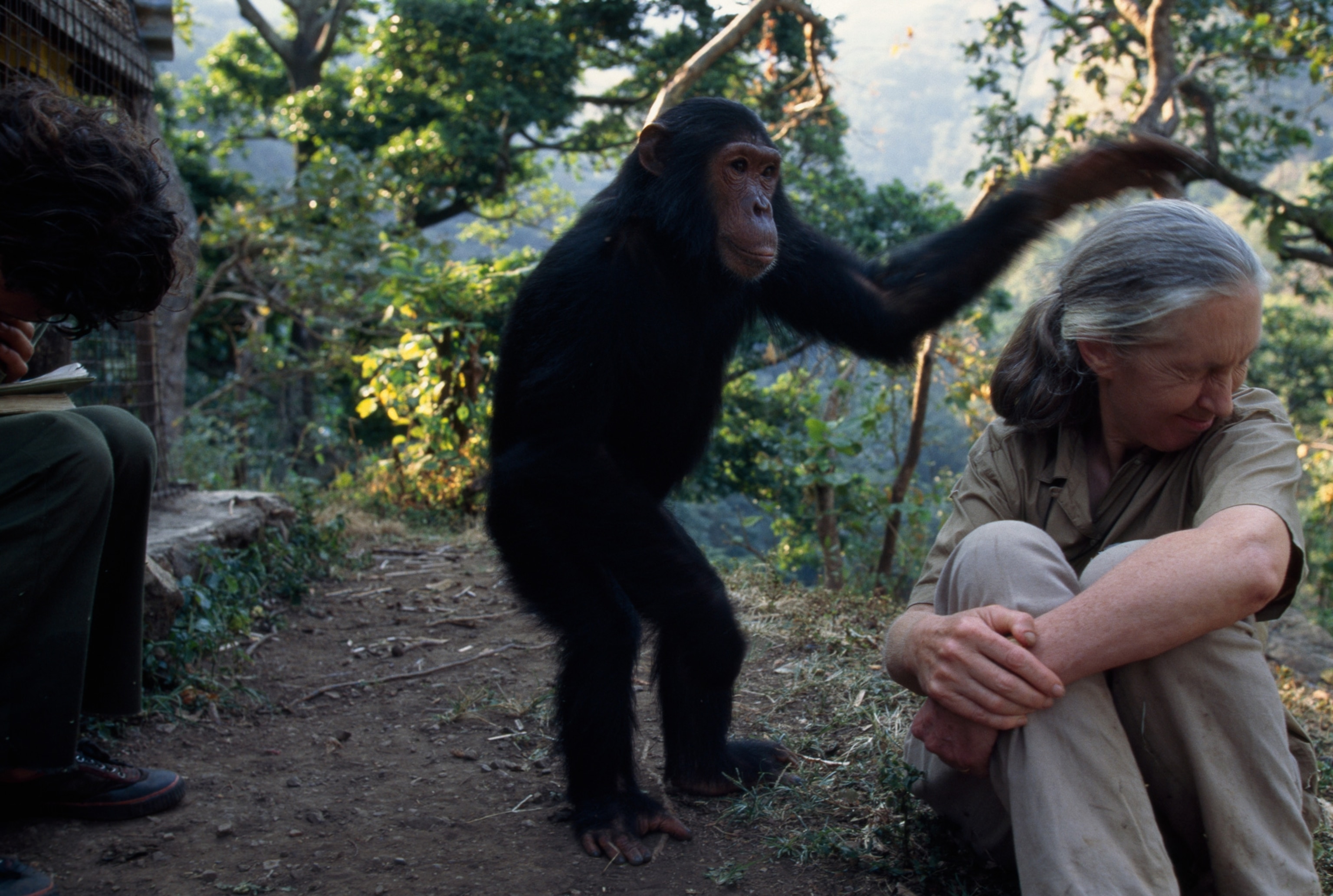
In later decades, National Geographic photographer Michael "Nick" Nichols documented Goodall’s transition from field researcher to global conservation advocate. Nichols photographed Goodall across Central Africa, capturing images of her work with orphaned chimpanzees at sanctuaries such as Tchimpounga in the Republic of the Congo.
| Collection / Source | Primary Photographer(s) | Main Era | Primary Subject Matter | Archival Owner / Distributor |
|---|---|---|---|---|
| National Geographic Archive | Hugo van Lawick, Michael Nichols | 1962–Present | Early Gombe field study, tool use, sanctuary work | National Geographic Society / Visual Icon |
| Jane Goodall Institute (JGI) Archives | Various field staff, Hugo van Lawick | 1960–Present | Institutional history, field notes, long-term habituation data | Jane Goodall Institute (Washington, D.C.) |
| Hugo van Lawick Estate | Hugo van Lawick | 1962–1975 | Wildlife portraits, African megafauna, early Gombe life | Hugo van Lawick Foundation / Private Estate |
| Getty Images Editorial Archive | International photojournalists | 1970–Present | Public appearances, lectures, UN Messenger of Peace events | Getty Images |
Ethical Evolution: Why Physical Contact Photography Has Changed
While early photographs of Jane Goodall touching, feeding, and grooming chimpanzees are historical landmarks, they represent field methodologies that are no longer practiced or advocated today.
Understanding the contrast between 1960s research practices and modern primatological protocols is critical for interpreting these photographs accurately.
- 1960s Methodology
- Physical touch & direct interaction
- Artificial feeding stations (banana feeding)
- Close-proximity observation (< 2 meters)
- Advancements in Pathology & Disease Control
- Modern Guidelines (2026)
- Strict 7-meter to 10-meter minimum distance
- PPE (Surgical masks, boots, sanitized gear)
- No physical contact or artificial feeding
1. Zoonotic Disease Transmission Risks
Chimpanzees and humans share approximately 98.8% of their DNA sequence. Because of this extreme genetic proximity, chimpanzees are highly susceptible to human pathogens, including respiratory syncytial virus (RSV), human metapneumovirus, influenza, tuberculosis, and COVID-19.
In the 1960s, the fatal risk posed by human respiratory viruses to wild ape populations was not fully understood. Today, field researchers, photographers, and tourists at Gombe and other primate research sites must strictly maintain a minimum distance of 7 to 10 meters (23 to 33 feet) and wear protective masks to prevent disease spillover.
2. Habituation Dynamics and Wildlife Safety
Early research at Gombe involved artificial feeding stations (providing bananas) to reduce chimpanzee fear and speed up habituation. Researchers later realized that high-density feeding altered natural foraging ranges, increased inter-community aggression, and reduced wild apes' natural fear of humans.
Modern field standards prohibit feeding wild primates. Physical contact photos from the 1960s show habituated behaviors that modern conservationists actively prevent to protect wild animals from poachers and human conflict.
3. Impact on the Illegal Pet Trade
Studies in conservation psychology demonstrate that seeing human beings posing alongside or touching wild primates in media misleads the public into believing primates make good domestic pets or are not endangered.
The Jane Goodall Institute (JGI) explicitly clarifies that historic photos of Goodall touching chimpanzees reflect an era before these disease dynamics and pet-trade impacts were known. JGI strongly urges media outlets and publishers to include context whenever displaying archival physical-contact photographs.
Accessing, Licensing, and Using Historic Images
For academic researchers, educators, publishers, and media organizations seeking to view or license authentic photographs of Jane Goodall and the Gombe chimpanzees, official historical repositories provide verified imagery:
- National Geographic Image Collection: Holds high-resolution original color transparencies and black-and-white negatives taken by Hugo van Lawick. Media organizations can request editorial licensing directly through National Geographic's official image portal.
- The Jane Goodall Institute (JGI): Maintains extensive archives of photographs used for educational displays, conservation advocacy, and historical research. JGI provides curated galleries detailing the life histories of Gombe chimpanzees such as Fifi, Flo, David Greybeard, and Goblin.
- Institutional Libraries and Museums: Academic institutions holding special collections on primatology—such as Duke University’s Evolutionary Anthropology department, which hosts Gombe field data—frequently display digitized archival prints for scholarly study.
Frequently Asked Questions
Who took the most famous photographs of Jane Goodall with chimpanzees?
Dutch wildlife photographer and filmmaker Hugo van Lawick took the vast majority of the famous 1960s photographs at Gombe Stream National Park. Commissioned by the National Geographic Society starting in 1962, van Lawick documented Goodall's early scientific discoveries and captured historic moments of interaction between Goodall and the Kasakela chimpanzee community.
What was the name of the first chimpanzee that interacted with Jane Goodall in photos?
The first wild chimpanzee to lose his fear of Jane Goodall was David Greybeard, named for his distinct silver facial hair. David Greybeard was the individual captured in the famous photographs accepting palm nuts, allowing close hand contact, and using grass tools to fish for termites.
Why did Jane Goodall touch chimpanzees in early photographs?
In the early 1960s, field primatology was in its infancy. Goodall used close interaction and habituation techniques to gain the trust of wild chimpanzees so she could observe their behavior up close. At that time, scientists did not yet understand the severe risk of transmitting human infectious diseases to wild apes or the broader conservation risks of human-wildlife habituation.
Is physical contact with wild chimpanzees permitted today?
No. Modern scientific and conservation guidelines strictly prohibit physical contact with wild chimpanzees. Organizations such as the International Union for Conservation of Nature (IUCN) and the Jane Goodall Institute enforce rules requiring researchers, tourists, and photographers to maintain a minimum distance of 7 to 10 meters, wear surgical face masks, and avoid bringing food or pathogens into primate habitats.
Where can I legally license authentic photos of Jane Goodall and Gombe chimpanzees?
Authentic archival photos can be licensed for commercial or editorial publication through the National Geographic Image Collection or Getty Images. Educational and non-profit usages are often managed in coordination with the Jane Goodall Institute.
Next Actions for Researchers and Educators
- For Academic Publishers and Educators: When publishing historic photographs showing physical contact between Jane Goodall and chimpanzees, include contextual captions explaining that the imagery dates from the 1960s and that modern conservation protocols prohibit touching wild primates.
- For Wildlife Photographers: Review the IUCN Best Practice Guidelines for Wild Primate Birdwatching and Tourism to ensure modern field photography adheres to safe distancing and protective equipment standards.
- For Conservation Researchers: Access the Jane Goodall Institute Research Center archives to review digitised field journals, photographic logs, and demographic histories spanning over six decades of continuous study at Gombe.
Image Gallery