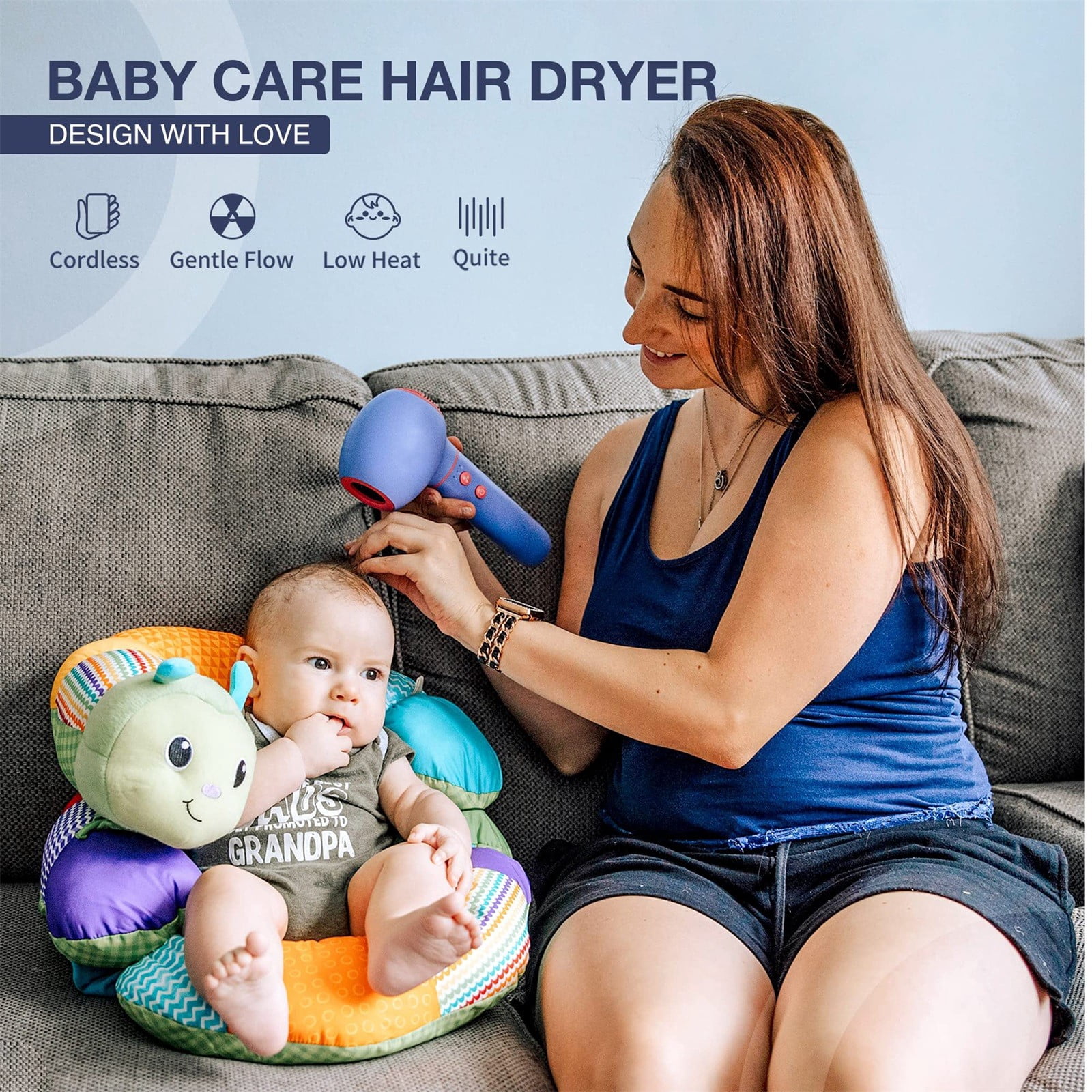
How the Heatless Hair Dryer Works for Gentle Styling: Mechanics of Damage-Free Drying
Heatless hair dryers work by replacing high-intensity thermal energy with high-velocity kinetic energy. Instead of using a heating element to evaporate water through boiling, these devices utilize powerful brushless motors to generate...
Heatless hair dryers work by replacing high-intensity thermal energy with high-velocity kinetic energy. Instead of using a heating element to evaporate water through boiling, these devices utilize powerful brushless motors to generate concentrated airflow that mechanically shears water droplets off the hair shaft, allowing for efficient drying at or near room temperature.
Contents
For decades, the standard approach to at-home hair care involved applying temperatures often exceeding 150°C (302°F) to accelerate the evaporation of moisture. While effective for speed, this method frequently compromises the structural integrity of the hair. As we move through 2026, the shift toward "heatless" or "cool-flow" technology has redefined gentle styling by prioritizing the long-term health of the hair cuticle over the convenience of extreme heat. Understanding the mechanics of these devices requires a look into thermodynamics, fluid dynamics, and the biological composition of human hair.
The Physics of Kinetic Evaporation vs. Thermal Evaporation
To understand how a heatless dryer functions, one must first distinguish between the two primary ways water leaves a surface: boiling and evaporation. Traditional hair dryers rely on thermal evaporation, where heat energy is transferred to water molecules until they reach a high enough energy state to turn into vapor. This process is rapid but carries the risk of "bubble hair"—a condition where water trapped inside the hair cortex boils, expands, and bursts the hair shaft from the inside out.
Heatless dryers utilize kinetic evaporation. This process relies on the Bernoulli principle and high-pressure airflow to move moisture. By moving a large volume of air at high speeds (measured in meters per second or cubic feet per minute), the dryer creates a pressure differential that physically pulls water away from the hair. This mechanical action breaks the surface tension of the water droplets, scattering them into a fine mist that is easily carried away by the surrounding air. Because this occurs at ambient temperatures, the internal moisture of the hair—the "bound water" necessary for elasticity—remains intact, while only the "free water" on the surface is removed.
Core Components: The Technology Behind the Airflow
The efficiency of a heatless dryer in 2026 is largely dependent on its internal architecture. These are not simply standard dryers with the heater turned off; they are engineered specifically to maximize air pressure and ion distribution.
High-Speed Brushless DC (BLDC) Motors
The heart of any effective heatless dryer is the BLDC motor. In 2026, these motors have reached speeds of 110,000 to 150,000 RPM (revolutions per minute). Unlike traditional brushed motors, which are bulky and generate significant internal friction heat, BLDC motors are compact, efficient, and capable of generating the high-static pressure required to push air through dense hair without needing thermal assistance. The high RPM allows the device to move a massive volume of air through a narrow aperture, increasing the "jet" effect that is crucial for mechanical drying.
Advanced Ion Generators
Heatless drying faces one major challenge: static electricity. As dry air moves quickly over the hair, it can strip electrons, leading to frizz. To counteract this, modern heatless dryers are equipped with high-output negative ion generators. These components emit millions of negatively charged ions per cubic centimeter. These ions serve two purposes:
- Water Molecule Breakdown: They help break down large water clusters into smaller molecules, which evaporate more quickly even at lower temperatures.
- Cuticle Smoothing: They neutralize the positive charge on the hair surface, causing the cuticle scales to lay flat. This creates a smoother, shinier appearance that mimics the "polished" look usually achieved with high heat.
Acoustic Engineering and Vibration Control
Moving air at high velocities naturally creates noise. To make these devices practical for daily use, manufacturers employ acoustic silencing techniques. This involves precisely shaping the internal air ducts to reduce turbulence and using vibration-damping materials around the motor. Many 2026 models operate at frequencies above the range of human hearing, making the "heatless" experience significantly quieter than traditional blow-drying.
Structural Benefits: Why Gentle Styling Matters
The biological structure of hair consists of three layers: the medulla (innermost core), the cortex (middle layer containing keratin and pigment), and the cuticle (outer protective scales). When hair is wet, the hydrogen bonds that provide its shape are broken, making the hair significantly more elastic and vulnerable to stretching and breakage.
Preservation of the Lipid Barrier
Every hair strand is coated in a thin layer of lipids (oils) that provides natural hydrophobicity and shine. High heat strips these lipids away, leaving the hair porous and brittle. Heatless dryers preserve this lipid barrier because the air temperature never reaches the melting point of these essential oils. Consequently, hair dried without heat maintains its natural luster and is less prone to split ends.
Preventing Protein Denaturation
Hair is primarily composed of keratin, a fibrous structural protein. Proteins are highly sensitive to temperature; once they reach a certain thermal threshold (typically around 140°C or 284°F), they undergo denaturation, meaning their structure permanently unfolds. By keeping the drying process below 40°C (104°F), heatless dryers ensure that the keratin chains remain tightly coiled and strong. This results in higher tensile strength and better "bounce" in the finished style.
Comparison of Drying Technologies (2026 Data)
The following table compares the operational characteristics of standard heat-based dryers versus modern heatless/high-velocity systems.
| Feature | Traditional Heat Dryer | High-Velocity Heatless Dryer | Natural Air Drying |
|---|---|---|---|
| Primary Mechanism | Thermal Evaporation | Kinetic Shearing/Pressure | Natural Evaporation |
| Average Temperature | 80°C - 150°C | 20°C - 35°C (Ambient) | Ambient Room Temp |
| Drying Time (Medium Hair) | 5 - 10 Minutes | 12 - 18 Minutes | 2 - 4 Hours |
| Impact on Cuticle | Potential for Cracking/Lifting | Smoothed and Sealed | Swollen (Hygral Fatigue) |
| Risk of "Bubble Hair" | High | Zero | Zero |
| Hair Elasticity Retention | Low (Becomes Brittle) | High | Moderate |
| Styling Longevity | High (Heat Sets Shape) | Moderate (Requires Products) | Low |
Practical Guide: Achieving the Best Results Without Heat
While the technology is advanced, the technique used with a heatless dryer differs significantly from traditional styling. Because you cannot rely on "heat-setting" to force the hair into a shape, you must utilize the airflow and dampness to your advantage.
- Initial Moisture Removal: Before using the dryer, blot the hair with a microfiber towel. Do not rub, as wet hair is fragile. Remove roughly 60-70% of the moisture manually.
- The "Directional Flow" Technique: Always point the nozzle of the heatless dryer downward, from roots to ends. This follows the natural orientation of the cuticle scales. Because there is no heat to "burn" the hair, you can hold the nozzle closer to the hair shaft to maximize the kinetic pressure.
- Sectioning for Efficiency: Since kinetic drying takes slightly longer than thermal drying, work in smaller sections. Use a concentrated nozzle attachment to focus the air on one area at a time.
- Product Synergy: Use lightweight, water-based styling mousses or sea salt sprays. Avoid heavy waxes or oils during the drying process, as they can weigh down the hair and trap moisture, extending the drying time.
- The Tension Method: To achieve a straight look without a flat iron, use a round brush to provide tension while the high-velocity air passes over the hair. The mechanical tension, combined with the smoothing effect of the ions, helps "lock" the hair into a straight configuration as the hydrogen bonds reform.
Limitations and Considerations
Despite the clear health benefits, heatless drying is not a universal solution for every styling need. It is important to manage expectations regarding speed and "hold."
- Time Investment: Even with 150,000 RPM motors, heatless drying generally takes 30-50% longer than high-heat drying. Users must balance the health of their hair against their morning schedule.
- Styling Stubborn Textures: For individuals with very coarse or tight curls who want a bone-straight look, heatless dryers may struggle to provide the "thermal shock" required to break and reset disulfide bonds permanently. In these cases, a heatless dryer is best used for the majority of the drying process, followed by a very brief "finish" with a low-heat tool.
- Environmental Factors: Because these dryers use ambient air, their efficiency is affected by room humidity. In a highly humid bathroom, a heatless dryer will take longer to work because the air it is "pulling" from is already saturated with moisture.
Frequently Asked Questions
Does a heatless hair dryer take longer to dry hair?
Yes, typically. While high-velocity airflow is efficient, it cannot match the sheer speed of thermal evaporation. On average, you can expect the process to take about 5 to 10 minutes longer than a traditional hot dryer, depending on hair density and length. However, the trade-off is significantly less damage and fewer long-term repair costs for hair treatments.
Is it safe for all hair types?
Heatless dryers are exceptionally safe for all hair types, particularly for those with fine, color-treated, or damaged hair. Since there is no risk of burning, they are also ideal for drying hair extensions or wigs made of synthetic fibers that might melt under traditional heat. Those with thick or curly hair will benefit from the reduced frizz caused by the ionic technology.
Can I still achieve volume without heat?
Volume is achievable through "directional drying." By using the high-velocity air to lift the hair at the roots while it is still damp, you can create a lasting lift. Many heatless dryers in 2026 come with specialized "root-lift" attachments that concentrate the air at the base of the hair strand to provide structure without needing thermal expansion.
Do I need to use a heat protectant with a heatless dryer?
Technically, no. Since the air temperature does not reach damaging levels, the primary function of a heat protectant—to create a thermal barrier—is unnecessary. However, using a "priming spray" or a "detangler" is still recommended to reduce friction during the brushing and drying process, as mechanical damage (from brushes) can still occur.
Why does my hair feel "different" after heatless drying?
Hair dried without heat often feels softer and more "weighty" because it has retained its internal moisture balance. Heat-dried hair often feels stiff or "crispy" because it has been over-dried. Many users find that while heatless-dried hair has more movement, it may require a light-hold hairspray to maintain a specific style throughout the day.
Future Outlook and Recommendations
As we look further into 2026, the refinement of ultrasonic drying—which uses high-frequency vibrations to turn water into mist without any air movement at all—is the next frontier. For now, high-velocity kinetic dryers remain the gold standard for gentle styling.
If you are looking to transition to a heatless routine, start by incorporating it every other wash. Monitor your hair’s texture and shine over a four-week period. Most users report a visible reduction in split ends and a significant increase in natural shine within the first month. For the best experience, invest in a model with a BLDC motor and a dedicated "ambient" or "room temp" mode to ensure you are truly reaping the benefits of heatless technology.
Image Gallery