Understanding Reserve Values in Life Insurance: A Guide to Insurer Solvency and Policy Stability
Reserve values in life insurance are the actuarial liabilities that insurance companies must set aside and maintain to ensure they can pay future death benefits and contractual obligations. Unlike cash values, which are assets belongin...
Reserve values in life insurance are the actuarial liabilities that insurance companies must set aside and maintain to ensure they can pay future death benefits and contractual obligations. Unlike cash values, which are assets belonging to the policyholder, reserves are financial requirements mandated by regulators to guarantee the long-term solvency of the insurer.
Contents
The Fundamental Purpose of Reserve Values
At its core, life insurance is a promise to pay a specific sum upon the death of the insured. However, the timing of that death is unknown, while the cost of providing the insurance increases significantly as the policyholder ages. To keep premiums affordable and stable, most permanent life insurance policies use "level premium" pricing. This creates a fundamental mathematical mismatch that reserve values are designed to solve.
In the early years of a policy, the level premium paid by the policyholder is much higher than the actual cost of insuring their life at a younger age. During these years, the insurance company collects "excess" premium. Rather than treating this excess as pure profit, the company must reserve a substantial portion of it. These funds are invested and held to cover the later years of the policy, when the cost of insurance will inevitably exceed the level premium being paid.
Reserve values serve as a financial shock absorber. Without them, an insurance company might appear profitable in the short term while silently accumulating a massive, unfunded liability for the future. By 2026, the complexity of these calculations has increased, moving away from static formulas toward dynamic, principle-based modeling that accounts for a wider range of economic and demographic variables.
Why Insurers Must Maintain Reserves: The Mathematics of Aging
The necessity for reserves stems from the biological reality of mortality. The probability of death increases exponentially with age. If an insurance company charged the "natural premium" (the cost of insurance for just that year), the premiums for an 80-year-old would be prohibitively expensive compared to those for a 30-year-old.
Level Premium Pricing and the Reserve Accumulation
To solve the affordability problem, insurers calculate a level premium that remains constant throughout the life of the policy. In the beginning, the premium is higher than the mortality risk. The insurer takes this "overpayment," subtracts administrative expenses, and places the remainder into the reserve. This reserve grows over time through both additional premium contributions and investment earnings.
By the time the insured reaches an advanced age, the level premium is no longer sufficient to cover the annual mortality risk. At this stage, the insurer begins to "draw down" the reserve to make up the difference. If the actuarial assumptions were correct, the reserve should eventually equal the face amount of the policy just as the policy matures or the insured reaches the maximum age on the mortality table.
The Present Value Calculation
Actuaries calculate reserve values using the "Prospective Method." This involves determining the Present Value of Future Benefits (PVFB) and subtracting the Present Value of Future Net Premiums (PVFNP).
- PVFB: The amount of money needed today, assuming a specific interest rate, to pay out all expected death benefits in the future.
- PVFNP: The amount of money the insurer expects to receive in future premiums, discounted to today's value.
The difference between these two figures is the reserve the company must hold. If the PVFB is $1,000,000 and the PVFNP is $600,000, the insurer must have a reserve of at least $400,000 on its books for that block of business.
Statutory vs. GAAP vs. Tax Reserves
In the United States, insurance companies must report their financial health using different accounting frameworks depending on the audience. Each framework has its own rules for calculating reserve values.
Statutory Reserves (STAT)
Statutory accounting is overseen by state insurance departments and the National Association of Insurance Commissioners (NAIC). Its primary goal is solvency and policyholder protection. Consequently, statutory reserves are the most conservative. They use lower interest rate assumptions and more pessimistic mortality tables to ensure that, even in a worst-case scenario, the insurer has enough cash to pay claims. These are the reserves that determine whether a company is legally "solvent."
GAAP Reserves
Generally Accepted Accounting Principles (GAAP) are used for financial reporting to investors and the Securities and Exchange Commission (SEC). The goal here is matching and transparency. GAAP reserves are typically less conservative than statutory reserves because they aim to present a realistic picture of the company's ongoing profitability. They allow for the "deferral" of certain acquisition costs, which statutory accounting requires to be expensed immediately.
Tax Reserves
The Internal Revenue Service (IRS) has its own set of rules for reserve calculations. Since reserves are a liability (an expense for the insurer), they reduce taxable income. The IRS limits how much an insurer can claim as a reserve to prevent companies from over-reserving simply to avoid paying taxes. These are governed by Section 807 of the Internal Revenue Code.
Principle-Based Reserving (PBR) in 2026
As of 2026, the industry has fully transitioned to Principle-Based Reserving (PBR) for new life insurance products. Historically, reserves were calculated using "formulaic" methods—fixed interest rates and mortality tables mandated by the state, regardless of the specific risks of the insurer's portfolio.
PBR represents a shift toward more sophisticated, company-specific modeling. Under PBR, insurers use a combination of:
- Stochastic Modeling: Running thousands of economic scenarios to see how the policy block performs under various interest rate and equity market conditions.
- Company Experience: Incorporating the insurer's own historical data on mortality and policy lapses, rather than relying solely on industry-wide averages.
- Deterministic Reserves: A single "best estimate" scenario with an added margin for uncertainty.
This approach ensures that reserves are "right-sized." For highly predictable products, reserves might be lower, while for complex products with secondary guarantees (like certain Universal Life policies), PBR often requires higher reserves than the old formulaic methods did.
Reserve Values vs. Cash Values: Key Differences
One of the most common points of confusion for policyholders is the difference between the reserve value and the cash surrender value. While they are related, they serve entirely different functions and are held by different parties in the accounting equation.
| Feature | Reserve Value | Cash Surrender Value |
|---|---|---|
| Who it belongs to | The Insurance Company (as a liability) | The Policyholder (as an asset) |
| Purpose | To ensure future claims can be paid | To provide liquidity/equity to the owner |
| Regulation | Governed by the Standard Valuation Law | Governed by Nonforfeiture Laws |
| Transparency | Found on the insurer's balance sheet | Found on the policyholder's statement |
| Calculation | Present Value of Benefits minus Premiums | Accumulated Premiums minus Costs/Fees |
| Access | Not accessible by the policyholder | Accessible via loans or withdrawals |
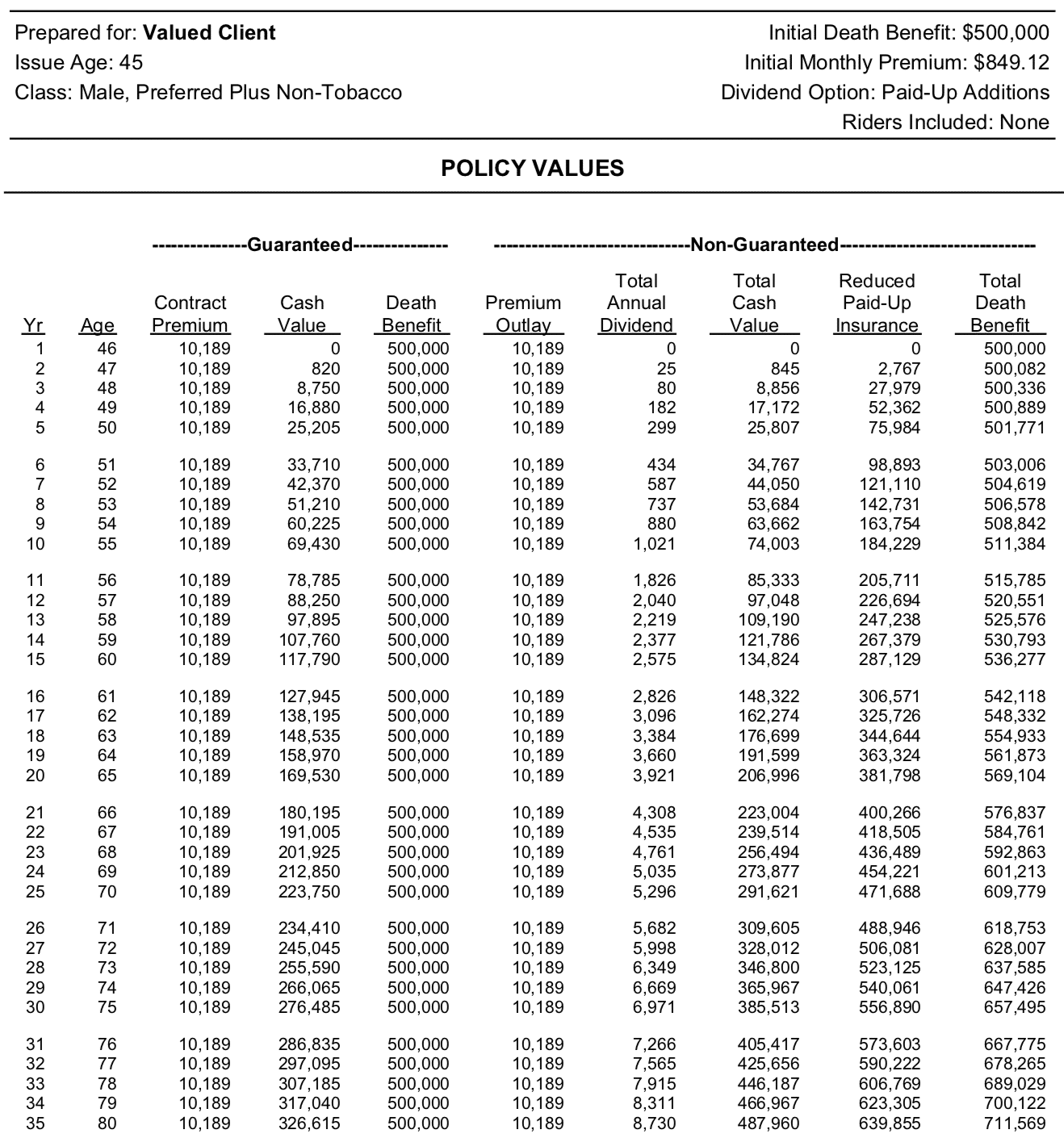
A policy's cash value is essentially the policyholder’s share of the reserve, minus "surrender charges" and administrative costs. In the early years of a policy, the reserve value is significantly higher than the cash value because the insurer needs to recoup the high cost of commissions and underwriting before giving the policyholder full access to the funds.
The Impact of Interest Rates and Mortality Tables
The calculation of reserve values is highly sensitive to two main variables: the "valuation interest rate" and the "mortality table."
The Discounting Effect of Interest Rates
Because life insurance claims are paid in the future, the insurer "discounts" those future payments to their present value. If interest rates are high, the insurer can assume that a smaller amount of money held today will grow significantly by the time the claim is paid. Therefore, high interest rates lead to lower reserve requirements.
Conversely, in the low-interest-rate environments seen periodically throughout the early 2020s, insurers were forced to increase their reserve values significantly. In 2026, with interest rates stabilized by central bank policies, actuaries use a "smoothed" valuation rate to prevent massive swings in reserve requirements year-over-year.
Updated Mortality Tables
Reserve values are also tied to the Society of Actuaries (SOA) mortality tables. As medical technology improves and life expectancy increases, the "cost" of the death benefit is pushed further into the future. This generally allows for lower reserves for newer policies. However, if a company’s specific "book of business" shows higher mortality than the tables suggest—perhaps due to a concentration in high-risk occupations—regulators may require "deficiency reserves" to be held.
Frequently Asked Questions
What happens if an insurer's reserve values fall too low?
If an insurer's statutory reserves fall below the minimum levels required by state law, the company is considered "impaired." The state insurance commissioner will intervene, which may involve a "corrective action plan," a suspension of new business sales, or, in extreme cases, placing the company into receivership or liquidation. During liquidation, state guaranty associations typically step in to cover policyholder claims up to certain limits.
Can a company use its reserves to pay dividends to shareholders?
No. Reserves are restricted funds held specifically to satisfy policyholder obligations. A company can only pay dividends from its "surplus"—the capital it holds above and beyond its required reserve values. Regulators closely monitor the "Risk-Based Capital" (RBC) ratio to ensure that insurers aren't depleting their surplus at the expense of solvency.
Do term life insurance policies have reserve values?
Yes, though they are much smaller than those for whole life or universal life policies. Because term insurance premiums are usually level for a period (e.g., 20 years) while the risk of death increases annually, the insurer must still reserve the "excess" premium collected in the early years of the term to cover the higher risk in the later years of that term. These are often called "unearned premium reserves."
Why do some policies require "Deficiency Reserves"?
Deficiency reserves are required when the gross premium the insurer charges the customer is lower than the "valuation net premium" required by the state. This often happens in highly competitive markets where insurers cut prices to gain market share. Regulators force the insurer to immediately recognize the loss by setting up a deficiency reserve to ensure they can still meet the long-term obligation despite the lower premium income.
How do reserve values affect my policy's performance?
For participating whole life policies, the size and growth of the insurer's reserves and surplus directly impact the "dividend scale." If the insurer manages its reserves efficiently and earns a better-than-expected return on the assets backing those reserves, it may have more surplus available to distribute to policyholders as dividends.
Practical Recommendation for Policyholders and Professionals
When evaluating the strength of a life insurance company, do not look at the reserve value in isolation. Instead, focus on the Net Reserve to Surplus ratio and the Risk-Based Capital (RBC) ratio. These figures, available through rating agencies like A.M. Best or in the insurer's annual statutory filing, provide a clearer picture of whether the company is merely meeting the minimum legal reserve requirements or if it possesses a healthy cushion of extra capital.
If you are a policyholder, ensure your insurer maintains an "A" rating or higher from major agencies, as this indicates their reserve methodologies and asset-liability management are robust enough to withstand economic volatility. For financial professionals, understanding the move to PBR in 2026 is essential; it allows for more customized product designs but requires a deeper dive into an insurer's proprietary modeling assumptions during due diligence.
Image Gallery