Master the Guitar Chords for "Here Comes the Sun"
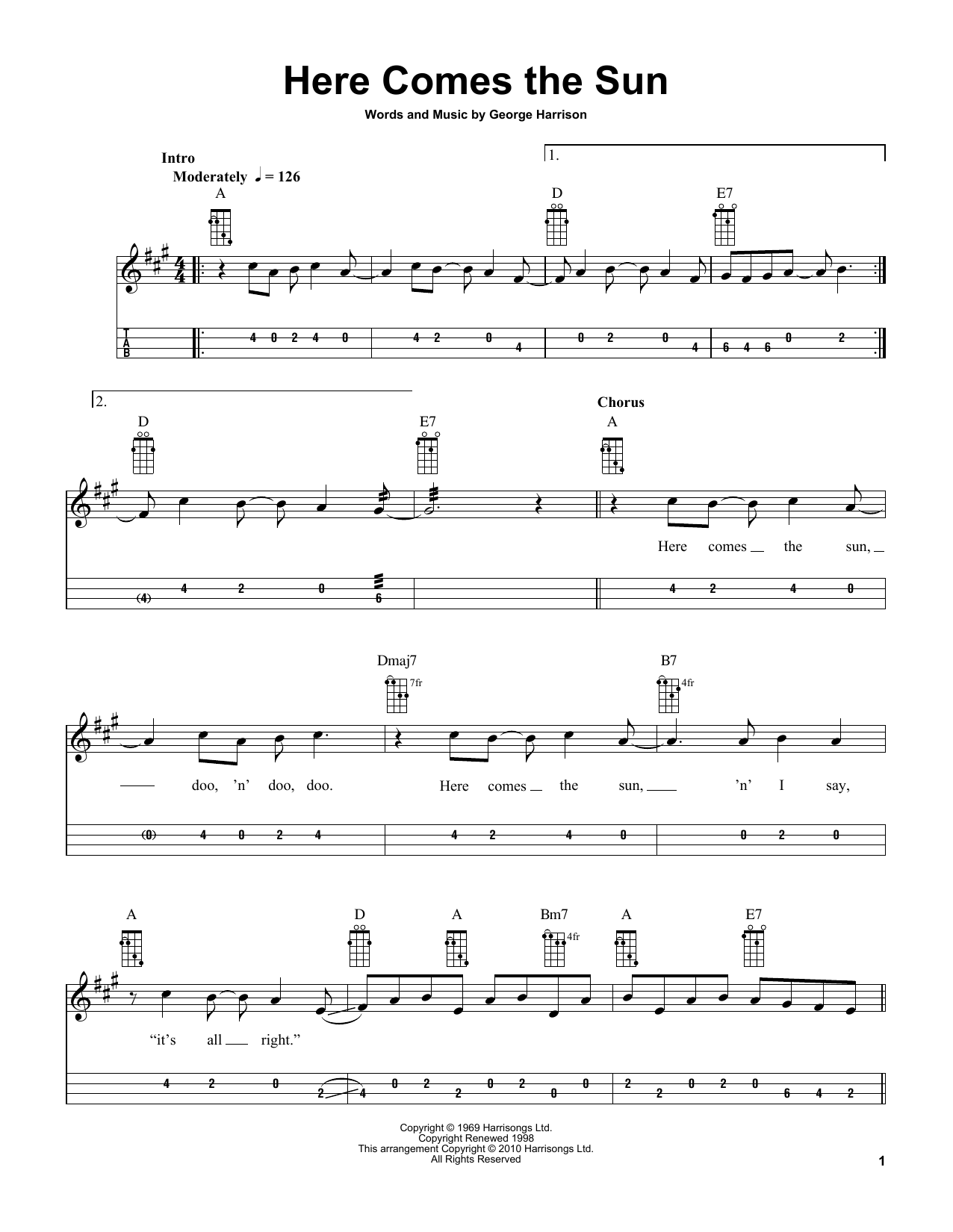
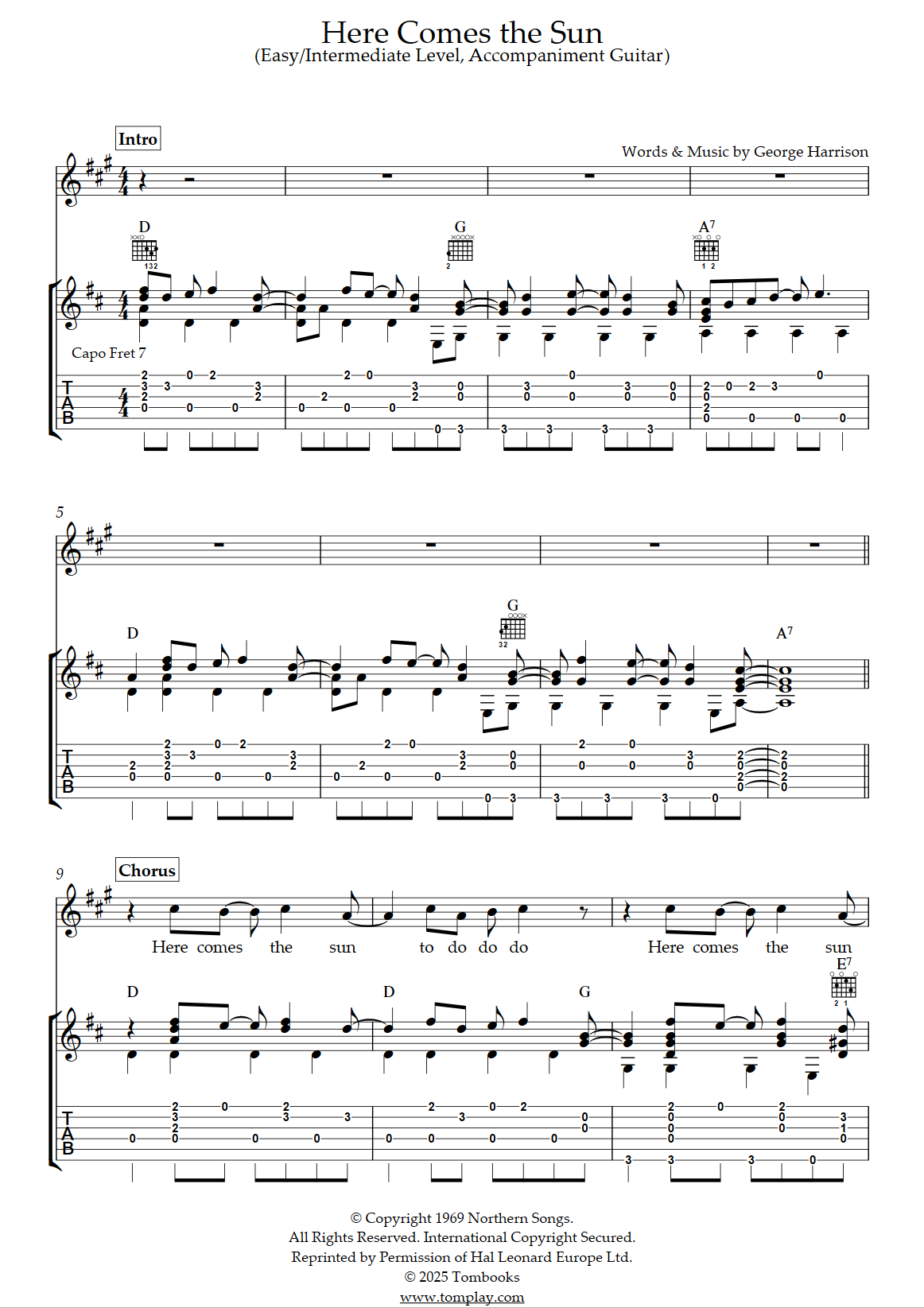
To play "Here Comes the Sun" by The Beatles accurately, place a capo on the 7th fret of your guitar and use chord shapes from the key of D major. The primary chords are D, G, and A7, with a bridge featuring a sequence of C, G, D, A7, a...
To play "Here Comes the Sun" by The Beatles accurately, place a capo on the 7th fret of your guitar and use chord shapes from the key of D major. The primary chords are D, G, and A7, with a bridge featuring a sequence of C, G, D, A7, and E7. This configuration matches George Harrison’s original recording on the Abbey Road album.
Contents
Understanding the Foundation: Why the 7th Fret?
The most critical step in learning "Here Comes the Sun" is the placement of the capo. While the song is technically in the key of A major, George Harrison used a capo on the 7th fret to achieve the bright, shimmering tonality that defines the track. By placing the capo so high on the neck, the guitar takes on a mandolin-like quality, which allows the higher frequencies to cut through the mix.
When you place a capo on the 7th fret, you use "D shape" fingerings. However, because of the capo, a D shape actually produces an A major chord. This is a common technique in folk and pop music to allow for open-string resonance while playing in a higher register. Playing the song without a capo in the standard A major position is possible, but you lose the specific "jangle" and the ability to play the iconic hammer-on riffs that are built directly into the D major chord shape.
In 2026, digital tuners and clip-on sensors are more accurate than ever, so ensure your guitar is perfectly in tune before placing the capo. The 7th fret is a high-tension area; sometimes, the pressure of the capo can pull strings slightly sharp. Always check your tuning after the capo is applied.
The Core Chord Shapes
To master this song, you must be comfortable with four primary shapes. Even if you are an intermediate player, the way these chords are voiced in "Here Comes the Sun" requires specific attention to which strings are left open.
The D Major Shape
This is the "home" chord of the song. Most of the signature riffs happen while holding a standard D major shape:
- Index finger: 2nd fret of the G string.
- Ring finger: 3rd fret of the B string.
- Middle finger: 2nd fret of the high E string. Throughout the verse and chorus, you will frequently lift your middle finger to create a Dsus2 or add your pinky to the 3rd fret of the high E string to create a Dsus4. This internal melody movement is what makes the guitar part recognizable.
The G Major Shape
The G major chord in this song is often played with a slight variation to facilitate quick transitions. Since you are coming from a D major, many players prefer using their middle, ring, and pinky fingers for the G major, leaving the index finger free to prep for the return to D or the transition to A7.
The A7 Chord
The A7 chord provides the "tension" that resolves back to the D major. In this song, it is typically played as a standard open A7:
- Middle finger: 2nd fret of the D string.
- Ring finger: 2nd fret of the B string. The open G and high E strings are essential here for that "sunny," open-air sound.
The E7 Chord
The E7 appears during the transitions between the chorus and the verse. It adds a bluesy, dominant lift that prepares the listener for the cycle to restart.
| Chord Name | Shape (Relative to Capo) | Actual Pitch (Key of A) | Difficulty Level |
|---|---|---|---|
| D Major | XX0232 | A Major | Beginner |
| G Major | 320003 | D Major | Beginner |
| A7 | X02020 | E7 | Beginner |
| E7 | 020100 | B7 | Beginner |
| C Major | X32010 | G Major | Intermediate (Bridge) |
The Signature Riff: Hammer-ons and Pull-offs
The "Here Comes the Sun" riff is not just about strumming; it is about flatpicking within a chord shape. To play the intro correctly, you should keep the D major shape held down while using your pick to highlight the melody on the high E, B, and G strings.
- The Opening Hammer-on: Start by strumming the D major chord but leave the high E string open (Dsus2). Immediately hammer your middle finger onto the 2nd fret of the high E string.
- The Descending Line: After the D major, you move to a G major shape, but the melody continues on the B string. You will need to "pick out" the melody notes (3rd fret, 2nd fret, open) while maintaining the rhythm.
- The A7 Resolution: The riff concludes with a rhythmic strum on the A7 chord, often incorporating a "sus4" to "major" resolution (lifting and placing the finger on the 3rd fret of the B string).
Mastering this requires a "hybrid" mindset. You aren't playing individual notes like a lead guitarist, nor are you blindly strumming like a campfire player. You are doing both simultaneously—maintaining a steady rhythmic pulse while the top notes of your chords sing the melody.
Navigating the Bridge: The "Sun, Sun, Sun" Section
The bridge is the most technically demanding part of the song due to its unusual time signatures. While the rest of the song is in a steady 4/4 time, the bridge utilizes a repeating cycle of shifting meters that can trip up even experienced players.
The sequence follows this chord progression: C - G - D - A7 - E7.
The Rhythmic Cycle
The bridge is famous for its "triplet-like" feel, though it is actually a sequence of different time signatures. George Harrison was heavily influenced by Indian classical music and its complex "tals" (rhythm cycles). The bridge roughly follows a pattern of 11/8, 4/4, and 7/8 (though interpretations vary among sheet music editors).
To play it successfully in 2026, don't get too bogged down in the math. Instead, listen to the vocal phrasing of "Sun, sun, sun, here it comes." Each "Sun" falls on a specific chord change:
- C Major: "Sun..."
- G Major: "...sun..."
- D Major: "...sun..."
- A7: "...here it comes."
The transition from C to G to D happens quickly. You must be able to change these shapes without looking at your fretting hand. The C major chord in the bridge provides a "flat-VII" sound (relative to the D shape), which gives the song a momentary sense of wonder and expansion before snapping back into the familiar A7 and E7 turnaround.
Essential Techniques for Authentic Sound
The "Harrison" Strumming Pattern
The strumming pattern is constant eighth notes, but the emphasis is uneven. It follows a "Down, Down-Up, Up-Down-Up" flow, but with a heavy emphasis on the downbeats. As you progress, try to keep your wrist loose. A stiff wrist will make the 7th-fret chords sound choked and percussive rather than ringing and melodic.
String Gauge Considerations
Because the capo is at the 7th fret, string tension is significantly increased. If you are using heavy-gauge strings (e.g., .013s), the guitar may feel very "tight" and difficult to play at the 7th fret. For this specific song, light-gauge strings (.011s or .012s on acoustic) are recommended to allow the strings to vibrate freely and make the hammer-ons easier on your fingers.
Tone Settings
If you are playing on an electric guitar, use the bridge pickup or a combination of the bridge and middle pickups. You want a "chimey" sound with very little distortion. A touch of compression can help even out the volume between the strummed chords and the picked melody notes.
Common Mistakes to Avoid
- Clamping the Capo Too Hard: If you use a spring-loaded capo, make sure it is placed directly behind the fret wire. If it’s too far back, the notes will buzz; if it’s too far forward, it will dampen the strings.
- Rushing the Bridge: Many players speed up during the "Sun, sun, sun" part because the chord changes feel fast. Use a metronome set to eighth notes to ensure your "11/8" section stays in time with the rest of the song.
- Ignoring the Bass Notes: While the melody is on the high strings, the alternating bass note (the D string and the A string) provides the "heartbeat" of the track. Don't neglect the lower strings during your strumming.
Frequently Asked Questions
Do I need a specific type of guitar to play this?
While George Harrison used a Gibson J-200 (a large-bodied acoustic), the song can be played on any steel-string acoustic or electric guitar. The key is the capo. Nylon-string classical guitars can work, but they won't provide the same "bite" and sustain required for the signature riff.
Can I play "Here Comes the Sun" without a capo?
Yes, you can play it in the key of A major using standard shapes (A, D, E7). However, you will not be able to play the signature melody riffs easily, as they rely on the specific fingerings available in the D major shape. It will sound like a "cover" version rather than the authentic record.
Why does my G chord sound weird at the 7th fret?
High up the neck, intonation issues become more apparent. If your guitar’s bridge isn’t perfectly compensated, the G chord might sound slightly out of tune even if your open strings were perfect. Ensure your capo is parallel to the fret and not pulling the strings to one side.
What is the best way to practice the bridge rhythm?
Clap the rhythm before you try to play it. Vocalize the "Sun, sun, sun" parts while clapping the steady eighth-note pulse. Once you can feel the syncopation in your body, the chord changes will feel much more natural.
Is this song suitable for a total beginner?
The verse and chorus are excellent for beginners who know their basic open chords. The bridge, however, is an intermediate challenge. A beginner should focus on the D, G, and A7 transitions first before attempting the complex timing of the bridge.
Final Recommendations for Practice
To master "Here Comes the Sun" by the end of 2026, focus on the fluidity of your fretting hand. The song moves quickly, and there is no "dead air" between chord changes. Start by practicing the transition from the D major riff into the G major chord until the movement becomes muscle memory.
Once you have the chords down, record yourself playing along with the original Abbey Road track. Pay close attention to the bridge; if you find yourself finishing the section before George Harrison does, you are likely skipping a beat in the 11/8 sequence. Slow the track down to 75% speed if necessary to internalize the rhythmic shifts. With patience and correct capo placement, you will capture the optimistic, bright essence of this timeless classic.
Image Gallery