Understanding Pressure Groups in Modern Politics: Function, Types, and Impact
A pressure group is an organized association of individuals, businesses, or interest groups that seeks to influence public policy, legislative outcomes, government decisions, or public opinion without seeking political office or contes...
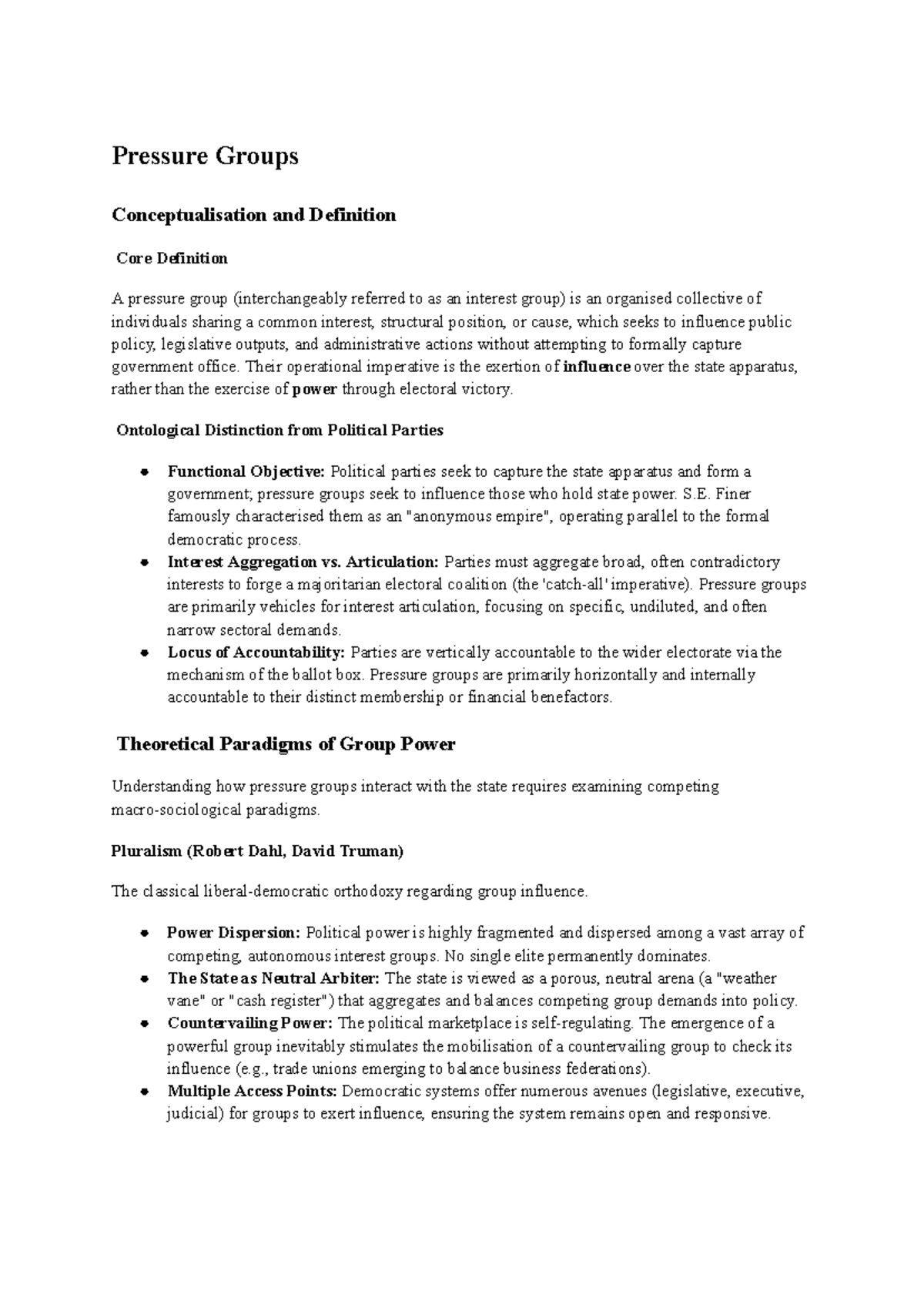
A pressure group is an organized association of individuals, businesses, or interest groups that seeks to influence public policy, legislative outcomes, government decisions, or public opinion without seeking political office or contesting elections directly. Operating within modern representative democracies, pressure groups act as vital intermediaries between civil society and formal state institutions.
Contents
Core Definition and Key Distinctions
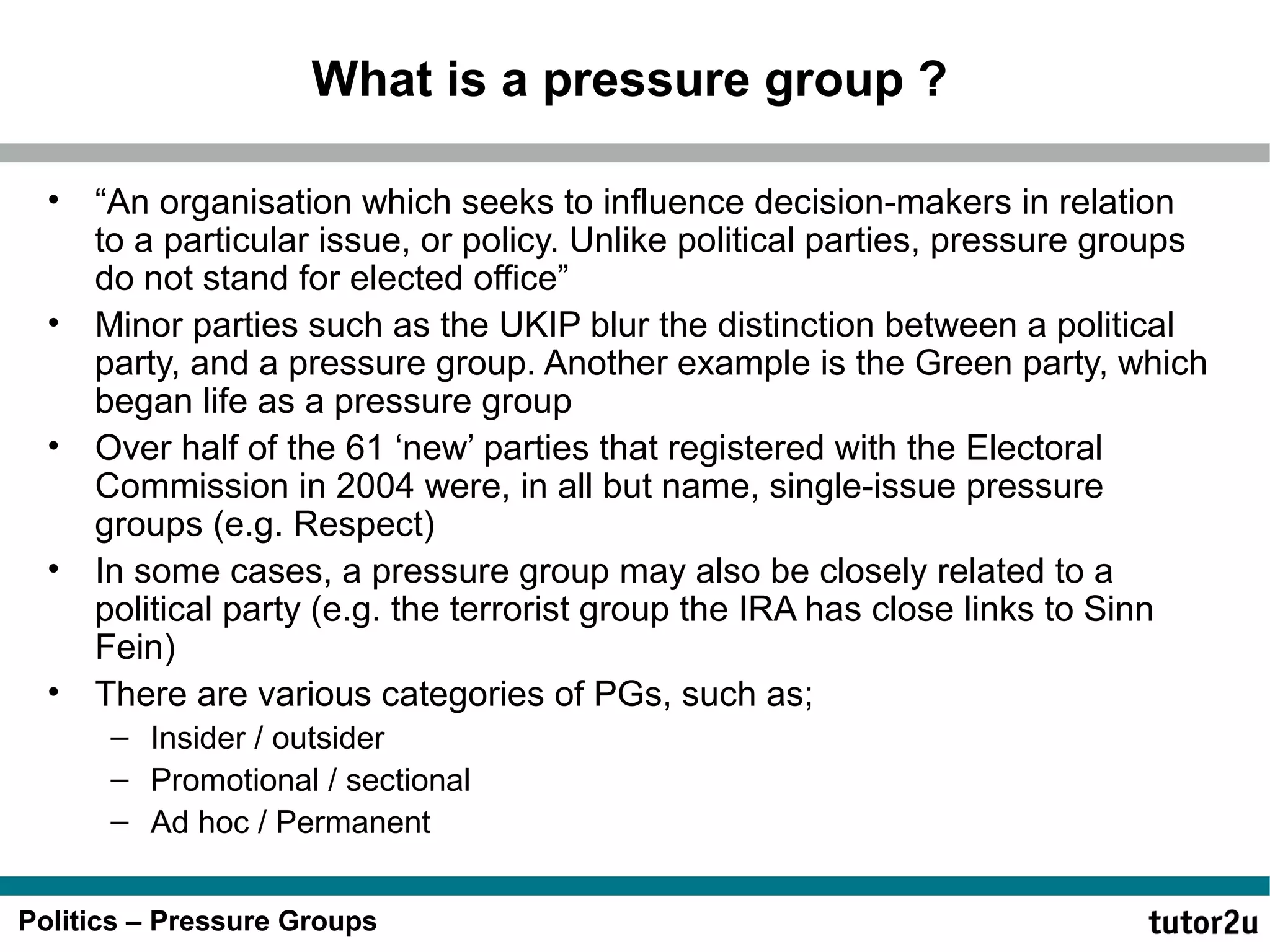
In political science, a pressure group—often referred to interchangeably as an interest group, advocacy group, or special interest group—is defined by its target objective: shaping decisions made by executive, legislative, judicial, and regulatory authorities.
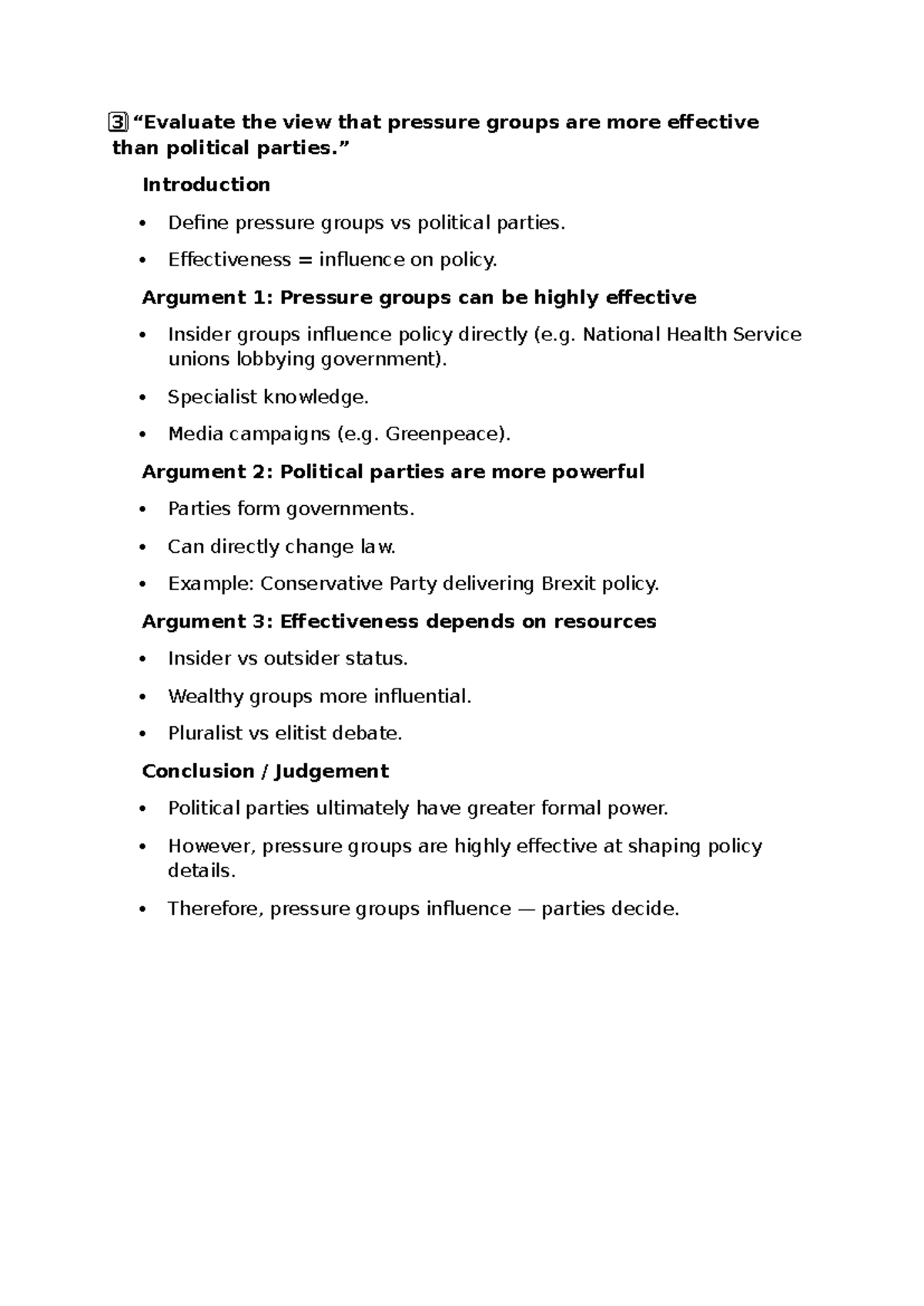
Unlike political parties, pressure groups do not field political candidates or aim to form a government. Instead, they apply focused leverage ("pressure") on policy makers regardless of which party is in power.
- Civil Society
- Political Parties
- Field candidates
- Seek political power
- Broad platform
- Pressure Groups
- Seek policy influence
- Do not run candidates
- Focused objectives
- State Institutions (Legislature, Executive, Judiciary, Agencies)
- Political Parties
Pressure Groups vs. Political Parties vs. Social Movements
To understand the specific role of pressure groups in governance, it is necessary to differentiate them from related political structures:
- Political Parties: Organise to win elections, secure majority control in legislatures, and execute comprehensive governance platforms across national, regional, and local jurisdictions.
- Pressure Groups: Focus on specific policy issues, sector protection, or regulatory changes. They maintain independence from political office, focusing exclusively on persuading whoever holds legislative or executive power.
- Social Movements: Loose, broad-based coalitions of citizens united around a shared societal grievance or ideological shift (such as early environmentalism or civil rights networks). Over time, social movements frequently formalize into structured pressure groups or advocacy organizations.
Classification of Pressure Groups
Political scientists classify pressure groups along two primary analytical dimensions: their operational relationship with government authorities and their primary membership objectives.
- Pressure Group Typology
- By Membership Goal
- Sectional/Protective (Professional/Biz)
- Cause/Promotional (Values/Ideology)
- By Systemic Access
- Insider Groups (Direct Consultation)
- Outsider Groups (Public Mobilization)
- By Membership Goal
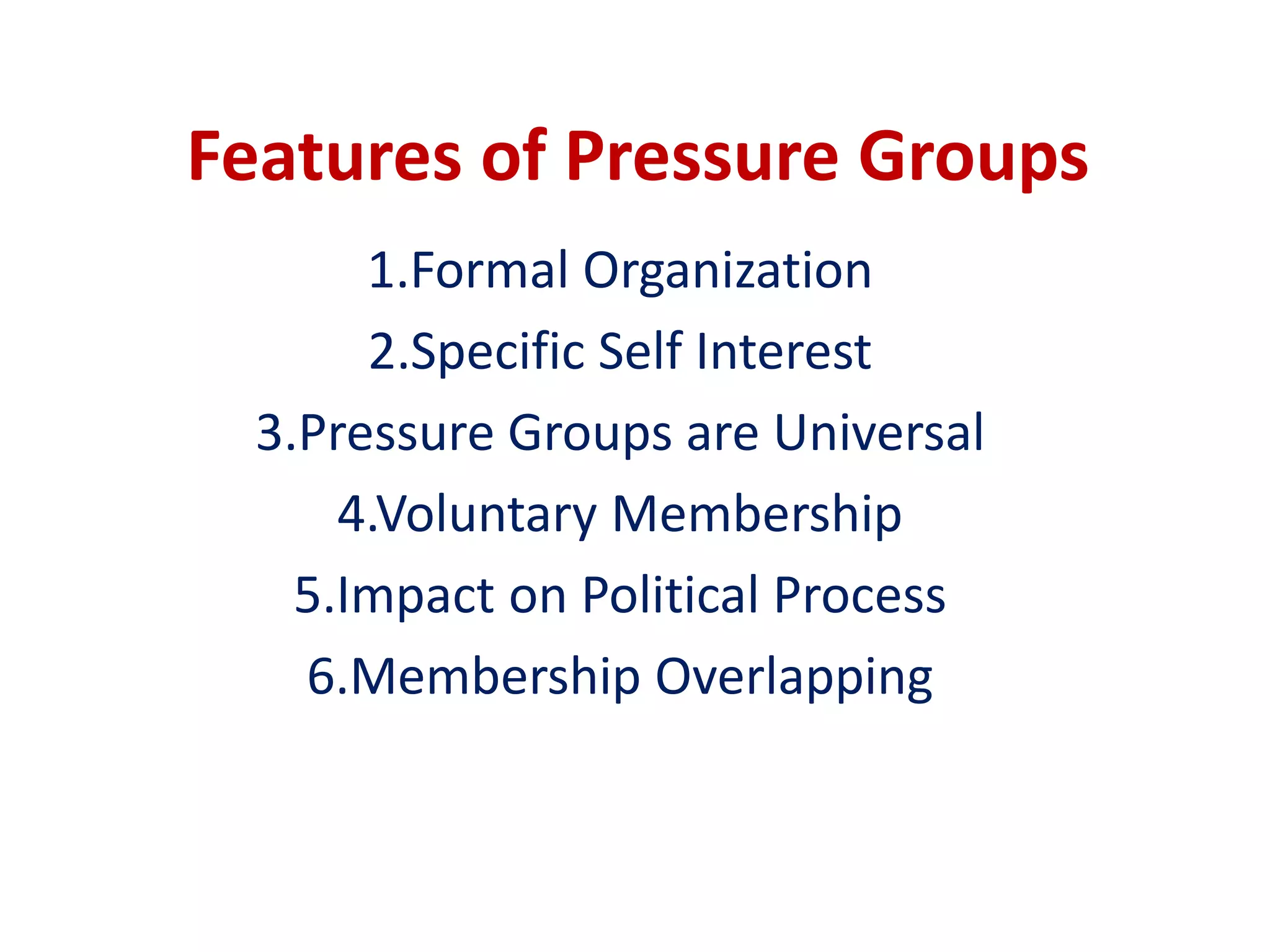
1. Sectional (Protective) Groups vs. Cause (Promotional) Groups
- Sectional (Protective) Groups: Represent the specific economic, professional, or social interests of a defined section of society. Membership is typically restricted to individuals belonging to that specific category. Examples include trade unions, bar associations, medical societies, and industry trade associations. Their primary objective is protecting the material welfare, regulatory standing, or financial conditions of their members.
- Cause (Promotional) Groups: Advocate for broad values, principles, or social objectives that are not limited to the direct self-interest of their members. Anyone who shares the cause can join or support the group. Examples include civil liberties unions, environmental conservation bodies, human rights organizations, and anti-poverty charities.
2. Insider Groups vs. Outsider Groups
First conceptualized by political scientist Wyn Grant, the distinction between insider and outsider access explains how pressure groups interact with government apparatuses:
- Insider Groups: Enjoy regular, formalized consultation with government officials, parliamentary committees, civil servants, and regulatory agencies. Because their expertise or economic weight is viewed as essential to policy implementation, they are routinely invited to draft policy papers, testify at legislative hearings, and participate in pre-legislative consultations.
- Outsider Groups: Lack direct access to policy makers, either by choice or because their political positions fall outside the mainstream consensus. These groups rely heavily on public demonstrations, media campaigns, grassroots mobilization, digital petitions, and direct action to generate public support and force policy makers to respond.
Comparative Framework of Pressure Group Types
| Pressure Group Type | Primary Objective | Key Operational Strategy | Typical Membership Structure | Institutional Access Level |
|---|---|---|---|---|
| Sectional (Insider) | Protect member economic rights and professional standards | Direct consultation, policy drafting, technical testimony | Exclusive (restricted to trade or profession) | High (formal advisory roles, ministry access) |
| Sectional (Outsider) | Resist economic policies detrimental to specific labor/trade sectors | Strikes, industrial action, public demonstrations | Exclusive (union members, industry workers) | Low-to-Moderate (intermittent access during disputes) |
| Cause (Insider) | Advance specific public interest legislation (e.g., public health) | Evidence-based research reports, committee briefings | Open to general public supporters | Moderate-to-High (sought for specialized expertise) |
| Cause (Outsider) | Shift public sentiment on ideological or ethical issues | Civil disobedience, social media campaigns, boycotts | Open to general public activists | Low (relies on indirect pressure via public opinion) |
Operational Strategies in Modern Politics
Pressure groups employ diverse tactics to influence modern policy outcomes. The selection of strategy depends on financial resources, institutional access, legal frameworks, and media capability.
- Tactical Toolkit of Groups
- Direct Lobbying: Executive & Leg. Briefings
- Public Advocacy: Grassroots Digital Campaigns
- Strategic Litigation: Court Amicus Briefs
- Campaign Finance: Electoral PACs & Advocacy
Direct Lobbying and Legislative Consultation
Direct lobbying involves structured communication between professional advocates and decision-makers, including members of parliament, congressional representatives, executive staff, and regulatory officials.
Pressure groups provide policy briefs, propose amendment language for pending bills, and supply specialized data. In complex technological, technical, or financial sectors, government bodies often depend on industry-specific insider pressure groups to explain the operational consequences of proposed regulations.
Grassroots Mobilization and Digital Advocacy
Outsider groups and broad-based advocacy coalitions engage in indirect lobbying by mobilizing the voting public. Modern digital infrastructure allows pressure groups to coordinate targeted email drives, digital petition signing, and coordinated social media initiatives aimed at elected representatives. By demonstrating that a large constituent block cares about a specific legislative vote, pressure groups create electoral incentives for politicians to align with their demands.
Strategic Litigation and Judicial Influence
When executive or legislative channels are unresponsive, pressure groups frequently use the legal system to achieve political outcomes. Strategic litigation involves initiating legal challenges against government actions, administrative rulings, or statutory interpretations.
Advocacy groups submit amicus curiae ("friend of the court") briefs in appellate and supreme court proceedings to provide legal arguments, economic data, and social science evidence to judicial panels considering landmark policy decisions.
Campaign Finance and Electoral Activity
In nations where law permits political spending by non-party entities, pressure groups exert influence through campaign contributions and political advertising:
- Political Action Committees (PACs) and Super PACs: In the United States, independent spending entities allow pressure groups to fund political advertisements that endorse or oppose specific candidates based on their legislative records.
- Issue Advocacy Advertisements: Pressure groups broadcast television, print, and online messaging during legislative debates to frame public issues and influence upcoming electoral campaigns.
The Role of Pressure Groups in Representative Democracies
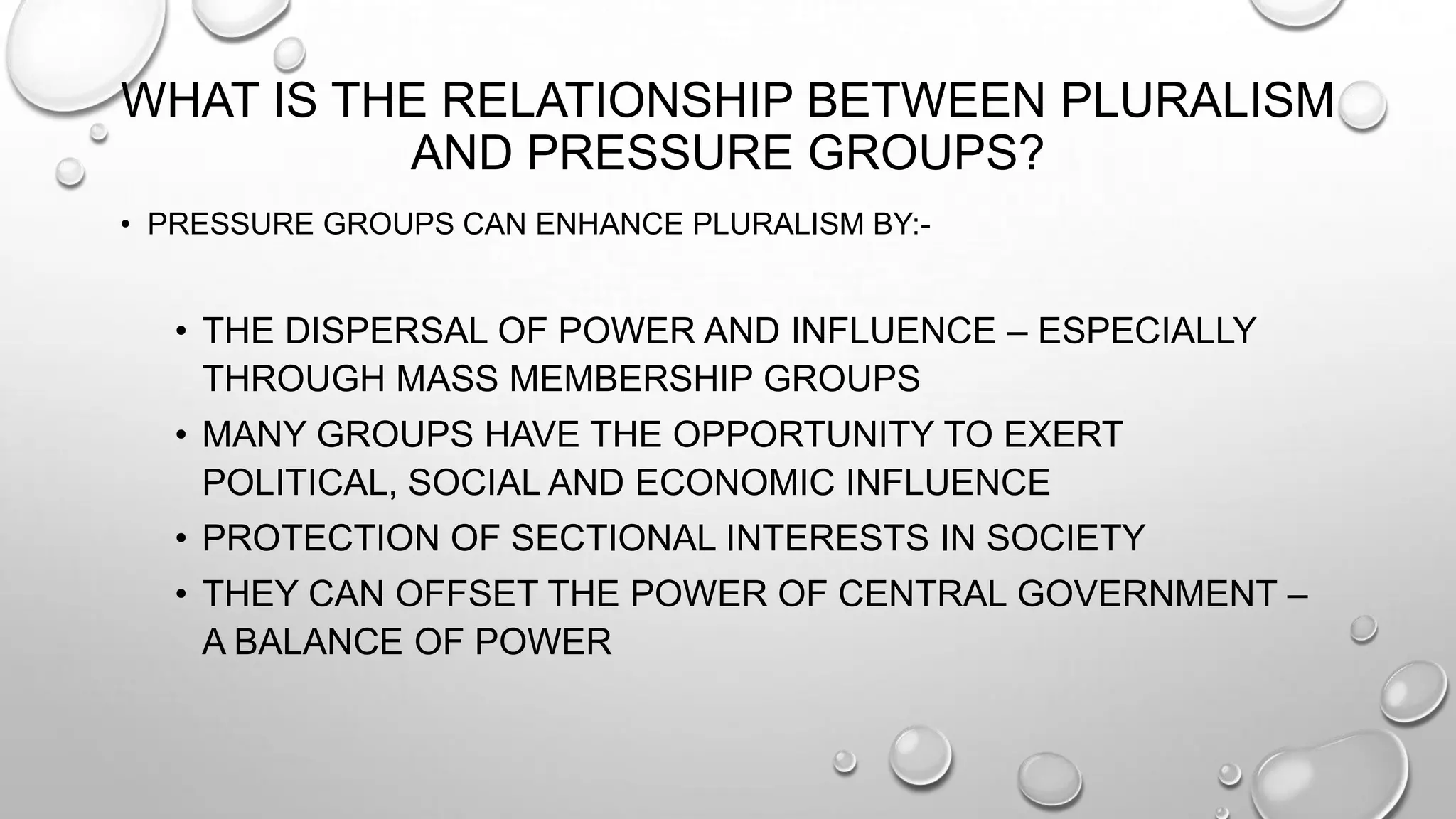
In political theory, the impact of pressure groups on democratic governance is evaluated through competing conceptual models: Pluralism and Elitism.
- Theoretical Views
- Pluralist Theory
- Power decentralized
- Dispersed influence
- Enhances participation
- Elitist Theory
- Power concentrated
- Financial advantage
- Policy capture
- Pluralist Theory
The Pluralist Perspective: Enhancing Democratic Engagement
Pluralist theorists argue that pressure groups strengthen democracy by distributing power across diverse societal interests. Under this framework, pressure groups serve essential functions:
- Specialized Expertise: They provide policy makers with detailed data, technical knowledge, and operational analysis that civil services may lack.
- Representation Beyond Elections: Elections occur periodically, whereas pressure groups offer continuous representation of specific interests between election cycles.
- Minority Voice Amplification: Small or specialized populations (such as rare-disease patient groups or micro-industries) use pressure groups to pool resources and ensure their concerns are heard in legislative debates.
- Government Oversight: Pressure groups monitor administrative compliance, tracking whether government agencies implement legislation as intended by statutory mandates.
The Elitist Perspective: Disproportionate Influence and Inequality
Critiques rooted in elitist political theory highlight democratic vulnerabilities created by unchecked pressure group activity:
- Resource Disparity: Well-funded corporate trade groups and financial interests possess resources far exceeding those of consumer protection bodies or social welfare organizations. This asymmetry can produce policy outcomes that favor concentrated economic interests over broad public preferences.
- Regulatory Capture: This occurs when a government regulatory agency, originally established to act in the public interest, becomes dominated by the political or commercial interests of the specific industry or sector it was created to oversee.
- Hyper-Pluralism and Gridlock: When competing pressure groups block legislative proposals, decision-making can become paralyzed, preventing governments from addressing urgent systemic issues.
Regulatory and Transparency Frameworks
To preserve institutional integrity and limit improper influence, modern democracies enforce legal guidelines governing how pressure groups operate.
- Regulatory Control Mechanisms
- Lobby Registries: Mandated public disclosure of clients & budgets
- Ethics & Revolving Door Laws: Post-employment cooling-off periods
- Campaign Spending Limitations: Financial contribution caps & audits
Statutory Lobbying Registries
Many jurisdictions mandate public disclosure of active lobbying practices:
- United States: The Lobbying Disclosure Act of 1995 and the Honest Leadership and Open Government Act require professional lobbyists to register, log their client relationships, report targeted legislation, and declare quarterly lobbying expenditures with the Secretary of the Senate and the Clerk of the House.
- European Union: The joint EU Transparency Register, managed by the European Parliament and European Commission, monitors organizations attempting to influence European lawmaking, establishing a public log of covered activities, staff counts, and funding sources.
- United Kingdom: The Office of the Registrar of Consultant Lobbyists enforces statutory reporting requirements under the Transparency of Lobbying, Non-party Campaigning and Trade Union Administration Act 2014.
Revolving Door Restrictions
The "revolving door" refers to the movement of individuals between roles as public officials or legislators and positions within private lobbying firms or industry pressure groups. To prevent conflicts of interest and the misuse of confidential state information, statutory frameworks often impose mandatory cooling-off periods (typically 12 to 24 months) before former government officials can legally lobby their former colleagues or agencies.
Frequently Asked Questions
What is the primary difference between a pressure group and a political party?
A political party nominates candidates, contests elections, and attempts to secure formal government control to execute a general political platform. A pressure group does not field electoral candidates or seek executive power; instead, it attempts to persuade existing government officeholders to pass, alter, or reject specific laws and policy initiatives.
How do insider pressure groups differ from outsider pressure groups?
Insider groups maintain established access to government ministers, departmental advisors, and legislative committees, contributing directly to early-stage policy formulation. Outsider groups lack direct access to government institutions and focus their efforts on generating public pressure through media campaigns, demonstrations, direct action, and online mobilization to force policy shifts.
What is regulatory capture?
Regulatory capture occurs when a state regulatory body created to protect the public interest instead becomes dominated or controlled by the very industry or interest groups it is supposed to oversee. Over time, the agency prioritizes the commercial or political welfare of those industry pressure groups over the public interest.
Are pressure groups beneficial or harmful to democratic governance?
Pressure groups provide both benefits and drawbacks. On the positive side, they aggregate expertise, allow continuous political participation between election cycles, and give voice to specialized minority interests. Conversely, when economic resources are unequally distributed, powerful pressure groups can disproportionately influence public policy at the expense of the general public.
Recommended Next Steps for Research and Analysis
- Examine Institutional Registries: To evaluate active lobbying within a specific sector, consult official registries such as the U.S. Senate Lobbying Disclosure Database or the EU Transparency Register to review financial disclosures, client lists, and targeted legislative files.
- Analyze Legislative Hearing Records: Review transcript records from legislative committees to assess how insider pressure groups present technical evidence and proposed bill amendments during drafting stages.
- Evaluate Comparative Policy Impact: Assess how competing insider and outsider groups frame policy issues across public media and formal legal filings to understand how public advocacy shapes regulatory outcomes.
Image Gallery