Capital Defined: Why It Matters for Your Business
Capital is the set of financial assets and physical resources a business utilizes to generate value, sustain operations, and facilitate long-term growth. Unlike immediate revenue, capital represents the durable foundation of a company,...
Capital is the set of financial assets and physical resources a business utilizes to generate value, sustain operations, and facilitate long-term growth. Unlike immediate revenue, capital represents the durable foundation of a company, including cash reserves, equipment, intellectual property, and equity, all of which are essential for navigating market volatility and funding strategic expansion.
Contents
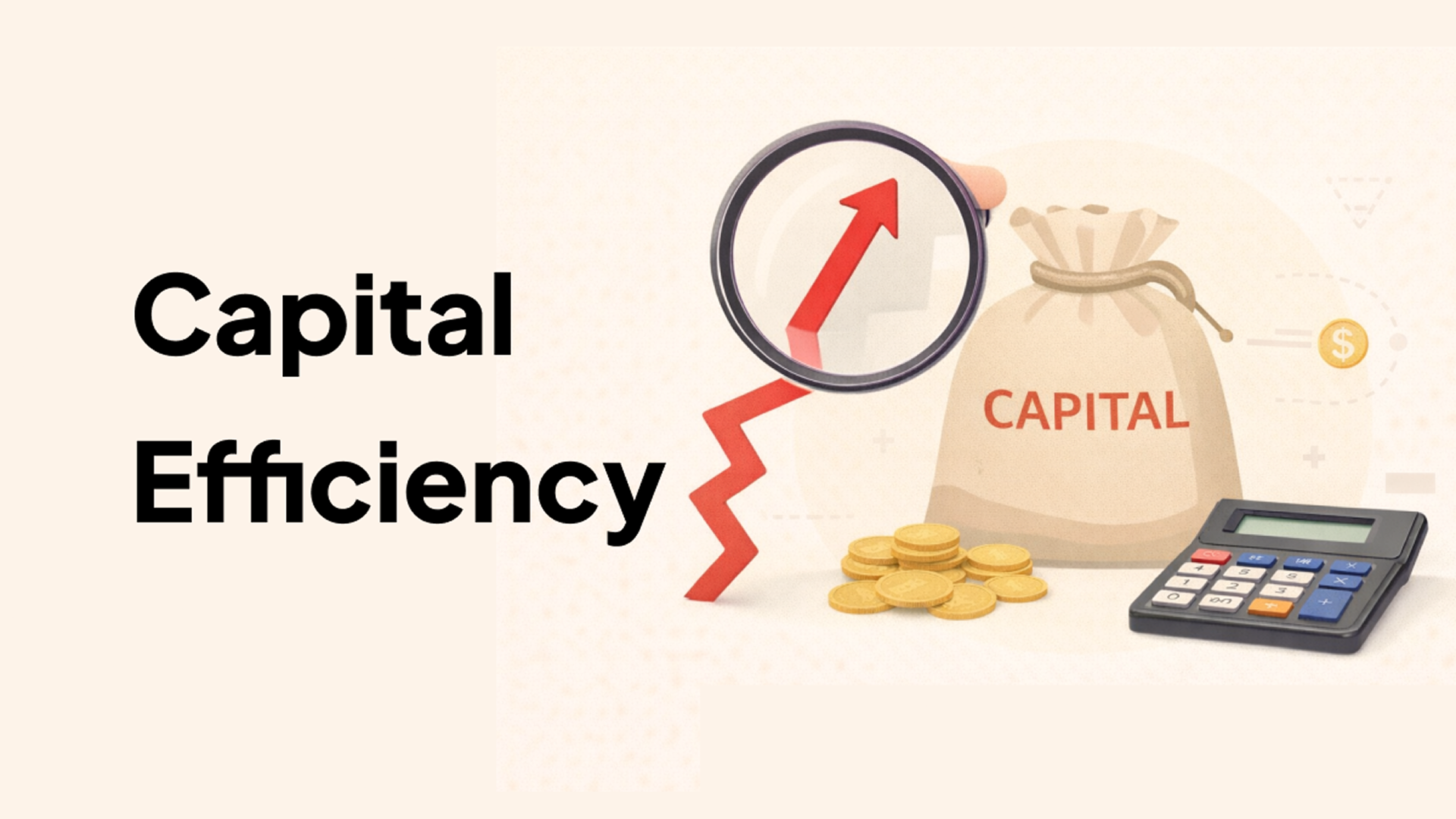
As of 2026, the landscape of business finance has evolved to prioritize not just the quantity of capital, but its composition and the efficiency with which it is deployed. Understanding the nuances of capital is no longer a task reserved for Chief Financial Officers; it is a fundamental requirement for any business owner seeking to maintain a competitive edge in a global economy.
The Multidimensional Definition of Business Capital
In the broadest sense, capital is any resource that provides value or benefit to its owner. However, in a commercial context, capital is specifically the money or assets used to produce goods and services. It is often confused with "money" or "cash," but while all cash is potential capital, not all capital is cash.
Capital is distinct because it is intended to be used for the generation of more wealth. When a business purchases a delivery truck, that truck is physical capital. When a company keeps $100,000 in a high-yield account to fund a future acquisition, that is financial capital. The primary characteristic of capital is its durability and its role as a factor of production.
The Core Components of Capital
To understand why capital matters, one must first identify the different forms it takes within a modern enterprise.
- Financial Capital: This is the most common form, consisting of the funds used by entrepreneurs and businesses to buy what they need to make their products or provide their services. It includes debt (loans) and equity (investments).
- Physical (Real) Capital: These are the tangible assets used in production. Examples include manufacturing machinery, office buildings, fleet vehicles, and computer hardware.
- Human Capital: Often the most undervalued, this refers to the skills, experience, and education of the workforce. In 2026, as automation and AI have integrated deeper into workflows, the specialized knowledge required to manage these systems has become a critical form of capital.
- Intellectual Capital: This encompasses intangible assets like patents, trademarks, proprietary software, and brand reputation. For many tech firms, intellectual capital represents the majority of their total valuation.
Why Capital Structure is the Blueprint of Your Business
Capital structure refers to the specific mix of debt and equity used by a firm to finance its overall operations and growth. Finding the "optimal" capital structure is a primary goal of financial management because it directly affects the company’s risk profile and its cost of capital.
Equity Capital: The Cost of Ownership
Equity capital is raised by selling shares of the company to investors or by reinvesting retained earnings back into the business. The primary advantage of equity is that it does not require monthly interest payments, which can be a lifeline during lean periods. However, the "cost" of equity is high; it involves giving up a portion of future profits and, often, a degree of control over decision-making.
Debt Capital: The Power of Leverage
Debt capital involves borrowing funds that must be repaid over time, typically with interest. In 2026, with interest rates stabilizing after the fluctuations of the early 2020s, debt remains a powerful tool for "leveraging" growth. By using someone else's money to fund a project that yields a return higher than the interest rate, a business can accelerate its expansion. The risk, of course, is that debt must be serviced regardless of the company's performance, making it a potential burden during economic contractions.
The Strategic Importance: Why Capital Matters for Growth
Capital is not merely a line item on a balance sheet; it is the engine of viability. Without adequate capital, even the most innovative business models will fail due to an inability to execute.
1. Facilitating Scaling and Expansion
Growth requires upfront investment. Whether a business is moving into a new geographic market, launching a new product line, or acquiring a competitor, it needs capital to bridge the gap between initial expenditure and eventual profit. Capital provides the "runway" necessary to reach a cruising altitude where the business becomes self-sustaining.
2. Risk Mitigation and Resilience
The business cycle is inherently unpredictable. Economic downturns, supply chain disruptions, or sudden shifts in consumer behavior can cripple a cash-poor business. Capital acts as a buffer. Companies with strong capital reserves can weather periods of negative cash flow without facing insolvency. This resilience allows them to keep their talent employed and their operations running while competitors may be forced to liquidate.
3. Increasing Operational Efficiency
Investing in physical and intellectual capital often leads to long-term cost savings. For example, a manufacturing firm that uses its capital to upgrade to energy-efficient, automated machinery may face a high initial cost but will benefit from lower labor costs and reduced utility expenses over the next decade. In this way, capital is a tool for transforming high variable costs into manageable fixed costs.
4. Enhancing Credibility and Valuation
Lenders and investors view a well-capitalized business as a lower-risk proposition. A strong capital position signals that the management team is disciplined and that the business has a solid foundation. This credibility makes it easier to secure further funding at more favorable rates, creating a "virtuous cycle" of financial health.
Working Capital vs. Fixed Capital
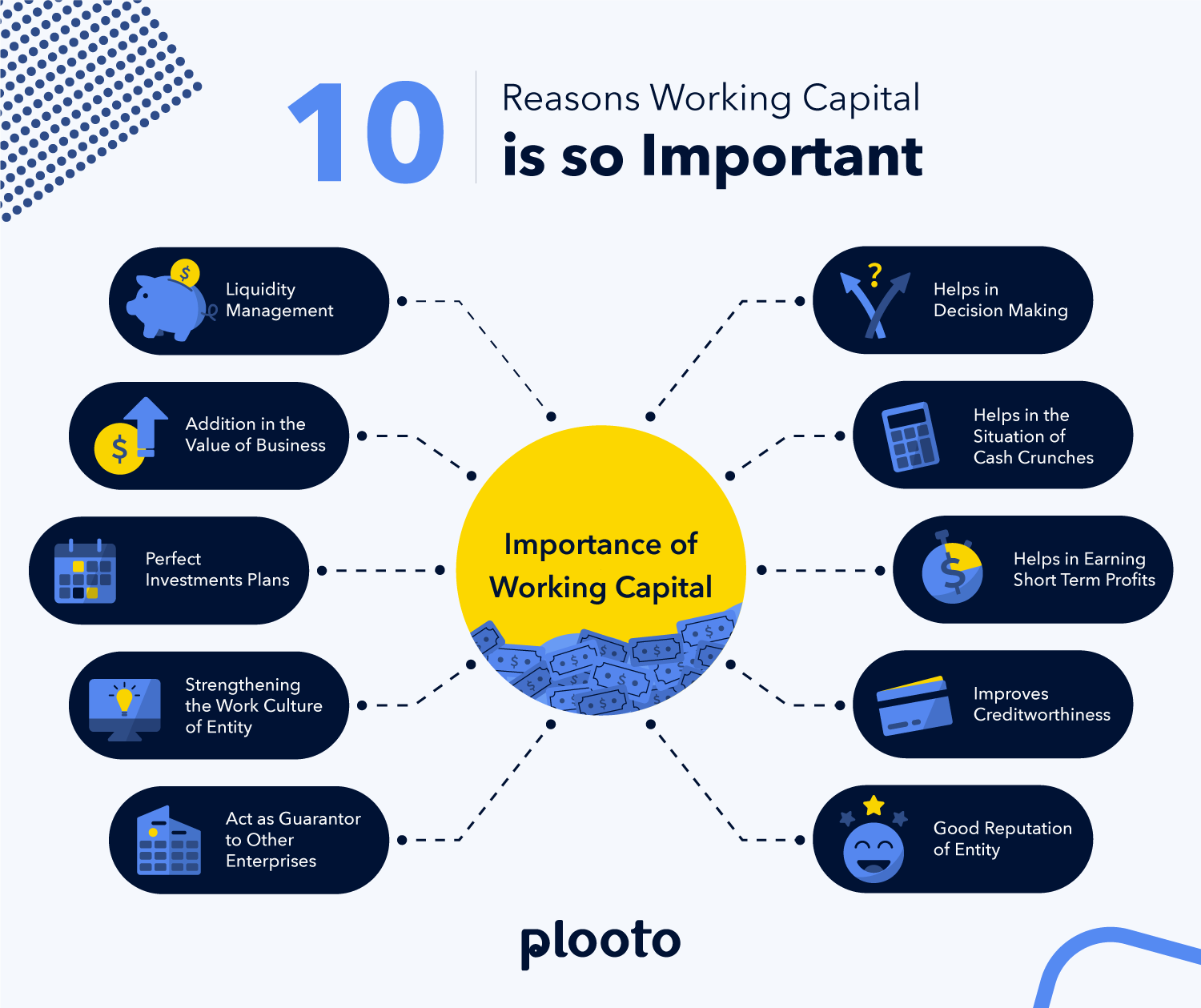
A common mistake among small business owners is failing to distinguish between working capital and fixed capital. Both are necessary, but they serve very different purposes.
| Feature | Working Capital | Fixed Capital |
|---|---|---|
| Definition | The difference between current assets and current liabilities. | Investment in long-term assets. |
| Purpose | To fund day-to-day operations (payroll, inventory). | To build the production capacity of the business. |
| Liquidity | Highly liquid; expected to be converted to cash within a year. | Low liquidity; intended for use over many years. |
| Example | Cash on hand, accounts receivable, inventory. | Land, buildings, heavy machinery, patents. |
| Strategic Focus | Operational efficiency and liquidity management. | Long-term growth and structural stability. |
Effective management requires a balance. Too much fixed capital with too little working capital leads to a "cash crunch," where a company owns valuable assets but cannot pay its utility bills. Conversely, too much working capital sitting idle in a bank account means the business is missing out on the potential returns that could be generated by investing in fixed assets.
The Cost of Capital: Measuring Investment Success
One of the most critical concepts for business owners in 2026 is the Weighted Average Cost of Capital (WACC). This is essentially the average rate a business pays to finance its assets, calculated by weighting the cost of debt and the cost of equity according to their share in the capital structure.
Why does this matter? Because a business must generate a Return on Invested Capital (ROIC) that exceeds its WACC. If your WACC is 8% and your projects only return 6%, you are effectively destroying value every day you operate. Monitoring this spread is the most objective way to determine if your capital is being used effectively.
Common Capital Management Pitfalls
Even successful businesses can fall into traps regarding their capital. Recognizing these early is key to long-term survival.
- Under-capitalization: This is the leading cause of small business failure. Starting a venture without enough capital to reach the break-even point leaves no room for error.
- Over-leveraging: Taking on too much debt can lead to "debt strangulation," where all available cash flow goes toward interest payments, leaving nothing for reinvestment.
- Mismatched Funding: Using short-term debt (like credit cards) to fund long-term assets (like real estate) is a recipe for disaster. Long-term assets should be financed with long-term debt or equity to align the repayment schedule with the asset's productive life.
- Ignoring Human Capital: Failing to invest in training and retention can lead to a "capital leak," where the value of the workforce diminishes, eventually impacting the efficiency of physical and financial capital.
How to Secure Capital in the 2026 Economy
Securing capital has become more data-driven than ever. Whether seeking a traditional bank loan or venture capital, businesses are now evaluated on a variety of metrics including sustainability (ESG scores), digital infrastructure, and historical cash flow stability.
- Bootstrapping: Relying on personal savings and early revenue. This retains 100% ownership but limits the speed of growth.
- Angel Investors and VC: Ideal for high-growth startups, but requires giving up equity and adhering to aggressive growth milestones.
- SBA Loans and Commercial Lending: In 2026, government-backed loans remain a cornerstone for small businesses, offering lower interest rates for those who qualify.
- Crowdfunding: A viable option for consumer-facing products where the "capital" also serves as marketing and market validation.
FAQs
What is the difference between capital and revenue?
Revenue is the total amount of money brought in by sales of goods or services. Capital is the underlying resource (money, equipment, etc.) used to create those goods or services. Revenue is a flow of money, while capital is a stock of value.
Can a business have too much capital?
Yes. While rare, a business can be "over-capitalized" if it has large amounts of cash or assets that are not being put to productive use. This can lead to a low Return on Equity (ROE), signaling to investors that the management is not efficiently deploying resources to generate growth.
How do I calculate my company's working capital?
Working capital is calculated by subtracting your current liabilities (debts due within one year) from your current assets (cash, inventory, and accounts receivable). A positive number indicates that you can cover your short-term obligations and have funds left to grow the business.
Why is human capital included in the definition of capital?
Human capital represents the economic value of an employee's experience and skills. Because these attributes increase productivity and can be developed through investment (training), they function like a physical asset that generates a return for the business.
How does inflation affect business capital?
Inflation generally erodes the purchasing power of financial capital. However, it can increase the nominal value of physical capital like real estate. For businesses with significant debt, high inflation can actually be beneficial, as they repay their loans with "cheaper" currency, provided their revenue also rises with inflation.
Final Recommendation
To ensure your business remains viable through 2026 and beyond, perform a capital audit once every quarter. Do not simply look at your bank balance; evaluate your capital structure. Are you too reliant on high-interest debt? Is your equipment becoming obsolete, representing a future "capital call" you aren't prepared for? By treating capital as a strategic resource rather than just "money in the bank," you position your business to seize opportunities that your under-capitalized competitors cannot.
Image Gallery