Seeing the Northern Lights from the USA: Prime Locations and 2026 Viewing Guide
Viewing the northern lights from the USA is highly achievable in 2026, as Solar Cycle 25 remains near its peak, offering frequent geomagnetic storms. While Alaska offers the most consistent displays, travelers in northern-tier states l...
Viewing the northern lights from the USA is highly achievable in 2026, as Solar Cycle 25 remains near its peak, offering frequent geomagnetic storms. While Alaska offers the most consistent displays, travelers in northern-tier states like Minnesota, Michigan, and Montana can witness the aurora by monitoring KP-index forecasts and seeking dark skies.
Contents
The Aurora Borealis, or northern lights, has long been a bucket-list item for travelers, traditionally requiring a flight to Iceland or Norway. However, as we move through 2026, residents and visitors in the United States find themselves in a privileged position. We are currently in the plateau of Solar Cycle 25’s maximum, a period of heightened solar activity that pushes the aurora further south, making it visible to millions of Americans who would otherwise never see it. This guide outlines the essential science, the best domestic locations, and the technical tools required to successfully hunt the lights from American soil.
The 2026 Solar Maximum: Why This Year Is Exceptional
The frequency and intensity of the northern lights are dictated by the solar cycle—an approximately 11-year period during which the Sun’s magnetic field flips. During "Solar Maximum," the Sun emits more solar flares and Coronal Mass Ejections (CMEs). These events send clouds of charged particles toward Earth; when they collide with our magnetosphere, they create the stunning light displays we see at the poles.
In 2026, we are experiencing the prolonged peak of Solar Cycle 25. Unlike the previous cycle, which was relatively weak, this cycle has consistently outperformed initial NASA and NOAA predictions. For the U.S. observer, this means two things: the "Aurora Oval" (the ring of light centered on the magnetic pole) expands further south more frequently, and the intensity of the colors—ranging from the standard pale green to rare vibrant purples and reds—is significantly higher.
The current timeframe is ideal because the Sun’s activity remains volatile. Even a "moderate" solar storm in 2026 can trigger aurora sightings in states as far south as Iowa or Pennsylvania, provided the sky is dark and the weather is clear.
Understanding the KP Index and Forecasting
To see the northern lights from the USA, you must understand the KP Index. This is a scale from 0 to 9 used to characterize the magnitude of geomagnetic storms.
- KP 0-3: Quiet activity. Auroras are generally confined to high latitudes like Northern Alaska.
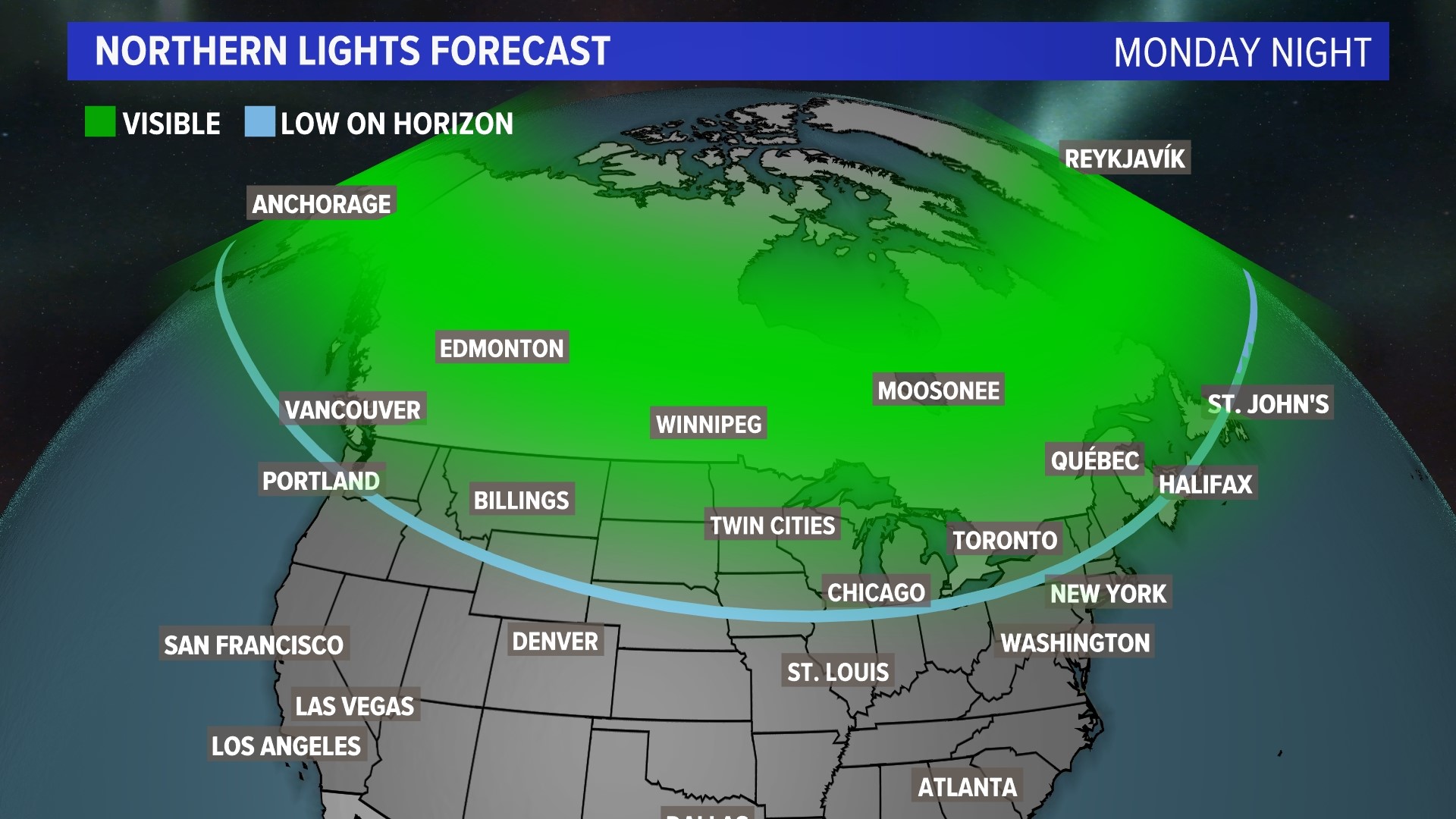
- KP 4-5: Unsettled to minor storm (G1 level). The lights become visible along the U.S.-Canada border.
- KP 6-7: Moderate to strong storm (G2-G3 level). The aurora can be seen in the mid-latitudes (e.g., Washington, Michigan, New York).
- KP 8-9: Severe to extreme storm (G4-G5 level). The lights may be visible as far south as Texas or Florida, as seen in the historic storms of 2024.
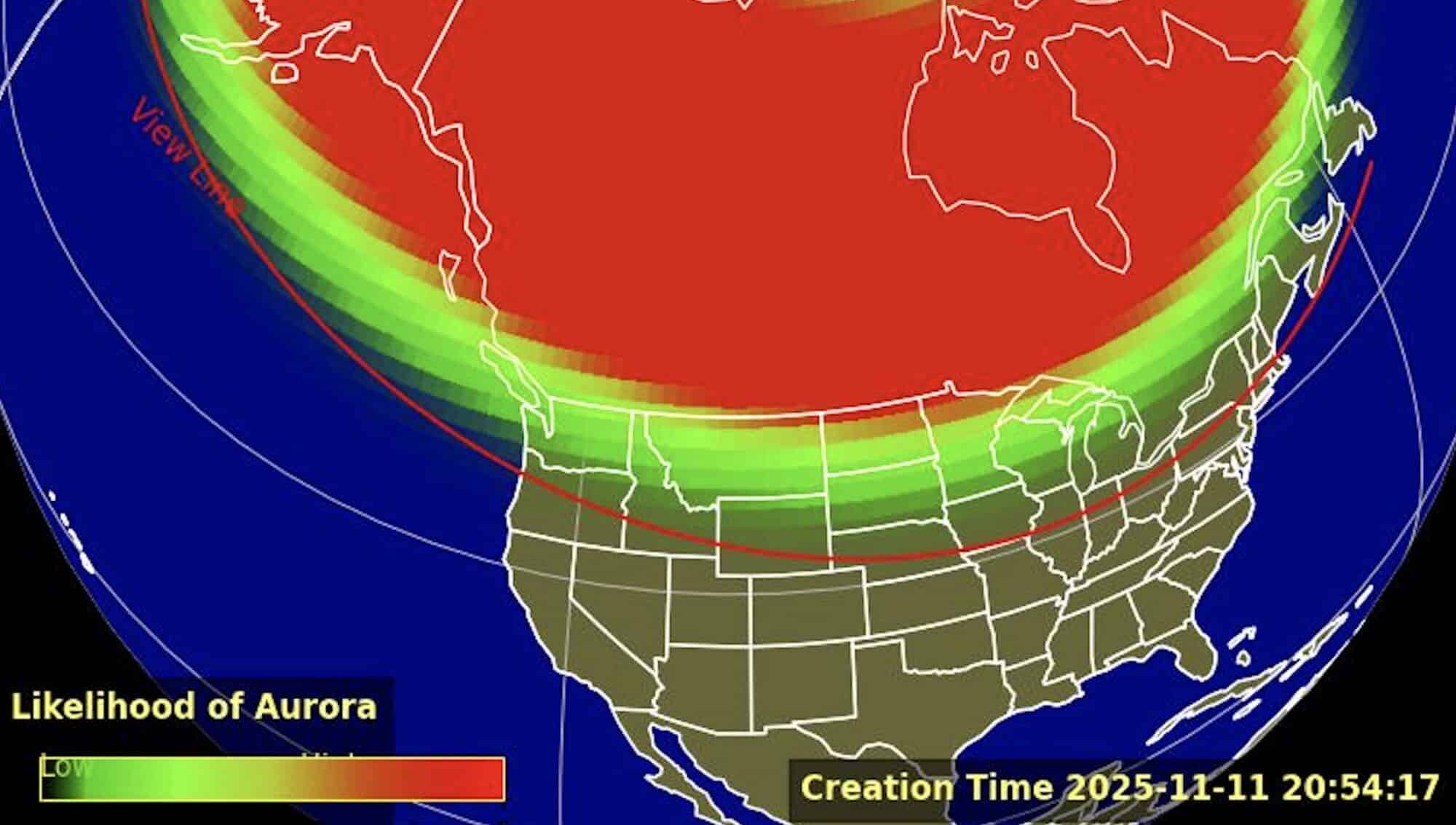
For the most accurate data, observers should rely on the NOAA Space Weather Prediction Center (SWPC), which provides 30-minute forecasts. The "Ovation" model shown on their site displays the probability of visible aurora across the continental U.S. in real-time.
Top Destinations for Aurora Chasing in the USA
While the solar max makes the lights more widespread, your probability of success is highest in the "Northern Tier" states. Below are the premier locations for viewing the northern lights within the United States.
1. Fairbanks and Coldfoot, Alaska
Alaska remains the undisputed champion for U.S. aurora viewing. Because Fairbanks sits directly under the Aurora Oval, you can see the lights even during low solar activity (KP 1 or 2).
- Why it works: The interior of Alaska has more clear nights than the coastal regions.
- When to go: Late August through April. In 2026, the equinoxes (March and September) are particularly potent due to the Russell-McPherron effect, which aligns the Earth’s magnetic field with the solar wind more effectively.
2. Voyageurs National Park, Minnesota
Located on the border with Canada, Voyageurs is a certified International Dark Sky Park. The vast expanses of water provide a flat, unobstructed northern horizon, which is critical for seeing auroras that may be low on the sky.
- Pro Tip: Use a boat or stay at a lakeside resort in Kabetogama or Rainy Lake to ensure you have a 180-degree view of the northern sky.
3. The Upper Peninsula (UP), Michigan
Michigan's UP is surrounded by the cold, dark waters of Lake Superior. The lack of light pollution and the clear northern view across the lake make it one of the best spots in the lower 48 states.
- Key Location: The Headlands International Dark Sky Park near Mackinaw City offers designated viewing areas and educational programs.
4. Glacier National Park, Montana
Glacier’s high altitude and extreme northern location make it a prime candidate for G1 and G2 level storms. The dramatic mountain backdrops provide world-class opportunities for night-sky photography.
- Viewing Spot: Lake McDonald is a favorite for photographers because the northern lights often reflect off the calm water.
5. Aroostook National Wildlife Refuge, Maine
As the easternmost point in the U.S., Northern Maine offers some of the darkest skies on the Atlantic seaboard. The low population density in Aroostook County ensures that light pollution will not wash out the faint glow of a distant aurora.
Comparative Overview of U.S. Viewing Locations
The following table compares the typical requirements for a successful sighting at various U.S. latitudes during the 2026 solar peak.
| Location | Latitude | Minimum KP Needed | Best Season | Viewing Conditions |
|---|---|---|---|---|
| Fairbanks, AK | 64.8° N | KP 1 | Sept - March | Excellent (Cold/Dry) |
| International Falls, MN | 48.6° N | KP 4 | Oct - April | Great (Lake Horizons) |
| Marquette, MI | 46.5° N | KP 5 | Sept - Oct | Good (Lake Superior) |
| Seattle, WA | 47.6° N | KP 6 | March - Sept | Variable (Cloud Cover) |
| Cherry Springs, PA | 41.6° N | KP 7 | Year-round | Dark Sky Preserve |
| Asheville, NC | 35.6° N | KP 8+ | Rare Events | High Elevation Help |
Environmental Factors: Clouds and Light Pollution
Even during a massive solar storm, two factors can ruin your chances: clouds and man-made light.
Cloud Cover: This is the most common reason for a "failed" aurora hunt. Use tools like National Weather Service satellite imagery to find "holes" in the cloud deck. In the Pacific Northwest and the Great Lakes, winter months are notoriously cloudy, making the drier spring and autumn months of 2026 more reliable.
Dark Skies: The aurora is often faint to the naked eye, appearing as a "glow" or "mist" before it erupts into movement. Light pollution from cities will easily drown out this light. To find truly dark locations, consult the International Dark-Sky Association maps. You should aim for a location rated 3 or lower on the Bortle Scale.
Technical Tips for Aurora Photography
In 2026, smartphone technology has advanced, but the fundamentals of long-exposure photography remain necessary to capture the vibrant greens and purples that the human eye might miss.
- Use a Tripod: Any movement during a long exposure will blur the stars and the aurora.
- Manual Focus: Autofocus fails in the dark. Set your focus to "infinity" or use "Focus Peaking" on a bright star to ensure the sky is sharp.
- Shutter Speed: For "dancing" auroras, use a faster shutter (2–6 seconds) to capture detail. For a faint glow, use 10–20 seconds.
- Aperture: Use the widest setting your lens allows (f/2.8 or lower is ideal) to let in as much light as possible.
- ISO Settings: Start at ISO 1600 and adjust based on the brightness of the display and the amount of noise your sensor produces.
Essential Resources for Real-Time Tracking
Success in the USA requires monitoring data rather than just stepping outside. The following resources are indispensable for the 2026 season:
- Space Weather Prediction Center (NOAA): Look for the "3-Day Forecast" and "Aurora Viewline."
- Geophysical Institute (University of Alaska Fairbanks): Provides detailed Alaska-specific and North American forecasts.
- SpaceWeatherLive: An excellent secondary source for "Solar Wind" speed and "Bz" orientation (a southward-pointing Bz is crucial for aurora activity).
- Mobile Apps: Apps like "My Aurora Forecast" use your GPS location to send push notifications when the KP index reaches a threshold suitable for your specific latitude.
Common Obstacles and Troubleshooting
"The forecast said KP 6, but I didn't see anything." The KP index is an average over three hours. If a storm hits during the day, it may have subsided by nightfall. Additionally, the Bz (Interplanetary Magnetic Field) must be "Southward" (negative) for the energy to enter our atmosphere. If the Bz is Northward, the Earth's magnetic shield effectively deflects the particles, even during high KP levels.
"The lights look white, not green." The human eye is less sensitive to color in low-light conditions (scotopic vision). Often, what looks like a white or grey cloud to the eye will show up as brilliant green on a camera sensor. If you suspect an aurora, take a 5-second test shot with your phone or camera to confirm.
Frequently Asked Questions
What is the best month to see the northern lights in the USA in 2026?
The months surrounding the equinoxes—March and September—are statistically the best. This is due to the Russell-McPherron effect, where the tilt of the Earth's axis relative to the solar wind increases the likelihood of geomagnetic disturbances. However, for those in Alaska, any dark, clear night between September and April is viable.
Do I need to be in a cold climate to see the aurora?
No. The aurora occurs high in the atmosphere (60 to 250 miles up), so the temperature on the ground is irrelevant. The reason people associate auroras with cold is that they are most visible at high latitudes during the winter months when nights are longest. In 2026, many viewers in the southern U.S. may see them during warm summer nights if a significant solar storm occurs.
How far south can I see the northern lights during a G4 storm?
During a G4 (Severe) geomagnetic storm, the aurora can often be seen as far south as 35° to 40° latitude. This includes states like Northern California, Oklahoma, Arkansas, and Virginia. In these regions, the lights will likely appear as a red or pink glow on the northern horizon rather than appearing directly overhead.
Is Solar Cycle 25 really better than previous cycles?
Yes, Solar Cycle 25 has significantly exceeded the consensus forecasts from 2019. Throughout 2024 and 2025, we saw more G4 and G5 storms than in the entirety of Cycle 24. This makes 2026 a premier year for domestic viewing before the cycle begins its eventual decline toward solar minimum around 2030.
Can I see the northern lights from a city?
It is very difficult. Light pollution from streetlights and buildings significantly reduces the contrast of the sky. While a very powerful (KP 8 or 9) storm might be visible from suburban areas, you should always drive at least 30-60 minutes away from major metropolitan centers for the best experience.
Practical Recommendation for 2026
If you are planning a dedicated trip to see the northern lights from the USA in 2026, book a 4-day window in Fairbanks, Alaska, during late September. This timing offers a trifecta of benefits: high solar activity from the maximum, the geomagnetic boost of the autumn equinox, and relatively mild temperatures compared to the Alaskan deep winter. Always have a "plan B" for your trip, such as visiting local hot springs or museums, as the lights are a natural phenomenon and can never be 100% guaranteed on any specific night.
Image Gallery