The Silicon Valley Bank Story in the US: Anatomy of a Financial Crisis and Its Lasting Impact
The Silicon Valley Bank (SVB) story is the definitive case study of how rapid interest rate shifts and concentrated depositor bases can trigger a modern financial crisis. SVB’s March 2023 collapse, the second-largest bank failure in Un...
The Silicon Valley Bank (SVB) story is the definitive case study of how rapid interest rate shifts and concentrated depositor bases can trigger a modern financial crisis. SVB’s March 2023 collapse, the second-largest bank failure in United States history at the time, forced unprecedented federal intervention and fundamentally reshaped the relationship between the venture capital ecosystem and the global banking sector.
Contents
The Specialized Rise of Silicon Valley Bank
Silicon Valley Bank was founded in 1983 with a specific mission: to provide banking services to the unique needs of high-growth tech startups and venture capital (VC) firms. For nearly 40 years, it was the "gold standard" for the innovation economy. Unlike traditional commercial banks that prioritize established cash flows and physical collateral, SVB specialized in lending to companies that were often pre-revenue but backed by reputable VC firms.
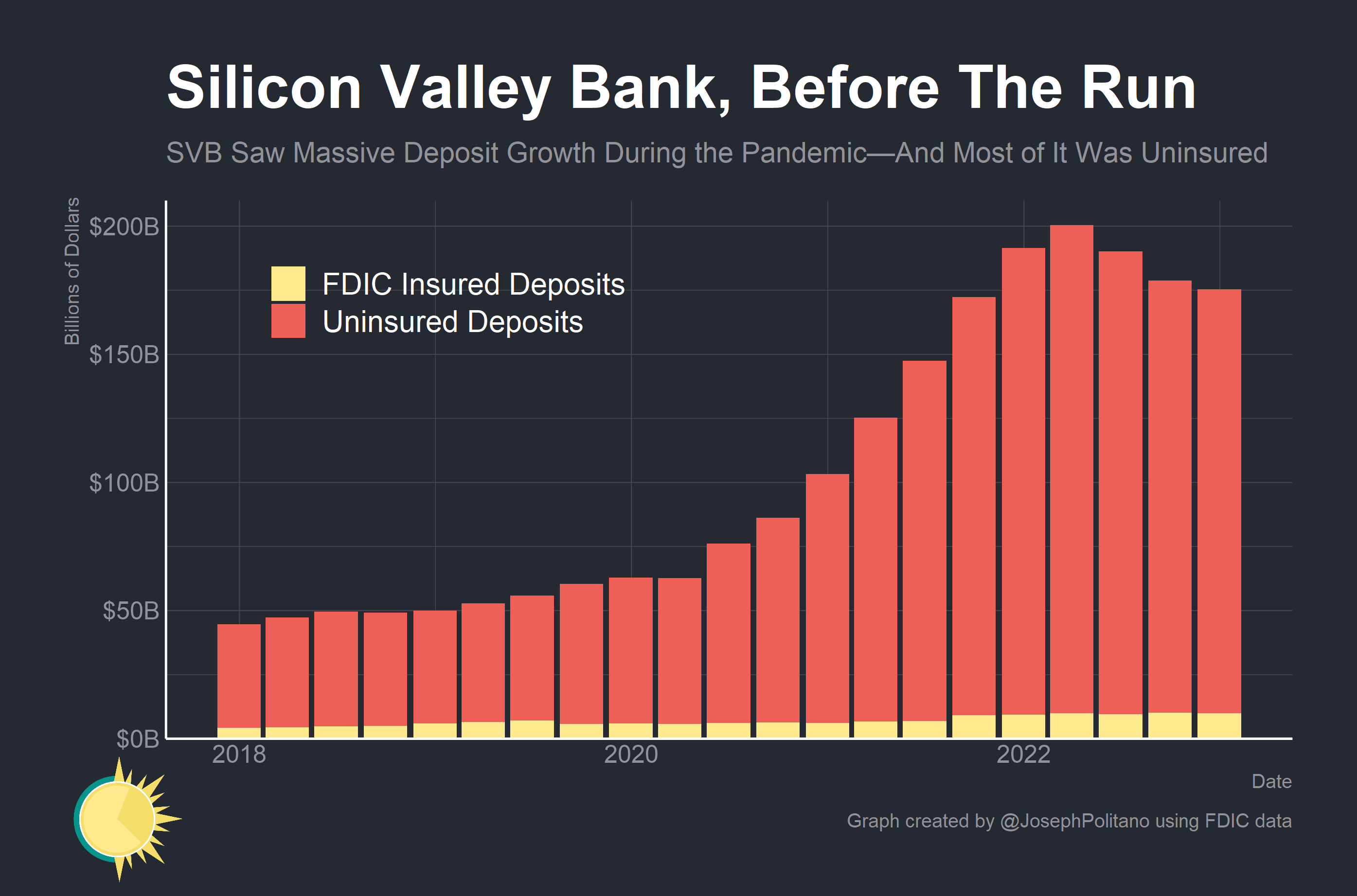
By 2021, SVB was the 16th largest bank in the US, holding over $200 billion in assets. Its success was intrinsically tied to the tech boom. During the COVID-19 pandemic, as the tech sector experienced an explosion in funding and valuations, SVB’s deposits ballooned. In 2021 alone, deposits grew from approximately $102 billion to $189 billion. This massive influx of capital created a "problem" for the bank: they had more cash than they could reasonably lend out to startups.
To generate yield on this excess cash, SVB management invested heavily in long-term US Treasury bonds and mortgage-backed securities. While these are considered "safe" assets in terms of credit risk, they carry significant interest rate risk. This decision set the stage for the liquidity crisis that would follow when the Federal Reserve began its aggressive tightening cycle.
The Macroeconomic Catalyst: Inflation and Interest Rates
The Silicon Valley Bank story cannot be understood without the context of the Federal Reserve's response to inflation. Beginning in early 2022, the Fed raised interest rates at the fastest pace in decades. This had two devastating effects on SVB’s balance sheet:
- Bond Devaluation: As interest rates rise, the market value of existing fixed-rate bonds falls. SVB had classified a significant portion of its bond portfolio as Hold-to-Maturity (HTM). Under accounting rules, these do not have to be "marked to market" (revalued) on the balance sheet unless they are sold. However, by late 2022, SVB was sitting on billions of dollars in "unrealized losses"—losses that existed on paper but hadn't been triggered by a sale.
- The Tech Slowdown: Higher interest rates made capital more expensive. The flow of venture capital slowed down, and startups began burning through their cash reserves rather than raising new rounds of funding. This led to a steady withdrawal of deposits from SVB, forcing the bank to find liquidity to meet those withdrawals.
By early March 2023, SVB was forced to sell approximately $21 billion of its Available-for-Sale (AFS) securities to cover withdrawals. Because interest rates had risen so sharply, the bank realized a $1.8 billion loss on that sale.
The Mechanics of the 2023 Bank Run
On March 8, 2023, SVB announced it needed to raise $2.25 billion in new capital to shore up its balance sheet following the loss on its bond sales. This announcement, intended to project stability, instead triggered a panic.
In the age of social media and digital banking, word spread through venture capital Slack channels and WhatsApp groups within minutes. Prominent VC firms advised their portfolio companies to move their money out of SVB immediately. Unlike historical bank runs where customers stood in line at physical branches, this was a digital bank run. Customers attempted to withdraw $42 billion in a single day—roughly a quarter of the bank’s total deposits.
The speed of the withdrawals overwhelmed SVB’s liquidity. Because so many of SVB's deposits were from business accounts rather than individual retail accounts, an estimated 94% of their deposits were uninsured, meaning they exceeded the FDIC’s standard $250,000 protection limit. This heightened the desperation of depositors to move their funds before the bank potentially closed.
Federal Intervention and the Systemic Risk Exception
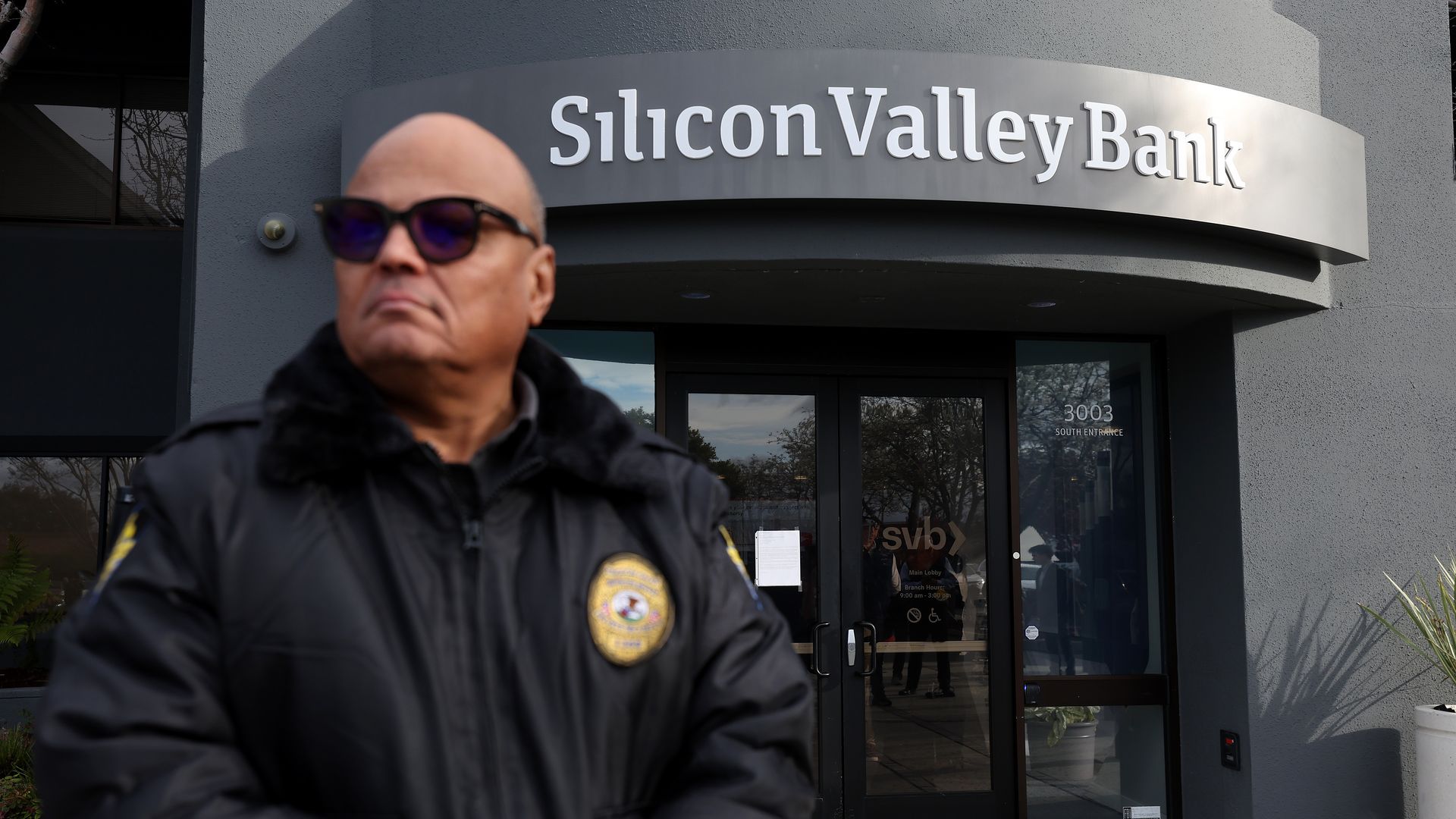
On the morning of March 10, 2023, the California Department of Financial Protection and Innovation shuttered the bank and appointed the Federal Deposit Insurance Corporation (FDIC) as receiver. This created an immediate crisis for thousands of startups that realized they might not be able to make payroll the following Monday.
To prevent a wider contagion that threatened to take down other regional banks—notably Signature Bank, which failed shortly after—the US Treasury, the Federal Reserve, and the FDIC issued a joint statement on March 12, 2023. They invoked a systemic risk exception, guaranteeing that all depositors at SVB (and Signature Bank) would be made whole, including those with uninsured funds.
The Federal Reserve also created the Bank Term Funding Program (BTFP). This facility allowed banks to borrow funds for up to one year by pledging US Treasuries and other qualifying assets as collateral, valued at "par" (original value) rather than current market value. This provided a crucial liquidity backstop for other regional banks facing similar unrealized bond losses.
The Aftermath: Acquisition and Industry Shifts (2023–2026)
By late March 2023, First Citizens Bank & Trust Company reached an agreement with the FDIC to purchase a substantial portion of SVB’s assets and loans. As we look at the landscape in 2026, the SVB entity operates as a division of First Citizens, maintaining its focus on the innovation economy but under a more conservative capital structure.
The collapse led to significant regulatory and behavioral changes in the US banking system:
| Feature | Pre-2023 Environment | Post-2023/2026 Environment |
|---|---|---|
| Deposit Diversification | Startups often kept 100% of cash in one bank. | Multi-bank strategies are standard for startups. |
| Regulatory Oversight | Banks under $250B had fewer stress tests. | Enhanced prudential standards for mid-sized banks. |
| Treasury Management | Focus on yield with long-term bonds. | Higher focus on liquidity and short-term T-bills. |
| Bank Run Speed | Physical and gradual. | Digital and near-instantaneous. |
| Uninsured Deposits | High concentrations seen as manageable. | High concentrations viewed as a major systemic risk. |
As of 2026, the Federal Reserve has adjusted Regulation YY and other capital requirements to ensure that banks with assets between $100 billion and $250 billion are subject to more rigorous "stress tests" that specifically account for rapid interest rate increases and concentrated depositor flight.
Lessons for Modern Treasury Management
The SVB story serves as a cautionary tale for both bank executives and corporate treasurers. The primary lesson is that liquidity is not the same as solvency. SVB was technically solvent (its assets exceeded its liabilities), but it did not have the liquidity to meet immediate demands.
For business owners and investors in 2026, the following best practices have become standard:
- The "Three-Bank" Rule: Many mid-to-large-sized startups now maintain relationships with at least one "Too Big to Fail" (G-SIB) bank, one regional bank for specialized services, and a third platform for automated sweeps into government money market funds.
- Sweep Accounts: Use of MaxSafe or similar FDIC-sweep products that distribute large deposits across dozens of different banks to maximize insurance coverage beyond the $250,000 limit.
- Duration Matching: Ensuring that the maturity of a company’s investments matches its expected cash burn, avoiding the "maturity mismatch" that crippled SVB.
The Federal Reserve's review of the failure admitted that supervisors failed to act with sufficient force once risks were identified. This has led to a more "assertive" supervisory culture in the mid-2020s.
FAQ
Why did Silicon Valley Bank fail so quickly?
The failure was driven by a combination of high interest rates, which devalued the bank's bond portfolio, and a concentrated client base in the tech sector. When SVB announced a loss on bond sales, social-media-driven panic led to a digital bank run where customers tried to withdraw $42 billion in 24 hours, exceeding the bank's available cash.
Were all depositors paid back?
Yes. Although most deposits at SVB were uninsured (above the $250,000 FDIC limit), the US government invoked a "systemic risk exception." This guaranteed that all depositors, regardless of account size, had full access to their funds to prevent a broader collapse of the startup ecosystem and the banking sector.
Who owns Silicon Valley Bank now?
In March 2023, First Citizens Bank acquired the majority of SVB's assets, deposits, and branches from the FDIC. As of 2026, it continues to operate as "Silicon Valley Bank, a division of First Citizens Bank," retaining much of its original branding and specialized focus on venture-backed companies.
What happened to SVB shareholders and bondholders?
Unlike the depositors, the shareholders and unsecured bondholders of Silicon Valley Bank's parent company (SVB Financial Group) were not protected by the government. They lost the majority of their investment as the parent company filed for bankruptcy protection following the bank's seizure.
How has banking regulation changed since the SVB story?
Federal regulators have implemented stricter liquidity requirements and more frequent stress tests for mid-sized banks (those with assets over $100 billion). There is also a greater emphasis on monitoring "unrealized losses" in bond portfolios and the risks associated with having a highly concentrated, non-diversified depositor base.
Practical Recommendation
If you are managing corporate or high-net-worth funds, the SVB story demonstrates that no bank is "too safe" to ignore diversification. You should utilize IntraFi Cash Service (formerly CDARS/ICS) or similar sweep programs to ensure your deposits are spread across multiple institutions, keeping as much of your capital as possible under the $250,000 FDIC insurance umbrella while maintaining a relationship with a Tier-1 systemic bank for operational security.
Image Gallery