Understanding the Vendor Management Risk Assessment Process: A Comprehensive Framework
The vendor management risk assessment process is a structured framework used by organizations to identify, evaluate, and mitigate operational, cybersecurity, regulatory, and financial risks associated with third-party vendors. By evalu...
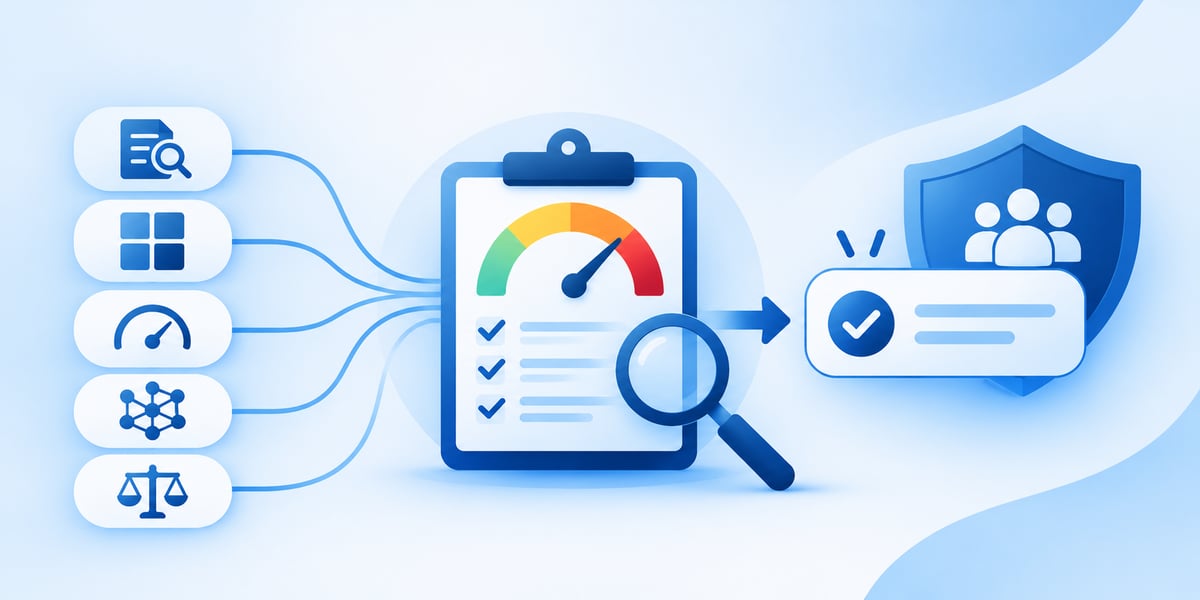
The vendor management risk assessment process is a structured framework used by organizations to identify, evaluate, and mitigate operational, cybersecurity, regulatory, and financial risks associated with third-party vendors. By evaluating vendor security controls and compliance postures before and during a contract, organizations preserve business continuity, protect sensitive data, and satisfy regulatory mandates.
Contents
What is Vendor Risk Assessment? Core Concepts and Scope
Third-party vendor management risk assessment—often categorized under Third-Party Risk Management (TPRM) or Vendor Risk Management (VRM)—is the systematic evaluation of external partners, suppliers, contractors, and cloud service providers. Modern enterprise infrastructure relies heavily on external software-as-a-service (SaaS) products, outsourced IT support, supply chain logistics, and specialized consultancy. While outsourcing enhances operational efficiency, it expands an organization's attack surface and regulatory exposure.
A robust assessment evaluates two distinct categories of risk:
- Inherent Risk: The natural level of risk present in a vendor relationship prior to evaluating the vendor’s internal controls. Inherent risk is determined by factors such as the volume and sensitivity of data shared, the level of system network access granted, and the criticality of the vendor’s service to business operations.
- Residual Risk: The remaining risk level after evaluating and verifying the effectiveness of the vendor’s existing security controls, policies, and contractual safeguards.
The evaluation spans multiple risk domains across the vendor lifecycle:
- Cybersecurity and Data Privacy Risk: Potential unauthorized access to Personally Identifiable Information (PII), Protected Health Information (PHI), or proprietary intellectual property due to weak vendor security controls.
- Operational Risk: Disruptions caused by vendor system downtime, financial instability, operational failure, or supply chain bottlenecks.
- Compliance and Regulatory Risk: Penalties arising from a vendor's failure to adhere to statutory standards such as the General Data Protection Regulation (GDPR), Health Insurance Portability and Accountability Act (HIPAA), or the EU Digital Operational Resilience Act (DORA).
- Reputational Risk: Brand damage caused by a vendor's ethical violations, security breaches, or public service failures.
Step-by-Step Breakdown of the Vendor Risk Assessment Lifecycle
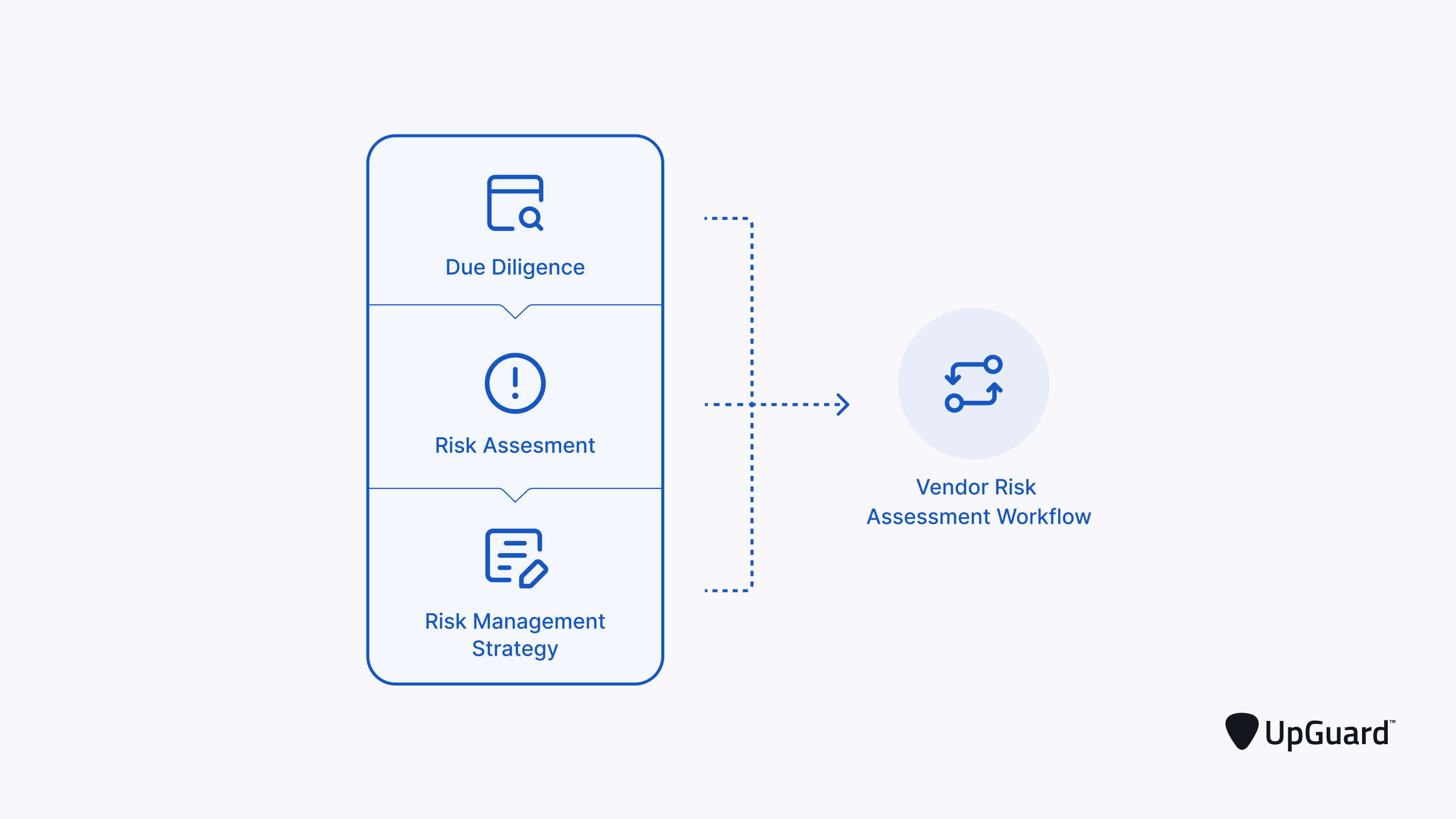
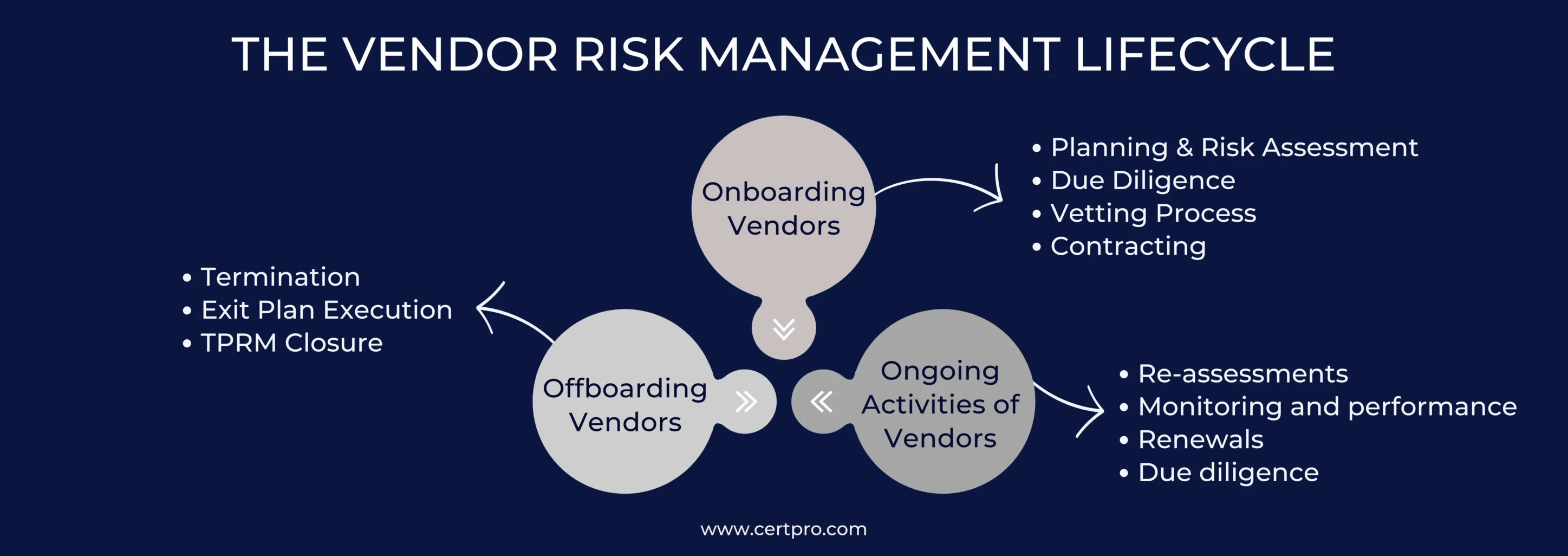
Executing a standardized assessment ensures consistent evaluation across diverse vendor portfolios. Organizations typically execute a five-stage lifecycle for every vendor engagement.
- Identification & Inherent Risk Tiering
- Information Gathering & Due Diligence
- Risk Evaluation & Gap Analysis
- Risk Remediation & Contractual Mitigation
- Continuous Monitoring & Periodic Re-Assessment
Step 1: Identification and Inherent Risk Tiering
Before distributing security questionnaires or requesting independent audits, organizations must categorize vendors by their inherent risk profile. Treating all vendors with equal scrutiny wastes enterprise resources and delays procurement timelines.
Organizations categorize vendors into risk tiers (e.g., Tier 1/Critical, Tier 2/High, Tier 3/Medium, Tier 4/Low) based on intake questions answered by the internal business owner:
- Does the vendor store, process, or transmit sensitive corporate data (PII, financial records, IP)?
- Does the vendor connect directly to the corporate network or cloud infrastructure?
- Would a complete outage of the vendor’s service stop core business operations within 24 hours?
- Is the vendor subject to specific regulatory oversight due to the functions performed?
A vendor providing core cloud hosting that holds customer databases is classified as Tier 1 (Critical), whereas a vendor supplying office breakroom refreshments is classified as Tier 4 (Low).
Step 2: Information Gathering and Due Diligence
Once the tier is established, the organization requests specific evidence from the vendor proportional to their risk level. Primary evaluation tools include:
- Standardized Security Questionnaires: Questionnaires such as the Standardized Information Gathering (SIG) questionnaire from Shared Assessments or the Cloud Security Alliance’s Consensus Assessments Initiative Questionnaire (CAIQ) collect details on administrative, technical, and physical security controls.
- Independent Audit Reports: Tier 1 and Tier 2 vendors must submit third-party audit documentation, such as Service Organization Control (SOC) 2 Type II reports or ISO/IEC 27001 certificates. SOC 2 Type II reports evaluate control operational effectiveness over an extended testing window (typically 6 to 12 months).
- Penetration Testing Summaries: Executive summaries of recent third-party penetration tests verify that the vendor actively identifies and remediates system vulnerabilities.
- Financial and Operational Documentation: Audited financial statements, business continuity plans (BCP), and disaster recovery (DR) test summaries confirm operational viability.
Step 3: Risk Evaluation and Gap Analysis
During risk evaluation, security analysts and compliance officers review the vendor's submitted evidence against organizational risk tolerance and regulatory standards. Analysts verify that:
- The scope of the provided SOC 2 report matches the specific product or service being purchased (rather than an unrelated product offered by the same vendor).
- Exceptions noted in audit reports have been remediated with documented corrective actions.
- Sub-processors (fourth-party vendors used by the primary vendor) are properly managed and subjected to equivalent risk controls.
Identified gaps—such as missing multi-factor authentication (MFA) for administrative portals or inadequate backup encryption standards—are logged as formal risk findings.
Step 4: Risk Remediation and Contractual Mitigation
Organizations address identified risk findings through one of four strategies:
- Remediation: Requiring the vendor to correct security deficiencies prior to contract execution or within a strictly defined post-onboarding remediation period.
- Mitigation via Contract: Incorporating specific clauses into the Master Services Agreement (MSA) or Service Level Agreement (SLA). These clauses mandate minimum encryption standards, annual SOC report delivery, prompt breach notification timelines (often 24 to 72 hours), and audit rights.
- Risk Acceptance: Formally accepting a low- or medium-severity risk when remediation is impractical, provided the business owner and Chief Information Security Officer (CISO) sign off on the decision.
- Avoidance: Terminating the procurement process if a high-risk vendor cannot meet essential security standards or provide credible assurance evidence.
Step 5: Continuous Monitoring and Periodic Re-Assessment
Risk evaluation does not end when a contract is signed. Threat landscapes change, software vulnerabilities emerge, and vendor control environments deteriorate over time.
Continuous monitoring incorporates non-intrusive external threat intelligence, continuous attack surface assessments, and automated data monitoring to track real-time security postures. Additionally, organizations enforce periodic re-assessments based on vendor tiering:
- Tier 1 (Critical): Comprehensive annual re-assessment, including updated SOC 2 reports and continuous automated threat tracking.
- Tier 2 (High): Re-assessment every 18 to 24 months or upon major scope updates.
- Tier 3/4 (Medium/Low): Lightweight annual self-declarations or event-driven reviews triggered by material service changes.
Technical Standards and Regulatory Frameworks
Risk assessment frameworks should align with established industry standards to ensure consistency and legal defensibility.
- NIST SP 800-161 Revision 1: Published by the National Institute of Standards and Technology, this publication provides comprehensive guidance on Cybersecurity Supply Chain Risk Management (C-SCRM). It integrates supply chain risk management into enterprise risk governance.
- ISO/IEC 27036: International standards specifically addressing information security for supplier relationships, including cloud services and system acquisition.
- EU Digital Operational Resilience Act (DORA): Establishes strict rules for financial institutions in the European Union regarding third-party ICT (Information and Communications Technology) risk management, requiring comprehensive oversight of critical third-party providers.
- SEC Cybersecurity Disclosure Rules: Enforces requirements for publicly traded companies to maintain effective oversight over material third-party systems and report major incidents linked to vendor infrastructure.
Comparative Assessment Methodologies
Organizations select assessment methods based on the depth of validation required and available internal resources. The table below outlines common vendor evaluation methodologies.
| Assessment Methodology | Scope & Data Source | Level of Verification | Operational Resource Effort | Primary Use Case |
|---|---|---|---|---|
| Standardized Questionnaires (SIG / CAIQ) | Vendor self-reported security controls across administrative, physical, and technical domains. | Low to Moderate (Self-declaration; requires supporting evidence). | Moderate | Baseline assessment for low-to-medium risk vendors; scoping for high-risk vendors. |
| Independent Audit Reports (SOC 2 Type II, ISO 27001) | Third-party CPA or certified auditor evaluation of control design and operational effectiveness over time. | High (Independent validation by accredited external auditors). | Low (Reviewed internally after vendor produces report). | Requirement for Tier 1 and Tier 2 vendors holding sensitive data or critical cloud workloads. |
| Security Rating Services (Continuous Monitoring) | Automated external scanning of public IP ranges, domain configurations, breach repositories, and patch posture. | Moderate (Evaluates external footprint; cannot inspect internal controls). | Low (Automated dashboard reporting). | Real-time threat detection between formal annual assessment cycles across all vendor tiers. |
| On-Site or Virtual Deep-Dive Audits | Direct inspection of vendor physical data centers, facility access controls, and operational processes by internal security teams. | Very High (Direct observation of controls and interview of key personnel). | High | Extremely high-criticality vendors, customized hardware suppliers, or highly regulated facilities. |
Common Pitfalls in Vendor Risk Management
Even mature security programs can encounter systemic issues during vendor risk reviews. Avoiding these common mistakes improves both protection and operational efficiency.
1. Using Generic "One-Size-Fits-All" Questionnaires
Sending a 300-question SIG Core questionnaire to every vendor, regardless of risk level, leads to vendor fatigue, delayed procurement workflows, and inaccurate responses. Questionnaires should be dynamically scoped according to the vendor's assigned risk tier and functional scope.
2. Treating Risk Assessments as Static Checkbox Exercises
A SOC 2 report or security questionnaire reflects controls at a specific point in time. Treating assessment as a one-time onboarding task leaves organizations exposed to operational degradation, unauthorized sub-processor additions, or unpatched vulnerabilities introduced long after contract execution.
3. Ignoring Fourth-Party (Sub-Processor) Risk
A vendor may maintain strong security controls, but rely on vulnerable subcontractors for hosting, customer support, or data processing. Vendor evaluations must inspect how primary suppliers manage their own supply chain risks.
4. Failing to Align Security Risk with Legal Provisions
Identifying security gaps during assessment is useless if the procurement team signs a standard vendor contract lacking risk-mitigation clauses. Security findings must feed directly into contract negotiations to secure clear SLA commitments, breach notification windows, and audit permissions.
Key Implementation Actions for Organizations
To establish or refine a vendor management risk assessment process, risk leaders should execute the following actions:
- Catalog All Active Vendors: Build a central centralized inventory of every external software, service, and infrastructure provider currently supporting organizational operations.
- Establish an Inherent Risk Tiering Matrix: Define explicit thresholds (data sensitivity, network connectivity, business impact) to bucket vendors into consistent tiers.
- Automate Due Diligence Workflows: Implement Third-Party Risk Management software to distribute questionnaires, ingest audit reports, and schedule recurring reassessments.
- Integrate Risk Management with Legal and Procurement: Standardize security clauses in Master Service Agreements to enforce reporting requirements, audit rights, and remediation deadlines.
Frequently Asked Questions
How long does a typical vendor risk assessment take to complete?
A standard assessment for a low-to-medium-risk vendor using self-assessment questionnaires typically takes 1 to 2 weeks. For high-risk or critical Tier 1 vendors requiring SOC 2 reviews, penetration test validation, legal review, and corrective action plan negotiations, the process usually takes 3 to 6 weeks depending on vendor responsiveness.
What is the difference between inherent risk and residual risk in vendor management?
Inherent risk is the raw risk present in a vendor relationship based on service scope and data exposure, assuming no security controls exist. Residual risk is the remaining risk after validating the strength of the vendor’s internal security controls, audit certifications, and contractual safeguards.
Can an organization rely solely on a vendor's ISO 27001 certification or SOC 2 report?
While ISO 27001 certificates and SOC 2 Type II reports provide high-quality independent assurance, organizations should not rely on them blindly. The assessment team must review the report's exact scope, examine any noted auditor exceptions, evaluate Complementary User Entity Controls (CUECs) that the customer is required to implement, and verify that sub-processors are adequately governed.
What happens if a critical vendor fails a risk assessment?
If a critical vendor fails an assessment, the organization can require the vendor to complete a binding Corrective Action Plan (CAP) before contract signature, implement compensating controls internally to bridge the security gap, or formally accept the risk through documented CISO sign-off. If the security risk exceeds acceptable thresholds and cannot be mitigated, the procurement request should be rejected.
How does continuous monitoring differ from periodic reassessment?
Periodic reassessment is a comprehensive point-in-time review (typically conducted annually) using questionnaires, audit reports, and contract reviews. Continuous monitoring uses automated tools to evaluate external security postures, patch levels, domain health, and public breach notifications continuously between annual review cycles.
Image Gallery