How Creative Optimization Shapes Ad Performance
Creative optimization significantly impacts ad performance by aligning visual and textual elements with user intent and platform algorithms. In an era where automated bidding is standard, the creative asset serves as the primary lever...
Creative optimization significantly impacts ad performance by aligning visual and textual elements with user intent and platform algorithms. In an era where automated bidding is standard, the creative asset serves as the primary lever for differentiation, directly influencing click-through rates (CTR), conversion volume, and overall return on ad spend (ROAS) through iterative refinement.
Contents
The Evolution of Creative Optimization in 2026
As we navigate the advertising landscape of 2026, the methodology behind high-performing ads has shifted fundamentally. Traditionally, digital marketers spent the bulk of their time on manual audience targeting—selecting specific interests, behaviors, and demographics to find the "perfect" customer. However, with the total deprecation of third-party cookies and the maturation of privacy frameworks like Apple’s AppTrackingTransparency (ATT), granular manual targeting has largely been replaced by algorithm-driven "broad" targeting.
In this environment, creative optimization has become the primary driver of performance. Platforms like Meta, Google, and TikTok now use the creative itself to find the audience. When an ad is deployed, the platform’s AI analyzes the visual content and copy, serves it to a small test group, and then uses the engagement data to determine which larger segments will respond best. Therefore, "the creative is the targeting." If the creative is not optimized for the specific desires of a sub-audience, the algorithm cannot find the right users, and the campaign fails regardless of the budget.
Core Components of the Creative Optimization Framework
To understand how optimization shapes performance, one must break down an advertisement into its functional variables. Each variable acts as a lever that can be pulled to influence specific user behaviors.
Visual Architecture and First Impressions
In the high-speed scrolling environment of 2026, the "hook"—the first 1.5 to 3 seconds of a video or the primary focal point of a static image—is the most critical variable for ad performance. Optimization here involves testing different visual triggers, such as:
- User-Generated Content (UGC) vs. High Production: Testing whether authentic, low-fidelity content outperforms polished, cinematic visuals.
- Problem-First vs. Solution-First: Starting an ad by showing a relatable pain point versus showing the end result of using the product.
- Color Theory and Contrast: Using specific palettes that stand out against the platform's native interface (e.g., using bright colors on the predominantly white/dark mode interfaces of social apps).
The Narrative and Copywriting Engine
Once a user’s attention is captured, the copy must convert that attention into interest. Optimization of copy involves shifting the focus from features to benefits. Advanced performance marketers in 2026 utilize Generative AI to produce hundreds of variations of headlines and body text tailored to different psychological profiles—some focused on "fear of missing out" (FOMO), others on "utility and logic," and some on "social proof."
The Call to Action (CTA)
Small changes in CTA phrasing can lead to statistically significant swings in conversion rates. Optimization involves moving beyond the generic "Shop Now" to more descriptive, low-friction prompts like "See Results," "Check Availability," or "Start Your Trial." The goal is to reduce the perceived effort required by the user to take the next step.
Methodologies for Continuous Optimization
Optimization is not a one-time event but a continuous loop of testing and learning. Several methodologies are used to refine creative assets.
Dynamic Creative Optimization (DCO)
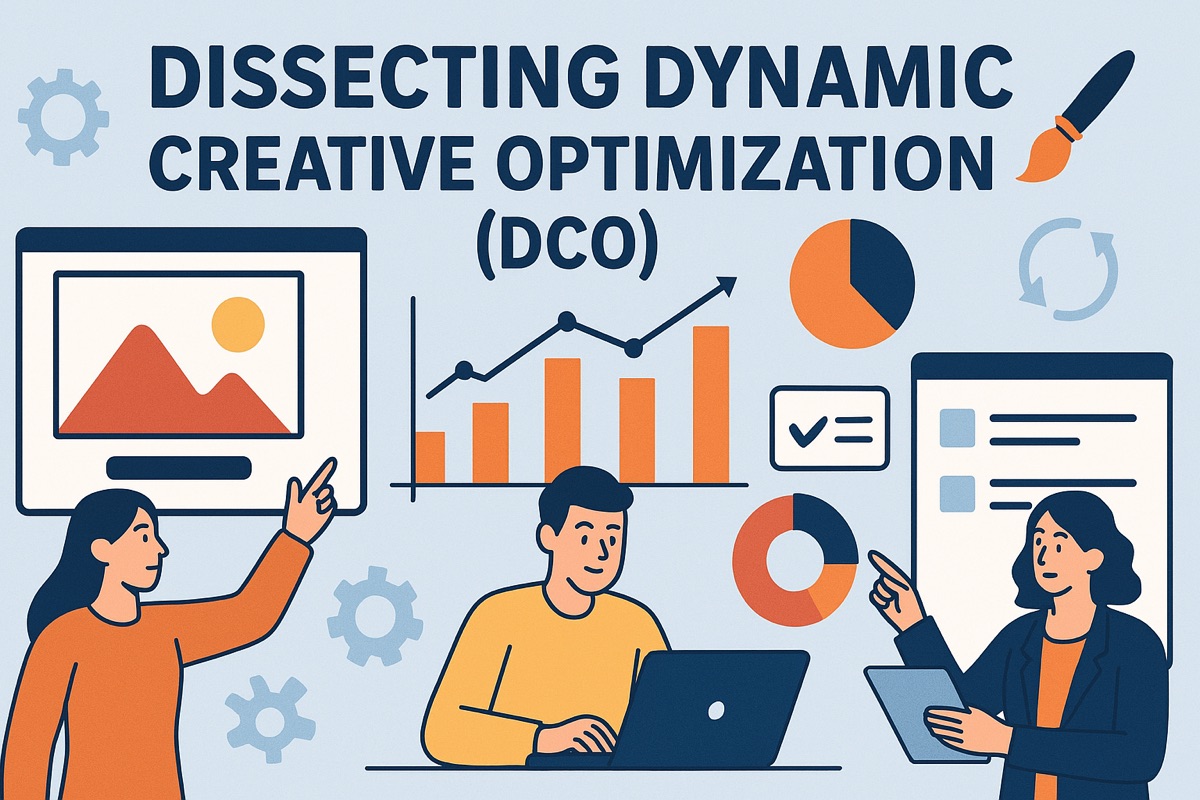
Dynamic Creative Optimization (DCO) is a technology that uses real-time data to assemble personalized ads for each viewer. Instead of creating ten finished ads, a marketer provides a series of components (images, headlines, descriptions, CTAs), and the DCO engine automatically mixes and matches them based on the viewer's location, weather, device, or past browsing behavior. In 2026, DCO is often integrated directly into the ad platforms’ native tools (such as Google’s Responsive Search Ads or Meta’s Advantage+ suites).
Systematic A/B and Multivariate Testing
While DCO is automated, manual A/B testing remains vital for discovering "big rock" changes—fundamental shifts in creative direction.
- A/B Testing: Comparing two versions of an ad that differ by only one variable (e.g., the headline).
- Multivariate Testing: Testing multiple variables simultaneously to see how they interact. This requires higher traffic volumes but provides a deeper understanding of the "creative recipe" that works for a specific brand.
Quantifying Success: Metrics That Move the Needle
To optimize effectively, marketers must look beyond the standard ROAS (Return on Ad Spend) and analyze "leading indicators" that reveal why an ad is performing or failing.
| Metric | Definition | Why It Matters for Optimization |
|---|---|---|
| Hook Rate | (3-Second Video Views / Impressions) | Measures the effectiveness of the first few seconds of an ad. |
| Hold Rate | (ThruPlays or 15-Sec Views / Impressions) | Indicates if the content is engaging enough to keep the user’s attention. |
| CTR (Click-Through Rate) | (Clicks / Impressions) | Validates the alignment between the creative message and the audience's intent. |
| CVR (Conversion Rate) | (Conversions / Clicks) | High CTR with low CVR suggests a "clickbait" ad or a landing page disconnect. |
| CPA (Cost Per Acquisition) | (Total Spend / Conversions) | The ultimate measure of whether the optimization is driving profitable growth. |
The Impact of Artificial Intelligence on Creative in 2026
By 2026, the integration of AI into the creative workflow has moved from "experimental" to "essential." Modern optimization tools now offer Predictive Creative Scoring. Before an ad even goes live, AI models trained on billions of historic impressions can predict which creative variations are most likely to achieve a high CTR or low CPA.
Furthermore, AI-driven Sentiment Analysis allows brands to monitor the comments and reactions to their ads in real-time. If an ad starts receiving negative sentiment, the optimization engine can automatically pull that creative and replace it with a variation that has historically resonated better, protecting the brand's reputation and saving ad spend.
Common Pitfalls in Creative Optimization
Even with advanced tools, many organizations fail to see performance gains due to specific tactical errors:
- Over-Optimization on Small Samples: Making drastic changes based on data from only a few hundred impressions. Statistical significance is required to ensure that the "winner" is actually better, not just lucky.
- Ignoring Creative Fatigue: Even the best-optimized ad will eventually see a decline in performance as the target audience sees it too many times. Optimization must include a schedule for "creative refreshing" to combat rising costs.
- Lack of Brand Consistency: In the pursuit of high CTR, brands sometimes create "performance-first" ads that look nothing like their actual product or website. This leads to high bounce rates and long-term brand erosion.
- Testing Too Many Variables: If you change the music, the headline, and the color scheme all at once in a single A/B test, you won't know which change actually caused the performance shift.
Practical Steps to Implement a Creative Optimization Strategy
For companies looking to improve their ad performance through creative, the following steps are recommended:
- Establish a Baseline: Analyze your current ads and identify your "control" assets—the ones that are currently performing best.
- Develop a Testing Roadmap: Commit to testing one specific variable (e.g., the hook) every week.
- Use Modular Production: When filming or designing, create "modular" assets. Record five different openings and three different endings for a single video. This makes it easier to swap components during the optimization phase.
- Monitor the Hook-to-Conversion Funnel: Use a dashboard to see exactly where users drop off. If the Hook Rate is high but the Hold Rate is low, your intro is great but your middle content is boring. If both are high but CVR is low, your offer or landing page needs work.
The Interactive Advertising Bureau (IAB) provides extensive documentation on creative standards and emerging ad formats that can assist in aligning your technical specifications with industry benchmarks for 2026.
Frequently Asked Questions
How often should I rotate my creative assets to avoid fatigue?
In 2026, rotation frequency depends on your "Frequency" metric (the average number of times a user sees your ad). For high-budget campaigns reaching a narrow audience, you may need to introduce new creative weekly. For broader audiences, monthly refreshes may suffice. High-performing ads should be kept as "controls" while new iterations are tested against them.
Can AI completely replace human designers in creative optimization?
No. While AI is superior at iterating, scaling, and predicting performance based on historical data, it lacks the ability to create "cultural resonance" or true innovation. The most successful brands in 2026 use a hybrid model: humans define the brand strategy and emotional "big idea," while AI handles the testing, variation, and technical optimization.
Does creative optimization matter for B2B advertising?
Absolutely. While B2B sales cycles are longer, the psychological triggers for attention are the same. B2B creative optimization often focuses on "educational hooks" and "trust signals." Testing different whitepaper titles or webinar themes can significantly lower the Cost Per Lead (CPL) for enterprise software and services.
What is the most important metric for video ad optimization?
While ROAS is the ultimate goal, the Hook Rate (3-second view rate) is often the most important diagnostic metric for video. If you cannot capture attention in the first three seconds, the rest of your video—no matter how persuasive—will never be seen by the majority of your audience.
How do I optimize creative for different platforms like TikTok vs. LinkedIn?
Optimization must be platform-specific. Content that looks like a "native" post typically performs better. On TikTok, this means using trending audio and vertical, fast-paced editing. On LinkedIn, it means professional-grade visuals, clear value propositions, and a more consultative tone. Using the same creative across all platforms without optimization usually leads to poor performance on at least one of them.
Recommendation for Next Actions
To start shaping your ad performance, conduct a Creative Audit of your last 90 days of spend. Identify the top 10% of your ads by ROAS and analyze them for common patterns in their hooks, color schemes, and CTAs. Use these findings to create three new "challenger" ads that iterate on those winning elements. Implement a "70/20/10" budget split: 70% of the budget on proven "winning" creative, 20% on iterations of those winners, and 10% on completely new, experimental concepts.
Image Gallery