Understanding 4.6L Engine Displacement in Cubic Inches
A 4.6-liter engine typically has a displacement of 281 cubic inches. This figure is reached by using the standard conversion factor of 61.0237 cubic inches per liter. While the exact mathematical calculation results in approximately 28...
A 4.6-liter engine typically has a displacement of 281 cubic inches. This figure is reached by using the standard conversion factor of 61.0237 cubic inches per liter. While the exact mathematical calculation results in approximately 280.7 cubic inches, the automotive industry and performance enthusiasts universally round this figure to 281 CID (Cubic Inch Displacement).
Contents
The transition from the imperial measurement system to the metric system in the automotive industry during the late 20th century created a dual-language for engine sizes. For many car enthusiasts, particularly those working with American muscle cars or trucks, knowing the cubic inch equivalent of a liter-based measurement is essential for identifying parts, understanding performance potential, and respecting the lineage of specific engine families. In 2026, as we look back on decades of internal combustion history, the 4.6L stands as one of the most significant "bridge" engines in this transition.
The Mathematics of Engine Displacement Conversion
To understand how we arrive at 281 cubic inches, one must look at the precise relationship between metric and imperial volume measurements. Displacement represents the total volume of all the cylinders in an engine as the pistons move from Bottom Dead Center (BDC) to Top Dead Center (TDC).
The Conversion Factor
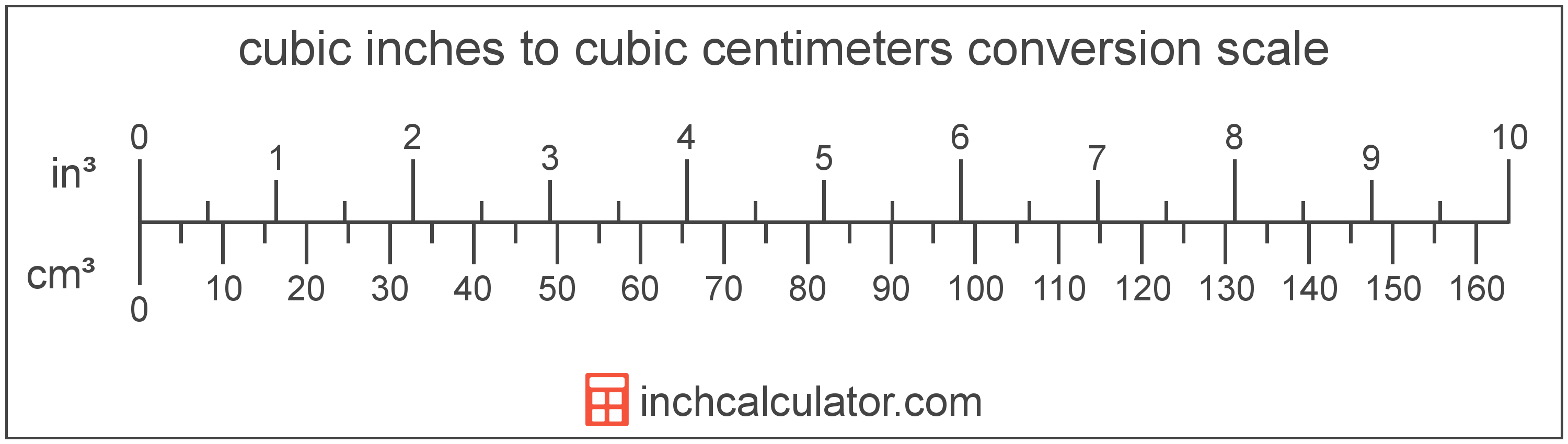
The fundamental constant used in these calculations is that 1 liter is equal to 1,000 cubic centimeters (cc), and 1 cubic inch is equal to approximately 16.387 cubic centimeters. By dividing 1,000 by 16.387, we get the conversion factor of 61.0237.
When you apply this to a 4.6L engine:
- 4.6 liters × 61.0237 = 280.709 cubic inches.
Why Do We Say 281 Instead of 280?
In automotive branding and technical shorthand, manufacturers often round to the nearest whole number. While "280" is technically closer to the decimal result, the Ford Motor Company—the most prominent manufacturer of 4.6L engines—standardized the "281" moniker in its technical literature and performance catalogs. This distinguishes it clearly from other engine sizes and aligns with the tradition of using odd numbers for certain engine families.
The Legacy of the Ford 4.6L Modular V8
When most people ask about a 4.6L engine, they are referring to the Ford Modular V8. Introduced in 1991 in the Lincoln Town Car, this engine eventually replaced the venerable 302 cubic inch (5.0L) Windsor V8. It became the heart of the Ford Mustang, the F-150, and the ubiquitous Crown Victoria.
Architecture and Design
The 4.6L Modular engine was a departure from the "pushrod" overhead valve (OHV) designs of the past. Instead, it utilized Overhead Cam (OHC) architecture. This change allowed for better airflow and higher RPM capabilities, though it resulted in a physically larger engine block despite having a smaller displacement than the 5.0L it replaced.
- 2-Valve (SOHC): The most common variant, found in millions of trucks and passenger sedans. It was known for extreme reliability and "million-mile" potential in taxi and police service.
- 3-Valve (SOHC): Introduced in the mid-2000s, this version added variable camshaft timing (VCT) and a third valve per cylinder to improve breathing and efficiency.
- 4-Valve (DOHC): The performance pinnacle of the 4.6L family, used in the Mustang SVT Cobra and the Lincoln Mark VIII. These engines were capable of producing significant horsepower, especially when paired with forced induction.
Bore and Stroke Specifications
Displacement is also calculated using the physical dimensions of the cylinders: the bore (diameter) and the stroke (distance traveled by the piston). For the standard Ford 4.6L V8, the dimensions are:
- Bore: 90.2 mm (3.552 inches)
- Stroke: 90.0 mm (3.543 inches)
Using the formula for the volume of a cylinder ($V = \pi \times r^2 \times stroke$) multiplied by the number of cylinders (8), these dimensions confirm the 280.7 cubic inch calculation.
Other Notable 4.6L Engines
While Ford is the most famous user of this displacement, other manufacturers have produced 4.6L powerplants, each with slight variations in exact cubic capacity based on their specific bore and stroke.
The Cadillac Northstar (4.6L)
General Motors produced the Northstar V8, which was the high-tech flagship for Cadillac for many years. Like the Ford, it was marketed as a 4.6L engine. Its specific displacement was often cited as 4,565cc, which converts to approximately 278.6 cubic inches. This highlights a common industry practice: "4.6L" is often a marketing label for any engine between 4,550cc and 4,649cc.
The Toyota UR Engine (4.6L)
The Toyota 1UR-FE is a 4.6L V8 used in the Tundra, Sequoia, and various Lexus models (such as the LS 460). With a bore of 94 mm and a stroke of 83 mm, its actual displacement is 4,608cc. This converts to 281.2 cubic inches, making it slightly larger than the Ford 4.6L but still falling under the same liter-class designation.
Comparing the 4.6L to Other Common Displacements
To provide context for the 4.6L's size, it is helpful to compare it to other engines commonly found in the same vehicle classes as of 2026.
| Engine Liter Size | Cubic Inch Displacement (CID) | Common Application |
|---|---|---|
| 3.5L | 213 CID | Common V6 (Ford EcoBoost, Toyota) |
| 4.0L | 244 CID | Older Jeep and Ford V6s |
| 4.6L | 281 CID | Ford Modular V8, Cadillac Northstar |
| 5.0L | 302 CID | Ford "Coyote" V8, Classic 302 |
| 5.4L | 330 CID | Ford Modular V8 (Stroke variant) |
| 5.7L | 345/350 CID | HEMI V8 (345), Chevy Small Block (350) |
| 6.2L | 376 CID | Modern GM LS/LT V8, Ford Super Duty |
Technical Considerations: Why Displacement Matters
Engine displacement, whether measured in liters or cubic inches, is a primary indicator of an engine's potential to do work. In 2026, even as electrification increases, understanding these metrics remains vital for internal combustion maintenance and performance tuning.
Torque and Horsepower
Generally, a larger displacement allows an engine to pull in more air and fuel per cycle, which typically results in higher torque. The 4.6L was often criticized in its early years for having less low-end torque than the 5.0L (302 CID) it replaced. However, because the 4.6L could rev higher due to its OHC design, it often produced more peak horsepower.
Tuning and Overboring
For enthusiasts looking to increase the "cubic inches" of their 4.6L, a common practice is "boring out" the cylinders. By increasing the bore diameter by .020 or .030 inches, a builder can slightly increase the displacement. A common "big bore" 4.6L can reach approximately 290 to 300 cubic inches without changing the crankshaft (stroke).
Common Misconceptions About 4.6L Engines
Several myths persist regarding the size and power of the 4.6L/281 CID platform.
- "It's just a 289." Some mistakenly associate the 4.6L with the classic Ford 289 V8 from the 1960s. While the cubic inch numbers are close (281 vs. 289), the engines share no parts and use entirely different valvetrain technologies.
- "Liters are more accurate." Metric measurements are precise, but labeling an engine as a "4.6" is often a rounding of the actual cubic centimeter (cc) count. Depending on the manufacturer, two different "4.6L" engines might vary by several cubic inches.
- "Smaller displacement means better fuel economy." While generally true, the efficiency of a 4.6L engine depends more on the fuel injection system, aerodynamics, and transmission gearing than the displacement alone. Many 5.0L modern engines in 2026 achieve better fuel economy than the older 4.6L units due to technological advancements like direct injection and cylinder deactivation.
Frequently Asked Questions
Is a 4.6L engine a small-block or a big-block?
The 4.6L is considered a small-block engine. In the modern era, "big-block" usually refers to engines with displacements exceeding 400 cubic inches (approx 6.5L+). Despite its physically large external dimensions due to the overhead cams, its internal capacity (281 CID) firmly places it in the small-block category.
How many cubic centimeters are in a 4.6L engine?
There are exactly 1,000 cubic centimeters in one liter. Therefore, a 4.6L engine has 4,600cc. However, the actual measured displacement of the Ford 4.6L is closer to 4,601cc or 4,605cc depending on the specific gasket thickness and manufacturing tolerances.
Can I swap a 4.6L for a 5.0L?
In the context of Ford vehicles, swapping a 4.6L (281 CID) for a 5.0L (302 CID) Coyote engine is a popular performance upgrade. While they both occupy a similar space in the engine bay, the wiring, computer systems, and motor mounts are different. It is a common "modern-to-modern" swap.
Why did manufacturers switch from cubic inches to liters?
The switch was largely driven by global standardization. As car manufacturers began selling the same engines in the United States, Europe, and Asia, using the metric system (liters) became the most efficient way to communicate engine size across international markets. Most US manufacturers completed this transition by the early 1990s.
Practical Next Actions
If you are currently working on or researching a 4.6L engine, your next step should be to identify the specific manufacturer and variant (e.g., Ford 2V vs. 3V). Knowing that your engine is a 281 cubic inch unit allows you to accurately source performance parts like pistons, rings, and gaskets, which are often listed by their imperial measurements in performance catalogs. For those calculating compression ratios or displacement for racing class compliance, always use the precise bore and stroke measurements rather than the rounded 4.6L or 281 CID figures to ensure accuracy.
Image Gallery