How to Choose the Right Business Valuation Advisor
Selecting the right business valuation advisor requires evaluating their professional credentials, relevant industry experience, adherence to recognized appraisal standards, and independence. Business owners and corporate leaders must...
Selecting the right business valuation advisor requires evaluating their professional credentials, relevant industry experience, adherence to recognized appraisal standards, and independence. Business owners and corporate leaders must match the advisor's specific expertise—such as IRS tax compliance, M&A advisory, or litigation support—to the purpose of the valuation to ensure regulatory acceptance and defensibility.
Contents
Why the Purpose of Your Valuation Dictates Your Choice
A business valuation is not a standardized product. The valuation methodology, level of detail, and required qualifications of the appraiser depend entirely on why the valuation is being performed. Hiring an advisor who excels in seller-side transaction advisory may yield poor results if the valuation is intended to survive an Internal Revenue Service (IRS) estate tax audit or a high-stakes shareholder dispute.
Before beginning the selection process, clearly define the intended end-user and legal context of the appraisal report. Common engagement purposes include:
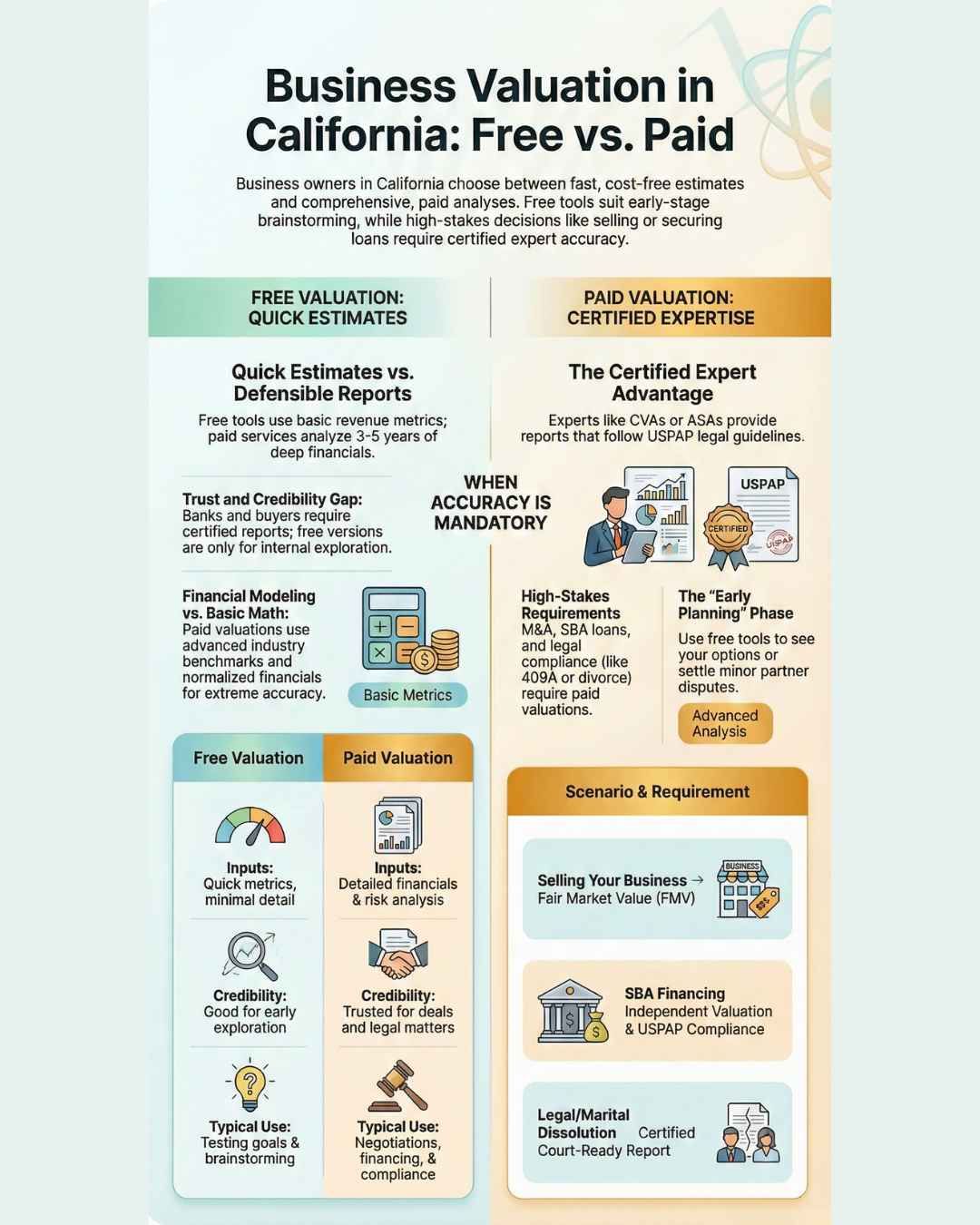
- Tax Compliance and Wealth Planning: Gift and estate tax filings, charitable donations, stock option pricing under Internal Revenue Code (IRC) Section 409A, and corporate conversions (such as C-corporation to S-corporation transitions) require compliance with strict regulatory definitions of Fair Market Value. The IRS enforces stringent rules regarding "qualified appraisers" and "qualified appraisals" under IRC Section 170 and related treasury regulations.
- Mergers, Acquisitions, and Corporate Restructuring: When buying, selling, or merging a business, management needs a clear understanding of investment value, fair market value, or synergistic value. Transactional valuations focus heavily on normalized earnings, synergistic cost savings, working capital adjustments, and prospective market conditions.
- Financial Reporting (GAAP / IFRS): Public companies and audit-subject private firms require specialized valuations for purchase price allocation (ASC 805 / IFRS 3), goodwill impairment testing (ASC 350 / IAS 36), and equity-based compensation (ASC 718). These valuations demand deep knowledge of complex accounting standards and strict audit defense experience.
- Litigation and Dispute Resolution: Dissolution of marriages, shareholder oppression suits, breach of contract claims, and economic damage calculations require an advisor capable of serving as a credible expert witness. The valuation report must withstand rigorous cross-examination and meet judicial evidentiary standards (such as Daubert or Frye standards in U.S. courts).
- Employee Stock Ownership Plans (ESOPs): Establishing or maintaining an ESOP involves regulatory oversight from the U.S. Department of Labor (DOL) under ERISA guidelines. ESOP appraisers must maintain absolute independence and follow specialized fiduciary valuation standards.
Essential Business Valuation Credentials
Professional credentials indicate that an advisor has passed rigorous technical examinations, submitted sample work for peer review, completed mandatory experience hours, and committed to continuing education and ethical rules. While credentials do not guarantee quality, working with an uncredentialed advisor significantly increases the risk of regulatory rejection or court exclusion.
The primary credentialing organizations in the business valuation field include:
1. Accredited Senior Appraiser (ASA) – American Society of Appraisers
The ASA designation in Business Valuation is widely recognized across corporate finance, tax authorities, and judicial systems. Candidates must demonstrate at least five years of full-time valuation experience, complete advanced coursework, pass comprehensive discipline-specific exams, and submit full narrative valuation reports for thorough peer review.
2. Accredited in Business Valuation (ABV) – AICPA
Issued by the American Institute of Certified Public Accountants (AICPA), the ABV credential is restricted to licensed CPAs and qualified financial professionals. It combines rigorous financial accounting mastery with specialized valuation training. ABV holders are particularly well-suited for engagements that intersect heavily with corporate tax filings, audited financial statements, and financial reporting compliance.
3. Certified Valuation Analyst (CVA) – NACVA
Granted by the National Association of Certified Valuators and Analysts (NACVA), the CVA credential requires candidates to hold a business-related degree or CPA license, complete specialized education, pass a comprehensive examination, and submit a detailed valuation case study. NACVA credentials are broad-based and widely held by practitioners serving middle-market and small business clients.
4. Chartered Business Valuator (CBV) – CBV Institute
For engagements operating in or involving Canadian jurisdictions, the CBV designation issued by the CBV Institute is the premier credential. It requires completion of a rigorous post-graduate program, thousands of practical work hours, and adherence to strict professional practice standards.
Comparing Valuation Credentials and Scope
The table below outlines how common designations align with typical engagement requirements and financial disciplines:
| Designation | Issuing Organization | Prerequisite / Core Background | Ideal Engagement Scenarios |
|---|---|---|---|
| ASA | American Society of Appraisers | 5+ years full-time valuation experience; rigorous peer report review | High-stakes litigation, large corporate M&A, complex tax disputes, ESOPs |
| ABV | AICPA | Certified Public Accountant (CPA) license or equivalent business degree | IRS tax compliance, estate/gift planning, financial reporting (GAAP/ASC), corporate tax planning |
| CVA | NACVA | Business degree or CPA; completion of intensive case study | Main-street to lower-middle market business sales, buy-sell agreements, matrimonial disputes |
| CBV | CBV Institute | Post-graduate educational program & mandatory practical hours | Canadian cross-border transactions, Canadian tax compliance, international disputes |
Core Criteria for Evaluating Potential Advisors
Evaluating a shortlist of business valuation professionals requires looking beyond credentials to assess their methodology, objectivity, and engagement terms.
1. Compliance with Recognized Valuation Standards
Qualified valuation experts perform work in accordance with standardized professional frameworks. Ask candidates which of the following standards govern their work:
- USPAP (Uniform Standards of Professional Appraisal Practice): Maintained by The Appraisal Foundation, USPAP sets standard ethical and performance guidelines for appraisers in the United States.
- VS Section 100 / SSVS No. 1: The AICPA’s Statement on Standards for Valuation Services governs CPAs providing valuation services and establishes clear guidelines for calculation engagements versus full valuation engagements.
- International Valuation Standards (IVS): Published by the International Valuation Standards Council (IVSC), these guidelines are essential for cross-border transactions and multinational corporate reporting.
Failure to adhere to these standards can render a valuation report inadmissible in court or vulnerable to rejection by tax authorities.
2. Relevant Industry and Sector Experience
Every industry features unique economic drivers, risk profiles, regulatory burdens, and accounting nuances. An appraiser specializing in commercial real estate holding companies may lack the framework necessary to value a SaaS (Software-as-a-Service) business with recurring revenue, high customer acquisition costs, and capitalized software development expenses.
During initial discussions, ask potential advisors:
- How many valuations have you performed in my specific industry over the last three years?
- What unique valuation adjustments (e.g., inventory normalization, regulatory compliance costs, customer concentration risk) apply to my industry?
- How do you source industry-specific transaction multiples and discount rate data?
3. Independence and Objectivity
An appraisal must remain free from bias. Regulators, judges, and adverse parties will scrutinize any financial or personal relationship between the appraiser, the client, and the target company.
Ensure that the advisor operates independently. Crucially, credible valuation advisors never charge contingency fees based on a percentage of the concluded business value or transaction deal size. The American Society of Appraisers and the AICPA explicitly prohibit contingent fee arrangements for valuation engagements, as they create an immediate conflict of interest.
4. Conclusion of Value vs. Calculation of Value
It is critical to understand the deliverable scope offered by an advisor before signing an engagement letter:
- Conclusion of Value (Full Appraisal Report): The appraiser considers all relevant valuation approaches (Income, Market, and Asset-based), applies the most appropriate methods, synthesizes the results independently, and arrives at an unambiguous opinion of value. This comprehensive document is required for tax filings, litigation, and formal regulatory review.
- Calculation of Value: A restricted engagement where the advisor and client agree in advance on specific valuation approaches and limited procedures. While more cost-effective, a calculation engagement does not result in a formal opinion of value and is generally unsuitable for court proceedings, IRS submission, or formal audit defense.
Step-by-Step Selection Process
Following a structured hiring process ensures that you select an expert tailored to your organizational needs.
- Step 1: Define Purpose & Scope
- Step 2: Vet Credentials & Standards
- Step 3: Interview Candidates
- Step 4: Compare Proposals & Terms
Step 1: Define the Purpose and Scope
Document the legal standard of value (e.g., Fair Market Value, Fair Value), the effective valuation date (historical date vs. current date), the exact ownership interest involved (controlling interest vs. minority non-voting stake), and the required deliverable type.
Step 2: Screen Candidates for Credentials and Standards
Filter prospective advisors based on their active credentials (ASA, ABV, CVA, CBV) and verify that their firm actively practices under USPAP or AICPA VS Section 100 standards.
Step 3: Conduct Technical Interviews
Interview candidate appraisers using targeted technical questions to test their knowledge and independence:
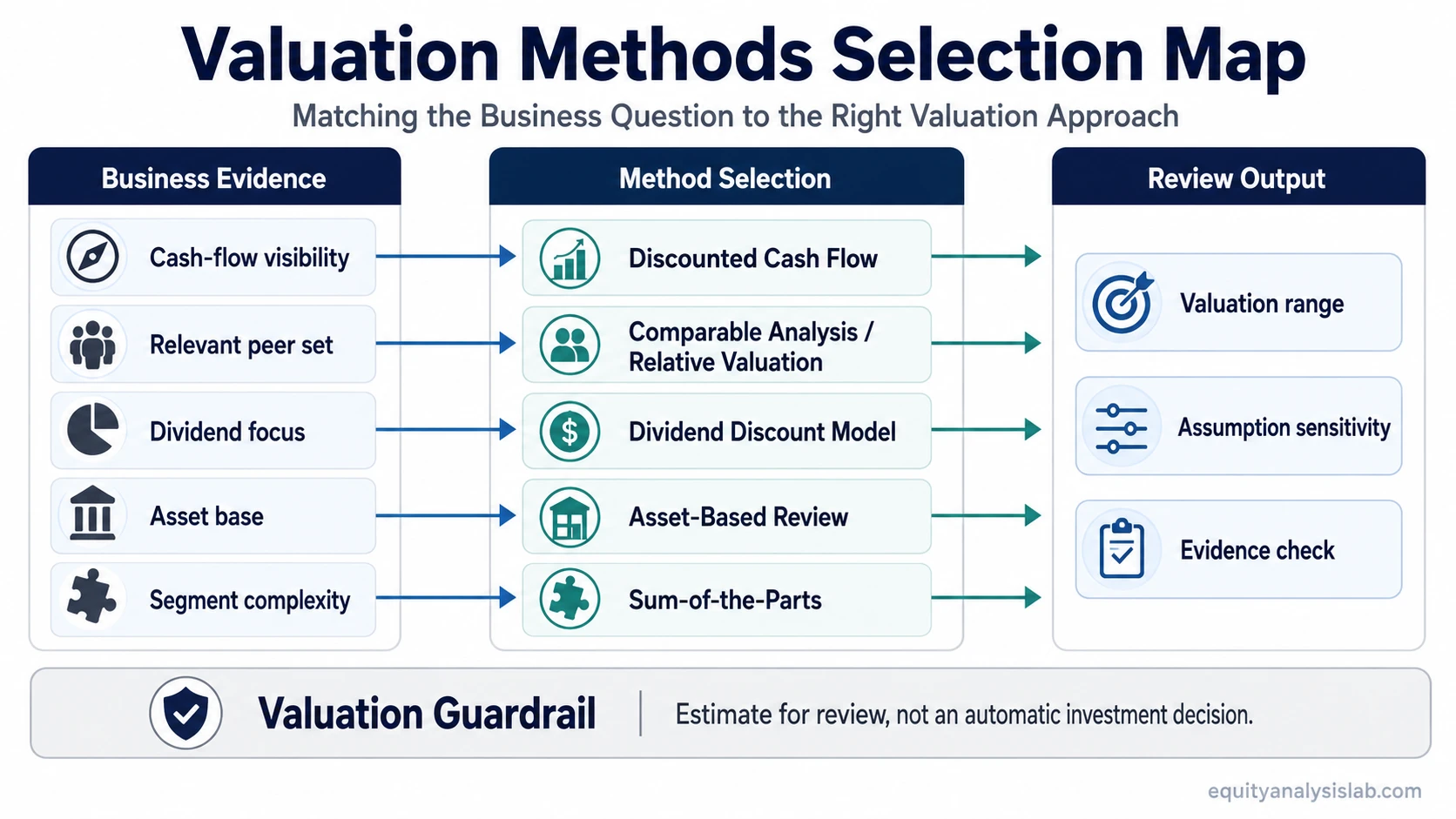
- What specific valuation methods (e.g., Discounted Cash Flow, Guideline Public Company Method, Capitalization of Earnings) do you anticipate applying to my company, and why?
- How do you quantify discounts for lack of marketability (DLOM) or discounts for lack of control (DLOC)?
- Have your valuation reports ever been challenged by the IRS or contested in court? If so, what was the outcome?
- Who on your team will perform the primary modeling work, and who will sign the final report?
Step 4: Review Sample Work and Engagement Letters
Request a redacted sample report of a similar engagement to evaluate the clarity of their narrative analysis, mathematical rigor, and source citations. Inspect the engagement letter to verify that fee structures are fixed or hourly, deadlines are clearly outlined, and limiting conditions are explicitly stated.
Red Flags to Avoid
When evaluating proposals, watch for these common warning signs:
- Guaranteeing a Specific Outcome: Any advisor who promises a high valuation figure to satisfy a seller, or a low figure to minimize estate taxes, before reviewing financial records lacks independence and professional ethics.
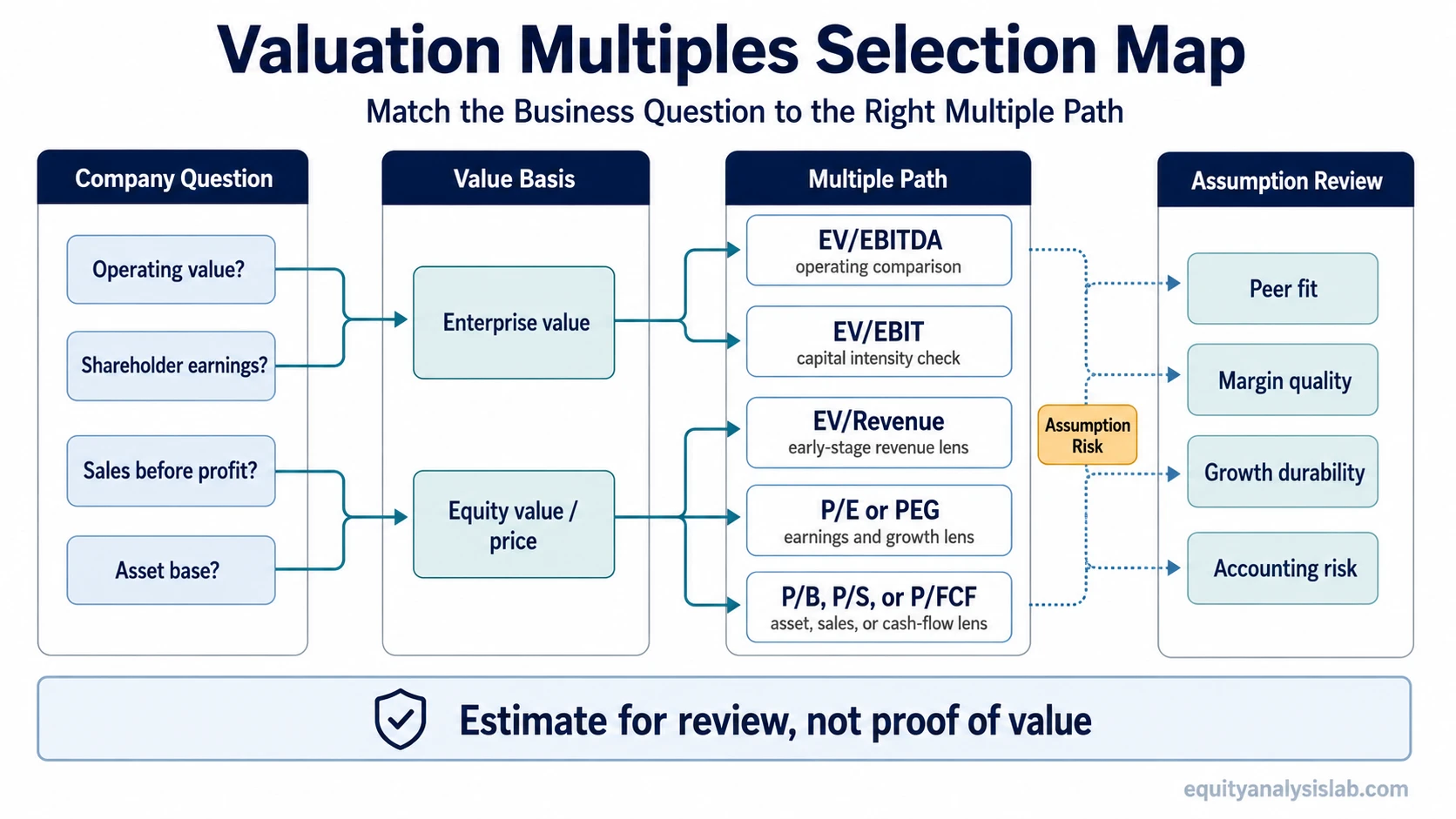
- Exclusive Reliance on Rules of Thumb: Using generic revenue or EBITDA multiples (e.g., "all medical practices sell for 1x revenue") without building custom discounted cash flow models or adjusted balance sheet analyses indicates an superficial process.
- Contingency Pricing: Compensation tied to the valuation outcome compromises objectivity and invalidates the report before regulatory bodies.
- Vague Methodology: Reports that fail to clearly document how key capitalization rates, discount rates, or valuation discounts were mathematically derived will not survive audit scrutiny.
Frequently Asked Questions
How much does a professional business valuation cost?
The cost of a business valuation varies significantly based on company size, capital structure complexity, industry, and engagement purpose. A simplified Calculation of Value for a lower-middle market business typically costs between $3,000 and $7,000. A comprehensive Conclusion of Value (Full Valuation Report) for estate tax, litigation, or complex financial reporting generally ranges from $8,000 to $25,000 or more. Highly complex enterprise valuations involving multi-tiered ownership structures or intellectual property appraisal can exceed $50,000.
What is the difference between a business broker's valuation and an accredited valuation?
A business broker’s estimate (often called a Most Probable Selling Price or Broker’s Opinion of Value) is an informal sales estimate designed to set a realistic listing price for marketing a business. Brokers are generally transaction-driven agents who do not follow appraisal standards like USPAP or hold recognized credentials like ASA or ABV. An accredited business valuation is an independent, defensible opinion of value prepared according to formal technical standards for legal, tax, financial accounting, or corporate governance purposes.
Does the IRS require specific credentials for estate and gift tax valuations?
Yes. Under Internal Revenue Code Section 170 and related treasury rules, the IRS requires appraisals for significant tax filings to be prepared by a "qualified appraiser." The appraiser must hold recognized appraisal designations from professional organizations or possess verified coursework and years of practical experience in valuing the specific type of property involved. Appraisals produced by non-specialists risk rejection and can result in severe accuracy-related penalties under IRC Section 6695A.
What is the difference between Fair Market Value and Strategic Value?
Fair Market Value (FMV) is a standard of value defined by regulatory and judicial bodies as the price at which property would change hands between a willing buyer and a willing seller, neither being under compulsion to buy or sell and both having reasonable knowledge of relevant facts. Strategic Value (or Investment Value) reflects the worth of a business to a specific buyer, accounting for unique operational synergies, cross-selling opportunities, administrative cost reductions, or vertical integration benefits that an abstract hypothetical buyer would not possess.
How long does a formal business valuation take to complete?
A standard formal business valuation engagement typically takes between three to six weeks from the receipt of all requested financial documents. The timeline depends heavily on the speed with which management provides historical financial statements, tax returns, ownership records, and operational details, as well as the complexity of the company’s capital structure.
Next Steps for Business Leaders
To ensure a smooth valuation engagement, begin by organizing at least three to five years of audited or reviewed financial statements, federal tax returns, detailed organizational charts, and financial projections. Once these documents are compiled, reach out to credentialed advisors holding an ASA, ABV, or CVA designation, request a preliminary consultation, and evaluate their proposals against the specific regulatory and strategic demands of your business.
Image Gallery