Why the PCI Standards for Credit Cards Matter: Securing the Future of Payments in 2026
The Payment Card Industry Data Security Standard (PCI DSS) is vital because it provides a mandatory, unified framework for protecting sensitive cardholder data from escalating cyber threats. By implementing these rigorous security cont...
The Payment Card Industry Data Security Standard (PCI DSS) is vital because it provides a mandatory, unified framework for protecting sensitive cardholder data from escalating cyber threats. By implementing these rigorous security controls, businesses mitigate the risk of costly data breaches, ensure operational continuity, and maintain the consumer trust necessary for a healthy global digital economy.
Contents
The landscape of financial transactions has undergone a profound transformation, with digital payments now representing the vast majority of global commerce. As of 2026, the complexity of these transactions—ranging from contactless biometric payments to decentralized finance integrations—has made the Payment Card Industry Data Security Standard (PCI DSS) more relevant than ever. These standards are not merely bureaucratic hurdles; they are the foundational architecture of trust in a world where data is the most targeted asset.
The Evolution of PCI DSS to Version 4.x
In the current 2026 environment, businesses are operating under the full implementation of PCI DSS v4.x. This version represented a significant shift from the previous v3.2.1, moving away from a prescriptive "check-box" compliance model toward a more outcome-based, security-first approach. The standards matter today because they have adapted to the sophisticated nature of modern threats, such as AI-driven phishing and automated credential stuffing.
One of the most critical updates in the current version is the introduction of the Customized Approach. This allows organizations to implement innovative security controls that meet the standard's objectives without following the strict, "defined" requirements, provided they can prove the effectiveness of their alternative methods. This flexibility is essential for tech-forward companies using advanced cloud-native architectures that did not exist when the earlier standards were written.
Furthermore, PCI DSS 4.x emphasized continuous compliance. Historically, many merchants viewed PCI compliance as an annual event—a snapshot in time for an auditor. In 2026, the standard requires that security controls are integrated into the business-as-usual (BAU) activities. This shift matters because it prevents the "security drift" that often occurs between audits, which is when the majority of successful breaches take place.
Protecting Business Reputation and Consumer Trust
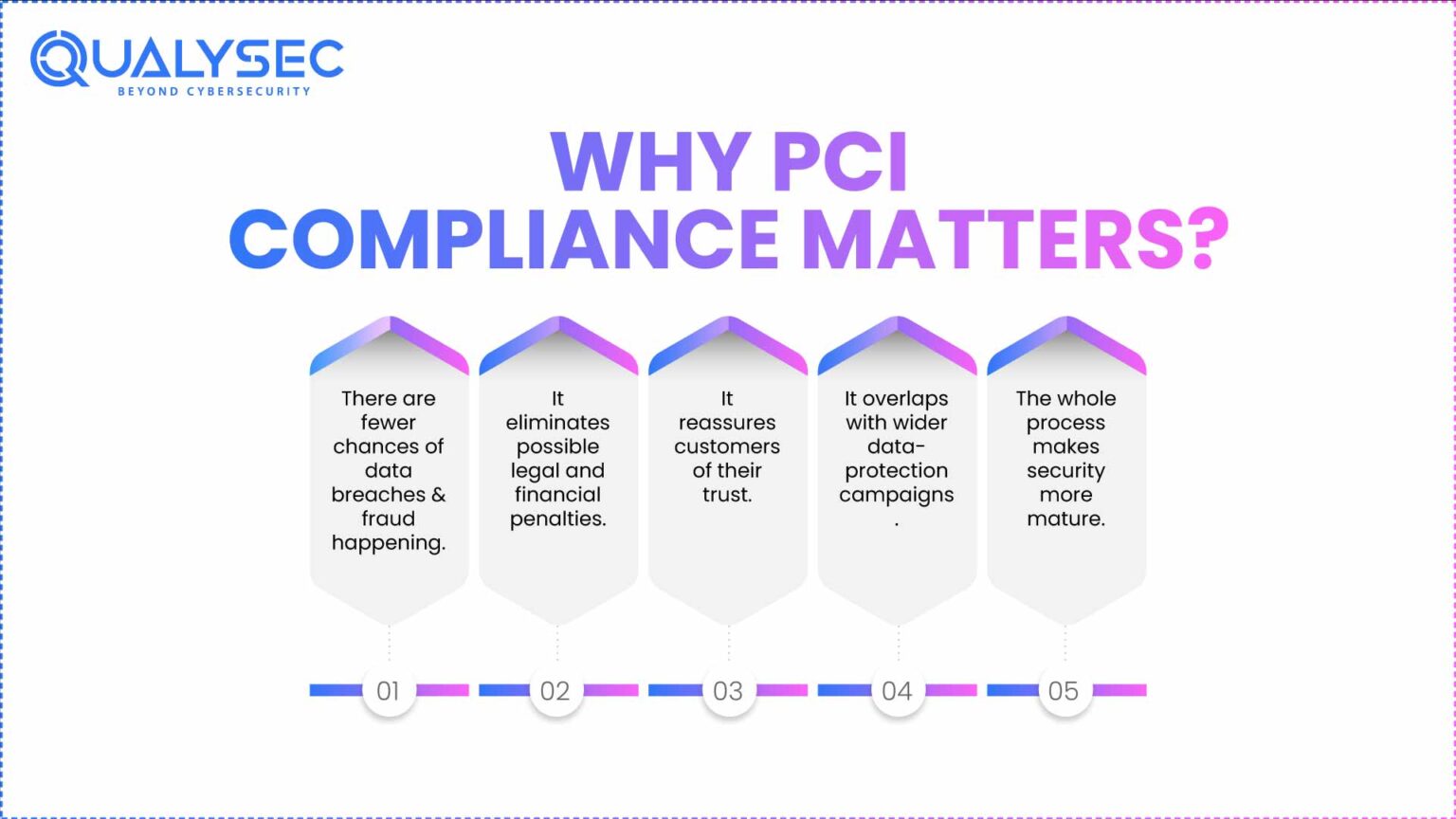
For any business handling credit card data, reputation is its most valuable—and fragile—asset. The PCI standards matter because they serve as a public-facing commitment to security. When a consumer swipes a card or enters their details into an app, they are implicitly trusting that the merchant has protected that pathway.
A single data breach can lead to a catastrophic loss of brand equity. Studies consistently show that a significant percentage of consumers will stop doing business with a brand following a high-profile security failure. In a hyper-competitive 2026 market, the cost of customer acquisition is too high to risk such attrition. PCI compliance provides a baseline of assurance that helps maintain this relationship. It signals to partners, banks, and customers that the organization treats data privacy as a core business function rather than an afterthought.
The Financial and Legal Consequences of Non-Compliance
The financial implications of ignoring PCI standards are multi-faceted and potentially ruinous. These consequences extend far beyond simple fines.
- Monthly Non-Compliance Fines: Payment brands (Visa, Mastercard, American Express, etc.) can levy fines against acquiring banks, which are then passed down to the merchant. These fines range from $5,000 to over $100,000 per month, depending on the volume of transactions and the duration of non-compliance.
- Forensic Investigation Costs: In the event of a breach, a merchant is often required to undergo a mandatory forensic audit by a PCI Forensic Investigator (PFI). These investigations are incredibly expensive, often costing tens of thousands of dollars, and are entirely funded by the merchant.
- Increased Interchange Fees: Banks view non-compliant merchants as high-risk. To compensate for this risk, they may increase transaction fees, directly impacting the merchant’s profit margins on every sale.
- Legal Liability and Settlements: While PCI DSS is a private industry standard and not a government law, it is frequently used in courtrooms as the "standard of care" for data protection. If a business is sued following a breach, failing to meet PCI standards makes it nearly impossible to defend against claims of negligence.
Detailed Breakdown of the 12 Core Requirements
To understand why these standards matter, one must look at the specific protections they mandate. The PCI DSS is organized into six logically related groups called "control objectives," which contain 12 core requirements.
| Objective | Requirement Number | Description of Requirement |
|---|---|---|
| Build and Maintain a Secure Network | 1 | Install and maintain network security controls (firewalls). |
| 2 | Apply secure configurations to all system components (no default passwords). | |
| Protect Cardholder Data | 3 | Protect stored cardholder data (encryption at rest). |
| 4 | Protect cardholder data with strong cryptography during transmission. | |
| Maintain a Vulnerability Management Program | 5 | Protect all systems and networks from malicious software (anti-virus). |
| 6 | Develop and maintain secure systems and software (patch management). | |
| Implement Strong Access Control Measures | 7 | Restrict access to system components and cardholder data by business need to know. |
| 8 | Identify users and authenticate access to system components (Multi-Factor Authentication). | |
| 9 | Restrict physical access to cardholder data. | |
| Regularly Monitor and Test Networks | 10 | Log and monitor all access to system components and cardholder data. |
| 11 | Regularly test security systems and network environments. | |
| Maintain an Information Security Policy | 12 | Support information security with organizational policies and programs. |
Each of these requirements addresses a specific vector used by cybercriminals. For instance, Requirement 8 has become particularly important in 2026. With the rise of remote work and decentralized administrative access, Multi-Factor Authentication (MFA) is now mandatory for all access into the Cardholder Data Environment (CDE). This single requirement has drastically reduced the success rate of credential-based attacks.
Technical Depth: Scope Reduction and Tokenization
One of the most practical reasons PCI standards matter is that they provide a roadmap for "scope reduction." Compliance can be daunting, but the standard encourages technologies that remove sensitive data from the merchant’s environment entirely.
Tokenization is the primary method used in 2026 to achieve this. By replacing a primary account number (PAN) with a non-sensitive "token," the merchant can still process recurring payments and analytics without ever actually storing the credit card number. This effectively removes the merchant's servers from the "scope" of many PCI requirements. If a hacker breaches a tokenized database, they find only useless strings of characters rather than actionable financial data.
The standards matter because they push the industry toward these more secure architectures, ultimately making the entire global payment ecosystem more resilient to systemic failure.
Operational Benefits Beyond Compliance
While often viewed as a burden, adhering to PCI standards provides significant operational advantages. The processes required for PCI compliance—such as regular vulnerability scanning, rigorous logging, and formal risk assessments—improve the overall security posture of the entire company.
When a company secures its CDE to PCI standards, those security protocols often bleed over into other departments. The disciplined approach to identity and access management (IAM) required by Requirement 7 and 8, for example, protects intellectual property and employee records just as effectively as it protects credit card numbers. In essence, PCI DSS acts as a template for a comprehensive enterprise security program.
Summary of Merchant Compliance Levels
The rigor of the assessment process depends on the volume of transactions processed annually.
- Level 1: Over 6 million transactions per year. Requires an annual Report on Compliance (ROC) by a Qualified Security Assessor (QSA) and quarterly network scans.
- Level 2: 1 million to 6 million transactions per year. Requires an annual Self-Assessment Questionnaire (SAQ) or ROC and quarterly scans.
- Level 3: 20,000 to 1 million e-commerce transactions per year. Requires an annual SAQ and quarterly scans.
- Level 4: Fewer than 20,000 e-commerce transactions or up to 1 million total transactions per year. Requires an annual SAQ and quarterly scans.
Common Misconceptions and FAQs
Does PCI DSS apply if I only use a third-party processor like Stripe or PayPal? Yes. While using a third-party processor significantly reduces your "scope" and simplifies the compliance process (often allowing for a shorter SAQ), you are still responsible for ensuring that the initial point of data entry is secure and that your business follows basic security hygiene. You must verify that your service provider is also PCI compliant.
Is PCI compliance a legal requirement in the United States? Technically, no. There is no federal law mandating PCI DSS. However, several states (such as Nevada and Washington) have incorporated PCI DSS into their state statutes. More importantly, it is a contractual requirement from the payment brands. If you wish to accept credit cards, you must agree to these standards.
What is the difference between an ASV scan and a vulnerability scan? An Internal Vulnerability Scan is performed by the company's own staff or tools to find internal weaknesses. An Approved Scanning Vendor (ASV) scan is a specific type of external scan required by PCI Requirement 11.2.2. It must be performed by a vendor certified by the PCI Security Standards Council to check for vulnerabilities on your external-facing IP addresses.
How often do PCI standards change? The PCI Security Standards Council (PCI SSC) updates the standards every few years to address new threats. Major versions (like the move from 3.0 to 4.0) occur roughly every 5-7 years, while smaller sub-revisions (like 4.0.1) may occur more frequently to clarify existing requirements.
Moving Forward: Practical Recommendations
For organizations looking to navigate the complexities of PCI DSS in 2026, the first step is accurate scoping. You cannot protect what you do not know you have. Conduct a thorough data discovery exercise to identify every point where cardholder data enters, moves through, or leaves your network.
Secondly, prioritize automation. In 2026, manual log reviews and manual patch tracking are no longer sufficient to meet the "continuous compliance" expectations of version 4.x. Implementing automated security information and event management (SIEM) systems and automated configuration monitoring will ensure that you remain compliant every day of the year, not just on the day the auditor arrives.
Finally, foster a culture of security. PCI standards matter most when they are understood by every employee—from the developer writing code to the cashier at the point of sale. Compliance is not an IT project; it is a fundamental component of modern business integrity.
Disclaimer: This article provides a general overview of PCI DSS standards and does not constitute legal or financial advice. Jurisdictional requirements and specific card brand rules may vary. Consult with a Qualified Security Assessor (QSA) or legal counsel for specific compliance guidance.
Image Gallery