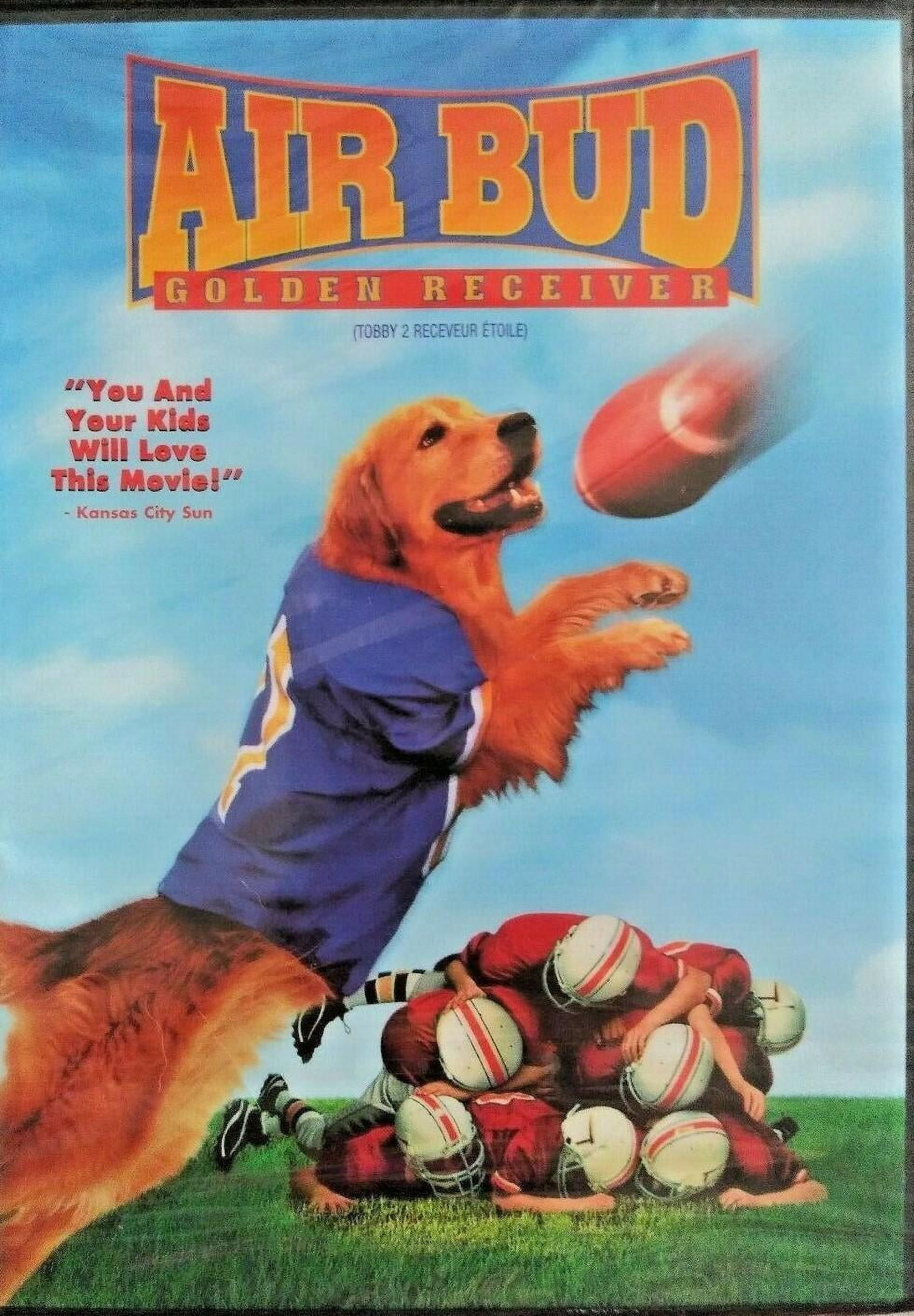
Air Bud Golden Receiver 1998 Sports Comedy: A Retrospective Analysis
Air Bud: Golden Receiver, released in 1998, serves as the second installment in the popular family sports comedy franchise featuring Buddy, the Golden Retriever with an uncanny ability to play competitive sports. This film shifts the a...
Air Bud: Golden Receiver, released in 1998, serves as the second installment in the popular family sports comedy franchise featuring Buddy, the Golden Retriever with an uncanny ability to play competitive sports. This film shifts the athletic focus from basketball to American football, following the protagonist, Josh Framm, as he navigates the challenges of middle school sports while his canine companion inadvertently joins the varsity team.
Contents
The cultural impact of the Air Bud series remains a distinct chapter in late 1990s family cinema, blending live-action animal stunts with lighthearted narrative tropes. For those revisiting this film in 2026, understanding its production context, athletic premises, and legacy provides insight into why "dog-as-athlete" films captured a specific segment of the millennial and Gen Z childhood experience.
The Production Context of 1998 Family Cinema
By 1998, the success of the original Air Bud (1997) had solidified a formula for mid-budget family entertainment. The film was directed by Richard Martin and produced by Keystone Pictures, building upon the premise that Buddy, a dog with a remarkable aptitude for human athletics, could integrate into organized school sports.
The transition to football was a strategic evolution for the franchise. While the first film centered on the tactical, fast-paced nature of basketball, Air Bud: Golden Receiver leveraged the high-stakes, contact-heavy imagery of football to heighten the comedic and dramatic tension. Filmed primarily in British Columbia, Canada, the production required extensive coordination between animal trainers, stunt performers, and child actors to ensure both the safety of the canine performers and the visual believability of the game sequences.
Plot Dynamics and Athletic Premise
The narrative of Air Bud: Golden Receiver centers on Josh Framm, now in middle school, who is struggling to adjust to a new step-father and a changing social environment. The film introduces a subplot involving a pair of bumbling Russian circus owners, Natalya and Popov, who seek to kidnap Buddy for their traveling show.
Parallel to this, Josh joins the football team. Through a series of events, Buddy ends up on the field, discovering that his natural ball-handling skills translate from basketball to football. He becomes the team’s star receiver, leading them toward a championship run. The film relies heavily on the "sports movie" archetype—the underdog team, the rigorous training montage, and the final high-stakes game—subverted by the presence of a Golden Retriever in a jersey.
Core Character Roles
- Buddy (Air Bud): The central catalyst for all athletic action.
- Josh Framm: The human protagonist navigating the intersection of adolescence and guardianship of a star athlete dog.
- Patrick Sullivan: Josh’s stepfather, representing the human emotional stakes of the film.
- The Timberwolves: The junior high football team that serves as the backdrop for the film's climax.
Comparing Sports Comedy Elements
When evaluating Air Bud: Golden Receiver against other sports comedies of the era, the film functions more as a fantasy-comedy than a realistic sports film. Unlike realistic portrayals of youth athletics, the film treats the presence of a dog in a varsity game as a whimsical reality that the other characters eventually accept.
| Feature | Air Bud (1997) | Air Bud: Golden Receiver (1998) |
|---|---|---|
| Primary Sport | Basketball | Football |
| Tone | Foundational/Introductory | Escalated/High Stakes |
| Villain Archetype | Abusive Former Owner | Circus Kidnappers |
| Team Dynamic | Community/Junior League | Middle School Varsity |
The escalation from basketball to football allowed the writers to introduce more complex physical comedy sequences. The "Golden Receiver" moniker serves as a pun on the dog's breed and his newfound position, a thematic device that highlights the film’s commitment to puns and lighthearted wordplay.
The Reality of Canine Performance in Film
The visual success of Air Bud: Golden Receiver relies entirely on the training of Buddy (a Golden Retriever named Air Buddy). Behind the scenes, the performance of canine actors involves "positive reinforcement" training methods. In the late 1990s, animal handling standards in Hollywood were overseen by the American Humane Association (AHA).
The football scenes are achieved through a combination of:
- Forced Perspective: Camera angles that make the dog appear to be in the middle of a play when he is actually interacting with a handler off-camera.
- Edit Sequencing: Cutting between the dog’s actions and the players' reactions to create the illusion of a continuous play.
- Visual Effects: Minimal use of early digital composite work to ensure the dog was interacting with real objects, such as the football itself.
For viewers in 2026, it is important to note that while the film appears primitive compared to modern CGI-heavy cinema, its reliance on practical training represents a specific era of animal acting that prioritized tangible interactions over digital manipulation.
Impact on 1990s Youth Culture
Air Bud: Golden Receiver solidified the "sports dog" trope, leading to a long-running series of direct-to-video sequels involving soccer, volleyball, baseball, and eventually the "Air Buddies" spin-offs featuring puppies. The success of the 1998 installment was pivotal in this expansion. It moved the franchise from a single "event film" into a recognizable intellectual property.
The film resonated because it combined two reliable audience draws: the inherent emotional appeal of a Golden Retriever and the universally understood "victory" arc found in sports cinema. It provided a low-risk, high-reward viewing experience for families, establishing a baseline for the family-friendly sports genre that dominated VHS rental shelves throughout the late 1990s and early 2000s.
FAQ: Common Questions Regarding the Franchise
Was a real dog actually playing football in the film? Yes. While no dog can understand the complex rules of American football, the Golden Retriever used in the film was trained to hold, carry, and release the ball on command. The "football plays" were carefully choreographed sequences where the dog performed individual tasks that were then edited together to simulate a game.
Why did the franchise move to football after the first movie? Following the box office success of the basketball-centric original, the production team sought to maintain momentum by selecting another popular American sport. Football provided more dynamic opportunities for physical comedy and a clear path to a dramatic, high-stakes final game, which is a staple of the genre.
Are there legal issues with using animals in sports films today? By 2026, production standards regarding animal welfare in film have become significantly more stringent than they were in 1998. Modern productions adhere to strict safety guidelines and animal rights oversight to ensure that no animal is stressed or endangered during the filming of complex stunts.
Is this film considered a cult classic? While perhaps not a "cult" film in the traditional sense, it is considered a hallmark of late 90s nostalgia. It is frequently revisited by audiences who grew up in that era, often cited as a definitive example of the "family animal comedy" that defined the video-rental market of the time.
Where can one watch Air Bud: Golden Receiver in 2026? As a legacy title, Air Bud: Golden Receiver is frequently available through major streaming platforms and digital rental services. Availability changes based on licensing agreements between the rights holders and the streaming providers.
Recommendation for Modern Viewers
For those looking to engage with Air Bud: Golden Receiver in 2026, the best approach is to view it through the lens of late-90s cinematic history. It is a product of its time—a straightforward, feel-good sports comedy that makes no claims to realism. To enjoy the film, one must accept the premise as an exercise in suspension of disbelief, focusing on the impressive practical training of the animal lead rather than the technical accuracy of the football gameplay.
If you are a fan of sports comedies or early-millennial family cinema, this film serves as a perfect case study in how simple concepts were scaled into successful franchises. It remains a lighthearted, accessible entry in the genre, serving its primary purpose as family entertainment without the complexity or subtext found in modern high-budget features.
Image Gallery