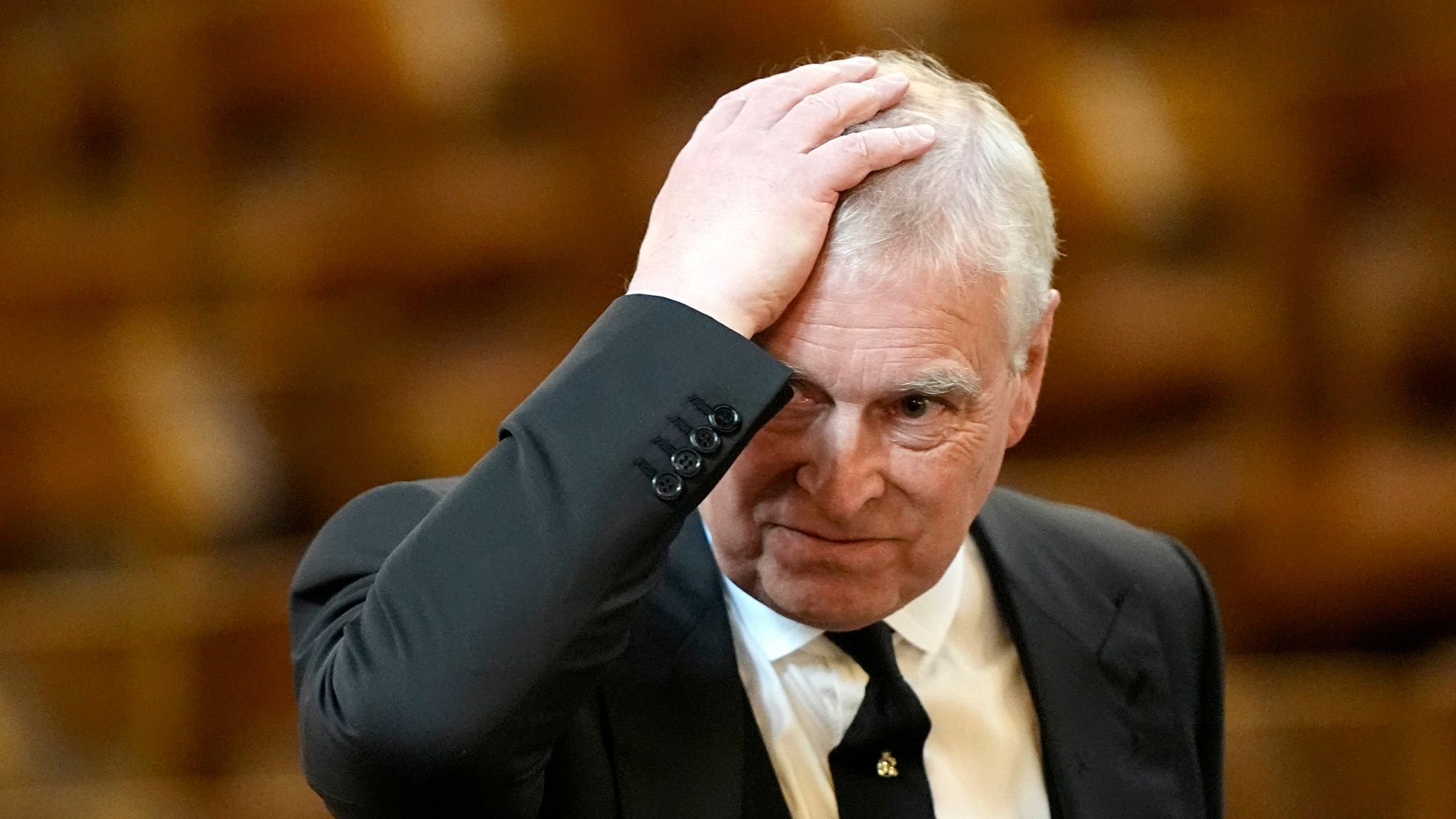
Could Prince Andrew Be Prosecuted in the UK: A Legal Analysis
Whether Prince Andrew could face criminal prosecution in the United Kingdom depends on the intersection of sovereign immunity, the specific nature of alleged offenses, and the threshold of evidence required by the Crown Prosecution Ser...
Whether Prince Andrew could face criminal prosecution in the United Kingdom depends on the intersection of sovereign immunity, the specific nature of alleged offenses, and the threshold of evidence required by the Crown Prosecution Service (CPS). While no charges have been brought against him in the UK, the legal framework governing potential prosecution remains a subject of significant public and constitutional scrutiny.
Contents
The Constitutional and Legal Status of the Royal Family
To understand the potential for criminal prosecution regarding a member of the Royal Family, one must first distinguish between the legal concept of sovereign immunity and the practical application of criminal law. Under the doctrine of "sovereign immunity," the reigning monarch—the Sovereign—is immune from prosecution. This is rooted in the constitutional principle that the King can do no wrong (Rex non potest peccare).
However, this immunity does not extend to other members of the Royal Family. While they occupy a unique position within the British social and constitutional hierarchy, they are generally subject to the same criminal laws as any other citizen. There is no specific statute that provides broad "royal immunity" from criminal investigation or prosecution for the Duke of York or other non-reigning members of the Royal household.
If a crime were alleged to have been committed within the jurisdiction of England and Wales, the legal process would theoretically follow the standard protocols established by the Police and Crime Evidence Act 1984. The decision to prosecute would rest with the Crown Prosecution Service, which applies a two-stage test: the evidential stage and the public interest stage.
The Two-Stage Test for Prosecution
The Crown Prosecution Service (CPS) operates under the Code for Crown Prosecutors. Before any prosecution can proceed, the CPS must satisfy itself that there is a "realistic prospect of conviction" based on admissible evidence. This is known as the evidential stage. If the evidence is deemed sufficient, the CPS moves to the public interest stage, where prosecutors must decide whether a prosecution serves the interest of justice.
In the case of high-profile or politically sensitive cases, the CPS must ensure that its decision-making process is entirely independent of political influence. The Attorney General holds a specific role in overseeing the administration of the law, but for criminal prosecutions, the Director of Public Prosecutions (DPP) leads the CPS with operational independence.
The complexity in high-profile cases often lies not in the law itself, but in the collection and corroboration of evidence. For an investigation to move forward, there must be a formal complaint or credible intelligence that warrants a police inquiry. As of 2026, there have been no active, public criminal proceedings initiated by UK authorities against Prince Andrew regarding the allegations that emerged in international civil litigation.
Jurisdictional Challenges and International Cooperation
A significant portion of the allegations surrounding Prince Andrew’s past associations occurred outside the United Kingdom, primarily in the United States. Criminal jurisdiction is largely territorial, meaning that crimes are prosecuted in the country where they allegedly occurred. If an offense were to be investigated in the UK, it would require evidence that the underlying conduct, or a significant component of it, took place within British jurisdiction.
The UK and the United States maintain a robust Treaty on Mutual Legal Assistance in Criminal Matters. This treaty allows for the exchange of evidence and the questioning of witnesses across borders. However, international legal cooperation is a lengthy, technical process. Even if evidence exists in a foreign jurisdiction, converting that evidence into a format that meets the strict requirements of the English court system—such as the rules against hearsay or specific standards for witness testimony—can present significant hurdles.
Comparing Civil Litigation and Criminal Prosecution
The public discourse surrounding Prince Andrew is often conflated with his 2022 civil settlement in the United States. It is essential to distinguish between the two legal domains:
| Feature | Civil Litigation | Criminal Prosecution |
|---|---|---|
| Primary Goal | Compensation or dispute resolution | Justice, punishment, and deterrence |
| Standard of Proof | Balance of probabilities (more likely than not) | Beyond reasonable doubt |
| Initiator | A private individual (plaintiff) | The State (CPS) |
| Outcome | Financial settlement or injunction | Fines, community orders, or imprisonment |
The 2022 settlement resolved a civil claim brought by Virginia Giuffre. A settlement of this nature does not constitute an admission of criminal guilt under English or American law, nor does it preclude the possibility of a criminal investigation. However, the absence of a criminal case in the United States at the time of the settlement significantly complicates the path toward a future criminal prosecution elsewhere.
The Role of Public Interest and Media Scrutiny
Public interest plays a nuanced role in the prosecution process. While the CPS maintains that it is not influenced by public opinion or media coverage, the scale of public concern regarding the integrity of public figures can sometimes prompt a review of whether an investigation was handled with due diligence.
However, "public interest" in the legal sense refers to the necessity of a prosecution to maintain the rule of law. If the police determine that there is insufficient evidence to warrant a referral to the CPS, the case remains closed regardless of how much public discussion occurs. In the UK, judicial review is available as a mechanism to challenge the decisions of public bodies, including the police or the CPS, but only if there is evidence of procedural impropriety, bias, or a failure to follow the law.
Why No Charges Have Been Filed
The absence of criminal charges in the UK is primarily attributed to the lack of a sufficient evidential basis that could satisfy the "realistic prospect of conviction" threshold. For a case to move forward, authorities would need:
- Credible Complainants: Witnesses or victims who are willing and able to provide testimony that withstands the rigor of cross-examination in an English court.
- Jurisdictional Link: Evidence that a criminal act occurred within the jurisdiction of the UK.
- Corroborating Evidence: Physical or digital evidence, or further independent testimonies, that support the allegations.
Without these components, the legal system remains in a state of stasis regarding these specific matters.
Frequently Asked Questions
Does the King have the power to stop a prosecution against his brother? No. While the King enjoys sovereign immunity, this does not grant him the power to intervene in the operational independence of the Crown Prosecution Service or the police. The UK justice system is designed to operate independently of the monarch’s personal intervention.
Could new evidence change the current status? Yes. In the UK, criminal investigations can be reopened if "new and compelling" evidence is discovered. This is a high bar, but it remains the standard route through which a closed or dormant matter could be brought back under active review.
Is there a statute of limitations for these types of crimes in the UK? For many serious criminal offenses, including sexual offenses, there is no statute of limitations in the United Kingdom. This means that a person can be investigated and prosecuted regardless of how much time has passed since the alleged incident occurred.
Why was the civil settlement not a criminal trial? The civil settlement was a private agreement between two parties to resolve a claim for damages. Civil courts are designed to settle disputes between individuals, whereas criminal courts represent the state's interest in punishing wrongdoing. The state was not a party to the settlement.
Next Actions and Legal Reality
For those tracking the legal status of this issue, the most critical indicator of change would be a formal announcement by the Metropolitan Police or the Crown Prosecution Service regarding an investigation. Absent a shift in the evidentiary landscape, the matter remains in the realm of historical and constitutional debate rather than active criminal litigation. Legal professionals generally advise that without a significant new discovery of admissible evidence, the current legal status quo in the United Kingdom is unlikely to change.
Image Gallery