The Meaning of Julienne in Cooking Explained: Mastering the Matchstick Cut
In professional culinary arts, julienne refers to a precision knife technique where food—typically vegetables—is cut into long, thin, uniform strips resembling matchsticks. The standard dimensions for a classic julienne are approximate...
In professional culinary arts, julienne refers to a precision knife technique where food—typically vegetables—is cut into long, thin, uniform strips resembling matchsticks. The standard dimensions for a classic julienne are approximately 1/8 inch by 1/8 inch by 2 inches (3mm x 3mm x 5cm).
Contents
The julienne cut is one of the most fundamental skills taught in culinary schools worldwide. While it may seem like a purely aesthetic choice, its primary purpose is to ensure uniform cooking times and consistent texture across a dish. Whether you are preparing a French stir-fry, a delicate slaw, or a refined garnish, understanding the technical nuances of the julienne is essential for advancing your kitchen proficiency in 2026.
The Technical Specifications of a Julienne Cut
To truly understand what julienne means, one must look at the specific measurements that differentiate it from other strip-based cuts. Precision is the hallmark of French classical cuisine, and the julienne is no exception.
Standard Julienne vs. Fine Julienne
In a professional setting, there are actually two primary versions of this cut:
- Standard Julienne: Measuring 1/8" x 1/8" x 1 to 2 inches. This is the most common version used for hardy vegetables like carrots, celery, and bell peppers.
- Fine Julienne (Julienne Allumette): Measuring 1/16" x 1/16" x 1 to 2 inches. This delicate variation is often used for garnishes or for vegetables that will be served raw, such as radishes or ginger, where a smaller surface area helps mellow intense flavors.
The term allumette is often used interchangeably with julienne when referring to potatoes, literally translating from French to "matchstick." Regardless of the specific name used, the goal remains the same: perfect rectangular prisms with no tapering or ragged edges.
The Functional Importance of Precision
Why do chefs insist on such rigid dimensions? The meaning of julienne extends beyond visual appeal; it is rooted in the physics of heat transfer and the chemistry of flavor release.
Uniform Cooking Rates
When vegetables are cut into identical sizes, they respond to heat at the same rate. If you were to sauté a mix of thick chunks and thin slivers, the slivers would turn to mush before the chunks were even warm. A julienne ensures that every piece reaches the "al dente" state simultaneously, which is critical for high-heat cooking methods like sautéing or stir-frying.
Texture and Mouthfeel
The structural integrity of a vegetable changes based on its cut. A julienne cut maximizes the surface area of the vegetable while maintaining enough thickness to provide a crisp "snap." This is particularly important in salads and cold preparations. The long, thin shape allows the vegetables to tangle together, creating a structural height on the plate that is difficult to achieve with cubes or rounds.
Flavor Distribution
By increasing the surface area, more of the vegetable's internal cells are exposed to the palate and to accompanying sauces. This results in a more cohesive flavor profile. For example, julienned ginger provides a subtle, aromatic heat throughout a dish, whereas a large chunk would provide an overwhelming burst of spice that might ruin a bite.
Essential Tools for the Julienne Technique
As of 2026, modern kitchen technology offers several ways to achieve a julienne, but the traditional knife method remains the gold standard for control and versatility.
The Chef’s Knife or Nakiri
A sharp 8-inch Chef’s knife is the most versatile tool for julienne. However, many contemporary chefs prefer a Nakiri, a Japanese vegetable knife with a flat profile. The flat edge of a Nakiri allows for full contact with the cutting board, preventing the "accordion effect" where the bottoms of the vegetable strips remain attached by a thin thread of skin.
The Mandoline
For high-volume prep, a mandoline is indispensable. It uses a stationary blade that produces perfectly uniform planks, which can then be stacked and sliced into strips. Professional models often include a "julienne blade" attachment that performs both cuts in a single pass. Safety Note: Always use the hand guard or a cut-resistant glove when using a mandoline, as the blades are exceptionally sharp.
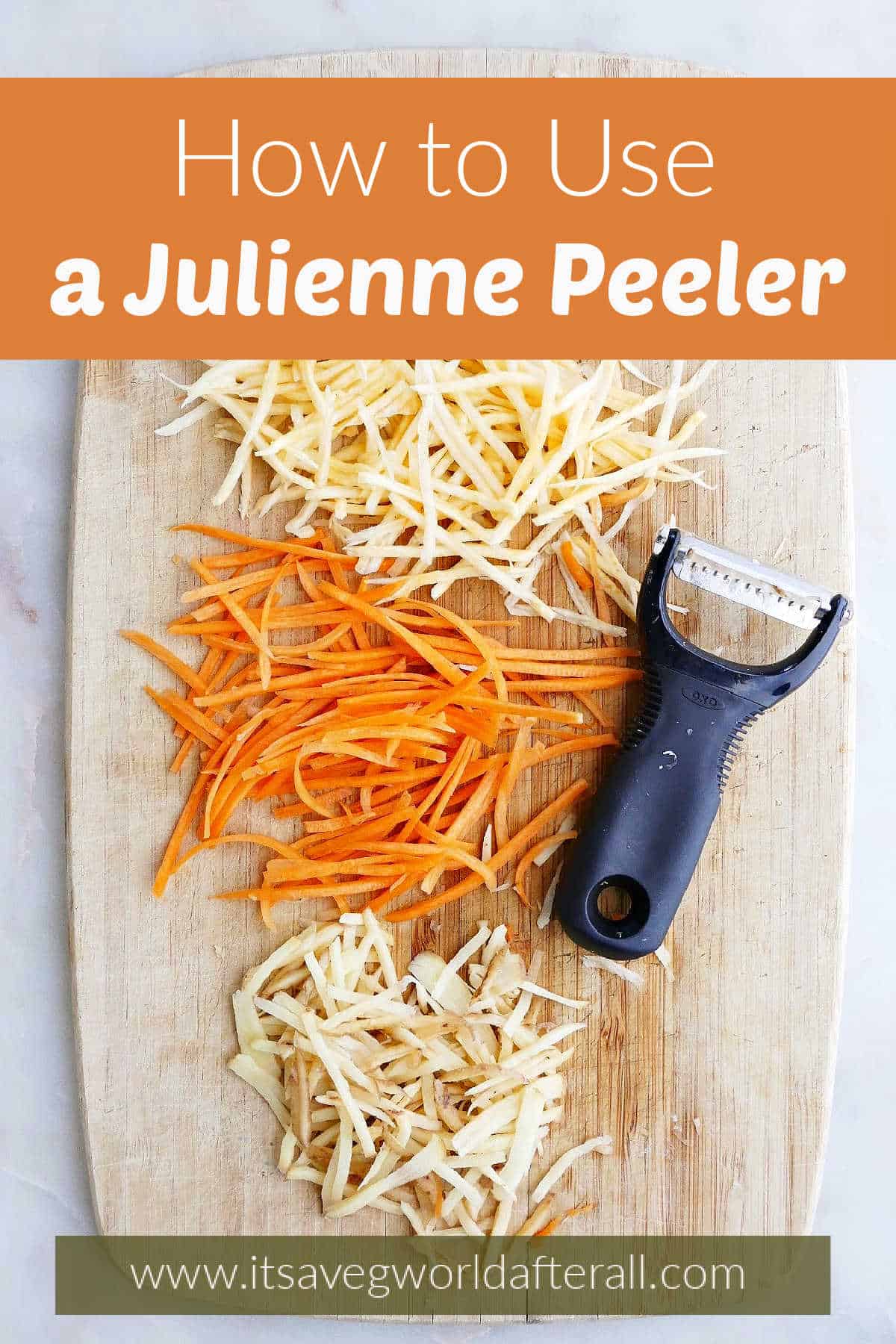
The Julienne Peeler
For home cooks who find knife skills intimidating, a julienne peeler is a specialized tool with a serrated teeth-like blade. While it is excellent for soft-skinned vegetables like zucchini or carrots, it lacks the precision of a knife and often produces slightly rounded strips rather than true rectangular prisms.
Step-by-Step Guide: How to Julienne Correctly
Mastering the julienne requires a systematic approach to transforming a round, irregular vegetable into a series of identical sticks.
- Wash and Prep: Clean the vegetable and peel it if necessary.
- Squaring Off: This is the most critical step. Cut off the ends of the vegetable, then slice a thin sliver off one side to create a flat base. Rotate the vegetable onto that flat side. Continue cutting the other three sides until you have a clean, rectangular block (often called a "plank").
- Creating Planks: Slice the rectangular block lengthwise into uniform slices that are exactly 1/8 of an inch thick.
- Stacking: Stack two or three of these planks on top of each other. Ensure they are aligned perfectly.
- The Final Cut: Slice through the stack lengthwise at 1/8-inch intervals. The result should be a handful of identical matchsticks.
Pro Tip: Do not discard the "scraps" created during the squaring-off process. These are perfectly edible and should be saved for stocks, soups, or purees where shape does not matter.
Comparison of Common Culinary Cuts
To understand the julienne, it is helpful to see how it relates to other standard knife cuts used in professional kitchens.
| Cut Name | Dimensions (Inches) | Primary Use |
|---|---|---|
| Batonnet | 1/4" x 1/4" x 2" to 2.5" | French fries, hearty vegetable sides |
| Julienne | 1/8" x 1/8" x 1" to 2" | Stir-frys, salads, garnishes |
| Fine Julienne | 1/16" x 1/16" x 1" to 2" | Delicate garnishes, ginger, radishes |
| Brunoise | 1/8" x 1/8" x 1/8" | Soups, sauces (made by dicing julienne) |
| Fine Brunoise | 1/16" x 1/16" x 1/16" | Fine sauces, consommé (made by dicing fine julienne) |
| Chiffonade | Variable (Fine Ribbons) | Leafy greens and herbs like basil |
Common Vegetables Used for Julienne
While almost any firm vegetable can be julienned, some are better suited for the technique than others.
- Carrots: The classic julienne vegetable. Their firmness allows for very clean edges.
- Zucchini: Often julienned for "zoodles" or light sautéed dishes. Note that the seedy core is usually discarded to maintain texture.
- Bell Peppers: Julienned peppers are a staple in fajitas and stir-frys. For best results, cut them from the inside (flesh side) to prevent the knife from slipping on the waxy skin.
- Celery: Requires removing the tough outer strings for a truly professional result.
- Potatoes: When julienned and fried, these become "shoestring fries" or "allumette potatoes."
Safety and Best Practices in 2026
Knife safety is paramount when performing precision cuts. Because the julienne requires many repetitive motions close to the fingers, you must employ the "Claw Grip." Curl your fingertips inward, using your knuckles as a guide for the blade. This ensures that even if the knife slips, it hits the flat of your knuckle rather than the tip of your finger.
Furthermore, ensure your cutting board is stabilized. A damp paper towel placed under a wooden or plastic board prevents it from sliding during the squaring-off process. According to the Culinary Institute of America, a sharp knife is significantly safer than a dull one, as it requires less downward pressure and is less likely to glance off the surface of the vegetable.
Frequently Asked Questions
What is the difference between julienne and shredding?
Shredding is an informal process, usually done with a box grater, resulting in irregular, often ragged pieces of varying sizes. Julienne is a precision knife cut that produces uniform, square-sided sticks. Shredding is better for melting (like cheese) or moisture release, while julienne is preferred for structure and presentation.
Can you julienne leafy greens?
No, the term for cutting leafy greens or herbs into thin strips is chiffonade. Because leaves are flat and lack the three-dimensional density of a root vegetable, they cannot be squared off into 1/8-inch matchsticks. To chiffonade, you roll the leaves tightly and slice across the roll.
Is a julienne cut the same as a matchstick cut?
Yes, "matchstick cut" is the common English-language term for julienne. While "julienne" is the formal culinary term used in recipes and professional kitchens, "matchstick" is frequently used in home cooking contexts to describe the same shape and size.
Why is my julienne uneven?
Uneven cuts usually stem from skipping the "squaring off" step. If you try to julienne a round carrot without first creating flat sides, the pieces will have curved edges and will roll under the knife, leading to inconsistent widths. Always create a stable, rectangular base before making your final strips.
Does julienne affect the nutritional value?
The cut itself does not change the nutrient content, but it does change how the food reacts to cooking. Because julienned vegetables cook very quickly, they often retain more heat-sensitive vitamins (like Vitamin C) compared to vegetables that are boiled or roasted for long periods in larger chunks.
Final Recommendation for Practice
If you are new to this technique, the best way to master the julienne is through consistent practice with carrots. Carrots are inexpensive, firm, and provide immediate visual feedback on your accuracy. Aim for consistency first, then speed. Once you can produce a handful of identical 1/8-inch matchsticks, you will have unlocked a fundamental skill that improves the quality, cooking accuracy, and professional appearance of nearly every meal you prepare.
Image Gallery